Arab Press

بالشعب و للشعب
Friday, Aug 07, 2026

A 'returns tsunami' is about to deal a crippling blow to retailers

A 'returns tsunami' is about to deal a crippling blow to retailers

It's the "calm before the storm" as consumers start to ship back unwanted gifts, but it comes as retailers are still dealing with a pile of inventory.

A tidal wave of returns is about to hit retailers already dealing with excess inventory.

Inventory glut was the theme of 2022 for retailers ranging from Nike to Nordstrom to American Eagle. Quarter after quarter, retailers — particularly in the apparel space — reassured Wall Street that they were working through the mountains of extra product they'd accumulated in 2022, the result of cooling consumer demand combined with a hangover from tangled supply chains.

And while heavy holiday discounting may have helped, industry experts say retailers are months away from fully easing their inventory issues — and that it's time to brace for a record number of returns. 


A 'returns tsunami' could hit retailers in the next two weeks
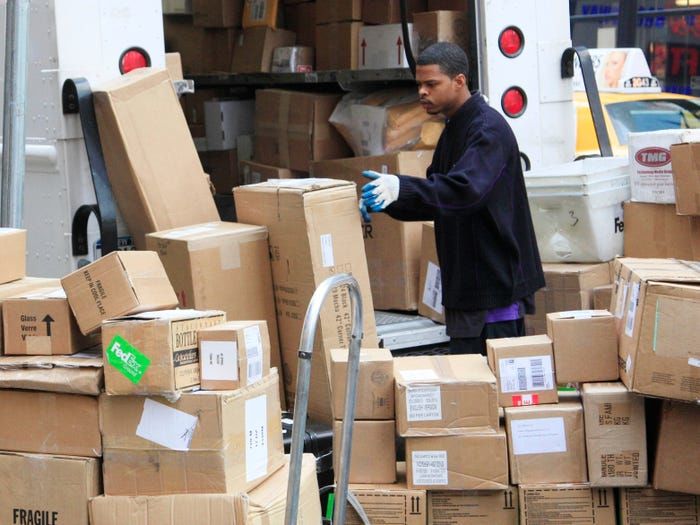
The average consumer starts sending back holiday purchases in the first few weeks of January, which means retailers will start receiving them in another 10 to 14 days, according to Romaine Seguin, a former UPS executive and the CEO of Good360, a nonprofit that partners with retailers to donate returned items that can't be resold. 

"It's the calm before the storm, because right now the storm's with the UPS stores and whoever's taking all the returns," she said. 

A December report from Insider Intelligence predicted that US shoppers would send back more than $279 billion worth of merchandise by the end of 2022, equivalent to 26.5% of consumer purchasing for the year. 

For this holiday season specifically, Rob Garf, vice president and general manager of retail at Salesforce, predicted a "returns tsunami" with more than 1.4 billion, or 13%, of orders getting returned, up 57% from last year. Returns-technology platform Loops Returns found that merchants who use its platform processed 133,000 returns on December 26 and December 27 alone, 33% higher than in 2021. 

"'More returns than ever' is the headline," said David Sobie, vice president of Happy Returns, which helps process and consolidate returns for retailers. 

Why so many? Sobie chalked it up to the "one-in-a-generation shift" from shopping in person to shopping online, which has led to people "bracketing" their purchases, meaning they buy more than one color or size of an item at a time and return what they don't want. A November Happy Returns consumer survey found that a third of shoppers planned to bracket heading into the holidays.


Retailers have been dealing with high inventory since spring 2022
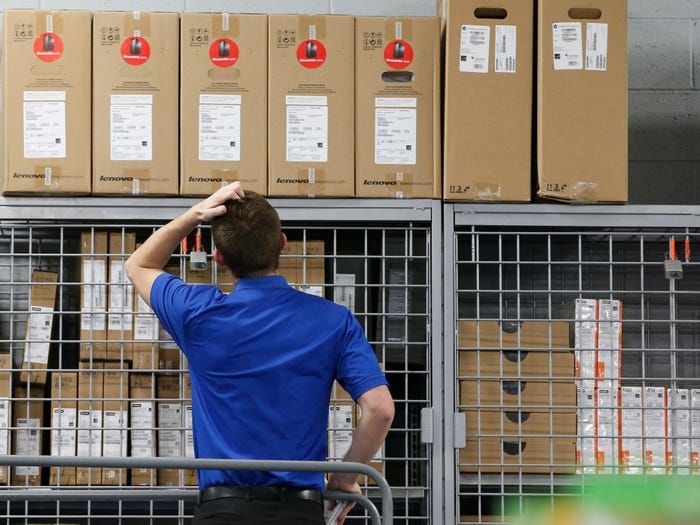
But even before this "tsunami" of returns hits, retailers were already dealing with too much inventory. 

Products flew off the shelves in 2021 as shoppers, flush with stimulus money and craving a return to normalcy, drove over $6.5 billion in retail sales. Consumers were buying so much stuff that retailers placed bigger-than-usual orders for the following year. Combine those goods with all the product retailers ordered in 2021 that got stuck on a boat somewhere and arrived late, and by spring 2022, retailers were overrun with inventory — just in time for inflation to slow down consumer spending. 

By September, retailers were "drowning in inventory," D.A. Davidson retail analyst Michael Baker wrote in a note at the time, with total retail inventories up 22% year-over-year.

So when the holidays rolled around, bargains abounded. Discounts on toys topped 34%, compared to 19% in 2019, while discounts on electronics reached 20% versus 8% pre-pandemic, drawing in shoppers and "helping retailers who were challenged with oversupply issues," Vivek Pandya, lead analyst at Adobe Digital Insights, said in a statement. 

But according to Baker, even with all those discounts, retailers' inventory troubles aren't over quite yet. 

"I think they've made progress, I think we're getting there," Baker told Insider. "But I think, on average, retailers won't be fully through the excess inventory at the end of the fourth quarter. My assumption is by the back half of 2023, we're not gonna be talking about inventory overhang anymore."

Comments

Oh ya 4 year ago
Just the start of the recession or depression that the world is headed into. Read banks are buying there own car lots as they are getting so many repos and are trying to recoup as much money as they can from the repos

Newsletter

Related Articles

Arab Press
0:00
0:00
Close
Saudi Arabia, Turkey and Pakistan Sign Mutual-Defence Pact
AI Is Remaking the US Economy, From GDP Growth to iPhone Prices
FIFA’s Retreat Leaves a Larger Question Over Who Guards the Game
Finland Deploys Commercial-Scale Thermal Batteries Using Crushed Rock to Store Renewable Grid Energy
Valued at $109 Million: F-35B Fighter Jet Crashes in Southern California
US Says It Has Carried Out Heavy Strikes on Iran After Attempted Attacks on Its Forces
Over 24 Hours in the Air: Qantas Airbus Completes Record-Breaking Test Flight
Arrest Warrant Issued in Lebanon for Tycoon Spotted Meeting Netanyahu in Washington
Trump says Israel ‘would not survive’ without US
Nvidia Reportedly Takes Vast Texas Data-Centre Lease to Underwrite AI Expansion
FIFA’s Private-Investment Plan for World Cup Rights Draws European Revolt
Following OpenAI's Cyberattack: 'Most Companies Still Do Not Understand What Is Coming'
OpenAI Sued After ChatGPT Allegedly Discouraged Emergency Care Before Near-Fatal Embolism
Miliband Sets Climate and International Law at Centre of UK Diplomacy
Pentagon Discloses Nearly 100 US Troop Injuries During Renewed Iran Fighting
Trump Readies New Tariffs as Temporary Global Levy Nears Expiry
High Prices Push Coffee Drinkers Toward Whole Beans and Home Brewing
Trump Draws Boos and Podium Scrutiny at Spain’s World Cup Triumph
Spain Defeats Argentina in Extra Time to Win Second World Cup
Turkey Explores S-400 Transfer to UAE in Bid to Rejoin F-35 Program
US Retaliates Against Iran After Two American Troops Killed in Jordan
Proposed U.S.-Saudi Nuclear Pact Could Permit Limited Uranium Enrichment Under International Safeguards
Why Kentucky Fried Chicken Became KFC—and Why the False Explanations Persist
Iran Claims It Destroyed Bahrain’s Main Artificial Intelligence Center in Missile and Drone Strike
Ukrainian Drones Strike Wildberries Warehouses Deep Inside Russia
Reported CIA Mission Helped Clear the UAE’s Path to Advanced US AI Chips
Artificial Intelligence Capital Fuels Markets While Governments and Regulators Face Mounting Strategic Tests
China’s Moonshot’s Kimi K3 Narrows the Gap With Anthropic Through Scale, Openness and Lower Cost
The Ledger Will Not Trust on Faith
Passenger Bound for Germany Refused to Sit Beside a Woman on a Plane — Then Slapped a Flight Attendant
Ukraine’s Leadership Rift Spills Into the Streets as Protesters Target Army Chief
The Ten World Cup Finals That Defined Football History
Smartphones Are Getting More Expensive, Sales Are Collapsing, and Even Apple Admits: "Prices Will Rise"
Leadership Change and Strategic Rivalry Redraw the Political Map
The AI Race Enters Its Infrastructure Era
Britain Nationalises British Steel to Protect Scunthorpe Production and Strategic Supply
Thomas Tuchel Faces Fierce Backlash After Tactical Retreat Costs England World Cup Final Berth
A Quiet Bastille Day: France Grapples with World Cup Heartbreak and Leftover Fireworks
Spain in Ecstasy: "We Feel Unbeatable, We Taught the Whole World a Lesson"
Harvard Astrophysicist to Lead U.S. Scientific Advisory on Unidentified Aerial Phenomena
Emergency Sirens Activated Across Bahrain as Interior Ministry Issues Shelter Directives
World Cup Visitors Turn American Big-Box Stores Into Souvenir Stops
Netflix Weighs Always-On Channels, Bundles and Short-Form Video
The AI Invoice Shock: Layoffs Didn't Save Managers Money — They Cost Them More
Concern: Sexually Transmitted Bacterium Among Men Develops Antibiotic Resistance
Passenger Partially Pulled Out of Ryanair Jet After Cabin Window Fails Mid-Flight
Severe Heatwave Drives Dangerous Ground-Level Ozone Pollution Across Two Thirds of European Union
The Physical and Electronic Barriers Disrupting Domestic Wireless Networks
France and Morocco Open World Cup Quarter-Finals as Collina Defends Refereeing
Tech Pulse: The Future of AI and Screen Culture
×