

AstraZeneca's pledge to poorer nations as it seeks COVID jab profits from next year
The chief executive of AstraZeneca (AZ) has told Sky News that the company's decision to begin seeking a modest profit from its COVID vaccine is unlikely to kick in until next year.
Pascal Soriot said this was because it still had many doses of the jab to supply that it had promised to do so at cost.
AZ announced earlier this month that it would be seeking to achieve a modest profit in future from the vaccine, in order to fund its new anti-viral COVID treatment.
The company's initial strategy was to provide the jab at cost, designed to help poorer countries get supplies, but the vaccine was also the backbone of the UK's early rollout to older people in late 2020 and early 2021.
But Mr Soriot stressed that, while some countries would be charged above cost for the vaccine, many more would not.
Advertisement
He said: "You have to remember that the orders we are taking today will be delivered next year. We still have a lot of orders at no profit to deliver. So they will be delivered next year.
"So you have got to think of the infection as if you were already in next year. And so essentially most of the world at that point will be in a different phase. And we will be more in a regional epidemic or regional pandemic than a global pandemic.
"But you know, we will of course adapt to every circumstance and countries that have low purchasing power we will be supplied at no profit or very low price and others will be a bit more."
Mr Soriot insisted that he had no regrets that AZ had provided the vaccine at cost, even though some of its competitors, such as Pfizer and Moderna, have supercharged their profits through charges for their COVID vaccines.
He went on: "We always knew that some vaccines would be sold at a profit and we made the decision from day one that we would partner with Oxford and deliver this vaccine around the world at no profit so everybody could access it much as possible.
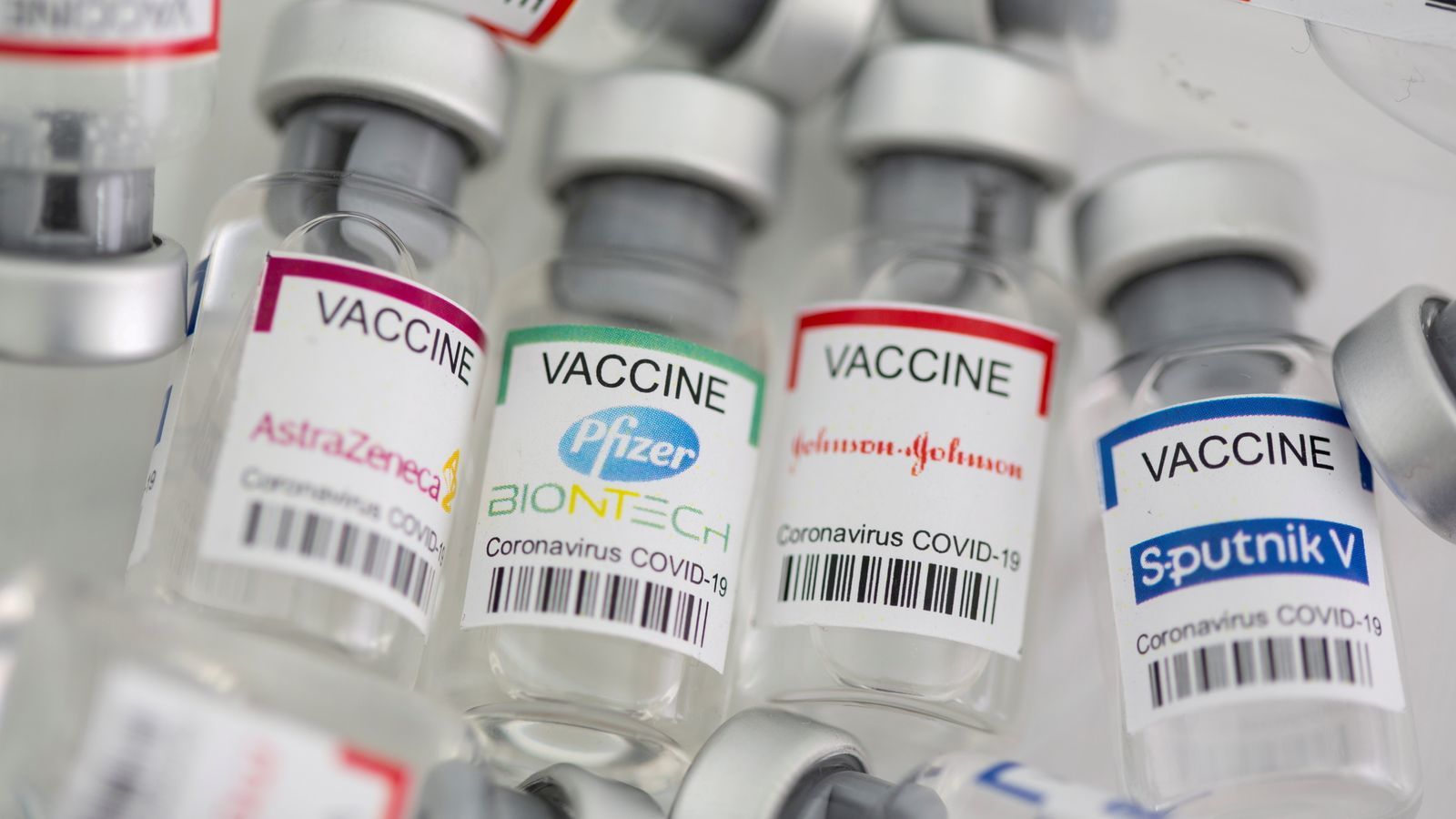
"And again, we've delivered more than 2 billion doses, 30% of global supply so far, so it really has worked quite well actually. So we always knew that it was what we were going to do. So there is no surprise, so there can't be any regret - it was our plan all along."
Mr Soriot also played down criticism that AZ had received during the pandemic from politicians in Europe, such as the French president Emmanuel Macron, who in January this year claimed that the company's vaccine was "quasi ineffective" in the over-65s.
The AZ chief executive, who declined to comment on why Mr Macron had subsequently changed his mind, suggested that, in fact, the relatively low levels of hospitalisations now being seen in the UK compared with continental Europe might be down to the use of the AZ vaccine in older people.
He noted that, in continental Europe, older patients have mainly been vaccinated with the mRNA vaccine produced by Pfizer.
Mr Soriot added: "Continental Europe vaccinated older people mostly with the mRNA vaccine and the UK vaccinated older people mostly with our vaccine - and we'll have to see over time whether that creates a difference.
"But what is really interesting to see in the data today is that in the UK, the number of hospitalisations…has remained relatively low, even though there were lots of infections, the number of severe infections and hospitalisations was still reasonable, relative to continental Europe, where the number of hospitalisations is relatively high in some countries."
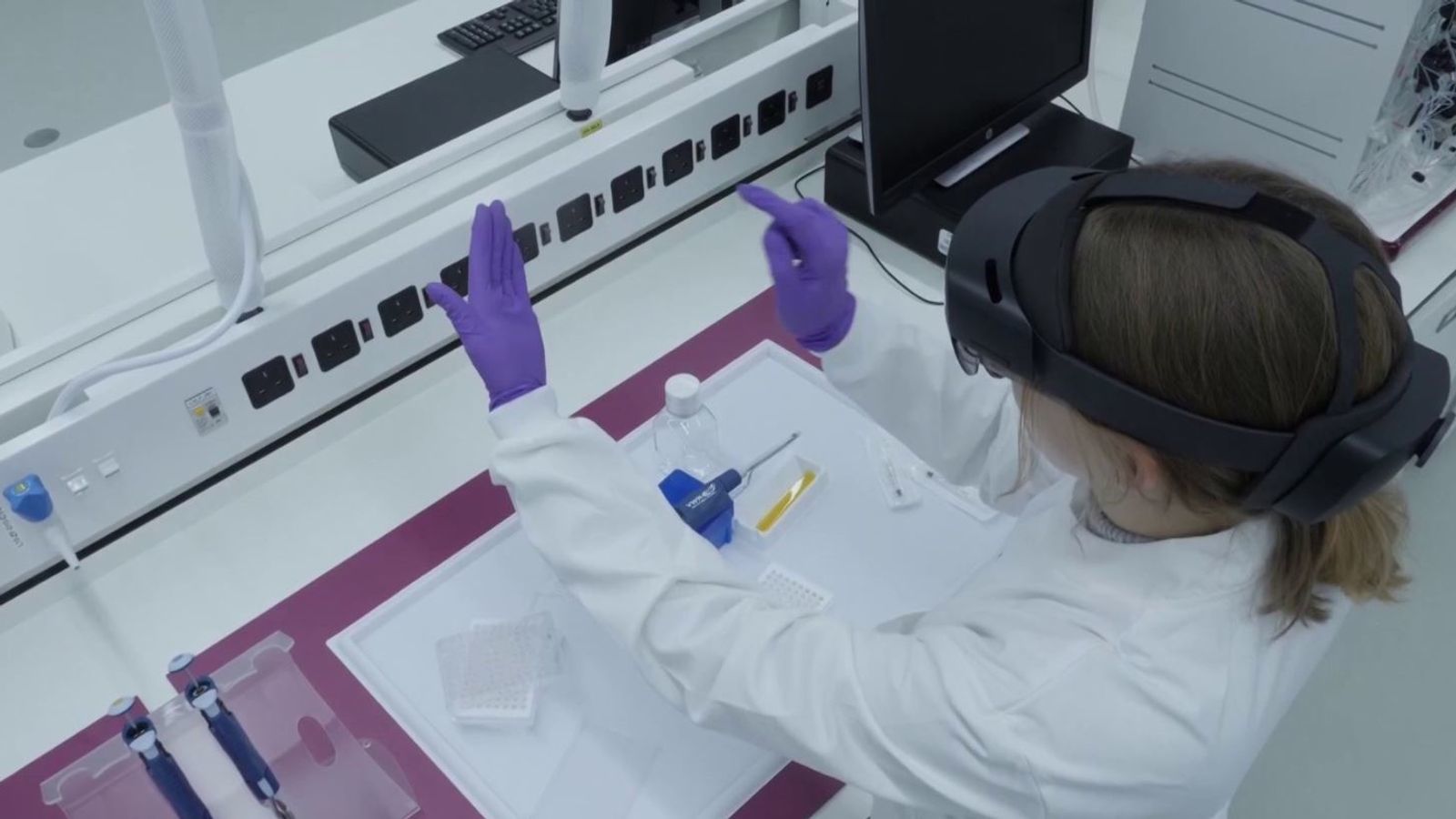
He was speaking as AZ, the largest company in the FTSE 100, formally unveils The Discovery Centre, its new £1bn research and development facility in Cambridge, which will be home to some 2,200 scientists.
The centre, to be opened by the Prince of Wales today, represents the biggest single investment ever made by AZ.
It has been specifically sited in Cambridge to be at the heart of the city's life sciences cluster, within close proximity to the Royal Papworth and Addenbrookes hospitals, Cancer Research UK and the University of Cambridge's school of clinical medicine.
The site is referred to in scientific circles as the 'Nobel factory' as it has created more Nobel Prize winners than anywhere else in the world.
Mr Soriot said AZ spent around $7bn (£5.3bn) on research and development annually - of which "a large proportion", close to one third, is deployed in the UK.
He added: "It's a very substantial investment we make each year."
The opening comes at a hugely busy time for AZ which, earlier this year, completed the $39bn takeover of the rare diseases specialist Alexion.
That took the company, traditionally better known in the industry for its treatments for cancers, heart and respiratory conditions, into a fourth therapy area - and now it has decided, based on the success of its COVID vaccine roll out, to expand into a fifth, vaccines, as well.
However, asked whether AZ was trying to do too much at once, Mr Soriot insisted this was not the case.
He added: "We have great strengths in oncology and we believe we can be one of the three great companies in the world in oncology and maybe even better than that by 2025.
 AZ has just achieved its first quarter of $10bn sales
"We continue to do very well in cardiovascular and bio pharmaceuticals overall and now we have rare diseases and vaccines.
"What we call the vaccine and immunotherapy unit is really looking at is managing this portfolio of products to treat or vaccinate people with viral diseases.
"We want to maximise the value of these assets and manage them better.
"Now whether we invest in the long run in this field remains to be seen, but there's a lot of synergies across this portfolio of products."
Mr Soriot pointed out that AZ had just achieved its first quarter during which it had notched up $10bn worth of sales.
It is a significant milestone because, when Mr Soriot oversaw AZ's successful defence against an unwanted takeover approach from Pfizer in 2014, he promised investors that AZ would be delivering annual sales of $40bn a year by 2023.