Arab Press

بالشعب و للشعب
Monday, Mar 02, 2026

Cambridge data shows Bitcoin mining on the move

Cambridge data shows Bitcoin mining on the move

New data shows Bitcoin mining in China was already in sharp decline before the latest crackdown by the government.

The research by the Cambridge Centre for Alternative Finance (CCAF) found China's share of mining fell from 75.5% in September 2019 to 46% in April 2021.

It also revealed Kazakhstan was now the third most significant Bitcoin mining nation.

Miners earn money by creating new Bitcoins, but the computing used consumes large amounts of energy.

They audit Bitcoin transactions in exchange for an opportunity to acquire the digital currency.

Global mining requires enormous computing power, which in turn uses huge amounts of electricity, and consequently contributes significantly to global emissions.

The CCAF's Cambridge Bitcoin Electricity Consumption Index shows that at time of writing Bitcoin consumed almost as much electricity annually as Colombia.

China moves


In June the Chinese authorities took strong action against Bitcoin.

The authorities told banks and payments platforms to stop supporting digital currency transactions causing prices to tumble.

The data from the CCAF covers a period before the crackdown, but it shows China's share of global mining power was already in significant decline prior to the action by the Chinese authorities.

The Cambridge researchers observed that the crackdown, once enacted, effectively led to all of China's mining power "disappearing overnight, suggesting that miners and their equipment are on the move".
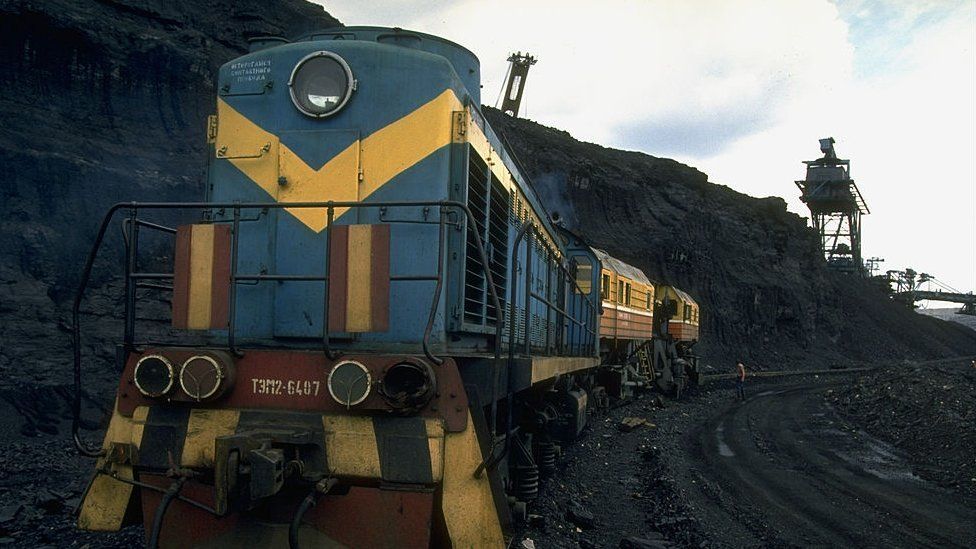
Kazakhstan is a heavy user of coal-fired generation


Experts say the miners are highly mobile.

"Miners pack shipping containers with mining rigs", said David Gerard, author of Attack Of The 50 Foot Blockchain, "so that in effect they are mobile computer data centres, and they are now trying to ship those out of China".

It's not clear where they will go, but even before the crackdown the geography of mining was shifting.

Kazakhstan, a country rich in fossil fuels, saw an almost six-fold increase in mining - increasing its share from 1.4% in September 2019 to 8.2% in April 2021.

According to the US Department of Commerce, 87% of Kazakhstan's electricity "is generated from fossil fuels" with coal accounting for more than 70% of generation.

The country is now the third largest miner of Bitcoins, behind the US, which saw its share of global mining power also rise significantly - to 16.8%.

Raining money


The data also revealed the close ties between sources of cheap electricity and Bitcoin mining.

Researchers found a seasonal movement of mining between Chinese provinces in response, it was suggested, to the availability of hydro-electric power.

Mining moved from the coal-burning northern province of Xinjiang in the dry season, to the hydro-abundant southern province of Sichuan in the rainy season.

The researchers noted that "this seasonal migration has materially affected the energy profile of Bitcoin mining in China", adding that it illustrated "the complexity of assessing the environmental effects of mining".

Sichuan banned Bitcoin mining in June.

Newsletter

Related Articles

Arab Press
0:00
0:00
Close
Violent Pro-Iranian Protesters Storm U.S. Consulate in Karachi
Missile Debris Sparks Fires at Dubai’s Jebel Ali Port Near Palm Jumeirah
Iran Strikes U.S. Fifth Fleet Headquarters in Bahrain Amid Wider Gulf Retaliation
Emerging Saudi–Turkish Alignment Draws Attention as Potential Strategic Challenge for Israel
Saudi Arabia Unveils $100 Billion Technology Investment Fund to Accelerate Post-Oil Diversification
Saudi Arabia Reaffirms Firm Commitment to Two-State Solution in Renewed Diplomatic Push
Saudi Arabia Launches Central Kitchen in Gaza to Deliver 24,000 Meals a Day
Saudi Arabia Announces $346 Million Support Package for Yemen in Renewed Humanitarian Push
Saudi Investors Increase US Equity Exposure Amid Domestic Market Weakness
Saudi Arabia Unveils Major Desert Gas Development in Strategic Shift Toward Diversified Energy Growth
Satellite Images Indicate Increased Aircraft Presence at Saudi Airbase Hosting US Forces
Telephone Diplomacy Sparks Tensions Between Two Key US Allies After Trump Intervention
Asian LPG Prices Surge After Damage Forces Saudi Aramco Export Disruptions
Saudi Arabia Unveils $100 Billion AI Infrastructure Fund to Challenge US and China
Saudi Stocks Close Lower as Tadawul All Share Index Falls 1.28 Percent
Saudi Arabia Launches Smart Mapping System to Enhance Pilgrim Experience at Holy Sites
Cristiano Ronaldo Acquires 25 Percent Stake in Saudi-Owned Spanish Club Almería
U.S.–Saudi Relations Balance Transactional Deal-Making with Expanding Strategic Ambitions
Israel’s President Herzog Signals Cautious Message on Saudi Ties at UAE Iftar in Tel Aviv
United States and Saudi Arabia Strengthen Security Ties with Joint Explosive Ordnance Disposal Exercise
Saudi Arabia Responds to Israel–UAE Moves in Somalia as Regional Rivalries Intensify
Saudi Arabia Showcases Expanding Defense Ambitions at World Defense Show 2026
SECRETARY RUBIO on IRAN: Iran poses a very great threat to the United States, and has for a very long time.
Larry Summers, the former U.S. Treasury Secretary, is resigning from Harvard University as fallout continues over his ties to Jeffrey Epstein.
U.S. stocks ended higher on Wednesday, with the Dow gaining about six-tenths of a percent, the S&P 500 adding eight-tenths of a percent, and the tech-heavy Nasdaq climbing roughly one-and-a-quarter percent.
Nvidia posted better than expected results for the January quarter on Wednesday and forecast current quarter revenue above market estimates.
Saudi Arabia’s Coffee Renaissance Gains Momentum as Investment and Heritage Drive Industry Growth
Saudi Shipping Leader Bahri Expands Fleet as Tanker Rates Approach $200,000 a Day
Saudi Arabia Advances First National Urban Policy Through High-Level Leadership and Institutional Alliances
Major Life Sciences Summits to Spotlight Saudi Arabia’s Rise as Regional Biotech and Pharma Hub
Saudi Arabia Reframes Red Sea and Horn of Africa Strategy Amid Rising Security and Trade Stakes
Saudi Arabia Recalibrates Its Role in Shifting Regional and Global Power Dynamics
Saudi Retail Signals to Global Brands: Localise or Lose Ground in a Rapidly Evolving Market
Saudi Arabia Looks to Human Capital Investment to Unlock Demographic Dividend
Saudi Arabia and Iran Increase Oil Exports Amid Escalating Middle East Tensions
Saudi Data Protection Authority Intensifies Enforcement Under Personal Data Law
Saudi Arabia Raises Oil Output and Exports Amid Contingency Planning Over Iran Tensions
USS Gerald R Ford Arrives in Souda, Crete
Saudi Sovereign Wealth Fund Unit Expands Push Into Global Private Credit
Saudi Arabia Eases Headquarters Rules to Attract More Foreign Firms
Saipem Secures Major Offshore Pipeline Contract in Saudi Arabia
Saudi Arabia’s Targeted Oil Export Cuts to the US Seen as Strategic Signal Amid Global Supply Glut
Nemetschek Arabia Signs Strategic MoU with Saudi Facility Management Association
Gulf Markets Close Mixed as Saudi Shares Slip on Budget Deficit Concerns
Saudi Arabia Posts Largest Quarterly Budget Deficit in Years Amid Weaker Oil Revenues and Higher Spending
U.S. Lawmaker Urges Safeguards on Saudi Civil Nuclear Deal as Trump Administration Advances Agreement
Saudi Arabia and Gulf Allies Rally Behind Kuwait in Escalating Maritime Border Dispute with Iraq
Universal Aviation Secures License to Operate and Manage New General Aviation Terminal in Dammam
Tucker Carlson’s Saudi Arabia Remarks Spark Debate Over Israel Stance
GCC Secretary-General Holds Talks with EU Ambassador in Riyadh
×