Arab Press

بالشعب و للشعب
Wednesday, Dec 24, 2025

China’s 'Artificial Sun’ Runs Five Times Hotter Than ‘Original’ in Quest For Clean Fusion Energy

China’s 'Artificial Sun’ Runs Five Times Hotter Than ‘Original’ in Quest For Clean Fusion Energy

Last year, China’s nuclear fusion reactor set a new world record for superheated plasma time in a “breakthrough” hailed as yet another step towards achieving clean, sustainable electricity generation.

The Experimental Advanced Superconducting Tokamak (EAST), China’s nuclear fusion device known as an “artificial sun”, has set a new record for sustained high temperatures, according to Xinhua News Agency.
The simulation in Hefei ran for 1,056 seconds (17 minutes, 36 seconds) at 70 million degrees – five times hotter than the actual sun, which hits about 15 million degrees in its core.

EAST, designed and developed by Chinese scientists, has been used since 2006 to conduct fusion-related experiments mimicking the atom-building process that occurs at the center of stars and gives them their luminosity and warmth. It does so by applying powerful magnetic fields to hydrogen to compress it until it creates a plasma that can reach temperatures of over 150 million degrees Celsius and generate enormous energy.

Scientists hope to harness the power of nuclear fusion to deliver near-limitless clean energy. Unlike the nuclear fission process that powers commercial nuclear energy production, nuclear fusion requires no fossil fuels and does not leave behind hazardous radioactive waste materials.

“The recent operation lays a solid scientific and experimental foundation towards the running of a fusion reactor,” Gong Xianzu, a researcher at the Institute of Plasma Physics of the Chinese Academy of Sciences who led the latest experiment, was cited as saying.


EAST will continue to run the experiment at the Hefei Institute of Physical Science in the eastern province of Anhui until June.

Institute of Plasma Physics director Song Yuntao was cited as saying:

“[The experiment] once again challenged the world record. We have comprehensively validated the technology, driving it a major step forward from basic research to engineering applications.”


He added that five years from now, the scientists hoped to start building their fusion reactor, which may take approximately ten years.

“After that is built we will construct the power generator and start generating power by around 2040,” he added.

The “artificial sun” had achieved another milestone in May 2021, running at a plasma (hot gas) temperature of 120 million degrees Celsius for 101 seconds.

Then for another 20 seconds it reached a peak temperature of 160 million degrees Celsius –over 10 times hotter than the Sun, according to the outlet.

Despite the breakthroughs achieves by EAST, one of three major tokamaks in operation in China, nuclear fusion remains decades away from being used outside of a lab. The principal challenges are maintaining the temperature over 100 million degrees and operating at a stable level for a long time, according to Xinhua.
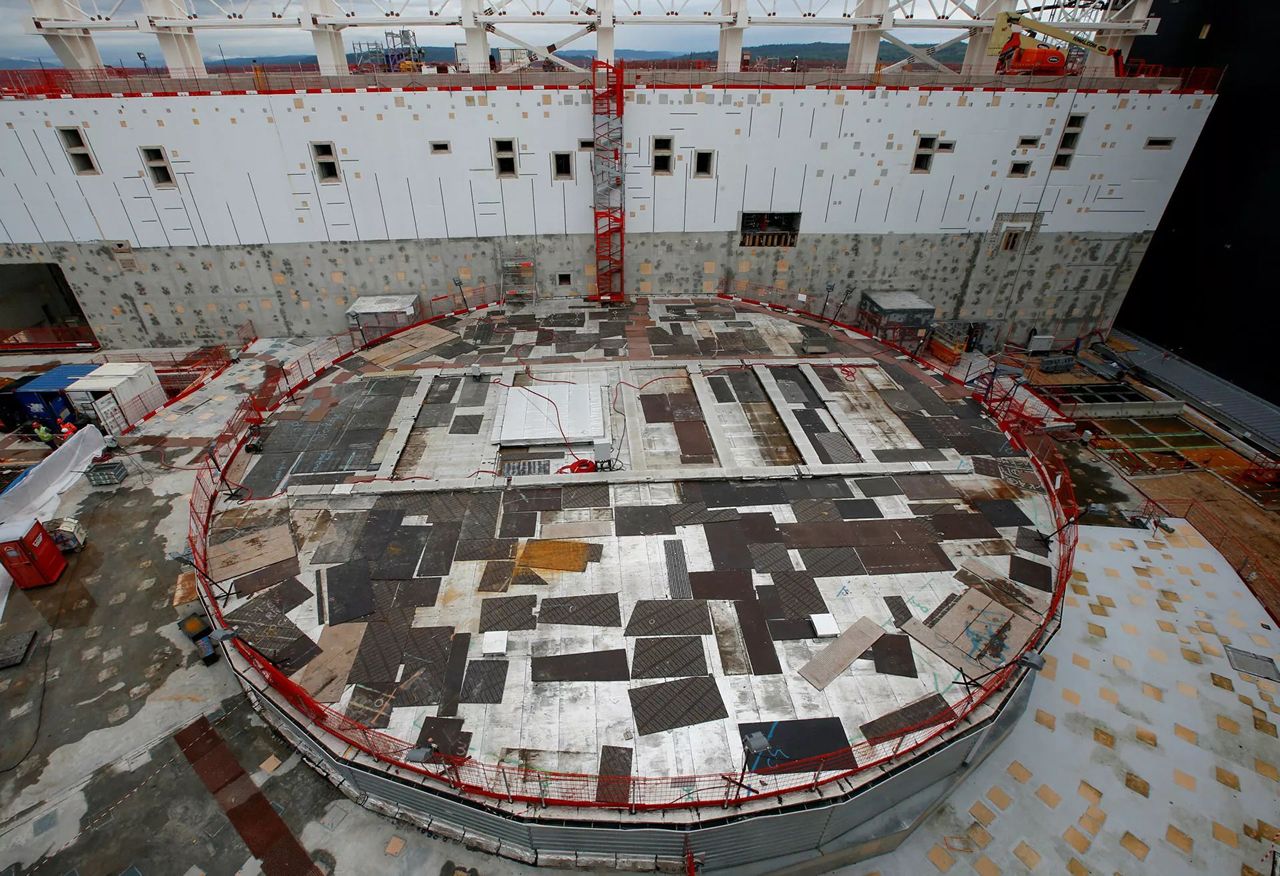
FILE PHOTO: General view of the circular bioshield inside the construction site of the International Thermonuclear Experimental Reactor (ITER) in Saint-Paul-lez-Durance, southern France, November 7, 2019.


Similar efforts are currently underway in other countries. China, alongside another 35 countries, is participating in the International Thermonuclear Experimental Reactor (ITER) megaproject in Marseille, France. ITER is touted as potentially being the world’s largest reactor once completed.

Comments

mike 4 year ago
Once again China is miles ahead of the rest of the world.

Newsletter

Related Articles

Arab Press
0:00
0:00
Close
Saudi Arabia’s 2025: A Pivotal Year of Global Engagement and Domestic Transformation
Saudi Arabia to Introduce Sugar-Content Based Tax on Sweetened Drinks from January 2026
Saudi Hotels Prepare for New Hospitality Roles as Alcohol Curbs Ease
Global Airports Forum Highlights Saudi Arabia’s Emergence as a Leading Aviation Powerhouse
Saudi Arabia Weighs Strategic Choice on Iran Amid Regional Turbulence
Saudi Arabia Condemns Sydney Bondi Beach Shooting and Expresses Solidarity with Australia
Washington Watches Beijing–Riyadh Rapprochement as Strategic Balance Shifts
Saudi Arabia’s Vision 2030 Drives Measurable Lift in Global Reputation and Influence
Alcohol Policies Vary Widely Across Muslim-Majority Countries, With Many Permitting Consumption Under Specific Rules
Saudi Arabia Clarifies No Formal Ban on Photography at Holy Mosques for Hajj 2026
Libya and Saudi Arabia Sign Strategic MoU to Boost Telecommunications Cooperation
Elon Musk’s xAI Announces Landmark 500-Megawatt AI Data Center in Saudi Arabia
Israel Moves to Safeguard Regional Stability as F-35 Sales Debate Intensifies
Cardi B to Make Historic Saudi Arabia Debut at Soundstorm 2025 Festival
U.S. Democratic Lawmakers Raise National Security and Influence Concerns Over Paramount’s Hostile Bid for Warner Bros. Discovery
Hackers Are Hiding Malware in Open-Source Tools and IDE Extensions
Traveling to USA? Homeland Security moving toward requiring foreign travelers to share social media history
Wall Street Analysts Clash With Riyadh Over Saudi Arabia’s Deficit Outlook
Trump and Saudi Crown Prince Cement $1 Trillion-Plus Deals in High-Profile White House Summit
Saudi Arabia Opens Alcohol Sales to Wealthy Non-Muslim Residents Under New Access Rules
U.S.–Saudi Rethink Deepens — Washington Moves Ahead Without Linking Riyadh to Israel Normalisation
Saudi Arabia and Israel Deprioritise Diplomacy: Normalisation No Longer a Middle-East Priority
As Trump Deepens Ties with Saudi Arabia, Push for Israel Normalization Takes a Back Seat
Thai Food Village Debuts at Saudi Feast Food Festival 2025 Under Thai Commerce Minister Suphajee’s Lead
Saudi Arabia Sharpens Its Strategic Vision as Economic Transformation Enters New Phase
Saudi Arabia Projects $44 Billion Budget Shortfall in 2026 as Economy Rebalances
OPEC+ Unveils New Capacity-Based System to Anchor Future Oil Output Levels
Hong Kong Residents Mourn Victims as 1,500 People Relocated After Devastating Tower Fire
Saudi Arabia’s SAMAI Initiative Surpasses One-Million-Citizen Milestone in National AI Upskilling Drive
Saudi Arabia’s Specialty Coffee Market Set to Surge as Demand Soars and New Exhibition Drops in December
Saudi Arabia Moves to Open Two New Alcohol Stores for Foreigners Under Vision 2030 Reform
Saudi Arabia’s AI Ambitions Gain Momentum — but Water, Talent and Infrastructure Pose Major Hurdles
Tensions Surface in Trump-MBS Talks as Saudi Pushes Back on Israel Normalisation
Saudi Arabia Signals Major Maritime Crack-Down on Houthi Routes in Red Sea
Italy and Saudi Arabia Seal Over 20 Strategic Deals at Business Forum in Riyadh
COP30 Ends Without Fossil Fuel Phase-Out as US, Saudi Arabia and Russia Align in Obstruction Role
Saudi-Portuguese Economic Horizons Expand Through Strategic Business Council
DHL Commits $150 Million for Landmark Logistics Hub in Saudi Arabia
Saudi Aramco Weighs Disposals Amid $10 Billion-Plus Asset Sales Discussion
Trump Hosts Saudi Crown Prince for Major Defence and Investment Agreements
Families Accuse OpenAI of Enabling ‘AI-Driven Delusions’ After Multiple Suicides
Riyadh Metro Records Over One Hundred Million Journeys as Saudi Capital Accelerates Transit Era
Trump’s Grand Saudi Welcome Highlights U.S.–Riyadh Pivot as Israel Watches Warily
U.S. Set to Sell F-35 Jets to Saudi Arabia in Major Strategic Shift
Saudi Arabia Doubles Down on U.S. Partnership in Strategic Move
Saudi Arabia Charts Tech and Nuclear Leap Under Crown Prince’s U.S. Visit
Trump Elevates Saudi Arabia to Major Non-NATO Ally Amid Defense Deal
Trump Elevates Saudi Arabia to Major Non-NATO Ally as MBS Visit Yields Deepened Ties
Iran Appeals to Saudi Arabia to Mediate Restart of U.S. Nuclear Talks
Musk, Barra and Ford Join Trump in Lavish White House Dinner for Saudi Crown Prince
×