

Former Saudi official calls Mohammed bin Salman a "psychopath," says Saudi crown prince fears what he knows
Much of the world was horrified when Saudi Arabia sent a hit squad to Turkey to murder Washington Post columnist Jamal Khashoggi. Tonight, the man you are about to meet says a second Saudi assassination team was sent to kill him in Canada. Saad Aljabri was number two in Saudi intelligence and he was among the best friends America had against terrorism. Now Saad is asking America's help. Truth is hard to triangulate among spies, despots and the Middle East. You're going to hear that Saad Aljabri may not be spotless. But as a spymaster, Saad says he has one more favor for America—a warning about a prince with the power to trouble the world.
Saad Aljabri: I am here to sound the alarm about a psychopath, killer, in the Middle East with infinite resources, who poses threat to his people, to the Americans and to the planet.
Saad Aljabri is talking about Mohammed bin Salman who seized power behind the back of Mohammed bin Nayef, then-heir to the throne. But in 2017, Nayef was arrested by Prince Mohammed bin Salman.
Scott Pelley: A psychopath?
Saad Aljabri: A psychopath with no empathy, doesn't feel emotion, never learned from his experience. And we have witnessed atrocities and crimes committed by this killer.
A source from U.S. intelligence told us Saad Aljabri would never show up for this interview. He'd lived too long in a silent profession. The fact that he did show up is a measure of his desperation. Saad is 62, married with eight children. He started as a cop but rose to the top of Saudi intelligence and earned a Ph.D. in the science of artificial intelligence. He could be seen in the Oval Office, with American ambassadors, the U.S. military command and with Michael Morell, former acting director of the CIA.
Michael Morell: I'm a big admirer. I found Dr. Saad to be extraordinarily bright. I found him to be incredibly loyal to his country.
Scott Pelley: Would you say honorable?
Michael Morell: Honorable. Yes, absolutely.
But in 2017, Saad found himself on the wrong side of Prince Mohammed's coup. The deposed Prince Nayef was Saad's boss. Saad fled to Canada where he remains and refuses to return. Now Prince Mohammed is making Saad's family pay. The very day of the coup, two of his children were barred from leaving the kingdom.
His daughter, Sarah, and his son, Omar, both planned to be in American colleges. They are now in Saudi prisons. Next, the family says, Prince Mohammed targeted Saad's son-in-law. They claim the son-in-law was kidnapped in a third country and returned to the kingdom.
Khalid Aljabri: The first night he was kidnapped, he received more than a hundred lashes. He was tortured. He was beaten on his back, on his legs.
Khalid Aljabri is Saad's eldest son.
Scott Pelley: What was he told he was being detained for?
Khalid Aljabri: He was being told that he was detained and tortured as a proxy for his father-in-law, meaning my dad. They even asked him a question, who do you think we should arrest and torture so Dr. Saad can come back to the kingdom?
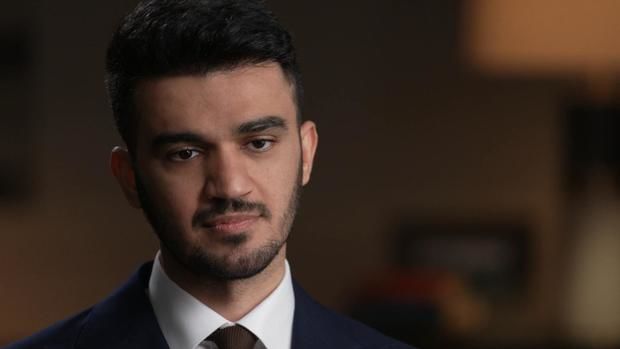
Their story recalls Washington Post columnist Jamal Khashoggi—a critic of Prince Mohammed. In 2018, a year after his coup, U.S. intelligence says Prince Mohammad sent a team to Turkey to lure Khashoggi to a Saudi consulate and dismember him. Saad told us that days later, before Khashoggi's murder was known to the public, he received a warning. A friend in a Middle Eastern intelligence service said another hit team was headed for Saad in Canada.
Saad Aljabri: And the warning I received, don't be in a proximity of any Saudi mission in Canada. Don't go to the consulate. Don't go to the embassy. I said why? Said, they dismembered the guy, they kill him. You are on the top of the list.
Saad says a six person team landed at the Ottawa Airport in mid-October 2018. He says, members of the team lied to customs about knowing one another and they carried suspicious equipment for DNA analysis. The team was deported. Canada seems to confirm at least part of this story, saying: "we are aware of incidents in which foreign actors have attempted to… threaten… those living in Canada. It is completely unacceptable."
Scott Pelley: Is that the way intelligence organizations work in this world?
Michael Morell: It's not a norm in this world. It's a norm for countries like Russia and North Korea; it's not a norm for almost any other country in the world.
Scott Pelley: Do you think Mohammed bin Salman fears you?
Saad Aljabri: He fears my information.
Saad told us his information includes a 2014 meeting between Prince Mohammed and the then head of intelligence, Mohammed bin Nayef. It was three years before the coup. Saad claims the young prince boasted to Nayef that he could kill the sitting king, Abdullah, to clear the throne for his own father.
Saad Aljabri: And he told him, I want to assassinate King Abdullah. I get a poison ring from Russia. It's enough for me just to shake hand with him and he will be done.
Scott Pelley: A poison ring from Russia?
Saad Aljabri: That what he say. Whether he's just bragging or, but he said that and we took it seriously.
By "we," Saad means Saudi intelligence took it seriously. The alleged threat, he says, was handled within the royal family. Saad told us he watched the meeting on a video recording.
Scott Pelley: Does this video recording still exist?
Saad Aljabri: Yes. I know where it is now. I know there are two copies of that. I know where they are.
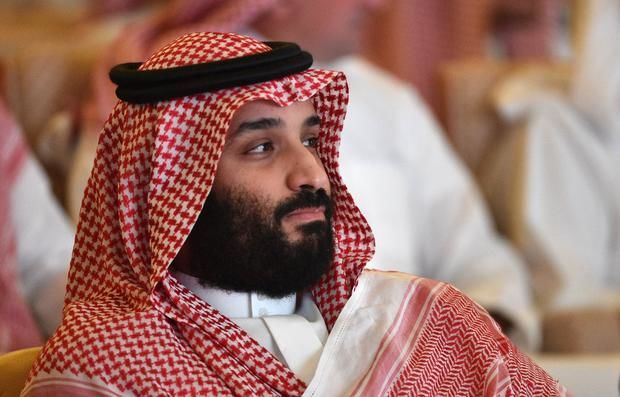
Prince Mohammed is 36 and wields unlimited power on behalf of his ailing 85-year-old father, King Salman. The prince is admired by some for allowing women to drive, permitting movie theaters and disbanding the religious police who once assaulted couples for holding hands.
Michael Morell: There's two groups of people in Saudi Arabia. There are those who are very happy with Mohammed bin Salman. The 70% of the population that is under 30. He is not popular with the old guard, with the royal family, because he changed the system.
But much of that change has been reckless. His war in Yemen has killed thousands of civilians in what the U.N. says may be war crimes. He invited Lebanon's leader to visit Saudi Arabia, took him hostage and forced him to resign. He detained hundreds of potential rivals until they signed over their wealth, jailed women calling for human rights, and murdered Jamal Khashoggi.
Saad Aljabri: I expect to be killed one day because this guy will not rest off until he see me dead.
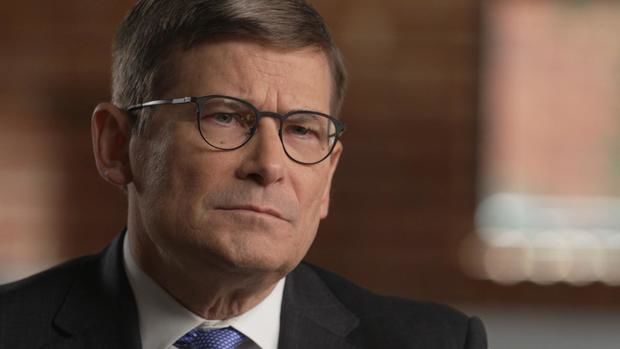
But what does America owe Saad Aljabri? We asked former CIA acting director and CBS News consultant Michael Morell, who worked closely with Saad from 2010 to 2013.
Scott Pelley: Is it too much to say that Saad may have saved American lives?
Michael Morell: He-- absolutely, Dr. Saad absolutely saved American lives. He saved Saudi lives, many of them, and he saved American lives.
Scott Pelley: Can you name any of those cases?
Michael Morell: The one I can talk about is the so-called printer cartridge plot.
In 2010, al-Qaida hid bombs in two desktop printers. They were in the air, as cargo, headed to the U.S. on two planes, perhaps intended to explode over American cities. But thanks to intelligence relayed by Saad Aljabri, the bombs were intercepted during layovers.
Scott Pelley: Are there any other examples of times that Saad had saved American lives?
Michael Morell: There are.
Scott Pelley: What are they?
Michael Morell: I can't talk about them because they're still classified.
Scott Pelley: Are there several?
Michael Morell: There are many. Many.
While working in that classified world, Saad Aljabri became enormously wealthy. Prince Mohammed typically accuses potential rivals of corruption. And Saudi entities are suing Saad in the U.S. and Canada claiming he stole as much as $500 million from the counterterrorism budget.
Scott Pelley: Did you steal the money?
Saad Aljabri: No.
Scott Pelley: If you didn't steal the money, how did you get so rich?
Saad Aljabri: You know, I have served a royal monarchy in a close proximity for two decades. Three kings, four crown prince. They've been nice to me. They've been very generous. It's a tradition in Saudi Arabia royal family. They take care of people around them.
Michael Morell: I don't know if Dr. Saad was corrupt in any way. I wouldn't be surprised if he wasn't because he's such an honorable man. But I also wouldn't be surprised if he was. Because everybody to some extent had their hand in the kitty. And King Abdullah allowed it, permitted it.
But in the Saudi lawsuit against Saad, the Canadian judge has said there is, "overwhelming evidence of fraud." And, so, she has frozen his assets as the case moves forward.
The Saudi government declined an interview, but in a statement, it said, "Saad Aljabri is a discredited former government official with a long history of fabricating and creating distractions to hide the financial crimes he committed… he implies that stealing was acceptable at the time. But it wasn't acceptable nor legal then, and it isn't now."
Saad says he's thinking only of his imprisoned children.
Saad Aljabri: I have to speak out. I am appealing to the American people and to the American administration to help me to release those children and to restore their life.
Saad Aljabri told us he's recorded a "death video" that reveals more secrets of the royal family and some of the United States. He gave us a short, silent clip of the video which, he told us, "could be released" if he is killed. It includes a message to Omar and Sarah, his imprisoned children.
Saad Aljabri: I told them, I'm sorry. I tried my best.
Scott Pelley: Does the United States, as a country, owe anything to Saad?
Michael Morell: Do I feel some obligation to Dr. Saad? Yes. Does the United States of America? The people at CIA do. The people at CIA do. You know, whether the country does or not, I don't know. It's a little bit of a hard question.
It's been hard for presidents to stand up to Mohammed bin Salman. Neither the Trump nor Biden administrations publicly sanctioned him after Khashoggi. Saudi oil isn't as important as it once was, but countering Iran is — which has led to a certain tolerance of a menacing prince.
The Embassy of the Kingdom of Saudi Arabia, in Washington, D.C., responded to a broad range of questions from 60 Minutes with the following written statement:
"Saad Aljabri is a discredited former government official with a long history of fabricating and creating distractions to hide the financial crimes he committed, which amount to billions of dollars, to furnish a lavish life-style for himself and his family. He has not denied his crimes; in fact he implies that stealing was acceptable at the time. But it wasn't acceptable nor legal then, and it isn't now. The reforms led by the Crown Prince have put an end to this type of gross corruption. Today, the nation's revenues are used to fund unprecedented economic and social development, invest in technology, contribute to the diversification of the economy, the empowerment of youth and women, and the building of a nation in which tolerance, moderation, innovation and entrepreneurship prevail -- the antithesis of what Aljabri was seeking when he committed his crimes."