

Generation America: The Models Changing an Industry
“I always knew I’d be on the cover of the September issue,” says Precious Lee, exuding the serene self-assurance of a woman who’s gotten used to her dreams coming true. “I won’t say I never doubted it would happen, but on a deeper level, I just knew.” From one angle, what Lee says makes perfect sense: The Atlanta native is not only stunning-she also boasts that oh-so-rare talent for transmitting charisma directly through the lens. The same can be said of the seven other distinctively transfixing models who joined Lee at the Vogue offices for this celebratory shoot, staged as New York City began shaking off its pandemic doldrums. “This is so nuts,” says Kaia Gerber, cracking up as she and her fellow cover stars shimmy around cubicles in their formalwear, vibing to a disco beat. And, from a different angle, a historical one, it is nuts: To see Anok Yai, Ariel Nicholson, Bella Hadid, Lola Leon, Sherry Shi, Yumi Nu, and Gerber and Lee posing together, collectively representing what you might call American beauty now, is to feel present at the revolution. The barricades have fallen. Welcome to the new world.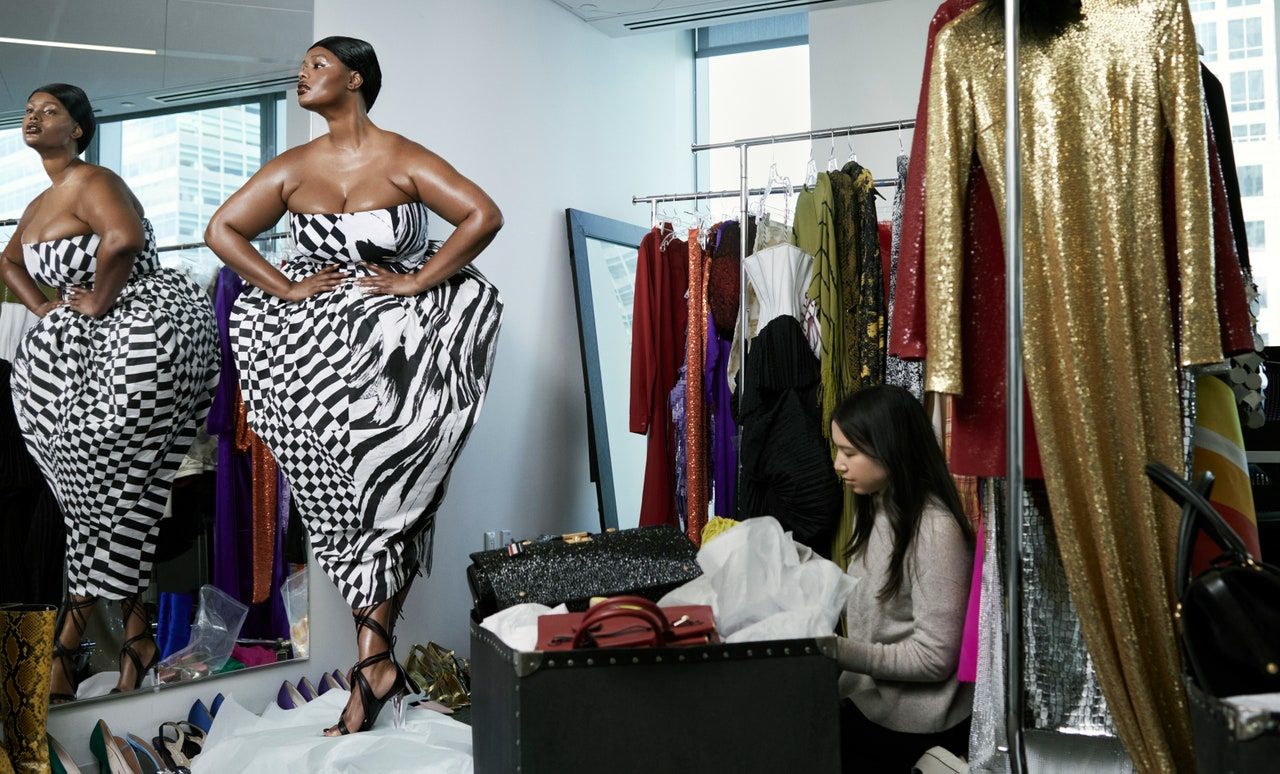
But what sort of revolution is this, exactly? Chromat designer Becca McCharen-Tran talks about “exploding beauty norms.” Gypsy Sport’s Rio Uribe sees fashion as one front in a fight for representation and equal rights. Christopher John Rogers believes the industry is simply catching up with our many-peopled reality. These are just a few of the American designers who have led the push for “big tent” casting, inviting models of all races, sizes, and gender identities into their fold-and in so doing, forced an industry-wide reckoning with a question: Who gets to be a model?
“I feel like fashion has gotten the message that casting models from diverse backgrounds is the absolute bare minimum,” says McCharen-Tran, whose all-inclusive ethos has been a signature of her bodywear brand since it launched in 2010. “But what people are starting to wrap their heads around now is that ‘diversity’ isn’t the point-the point is respect; the point is dignity.”
It is tempting to pan across the faces on these pages and see the shattering of beauty norms: There’s no dominant type, no singular standard for readers to measure themselves against. For far too long, that standard was bone-thin, painfully young, cisgender, and, by an overwhelming margin, white. Such uniformity now seems outrageous, both antiquated and out of sync with a culture rejoicing in the hard-fought visibility of people who mirror the splendid multiplicity of our modern global society. Yet the mind snags on this idea that beauty norms have gone out the window: There is still, of course, currency in being a slim, conventionally pretty white woman, as most-followed female TikTok stars Charli D’Amelio and Addison Rae might attest. On Instagram, lingerie ads featuring women with voluptuous fat rolls alternate with others for products promising speedy post-pandemic weight loss. There’s work yet to do on this front.
On the other hand, it’s insufficient to describe the radical makeover of runways and magazines in terms of diversity and inclusion-words that can carry a whiff of tokenism about them. What stands out about the women on this cover is that they’re not reducible to kind; each is a unique superstar with her own story to tell, of which her beauty is merely a part. That’s the breakthrough we’re witnessing: the transformation of the model from object to subject. For the first time in history, she is meeting our gaze.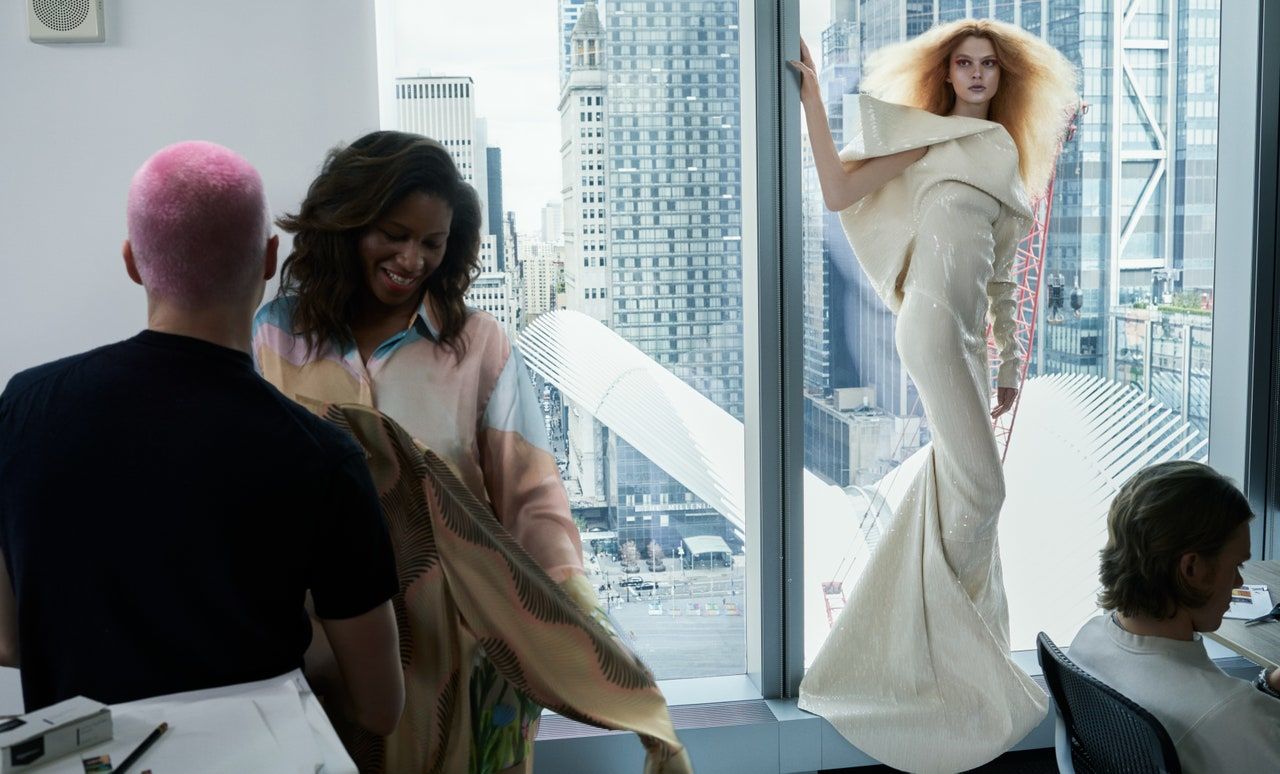
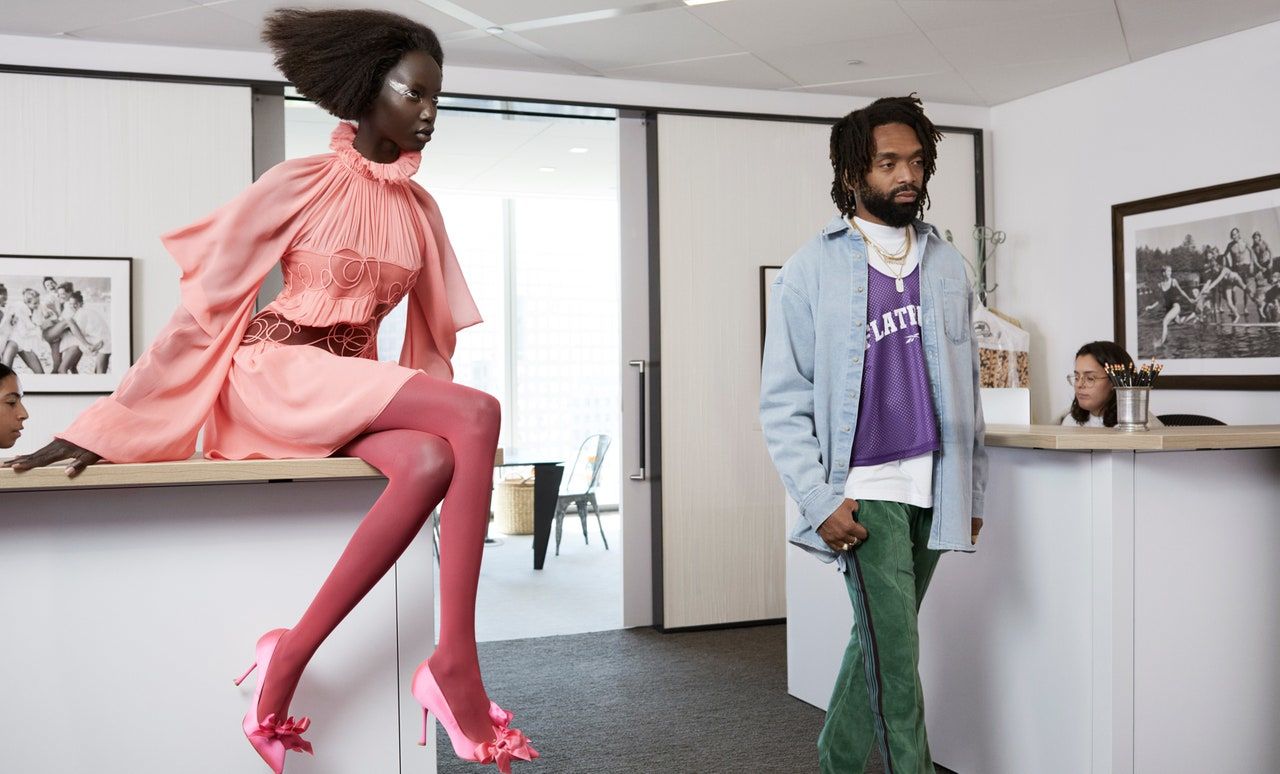
Virtually everyone I spoke to for this story-models, designers, casting directors, agents-credits social media with upending their business. Platforms such as Instagram have not only allowed users to voice a previously pent-up demand for broader representation; as casting directors Daniel Peddle and Drew Dasent point out, they have changed the very nature of modeling. “People notice a model, and they look up her profile,” says street scout Peddle, who formed an agency, The Secret Gallery, with Dasent in 2001. “That’s been incorporated into the casting process,” Dasent adds. “Now brands look for models who are entertaining on TikTok or who align with their values-if a company is trying to position itself as a leader on sustainability, they’ll want to use models who are vocal on the issue of climate change.”
Social media’s kaleidoscopic influencer economy has also given designers unprecedented freedom to cast whomever they like-whatever size, age, ethnicity, or gender they may be-in their shows or campaigns. “There was never only one type of person who had that thing,” says designer Victor Glemaud, “that magical talent to elevate the clothes they happen to be wearing. If you look at someone like Precious, you think-God, she always should have been a star. Why were we so stupidly fixated on who could fit the samples?”
But social media is not, on its own, responsible for the tectonic shifts rattling the fashion landscape. You have to account for star quality-that intangible that famously prompted makeup artist Pat McGrath to pluck Paloma Elsesser from a sea of Instagram selfie-posters. “People are dead wrong if they think modeling is as simple as standing in front of a camera,” attests Yai, who was herself discovered when a shot of her at the 2017 Howard University homecoming celebration went viral. “Like any art, it’s a form of expression-it’s like silent acting, really,” she says. “I didn’t get where I am just because of Instagram.”
Meanwhile, the same apps democratizing beauty have also given us “Instagram Face,” as writer Jia Tolentino described the platform’s omnipresent filtered pout, along with #thinspiration and an army of trolls with nothing better to do than, say, hurl invective at Lola Leon for not shaving her armpits. (“Yeah, come at me, bro,” says Leon of this and similar incidents.) And to be clear: It wasn’t an algorithm that determined that the face of modern beauty in fashion would change; it was an emerging generation of American designers ardent in the belief that fashion belongs to everyone-and that it’s better, fresher, and more interesting when it “incorporates a range of perspectives,” as Christopher John Rogers says. This view has since been given establishment imprimatur by the likes of Gucci’s Alessandro Michele and Balenciaga’s Demna Gvasalia, but it generated here, in the States, among the same millennials and Gen Z’ers who have pushed social-justice movements such as #MeToo and Black Lives Matter to the political foreground.
“It’s like street protest taken to the runway,” says Rio Uribe, whose spring 2021 Gypsy Sport show-a virtual event, due to the pandemic-featured an all-Latinx cast, with the designer making a special effort to include Indigenous models in the mix. “My generation, we’re not going to support a fashion institution if we don’t feel seen, or if we feel like the ‘diversity’ is inauthentic.” As in, the people modeling the clothes must bear some relation to the people who created them-and to the customer. “With our brand being built on principles of inclusivity, we understand the importance of representation in an industry that has historically been exclusive,” says the team behind the New York City–based brand Area, who preferred to speak collectively. “Area resonates with so many different people around the world, so it is important that our casting is an accurate reflection of this.”
These shifts in model casting “track with changes we’re seeing all across our culture,” as casting director Jennifer Venditti observes. Long one of the fashion industry’s secret weapons for finding “real people” to star in shoots and shows-experience she now brings to bear working with film directors such as Andrea Arnold and the Safdie Brothers-Venditti believes that current disruptions are a byproduct of the rise of more conscious forms of consumption. “We want our purchases to mean something,” she says. “Likewise, the models who are connecting right now-there’s always a person beyond the façade. People are asking, What do you stand for? Where do you come from? Who are you?”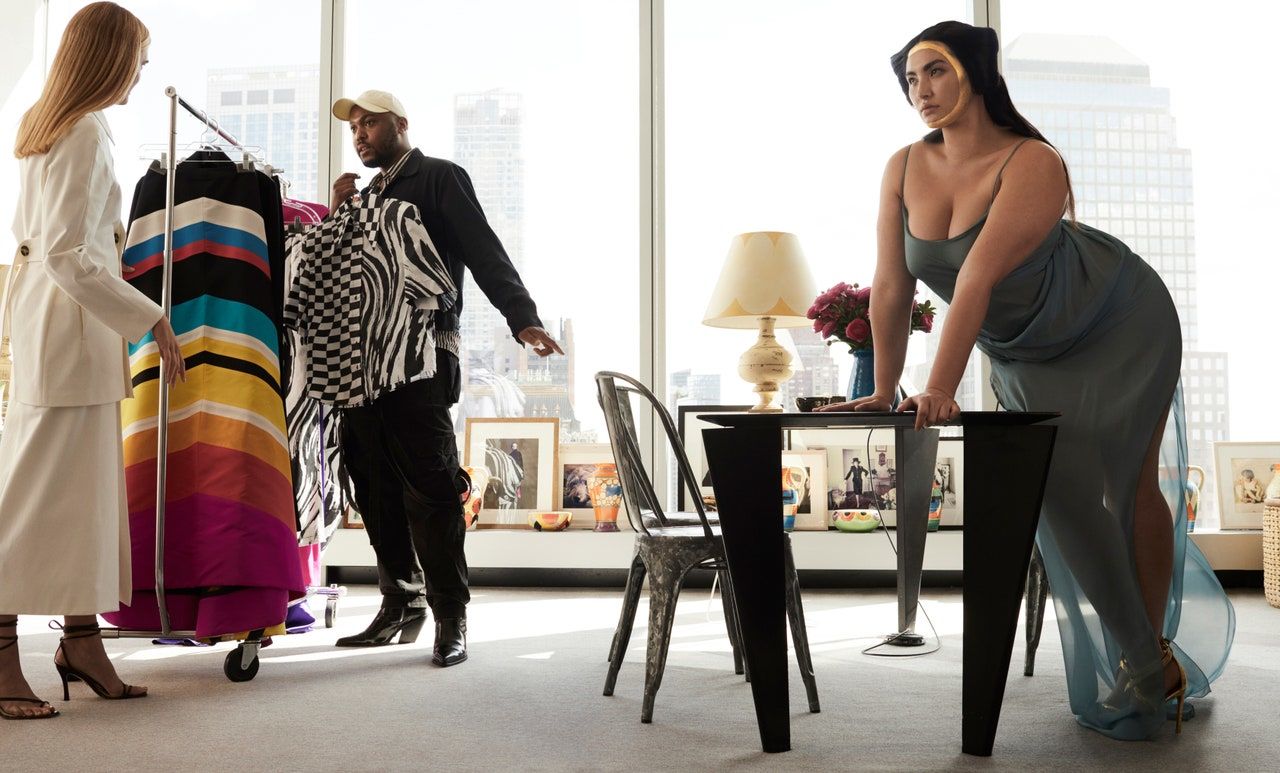
Lola Leon, daughter of Madonna, has followed in her mother’s footsteps as a dancer and an advocate for LGBTQ+ rights, but in all other respects stubbornly insists on cutting her own path. Yai, born in Egypt while her family awaited political asylum in the U.S. and now a muse to designers such as Valentino’s Pierpaolo Piccioli, took up martial arts during the pandemic but also likes to paint, drawing inspiration from Renaissance masters. A similar creative streak runs through Sherry Shi, though her taste favors anime-she might become an animator, she says. Yumi Nu is a singer-songwriter who just released the summery single “Pots & Pans” and plans on launching an ethical plus-size clothing line; Kaia Gerber reads books backstage at fashion shows and forged her close friendship with Ariel Nicholson out of a mutual dislike of small talk. “We like talking about ideas,” says Nicholson, a budding writer and actor. Bella Hadid likes to journal in the form of poetry-“It’s a way of getting at my emotions without it being total nonsense,” she explains-and Precious Lee really likes her hometown, championing Atlanta as a cultural nerve center to rival New York and L.A. (“You’ve got to come down and see what’s going on here,” she insists.) What all these women share, however, is a fierce desire not to be pigeonholed.
“Everyone wants to see my story as some kind of fairy tale,” says Yai, rolling her eyes.
“I get a lot of ‘Oh, another dumb model,’ ” says Gerber.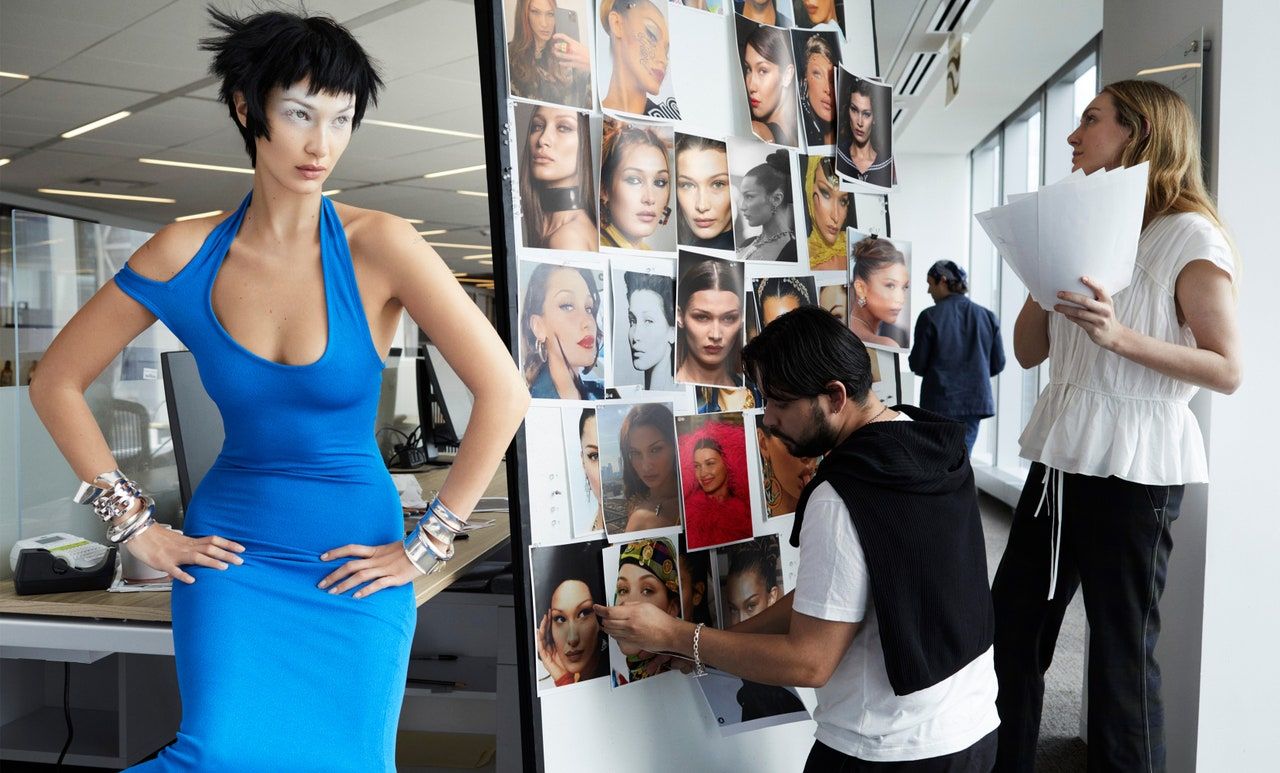
“People think I’m this talentless rich kid who’s had everything given to her, but I’m not,” says Leon. As we speak, the 24-year-old is slouched on a sofa in a corner of the Vogue offices, her firm eyebrows knit and fists curled as if anticipating a punch. As she runs down a list of ways she’s independent from her mother (she paid for college herself; she lives in Bushwick so she can disappear into its polyglot creative community), it’s like she’s aiming bullets at a cardboard caricature of herself-an attitude that vanishes as soon as Leon is asked about her dancing. “A teacher of mine made me understand movement in a whole new way,” says Leon, her face now open, her edges softened. “You’re using your body to define the space around you-to change it. That’s a very naked form of expression,” she adds.
Using your body to change the space around you. This, it so happens, is a supremely apt description of the role Precious Lee and Yumi Nu have been thrust into. Lee is one of the few plus-size Black women to appear on the cover of Vogue, Nu the first plus-size Asian-American. Their very flesh is charged with cultural significance-a situation Lee mostly shrugs off with characteristic aplomb, noting that “Black women have always embraced their curves,” but that Nu admits she finds both liberating and constricting. “I cherish the platform I’ve been given, and it makes me happy-like, so happy-to know there are larger Asian-American girls who can look at me and see themselves,” says Nu. “But-I guess there’s a part of me that feels like-” she breaks off, filling the silence with a gentle smile, and then chooses her words carefully. “Labels can be limiting. In an ideal world, maybe we wouldn’t have them.”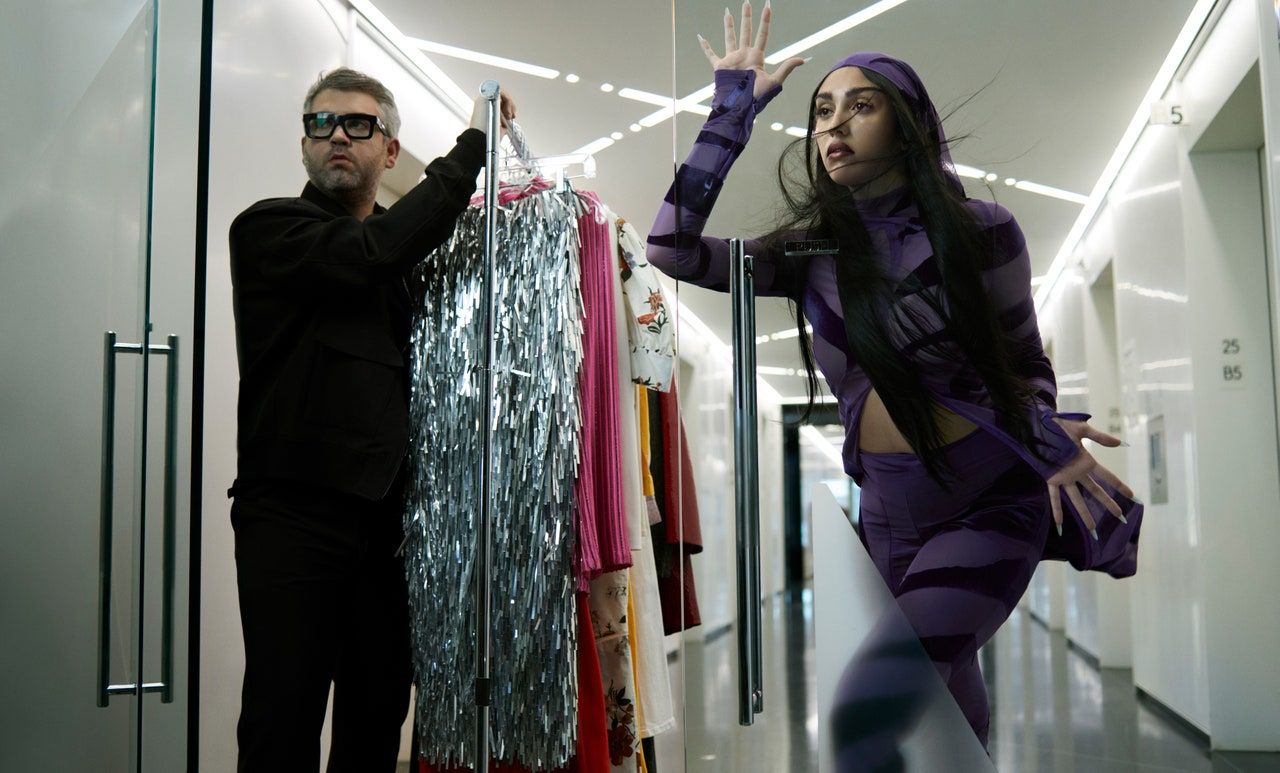
Nu’s caution is understandable: It can seem off-limits to hint at any sense of ambivalence or ambiguity at a moment when much of the political discourse revolves around brandishing identity like a flag. Saying you might sometimes prefer to be seen for yourself, rather than as an ambassador for your community, can be read as disowning that community’s fight against oppression. Which, for plus-size women, is both serious and material, as Virginia Sole-Smith, author of The Eating Instinct, points out. “We tend to think about body positivity as women learning to see the beauty in themselves no matter their shape, but it grew out of a much more radical movement,” she says. “There are civil rights issues associated with weight stigma-like medical discrimination and the fact that people with larger bodies get paid less.”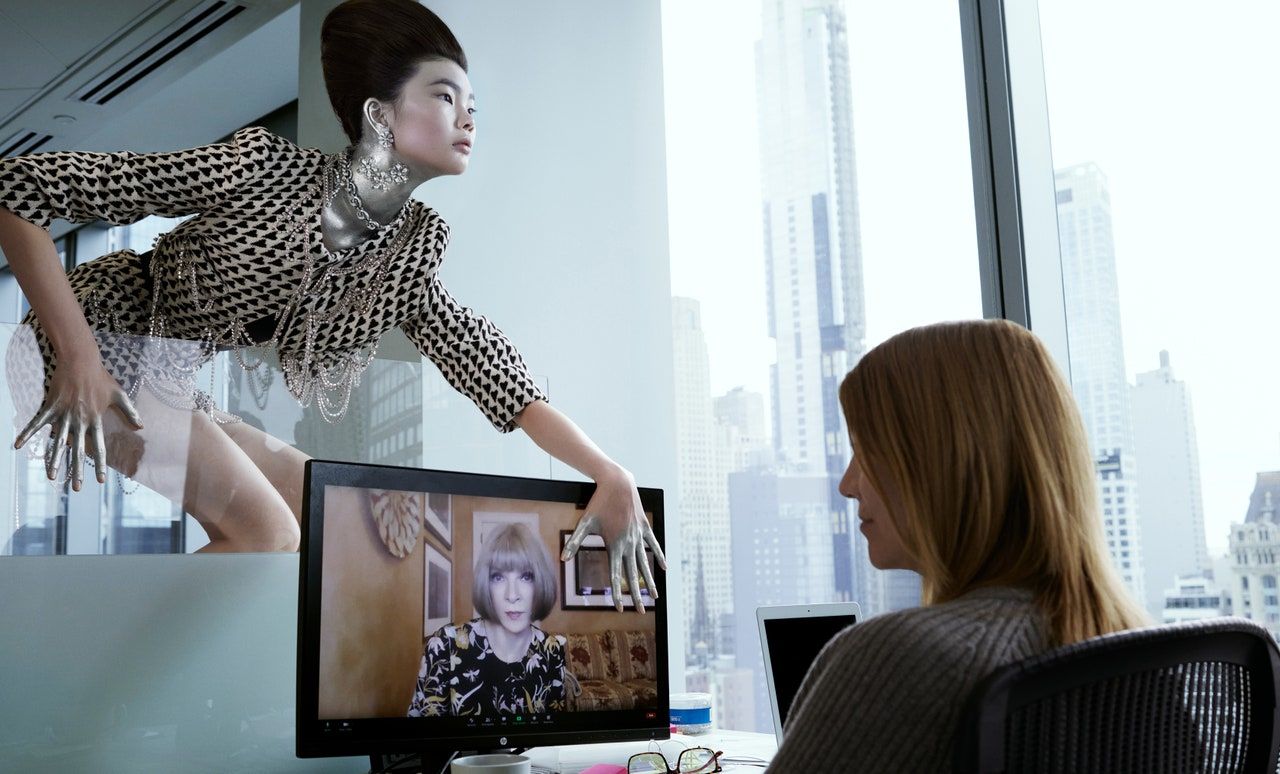
None of that will change as a result of a Vogue cover. Nor will racism disappear, or the 100-plus anti-transgender bills that have been introduced across the country this year be set ablaze by their sponsors. “There are limits to what ‘representation’ can do,” Nicholson states bluntly-and she would know, having been in the public eye since she was 13, appearing in the PBS documentary Growing Up Trans. When she began modeling a few years later, she says, she embraced her role as a standard-bearer because she was passionate about transgender rights and believed trans visibility was important to furthering them. And she still believes that-up to a point. “Obviously it’s a big deal being the first trans woman on the cover of Vogue,” she says, “but it’s also hard to say exactly what kind of big deal it is when the effects are so intangible.”
“People attach a lot of importance to symbols,” offers her friend Gerber.
Nicholson agrees with Gerber but also counters that treating someone as a symbol enacts its own form of erasure. “I’ve been put in this box-trans model. Which is what I am-but that’s not all I am.”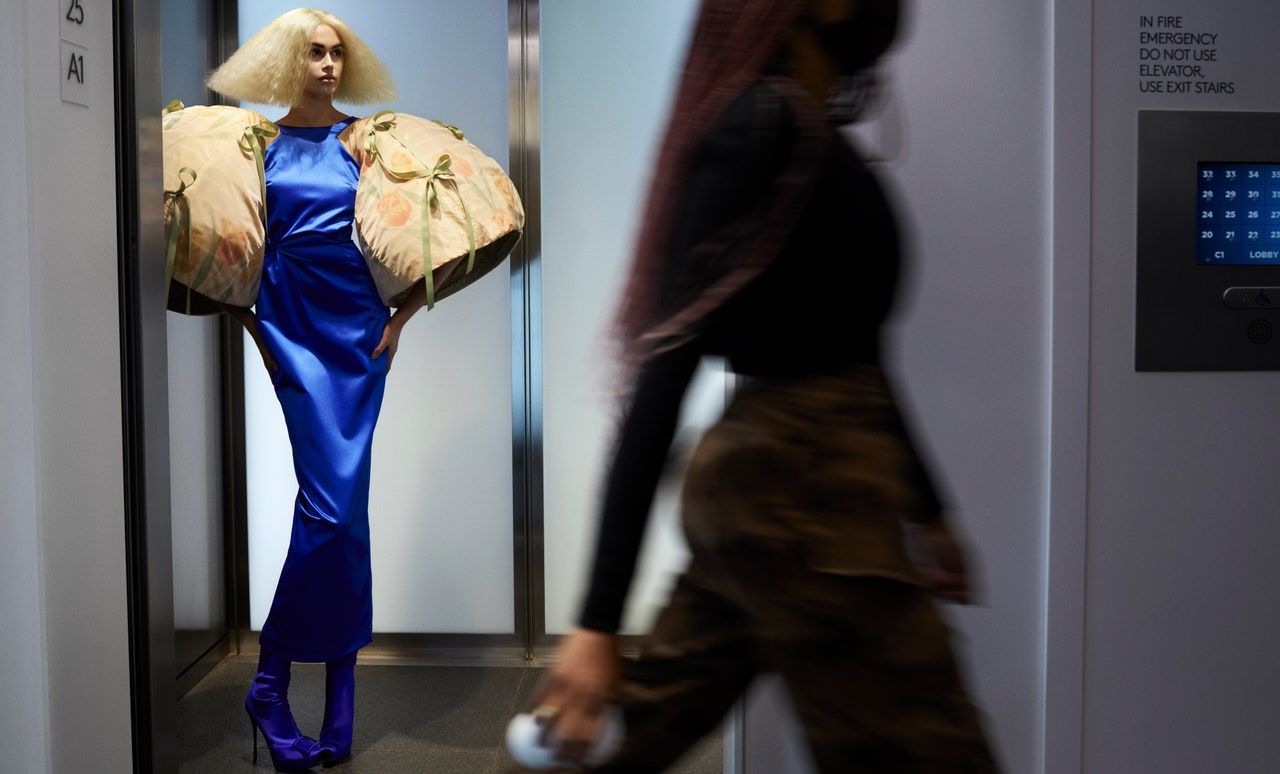
“There’s this oscillation-I want to be recognized as a trans person or a Black person or what-have-you, but I also don’t want to be homogenized as trans or Black,” explains Kwame Anthony Appiah, professor of philosophy and law at NYU and author of such books as The Lies That Bind: Rethinking Identity. “Right now, in the name of justice, we’re very focused on these group identities-but we may be seeing a move in a new direction where those identities are acknowledged and celebrated, but as an aspect of who a person is, and something she has the freedom to interpret in the way she sees fit.”
If the evolution of Gypsy Sport casting is anything to go by, Appiah’s instincts are correct. The brand’s designer, Uribe, has always eschewed standard types-indeed, his total lack of interest in securing “tall, skinny, blonde girls” to model his gender-fluid designs helped persuade Leon to make her runway debut in a Gypsy Sport show in 2018, after years of refusing similar requests. But even he sees his process becoming more nuanced of late. “The scene Lola and I are part of, in Bushwick, the word everyone uses is intersectional, and that’s what I’m going for now,” Uribe says. “In the last couple years, I’ve shifted toward working with people who represent the diversity within ‘diversity.’ That’s less about the look than it is the journey someone’s on-maybe you’re fighting for trans rights, and that’s why you deserve a spot on my runway.”
Around the same time this new mode of casting was picking up steam, professor of philosophy Heather Widdows published Perfect Me, which sounded a stern cautionary note about expanding the definition of beauty. As well as reminding readers that today’s subversion may become tomorrow’s norm-think Kim Kardashian’s hourglass replacing the early aughts’ size 00 as the figure du jour-Widdows made the provocative argument that embracing more varied kinds of beauty merely reinforces the idea that being beautiful is a woman’s primary “ethical imperative.”
“If you look at girls’ New Year’s resolutions a century ago, they were mostly things like ‘Be more caring’ or ‘Think before I speak,’ ” says Widdows. “Whereas now we’ve shifted almost all our sense of what it means to self-improve onto the visual: If you don’t look good, that must be because you’re not working hard enough at it, and that implies you’re failing morally.”
Perfect Me is very convincing-and, frankly, kind of a downer. But the book also raises a hopeful possibility: What if, rather than trying to “shatter beauty norms,” we put beauty back in its proper place and assert other, more substantial qualities as the ones we most admire-and what if, by golly, that’s exactly the paradigm shift happening right now?
“When you’re casting, the question is always ‘Can she carry the clothes?’ ” notes Christopher John Rogers. “But that means something different than it used to. It’s not about a particular look or even a particular identity that someone represents-you’re embracing a model for what she does as a component of who she is. Her story becomes part of the fantasy.”
Among the models on this cover, Bella Hadid serves as something of an éminence grise, having reigned as an industry star for several years. Although she admits it’s hard to disentangle changes in the business from her own evolution-Hadid was 17 when she started out and is 24 now-she feels newly empowered to be herself. “It’s like there were two Bellas-me, this person in the process of figuring out who she was, and ‘Bella Hadid’ the alter ego, who was, I dunno, a sexbot who goes out every night?” She laughs. “I have insane social anxiety! Partying is not my thing, but I felt enormous pressure to project that image because I assumed that’s all people wanted from me. Now I don’t want to live in that box. I definitely feel like I’m allowed to speak.”
The stereotype of the dumb model was never accurate in terms of intellect, but it did describe what has long been stipulated of models: that they remain “dumb” in the sense of mute, a blank screen onto which we can project our own desires, hopes, anxieties. It’s not that models lacked opinions prior to, say, 2019; as Kaia Gerber notes, her mom, Cindy Crawford, “always had plenty to say-she just didn’t have Instagram.” It’s simply that the job description was to be silent and lovely and, excepting a few superstars, interchangeable with all the other silent, lovely girls. No more.
“I’ve manifested this much by believing in myself and standing my ground about who I am-no compromises,” says Lee. Like all the women on this cover, she embraces the symbolism of this moment but is also keen to move on-to the next creative pursuit, the next dream. “Maybe some people think this is a trend, and everything’s going to go back to ‘normal’ soon,” she adds with a shrug. “Sure. But good luck telling us to shut up. Why would we?”