

Hong Kong should use cruise ships to increase housing supply
In response to Chief Executive John Lee Ka-chiu’s commitment to resolving Hong Kong’s perennial housing crisis, the Tanner Hill Workshop has another novel, near-term solution formulated under the guiding principles of a short timeline and being cost effective. Our proposal is aimed at addressing the shortcomings in the current government housing supply plan for the next 10 years, which we see as “top-light, bottom-heavy”.
Our team has examined the availability of economical, disused second-hand cruise ships that are currently being put up for sale at highly discounted rates owing to the pandemic-depressed cruise market.
Dwellings provided on such vessels could offer a ready solution to our shortage of land for housing, particularly in urban areas. Being moored at sea, the vessels would not take up scarce urban land resources.
Additionally, cruise ships come with ready amenities, such as swimming pools, gymnasiums and cinemas, which can enhance the quality of life of those on board. If they were open to the public, such amenities could also benefit residents of the neighbourhood and reduce demand for land for such amenities.
Disused vessels are available immediately and are mobile in the sense that they can be strategically located along our coastline to serve needs in different geographical areas and on a flexible timetable.
The major challenge is to find stable and safe locations to moor the ships.
Putting safety first, including managing the risk of collision with other vessels, or even sinking during extreme weather such as typhoons, berths near existing large typhoon shelters would be ideal. Kwun Tong Typhoon Shelter in the outer part of the Kai Tak Nullah, being tentatively planned as a future watersports centre, could be considered.
We estimate the shelter could accommodate a few cruise vessels, each about 250m long with about 2,000 cabins, without stress to other vessels during inclement weather.
Existing berths can also be found next to China Merchants Pier in Kennedy Town or the Kwai Chung Container Terminal. Other possibilities could be around the Cheung Sha Wan berth area, opposite the government dockyard or within the Aberdeen South Typhoon Shelter, where the Jumbo Floating Restaurant used to anchor. These anchor areas are just examples and by no means exhaustive.
Cruise vessels bought using the public purse or by philanthropists championing such social causes should be maintained as part of the government fleet, enjoying economies of scale to keep running costs low. Income could be further generated through public-private partnership models similar to the leasing out of shopping spaces in public housing estates.
The long-term housing solution should be a dual track one, with private housing for the more prosperous top 20 per cent of the population and social housing for the remaining 80 per cent. A basic standard of living should be upheld, and the cost of future social housing should be tied to affordability, with the goal that most residents should be able to own their own flat.
However, before the underserved demand is satisfied by the completion of mega projects in the northern New Territories, readily available cruise liner dwellings could serve as transitional housing for groups such as those living in subdivided flats waiting for public housing allotment, young people at the start of their career, or people displaced while waiting for their flats to be redeveloped by the Urban Renewal Authority.
The Hong Kong government is currently undertaking a study to redevelop or gentrify the Yau Tsim Mong area. Urban renewal undertakings in these old, densely populated areas pose several serious challenges because of the large number of people living and working there and their reluctance to give up the convenience of the location, as well as the sense of community and belonging they have enjoyed over so many years.
Take, for example, Man Wah Sun Chuen, popularly known as bat man lau (eight man buildings) in Jordan, which was recently in the news because of structural problems. Urban renewals efforts to rehouse the 4,238 households, according to the 2016 by-census, could be resolved by using two 2,000-cabin cruise vessels as decanting sites.
Affected residents, 85 per cent of whom work in traditional urban areas, may well support the scheme which presents a much-improved alternative quality living environment not too far away. The investment of under HK$1 billion, depending on the age and facilities of the two cruise vessels to be acquired, could probably be justified when Man Wah Sun Chuen is redeveloped into a commercial and residential complex in the prime West Kowloon central business district and cultural hub.
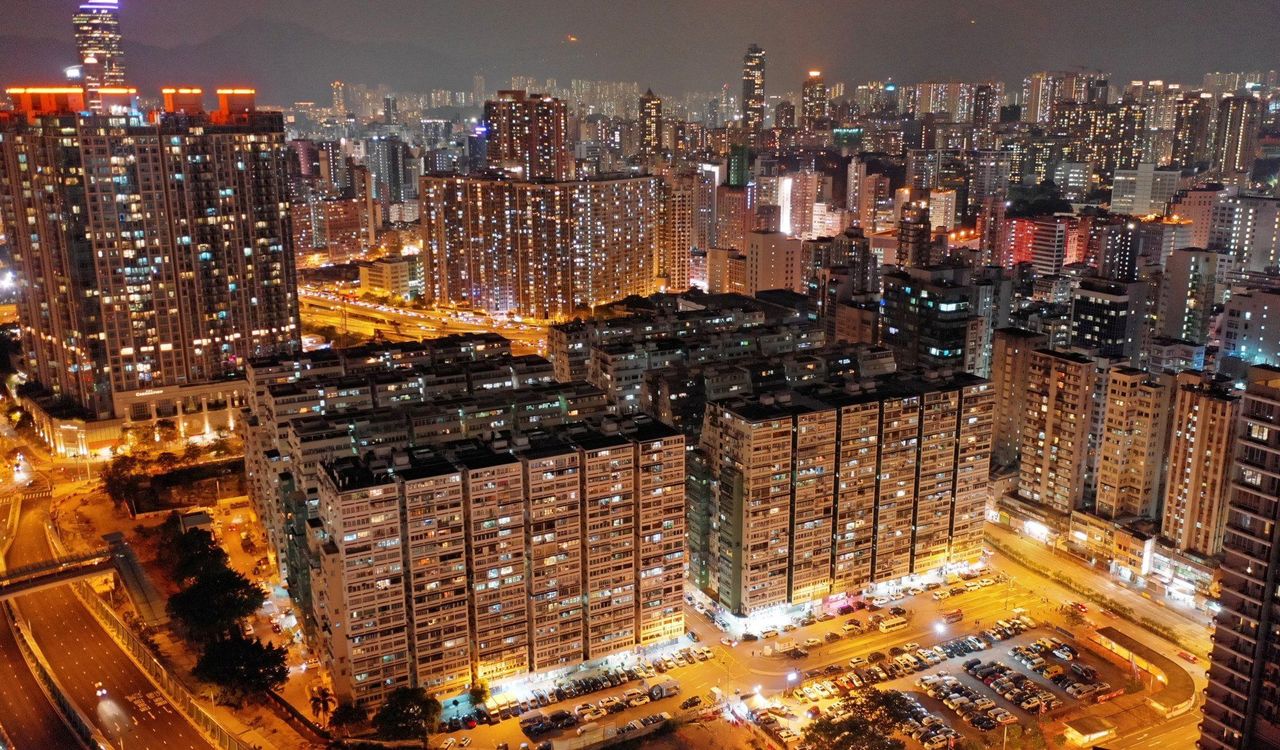 Man Wah Sun Chuen in Jordan was one of Hong Kong’s early private housing estates.
This proposal may sound unconventional, but it is cost-effective and can be implemented in the near term. Some of the technical hurdles, such as sewage, drainage, water and power supply, and ongoing maintenance, should not be underestimated – but they are surmountable.
The key factor for success may well depend on a champion coming forward who has the resources, power and will to get the project off to a quick start. The financial resources involved should be modest when the wealth in our society is considered.
When mega projects in the northern New Territories and the waters off Lantau Island are completed and can provide a decent living and working environment for the masses, then the vessels could be recommissioned and used for cruises around the Pearl River Estuary or other Asian waters to facilitate cultural and heritage exploration in the Greater Bay Area or nearby countries.
Hopefully, a white knight will appear soon to realise the dream of solving our near-term housing problems and becoming a city of hope and happiness.