

How to plan a bathroom – a complete guide designing your perfect family bathroom or chic en suite
It was once an afterthought – often contained to a shed in the garden. But now, after the kitchen, the bathroom is probably the most important room in the house in terms of resale value.Which is why it’s well worth bookmarking this guide to how to plan a bathroom.
As we seek to make the most of precious downtime, its status has been raised. No longer driven by purely practical needs, many of us are renovating our bathrooms with relaxation and pampering in mind.
As well as simple renovations, we’re also planning more extra bathrooms and en-suites. Whatever your reason, installing a new bathroom is a serious undertaking and can be deceptively tricky. It requires quite an array of fittings and technical skill, often in a very compact space. For this reason, carefully planning from the start will prevent costly mistakes and changes down the line.
Follow our simple rules and you’ll soon be enjoying a bathroom that will be a joy for years to come. And if you are planning a makeover, our bathroom ideas will provide more food for thought.
1. Assess your bathroom needs
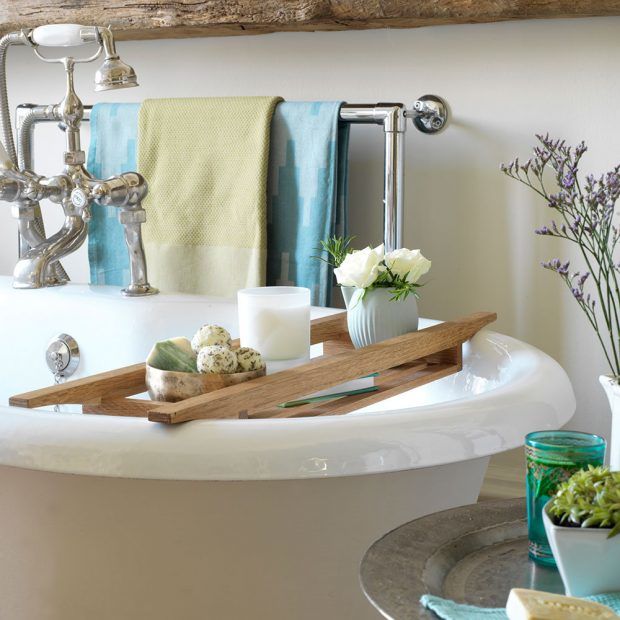
Start by thinking about who will be using the room, as this will have a big bearing on the scheme you finally choose. Is it to be an en-suite shower room for two? Or a family bathroom that will require a bath and plenty of storage for toys?
A spa-style sanctuary will require a long list of specifications and fittings that could include a bath, separate shower, double basins, and heaps of storage, while a guest bathroom may just require a shower and loo.
Next, ask yourself what sort of space you hope to achieve. Are you seeking a haven to escape to, or are you more of an invigorate-and-energise kind of person? This will affect the fixtures, fittings and colour scheme you choose.
‘Forget about how you currently use your bathroom, and instead imagine how you would like to use it,’ says designer Hayley Tarrington. ‘Draw on your experiences when you’ve visited great spas, for example, and visualize how you would like your new scheme to function.’
2. Measure up your space
A scale plan of your space is a good place to start. Measure carefully as accurate dimensions are key and include features that are likely to affect the design, including windows, chimney breasts and doors.
Cut out to-scale shapes of everything – loo, basin, bath and shower enclosure, for instance – and rearrange them until you find a layout that works best. Incorporate plenty of space between the elements and consider how the room will work with more than one person in there at the same time.
3. Ask the experts
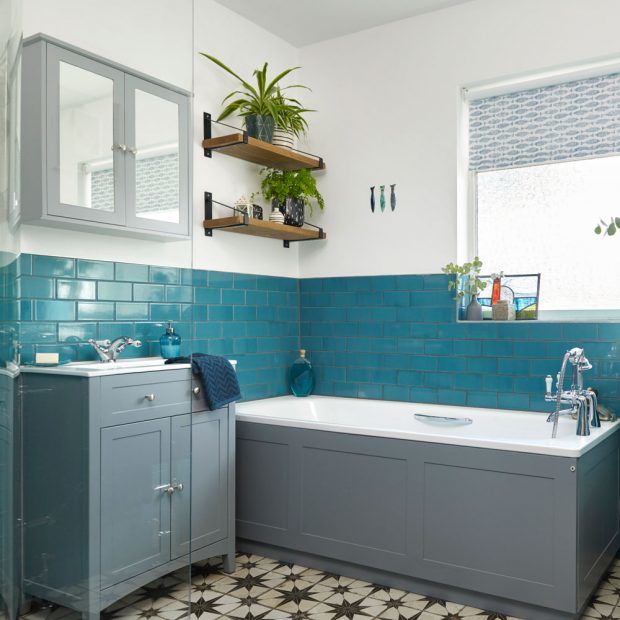
If you’re thinking about how to plan a bathroom, it’s best to seek out expert advice sooner rather than later. Visit local bathroom showrooms and websites – bathroom designers are great sources of information and advice.
They’ll be able to tell you about the latest materials and technology and will have lots of solutions for compact or awkward spaces. They’ll also have plenty of experience in maximising space while at the same time minimising costly mistakes.
For more practicalities, such as water pressure, soil stacks other planning issues, a builder or plumber should be able to help. Find a recommended tradesperson by visiting Trust a Trader’s website.
4. Choose a layout
While it might seem daunting, getting your bathroom layout right from the start will make the difference between an adequate design and one that ticks all your boxes. But don’t change a layout just for the sake of it. If it works well for you, keep it. It’s a much cheaper option, too, as moving waste and water pipes can be expensive.
Replacing fittings, flooring and tiles or repainting walls is a quick way to get a refresh. If your layout isn’t quite right, think about the ways you might be able to make small but effective changes. Rehanging doors or fitting sliding ones is an excellent way to gain space, for instance.
Finally, bear in mind how your needs might change in the years to come. Just because you don’t need a bath in your life right now… it might not always be the case. Your family might grow, or indeed you might be selling, in which case a bath will have broader appeal.
5. Seek out inspiration
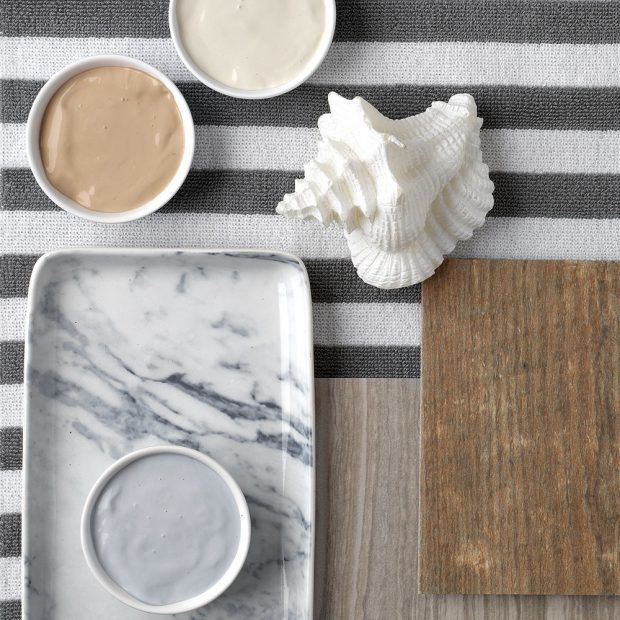
Choose your style early on as this will help narrow down the choice of fittings to consider. Your main options are period style, classic or a contemporary look. Hotels, particularly small boutique ones, are a fabulous source of design inspiration, so scour their websites for looks you love. Quite often they’ll feature a lot packed into a compact space, so you’ll probably pick out a few layout tips, too.
Bring together a visual checklist of what appeals to you, whether that’s an Eastern-Zen look, or something more Scandi-inspired. ‘This will really help formulate your ideas for the look,’ says Hayley Tarrington. ‘It’s easier to show someone a mood board to express your vision.’
Talk to friends who have completed similar projects about what they love about their new bathroom, and to discover the pitfalls and problems they may have encountered along the way.
6. Be realistic about your space
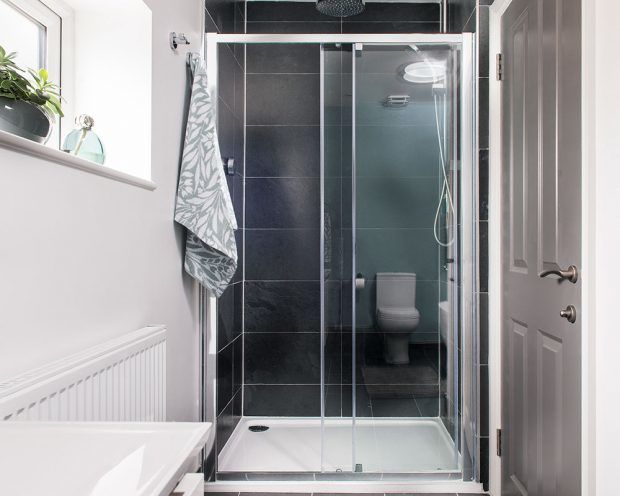
There’s no point pining for his-and-her sinks, a statement walk-in shower or a double-ended roll top if they won’t fit. The truth of the matter is it isn’t going to be possible in the most UK bathrooms – apparently the average footprint is about the same as a king-size bed.
Don’t cram in fittings (this will only make the room feel smaller) and research products that will help you make the most of your square meterage, such as wet-room style showers or Japanese-style square tubs.
7. Remember, ventilation is important
Sam Ball, Marketing Manager at Utopia Group, often finds people overlook the ventilation in their bathroom, only to regret it later. ‘it’s so important in a bathroom with furniture, as condensation can damage wood,’ she says. ‘An open window alone is not enough.’
‘You certainly don’t want the bathroom to become damp, especially an en suite placed so close to the bedroom, which is why extraction needs to be considered,’ adds Chris Payne, Senior Designer at Ripples.
‘Make the room well ventilated, as you certainly don’t want steam flowing in to the bedroom. Nor do you want your extraction to be too loud.’
Our guide to how to get rid of damp will help you avoid the pitfalls of a damp issue.
8. Factor in storage
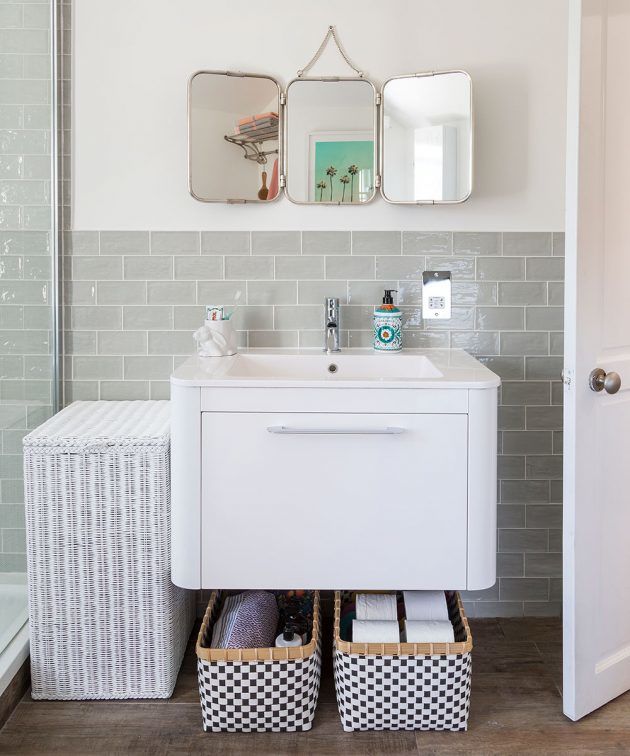
Storage is the key to a successful bathroom – and no, a minimal glass shelf won’t be enough! Toiletries never display well (unless you’ve taken out shares in Aesop or Jo Malone), nor do shampoo bottles standing on the floor of the shower. A substantial vanity with space for extra towels is a smart buy.
‘Mirrored cabinets will allow for you to store products, as well as charge toothbrushes and electric razors,’ advises Chris Payne. ‘Niche storage in the walls will also ensure that you can store bottles discreetly when in the shower.’
9. Consider your bathroom lighting
As bathrooms are often placed next to the bedroom, any bathroom lighting ideas should be considered carefully. You don’t want bright lights flashing on in the middle of the night – it’s not comfortable for the person taking a trip to the bathroom, or for the person asleep next door bedroom.
‘I would suggest that you consider having different levels of lighting,’ suggests Chris Payne. ‘Then, if you’re taking a late-night trip to the bathroom, you can turn on the low level lighting without waking up others – or yourself – too much!’
‘Some of the lighting could be operated by a motion sensor, meaning there is no fumbling around for a light switch.’
10. Tiles are the easiest way to follow trends
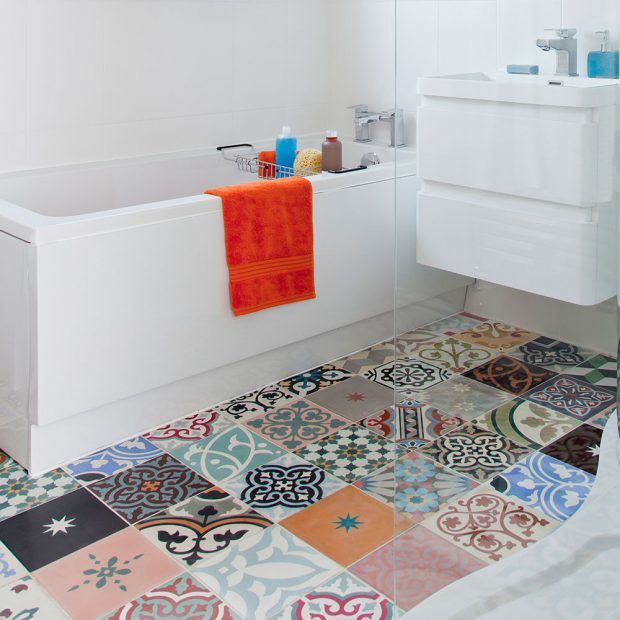
Surfaces make or break a bathroom: there’s little that feels more dated than cruddy, worn-out vinyl. One current trend is for graphic ceramics – say, a patchwork of decorative geometrics or a striking hexagonal design.
You’ll achieve maximum impact with a floor-to-wall seamless feature, but you can also opt for a feature wall or floor. Think about your room proportions before choosing your tiles. Very decorative designs can be too busy for a small space, whereas they could be an ideal way to add interest and warmth to a large bathroom.
11. Finalise a budget
Deciding on a budget in advance means you can prioritise where to spend and where to save. And the good news is that it doesn’t have to cost thousands to create a spa feel. Invest in just one beautiful piece, such as a freestanding bath (which you can pick up for under £500) and show it off against a more budget-conscious backdrop.
Bear in mind you also need to allocate some money to practical elements. You might need a larger water tank if you are planning a rainfall shower, and a water softener can be a smart idea to prevent the build-up of limescale.
12. Decide what level of service you need
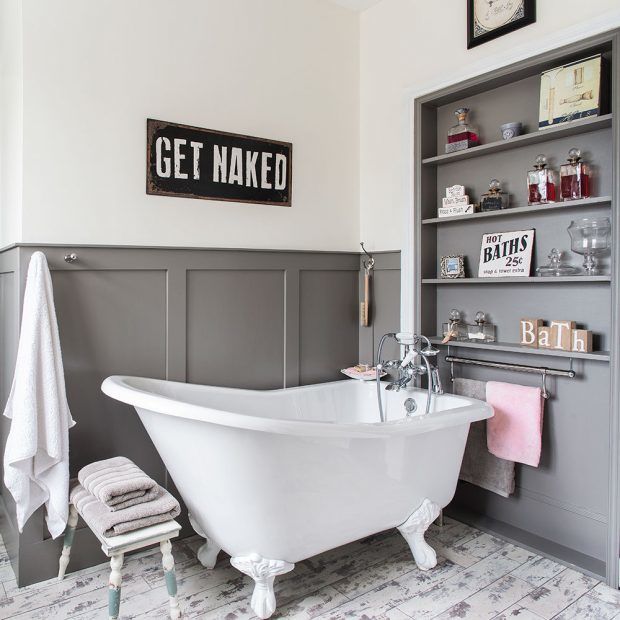
This will largely be dictated by your budget. Some bathroom companies offer a turn-key solution, with everything from planning and installation to decorating included in the price. While this isn’t the cheapest option, it can repay in terns of the speed and ease of your project. Alternatively you can design the space yourself, buy your own fittings, and hire a plumber or builder to work to your plan. While you have to ensure you get the layout right, and it will take more time to source products, it should work out cheaper in the long run.
Of course, Nothing beats seeing products in the ‘flesh’ so put time in to visit plenty of showrooms. Don’t be afraid to get in the bath and test it for comfort right there in the showroom, and feel for furniture and taps for build quality.
Get quotes from at least three fitters, making sure you’ve been specific about every element of the project. This will avoid added costs later.
13. Organise your tradespeople
Get recommendations from friends and family about fitters. Always ask for references and make sure the person you choose is some one you trust and – importantly – like, as they will be in your home for a week or so. Remember, the best price might not always result in the best service.
If you’re knocking down walls, moving or adding windows, or putting in new joists, check with your local building control office about whether you need Building Regulation approval.
Buying your suite and fittings through your builder might allow you to take advantage of trade discounts. Some bigger bathroom suppliers offer significant savings to the trade, as well as fast delivery and product support. Don’t forget, though, that your fitter will probably take a small cut for the time and effort of ordering for you.
Regardless of whether you are buying from a high-street store or a high-end brand, factor in delivery times. Big name manufacturers might take three or four weeks to deliver, while luxury brands can take around eight weeks.
When placing your orders, don’t forget the peripherals, such as waste traps for the bath and sinks and try to schedule delivery to coincide with when the builder is on site otherwise you could have items cluttering up the house. Or, worse still a builder with nothing to fit. Give yourself plenty of wriggle room to avoid having contractors twiddling their thumbs on site.
TOP TIP: Double check the returns period BEFORE you place your order so you know how long you have to report anything that’s not right. Take the time to check the condition of your fixtures and fittings as soon as they are delivered.
14. Survive the work
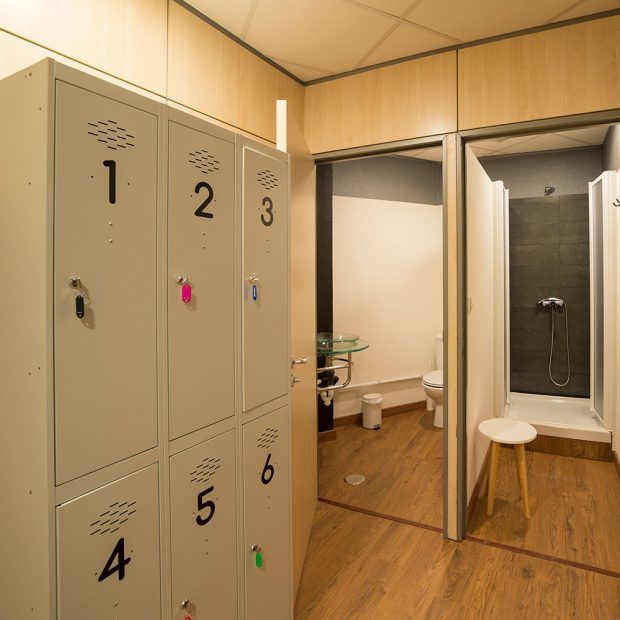
You’ll also want to take steps to minimise the inevitable mess. Cover stairs and hallway floors with old dust sheets to protect them while products are being taken through the house. Ask for any cutting of tiles and plasterboard to be done outside to minimise dust, and seal off doors to any bedrooms using masking tape to keep them pristine.
You might usually only make it to the local gym once a month, but that will certainly change if you plan to rip out the only bathroom in the house; you’ll find those changing rooms quickly take on a new appeal!
How long you’ll have to cope without a shower or bath depends on the scale of the work – a spruce job might only take a matter of days, but if you are planning to move fittings or relocate plumbing, account for significantly longer.
If you don’t have a gym membership, your only option might have to be chez a friendly neighbour, so start smiling when you pass in the street well in advance of any owrk. Believe us, dry shampoo can only go so far.
You’ll also want to take steps to minimise the inevitable mess. Cover stairs and hallway floors with old dust sheets to protect them while products are being taken through the house. Ask for any cutting of tiles and plasterboard to be done outside to minimise dust, and seal off doors to any bedrooms using masking tape to keep them pristine.
Armed with all our advice, it should be easier than ever to create the bathroom of your dreams.