Arab Press

بالشعب و للشعب
Friday, Jan 09, 2026

Iran’s embattled currency plunges to historic lows amid protests

Iran’s embattled currency plunges to historic lows amid protests

Rial continues to register new lows after another unstable year amid ongoing protests and a lack of progress on the revival of the nuclear deal.

Iran’s embattled national currency has hit a new all-time low amid ongoing protests and a lack of progress in efforts to restore the country’s 2015 nuclear deal with world powers.

The rate of the United States dollar for the first time broke past the 350,000 mark against the Iranian rial in the open market at the start of the working week on Saturday. The rial continued its decline, falling to about 362,000 per dollar later in the day.

The Iranian government still maintains a drastically lower artificial rate of 42,000 rials for the dollar as its official figure, even after a subsidy reform plan earlier this year that eliminated the use of this rate for imports of a number of essential goods.

The greenback changed hands at a rate of about 300,000 rials at the beginning of September, but the Iranian currency has been on a declining trajectory ever since nuclear talks once more stalled and protests erupted across the country in mid-September after the death of a young woman in police custody.
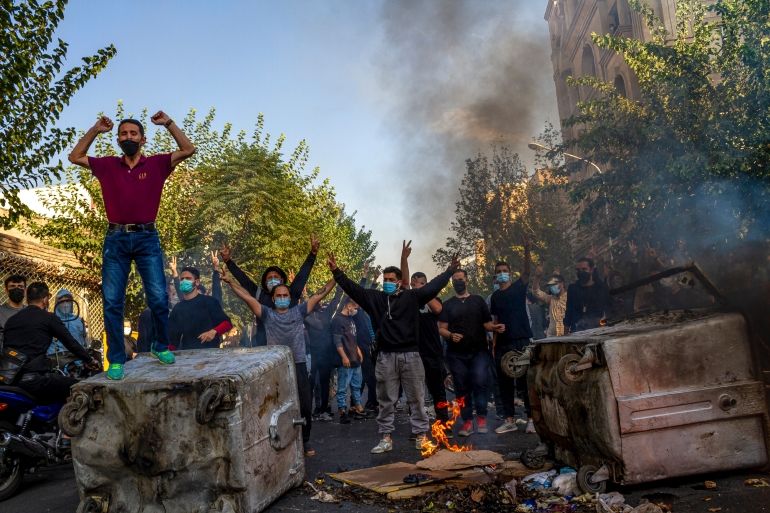
Iranians protest against the death of 22-year-old Mahsa Amini after she was detained by the morality police last month, in Tehran


When the nuclear deal was signed in 2015, the Iranian rial fetched more than 10 times the amount of dollars it does today.

The Central Bank of Iran (CBI) said on Thursday it would pump more foreign currency into an official market it operates for importers and exporters, and to answer “the real demands of the people”.

CBI Governor Ali Salehabadi also sought to reassure the market by claiming the supply of foreign currency “far outweighs” demand and the central bank enjoys strong currency reserves.

The latest drop in the value of the Iranian currency comes amid continued economic woes and as the country continues to experience a persistent annual inflation rate of more than 40 percent, some of the highest in the world.

Food items continue to experience much higher price jumps, with the latest report of the Statistical Center of Iran earlier this week registering 289 percent and 138 percent year-on-year hikes in prices of cooking oil and rice, respectively, for the month ending October 22.

Meanwhile, protests that gripped the country after the death of 22-year-old Mahsa Amini in the custody of “morality police” for allegedly wearing improper hijab continued on Saturday, with demonstrations reported in several universities across the country.

Widespread internet restrictions that have been imposed since shortly after the start of the protests are also thought to have incurred significant losses on Iranian businesses, but the exact extent remains unclear amid persisting unrest.


Nuclear deal ‘stalemate’


The rial had experienced a period of relative stability earlier this year and had even regained some ground amid news that an agreement on restoring the nuclear deal could be near. The currency had nosedived after the US pulled out of the nuclear deal in 2018 and imposed harsh sanctions.

But it started significantly losing value again as Tehran and Washington could not see eye-to-eye on an agreement, stalling efforts to revive the deal, effectively postponing the talks until after the upcoming midterm elections in the US.

The imposition of new sanctions by the US and the European Union in the wake of the weeks-long protests has renewed confrontations further, reducing the chances of a restoration of the deal as Tehran blamed the US for being behind “riots”.

US officials have said in recent weeks the Joint Comprehensive Plan of Action (JCPOA), as the deal is formally known, is not a priority at the moment while Josep Borrell, the EU’s foreign policy chief, told reporters on Friday the negotiations were at a “stalemate” and “there is nothing new”.

This contradicts claims by Iranian officials who have said the US has sent messages with the aim of quickly achieving an agreement.

Foreign Minister Hossein Amirabdollahian said on Saturday Tehran has relayed a message to Washington through the EU, and expects an answer within days.

He had also said earlier this week that Iran will soon send a team to Vienna to continue talks with the International Atomic Energy Agency (IAEA) on the open case of unexplained nuclear materials found at several sites, something Tehran has said will need to be resolved before any agreement.


Newsletter

Related Articles

Arab Press
0:00
0:00
Close
There is no sovereign immunity for poisoning millions with drugs.
Mohammed bin Salman’s Global Standing: Strategic Partner in Transition Amid Debate Over His Role
Saudi Arabia Opens Property Market to Foreign Buyers in Landmark Reform
The U.S. State Department’s account in Persian: “President Trump is a man of action. If you didn’t know it until now, now you do—do not play games with President Trump.”
CNN’s Ranking of Israel’s Women’s Rights Sparks Debate After Misleading Global Index Comparison
Saudi Arabia’s Shifting Regional Alignment Raises Strategic Concerns in Jerusalem
OPEC+ Holds Oil Output Steady Amid Member Tensions and Market Oversupply
Iranian Protests Intensify as Another Revolutionary Guard Member Is Killed and Khamenei Blames the West
President Trump Says United States Will Administer Venezuela Until a Secure Leadership Transition
Delta Force Identified as Unit Behind U.S. Operation That Captured Venezuela’s President
Saudi-UAE Rift Adds Complexity to Middle East Diplomacy as Trump Signals Firm Leadership
OPEC+ to Keep Oil Output Policy Unchanged Despite Saudi-UAE Tensions Over Yemen
Saudi Arabia and UAE at Odds in Yemen Conflict as Southern Offensive Deepens Gulf Rift
Abu Dhabi ‘Capital of Capital’: How Abu Dhabi Rose as a Sovereign Wealth Power
Diamonds Are Powering a New Quantum Revolution
Trump Threatens Strikes Against Iran if Nuclear Programme Is Restarted
Why Saudi Arabia May Recalibrate Its US Spending Commitments Amid Rising China–America Rivalry
Riyadh Air’s First Boeing 787-9 Dreamliner Completes Initial Test Flight, Advancing Saudi Carrier’s Launch
Saudi Arabia’s 2025: A Pivotal Year of Global Engagement and Domestic Transformation
Saudi Arabia to Introduce Sugar-Content Based Tax on Sweetened Drinks from January 2026
Saudi Hotels Prepare for New Hospitality Roles as Alcohol Curbs Ease
Global Airports Forum Highlights Saudi Arabia’s Emergence as a Leading Aviation Powerhouse
Saudi Arabia Weighs Strategic Choice on Iran Amid Regional Turbulence
Saudi Arabia Condemns Sydney Bondi Beach Shooting and Expresses Solidarity with Australia
Washington Watches Beijing–Riyadh Rapprochement as Strategic Balance Shifts
Saudi Arabia’s Vision 2030 Drives Measurable Lift in Global Reputation and Influence
Alcohol Policies Vary Widely Across Muslim-Majority Countries, With Many Permitting Consumption Under Specific Rules
Saudi Arabia Clarifies No Formal Ban on Photography at Holy Mosques for Hajj 2026
Libya and Saudi Arabia Sign Strategic MoU to Boost Telecommunications Cooperation
Elon Musk’s xAI Announces Landmark 500-Megawatt AI Data Center in Saudi Arabia
Israel Moves to Safeguard Regional Stability as F-35 Sales Debate Intensifies
Cardi B to Make Historic Saudi Arabia Debut at Soundstorm 2025 Festival
U.S. Democratic Lawmakers Raise National Security and Influence Concerns Over Paramount’s Hostile Bid for Warner Bros. Discovery
Hackers Are Hiding Malware in Open-Source Tools and IDE Extensions
Traveling to USA? Homeland Security moving toward requiring foreign travelers to share social media history
Wall Street Analysts Clash With Riyadh Over Saudi Arabia’s Deficit Outlook
Trump and Saudi Crown Prince Cement $1 Trillion-Plus Deals in High-Profile White House Summit
Saudi Arabia Opens Alcohol Sales to Wealthy Non-Muslim Residents Under New Access Rules
U.S.–Saudi Rethink Deepens — Washington Moves Ahead Without Linking Riyadh to Israel Normalisation
Saudi Arabia and Israel Deprioritise Diplomacy: Normalisation No Longer a Middle-East Priority
As Trump Deepens Ties with Saudi Arabia, Push for Israel Normalization Takes a Back Seat
Thai Food Village Debuts at Saudi Feast Food Festival 2025 Under Thai Commerce Minister Suphajee’s Lead
Saudi Arabia Sharpens Its Strategic Vision as Economic Transformation Enters New Phase
Saudi Arabia Projects $44 Billion Budget Shortfall in 2026 as Economy Rebalances
OPEC+ Unveils New Capacity-Based System to Anchor Future Oil Output Levels
Hong Kong Residents Mourn Victims as 1,500 People Relocated After Devastating Tower Fire
Saudi Arabia’s SAMAI Initiative Surpasses One-Million-Citizen Milestone in National AI Upskilling Drive
Saudi Arabia’s Specialty Coffee Market Set to Surge as Demand Soars and New Exhibition Drops in December
Saudi Arabia Moves to Open Two New Alcohol Stores for Foreigners Under Vision 2030 Reform
Saudi Arabia’s AI Ambitions Gain Momentum — but Water, Talent and Infrastructure Pose Major Hurdles
×