

Orbán’s new public enemy: A Twitter-savvy US ambassador calling out conspiracies
On an early morning drive from his residence to the U.S. Embassy, David Pressman kept a close eye on his surroundings.
Look, the new U.S. ambassador to Hungary said, pointing out the government-funded billboards dotting Budapest’s streets.
“The Brussels sanctions are ruining us!” they declared, the word “sanctions” emblazoned across a flying bomb.
One by one, the posters whizzed by, blaring the same ominous warning.
These types of signs have been a feature of the Budapest landscape for years, spinning up a conspiratorial gallery of foreign enemies Hungarian Prime Minister Viktor Orbán has used to instill fear and anger in the Hungarian population as he vies to keep his grip on power.
But historically, the U.S. — like many of its Western partners — has stayed relatively quiet in public about these targeted messaging campaigns and the rise of anti-Western government rhetoric, which often reflected the country’s democratic backsliding and the local influence of Russian propaganda.
With Pressman, that has changed. Pressman’s presence alone is an implicit rebuke of Orbán’s strongman, culture wars agenda. Pressman is a human rights lawyer, has a male partner and has worked closely with George Clooney, a totem of the Fox News-caricatured “Hollywood liberal elite.”
And in just two months on the job, the new American ambassador has become a household name in Budapest for his willingness to call out — and even troll — the Orbán government’s overtly propagandistic and conspiratorial bombast.
There is, Pressman said in his first interview since taking his post, a “need to be both respectful and more candid about what we’re seeing.”
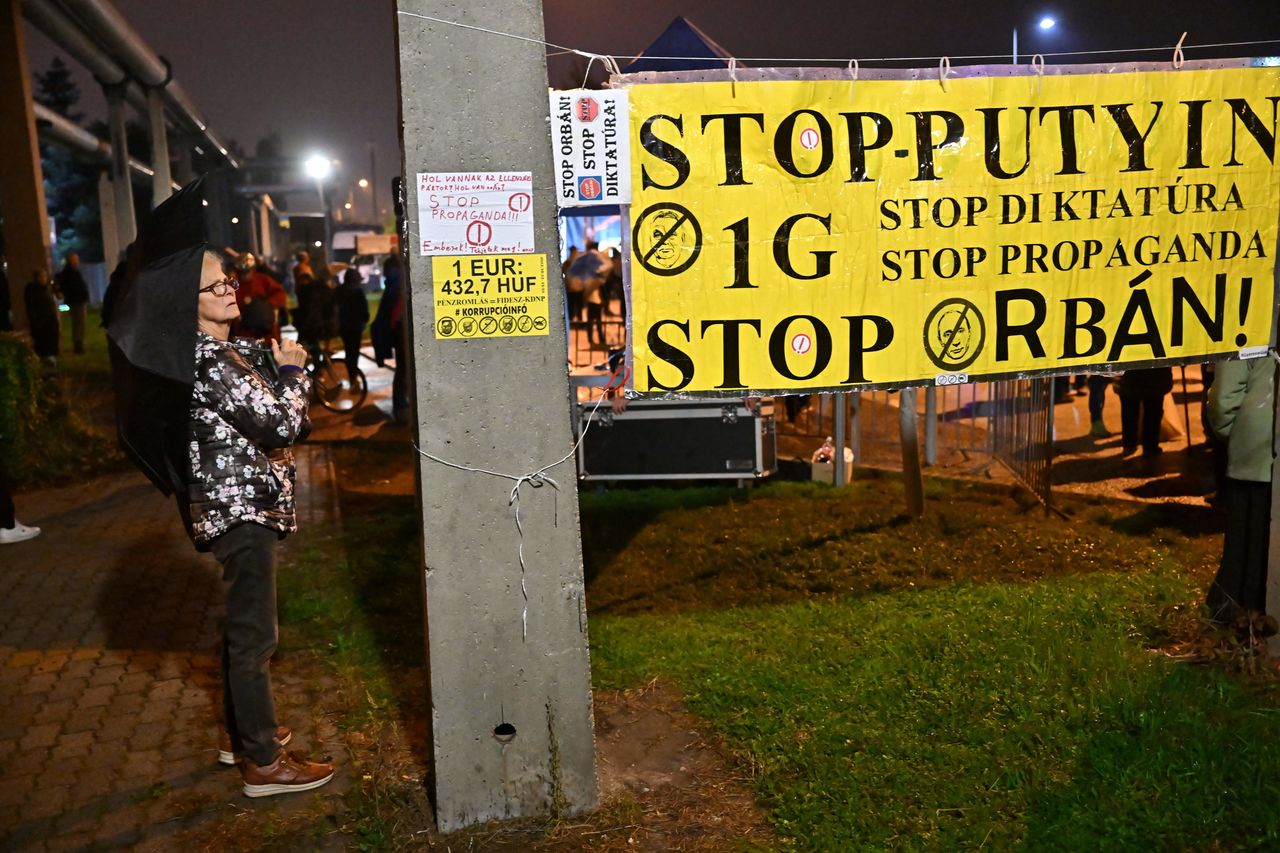
Recently, the U.S. embassy posted a once-unthinkable video quiz challenging people to guess whether quotes came from Hungarian public figures or Russian President Vladimir Putin. The answer, of course, was never Putin.
“I’m concerned when I see missiles flying from Moscow into children’s playgrounds in Kyiv — and see the foreign minister of Hungary flying into Moscow to do Facebook Live conferences from Gazprom headquarters,” the ambassador told POLITICO.
For this approach, Pressman has become the latest foreign enemy in Budapest.
 In a country that recently banned the portrayal of LGBTQ+ content to minors, Pressman has put his personal life on display
And in a country that recently banned the portrayal of LGBTQ+ content to minors, Pressman has put his personal life on display, posting photos of his partner and their two kids as they arrived to present his diplomatic credentials.
“I think it speaks for itself,” Pressman said. “Sometimes the power of example,” he added, “is the most powerful way we can communicate about shared values and concerns.”
In many ways, Pressman’s story is emblematic of the evolution of the broader relationship between the U.S. and Hungary. For years, an ambassador posting in Budapest was primarily considered a symbolic role, reserved for wealthy political donors with no foreign policy expertise.
Hungary, the thinking went, was a reliable European Union and NATO member that required little extra attention in Washington. But the erosion of democratic norms — combined with Moscow’s influence in Budapest and Russia’s bombardment of Ukraine — has changed the calculus.
“The stakes right now are huge,” the ambassador said. “The politicization and partisanization of the relationship,” he added, “is not sustainable.”
A pragmatic idealist
Pressman, unlike many of his predecessors, is no novice to U.S. foreign policy.
As a young lawyer, he teamed up with Clooney on a campaign to get those in power to pay attention to atrocities in Darfur — later earning the nickname “Cuz” from Clooney. He also made stops as an aide to Secretary of State Madeleine Albright, as a Homeland Security Department official and a White House staffer during the Obama years. In 2014, he landed in New York as the U.S. ambassador to the United Nations for special political affairs.
Those experiences — and his resulting relationships across government — have given Pressman the backing to make significant changes to how the U.S. approaches Orbán’s government.
Samantha Power, the Pulitzer Prize-winning author-turned-diplomat, was the one who brought the then-32-year-old Pressman to the White House before working closely together in New York when she became U.N. ambassador. Pressman, she said, was her go-to person for tough assignments.
Once, she recalled, her staff needed to convince China to join sanctions against North Korea after a nuclear test.
“David,” she told POLITICO, “is a person that I entrusted in the day-to-day to work with the Chinese ambassador to extract as robust a set of sanctions as possible.”
 “When we see insane Kremlin stories being re-propagated in the Hungarian
media, we’re gonna call that out, because we have to”, David Pressman
said
“When we see insane Kremlin stories being re-propagated in the Hungarian
media, we’re gonna call that out, because we have to”, David Pressman
said
Pressman, Power recounted, was so well-prepared that it was as if he “got a PhD in iron ore trafficking.” His prep work also paid off. “No one had invested more in advance of the nuclear tests in a relationship with his Chinese counterpart that he could then call upon when it mattered for the United States,” she added.
Now, Hungary matters for the United States. In the last 12 years, Orbán’s ruling Fidesz party has taken control of much of the media landscape, placed allies at the helm of independent state institutions, channeled government resources into political campaigning and nurtured ties to Moscow and Beijing. The development has strained the bedrock of the global democratic order.
On a recent fall day, the ambassador invited POLITICO to visit his home at 7:30 in the morning, as his sons were getting ready to leave for school. He then spent the day racing between meetings with anti-corruption experts, a founding member of Orbán’s ruling Fidesz party, Hungarian students and a fellow ambassador.
At the discussion with anti-corruption campaigners, Pressman placed a large notebook on the table and began scribbling as he tossed out a flurry of questions: Who is involved? How does this work? How do you know that?
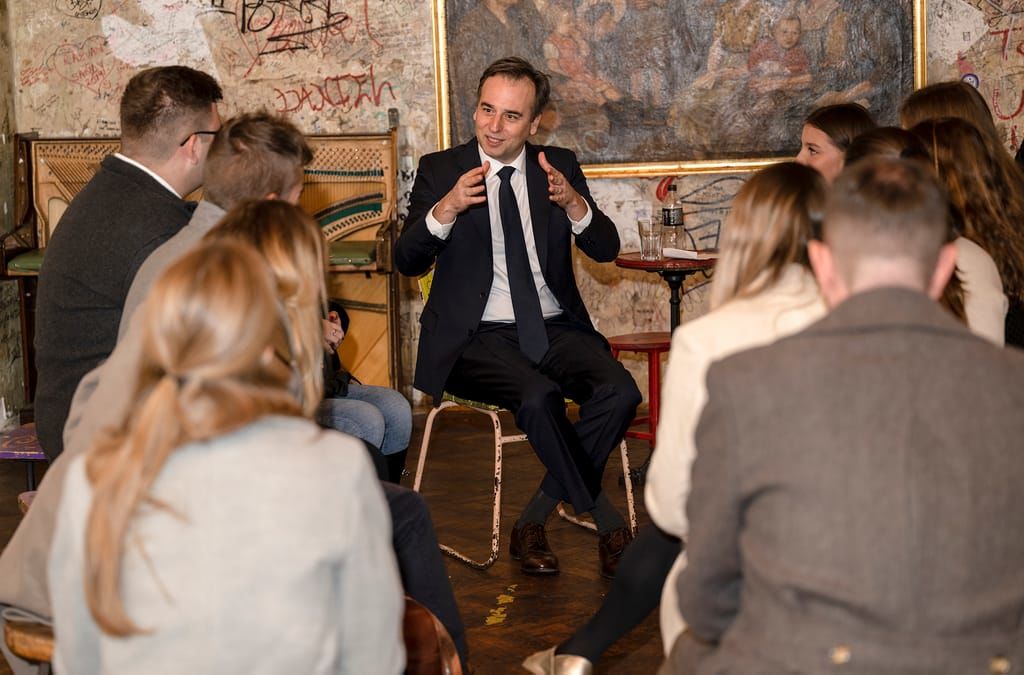
Later, Pressman popped into a graffiti-decorated pub and took his seat among a cluster of high school and university students. Again, the questions came quickly: How do your peers see the U.S.? Is there anyone in the government you trust? What comes to mind on Russia?
Pressman is known as an idealist. As the White House National Security Council’s director for war crimes and atrocities, he decorated his office — no bigger than two large filing cabinets — with photos of indicted war criminals the U.S. was trying to apprehend, Power recalled.
But he still professes a pragmatic approach. His goal, he insists, is to build relationships with the Hungarian government — even as he needles it over anti-democratic behavior. The two sides can work together, he noted.
“When we see insane Kremlin stories being re-propagated in the Hungarian media, we’re gonna call that out, because we have to,” he said.
But, Pressman added, “all of that is with the intent to pull us closer together — not to push us apart.”
A troubled relationship
Even before the ambassador’s arrival, anti-American rhetoric had been on the rise in Hungary.
In the government-controlled press, the U.S. is both the boogeyman behind the invasion of Ukraine and the puppet master of Hungary’s opposition parties. Fidesz-linked outlets even spread paranoid conspiracy theories about a U.S. diplomat who died in a traffic accident.
But in recent weeks, the vitriol — and the personal attacks on Pressman — has reached a fever pitch.
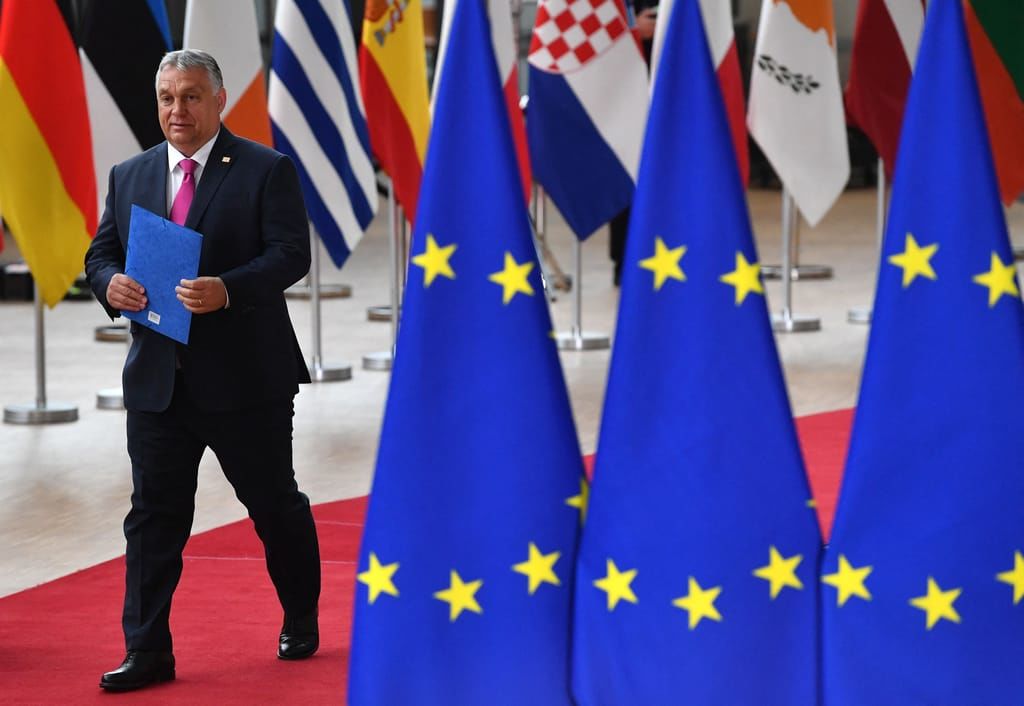 As Orbán’s allies have tightened their judicial system vice grip, the EU
and others have made strengthening the council a priority
As Orbán’s allies have tightened their judicial system vice grip, the EU
and others have made strengthening the council a priority
One sharp escalation occurred after Pressman posted a photo of himself meeting with two judges from the National Judicial Council.
The group’s bureaucratic name belies its heated symbolic and political importance in Hungary.
The council is meant to help oversee Hungary’s judiciary. So as Orbán’s allies have tightened their judicial system vice grip, the EU and others have made strengthening the council a priority.
Pressman’s decision, just weeks into his job, to sit down with the council’s representatives sparked dozens of articles attacking him and breathless TV coverage.
“Unprecedented serious interference in the judiciary,” blared a headline in the government-linked Origo news portal. “Today what comes to mind is that if we have such friends, then we don’t need enemies,” the Orbán-adjacent Magyar Nemzet newspaper pronounced.
Even in private, Hungarian officials stewed. “His meeting with two infamous judges,” said one senior Hungarian official, ”was a pretty unfortunate beginning.” A spokesperson for the Hungarian government did not respond to questions about Pressman.
Judge Csaba Vasvári — the council’s spokesperson and one of the figures who met with the ambassador — told POLITICO the public pillorying is fueling a “strong chilling effect” within the judiciary.
Instead of letting it pass, Pressman pushed back — in his own style.
The U.S. embassy posted a host of photos of politicians and senior diplomats meeting with judges — including, cheekily, a smiling younger Orbán standing beside former U.S. Supreme Court Justice Anthony Kennedy.
“What is inconsistent with normal diplomatic practice between allies,” the embassy said in a public statement, “is the recent coordinated media attack on the spokesperson and international liaison of the National Judicial Council in what appears to be an effort to instill fear in those who wish to engage with representatives of the United States.”
A politicized alliance
Orbán and his government have made no secret of their disdain for Democrats.
Democrats, they say, want to impose their liberal ideology on Hungary. They are the ones who ruined the relationship with Hungary. They lack family values. They are not a Christian government.
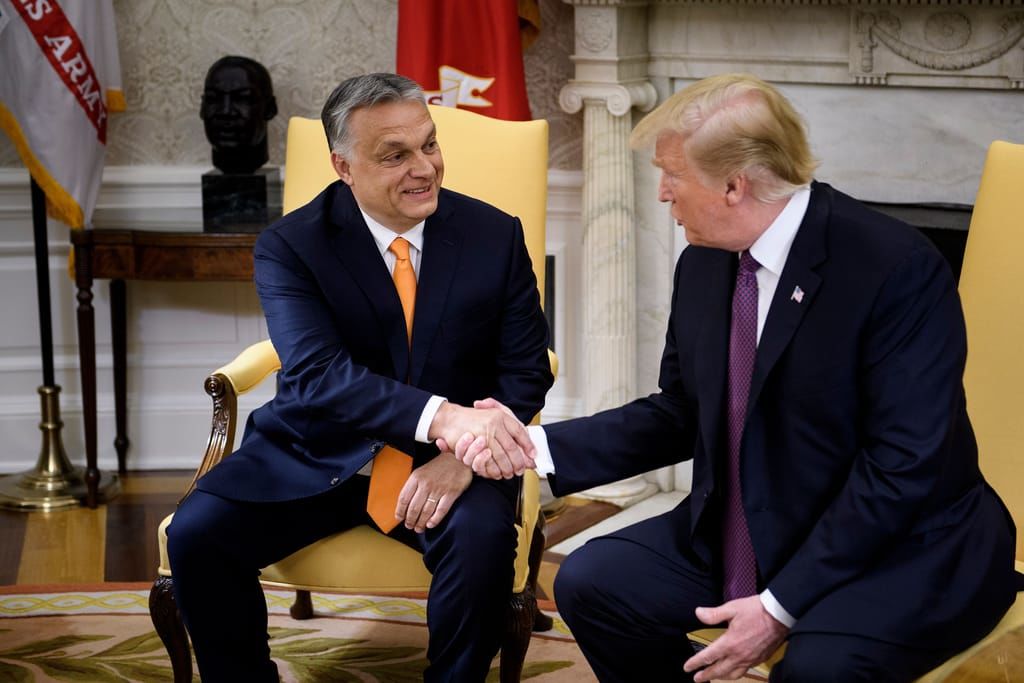 “Always great to hear from our good friend @realDonaldTrump. Let’s make
US-HU relations great again!” Orbán tweeted recently at the
Twitter-banished ex-president
“Always great to hear from our good friend @realDonaldTrump. Let’s make
US-HU relations great again!” Orbán tweeted recently at the
Twitter-banished ex-president
Republicans are the exact opposite, in the government’s narrative. Orbán himself has personally courted MAGA-ites at their own super bowl — CPAC. He hosted Tucker Carlson in Budapest. He pines on Twitter for Donald Trump’s return.
“Always great to hear from our good friend @realDonaldTrump. Let’s make US-HU relations great again!” Orbán tweeted recently at the Twitter-banished ex-president.
It’s these types of tossed-off comments that no longer pass without a response.
“With Hungary facing economic challenges and Vladimir Putin’s war on its doorstep, the time for a great US-HU relationship? Right now,” Pressman quipped back.
It wasn’t the pair’s first sarcastic Twitter repartee, either. When the Hungarian leader first joined the platform in October and rhetorically asked where Trump was, Pressman also jumped in.
“While you look around for your friend, perhaps another friend to follow: the President of the United States,” he shot back, before offering a sly nod to his critics: “But as the Hungarian media might say: no pressure.”
Such cutting Twitter missives are not to everyone’s liking. Some even insist they are having a boomerang effect, cheapening diplomacy and further deteriorating the U.S.-Hungarian relationship.
Two former Trump-era intelligence officials recently blasted Pressman’s approach in the Wall Street Journal, calling the playful video quiz a “cringe-worthy example of the State Department’s woke virtue signaling.”
“When the U.S. has issues with foreign leaders, it should deal with them through adult diplomacy,” they added. “Instead, our diplomatic efforts under President Biden, a self-styled foreign-policy expert, could be summed up as ‘anyone I don’t like is Putin.’”
The Biden administration batted away any concerns.
When POLITICO asked for comment on the ambassador’s work, the State Department was quick to both express the administration’s “full confidence” in Pressman and to pass along a bipartisan endorsement from Cindy McCain, the widow of Republican stalwart and foreign policy maven John McCain.
McCain, now in Rome as a U.S. diplomat, talked of knowing Pressman for “nearly two decades,” and said he had “earned the deep respect of national security and foreign policy leaders in both the Republican and Democratic parties.”
 If there is any overarching goal, it is to call out Russian propaganda,
while still paying attention to how Hungary’s government treats
minorities at home
If there is any overarching goal, it is to call out Russian propaganda,
while still paying attention to how Hungary’s government treats
minorities at home
For his part, Pressman insisted the embassy has no partisan goals and simply wants a better relationship with the Hungarian authorities.
“Our work is not about liberal policies. It’s not about conservative policies,” he said. “But it’s fundamentally about shared core values that are premised upon small ‘d’ democracy, and ensuring that we are able to collaborate together.”
If there is any overarching goal, it is to call out Russian propaganda — while still paying attention to how Hungary’s government treats minorities at home.
“The United States will always engage on behalf of communities that are vulnerable or marginalized, and that are under pressure — and here in Hungary, there are a few of those,” the ambassador said, noting that groups have Washington’s support as “they seek to engage in their own democratic process.”
Principled stances aside, the situation is undeniably strange: A diplomat from an allied country becoming public enemy No. 1 — and the top news story. On a recent Sunday evening, the Fidesz-linked HírTV station spent nearly half an hour on Pressman.
Pressman insisted he doesn’t take it personally. But “do we take it seriously? Absolutely,” he said.
“I’m the representative of the United States of America,” he added. “It’s unusual to find yourself,” he observed with understatement, in “an environment quite like this.”