

Prioritize global cooperation over individual national efforts to bridge digital divide, says Deemah AlYahya, Saudi head of Digital Cooperation Organization
Research by the Digital Cooperation Organization, an international body founded by Bahrain, Jordan, Kuwait, Pakistan and Saudi Arabia, says that 70 percent of growth in the global economy over the next decade will be digitally based.
But as Deemah AlYahya, former Microsoft executive and current secretary-general of DCO, says, cooperative efforts must be made to ensure that the digital transformation of the world’s economy is inclusive and equitable.
“Over the past two decades, the digital economy has been growing at an unprecedented rate, becoming the backbone of our societies, bringing people together, offering infinite economic possibilities,” she said in the latest episode of the Arab News current-affairs talkshow “Frankly Speaking.”
“A thriving digital economy is critical to achieving sustainable economic development.”
Although technology presents great opportunities, 2.7 billion people around the world have no access to the internet, which can widen the economic gap and leave some behind.
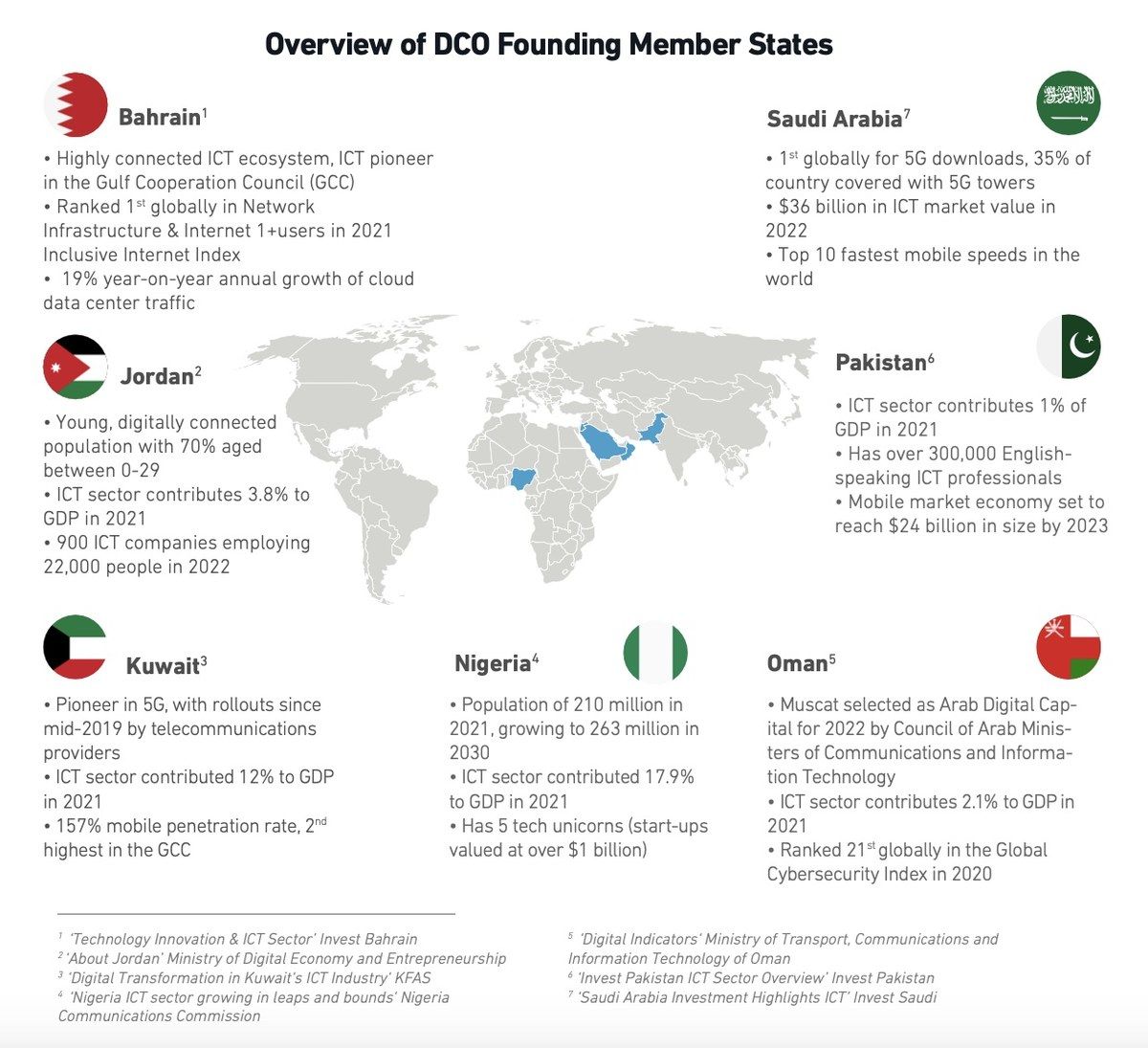 Infographic courtesy of the DCO's Digital Prosperity Report - H1 2022
The DCO’s goal is “to enable digital prosperity for all by accelerating the inclusive growth of the digital economy across countries, advance their digital transformation and strengthen the collaborative efforts of our member states and the global digital economy.”
AlYahya said that the sharing of knowledge and practices combined with the establishment of proper digital infrastructure within the DCO’s member states, as well as the introduction of policies and legislations, can enable the building of “an inclusive, equitable digital economy, within which all people, businesses, and societies can innovate and thrive.”
She said that the DCO recently became an observer at the UN, further enabling the initiative to improve international and regional collaboration.
The DCO has launched several programs to spur the digital economy. In 2022, it partnered with the World Economic Forum to implement projects which will help grow digital foreign direct investments, or FDIs, with the first project taking place in Nigeria.
The same year, it launched the Elevate 50 initiative, which aims to create 50,000 business opportunities in Asia, the Middle East, and Africa by helping small and medium businesses set up e-commerce platforms to sell products online.
AlYahya believes suitable policies and regulations are critical for regulating digital economic growth given it is based on both intangible and tangible assets.
“We find that nations and several entities and continents are working on having harmonized policies and regulations that will enable innovators to create the new technologies which will empower the citizens,” she told Katie Jensen, the host of “Frankly Speaking.”
“Therefore, it is important to work with other organizations like the United Nations, for instance, and ITU at OECD, and also work with member countries themselves to try to bring in that unified message and unified policies and regulation that will help innovators to cross borders, as well as for nations to start sharing data.”
AlYahya, however, pointed out that the cost of getting online can be prohibitive even in countries eager to accelerate digital growth.
“It’s not enough that we’re connected. We do also have a big challenge, which is the affordability of the devices and services as well. We look at several countries that are … 98 percent connected, but we find that utilization of the service is only 3 percent. And that’s because of the high cost of either the devices or the services,” she said.
AlYahya noted that cost and accessibility are influenced by three factors: Proper data for investment, growth opportunities and a stimulating business environment for youth and policies and regulations.
The private sector can provide the data for appropriate investment to stimulate the economy, thereby providing “the right jobs and also the right growth opportunities for the youth,” she said.
“And by having that business environment, we will reach a balance when it comes to the cost of services and also devices.”
AlYahya believes policy and regulation recommendations will enable flexibility for cross-border expansion for businesses. “By removing these barriers to expansion, that will accelerate the availability of technologies in the countries,” she said.
With the DCO acting as a facilitator between the government and the private sector, communities can reach the right balance between cost and availability, AlYahya said.
As the online economy grows, so do concerns about data breaches, security and privacy. According to the Identity Theft Research Center’s 2022 Data Breach Report, more than 400 million people in the US were victims of data breaches or exposures last year.
AlYahya said the DCO has major concerns over the privacy of vulnerable populations in developing nations new to the technological revolution.
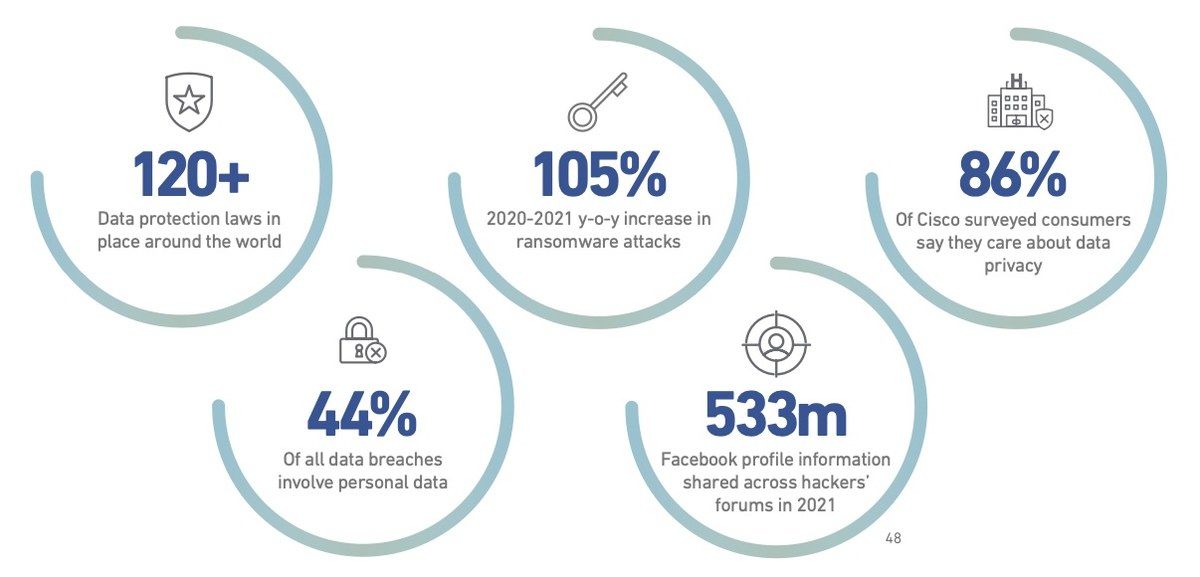 Infographic courtesy of the DCO's Digital Prosperity Report - H1 2022
“It’s very important that we build that trust within the nation itself — between the citizens and the governments, as well as the governments together,” she said. “That, by itself, is important; that will enable the placement of any policies and regulations that are harmonized and where member countries, or the globe approves.
“The DCO has adopted a data-privacy statement and a call for action for AI, and is working with other governments on several projects. Chief among them is creating governance and standards and norms around the data flows, and data sovereignty as well.”
AlYahya added that engaging the private sector and governments together was critical for building trust and protecting both governments and citizens.
The DCO’s Digital FDI Initiative, launched in cooperation with the World Economic Forum, also contributes to building trust and a digital-friendly environment, according to her.
“We study the environment and the ecosystem of each of our member countries, and we see where are the sectors that really need and demand that investment. Also, what kind of technologies are missing, that need to be adapted and attracted to come into the country,” she said.
She said the DCO had already launched the initiative in Pakistan and Rwanda, with plans to launch in all member countries soon. She added that investment will bring with it new skills, knowledge, experience and jobs.
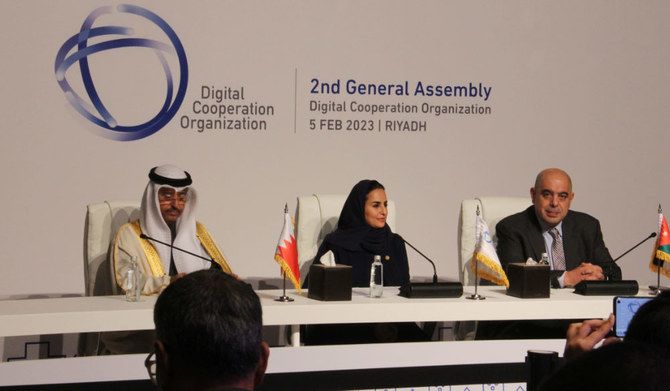 During its 2nd Annual General Assembly in Riyadh on Feb. 5, the DCO
called for open cooperation globally to bridge the digital divide .
During its 2nd Annual General Assembly in Riyadh on Feb. 5, the DCO
called for open cooperation globally to bridge the digital divide .
As the first secretary-general of the DCO and the first Saudi woman to work as an executive director for Microsoft, AlYahya is a trailblazer in her own right. She stressed the importance of encouraging the involvement of more women in science and technology.
She recalled meeting a woman in Taif, a Saudi city known for its rose farms, while working for Microsoft.
“She created products from these roses. She was a widow with six kids, and she used to sell these products in just the city or the village that she was in. She came looking for training and learning programs to help her create an e-commerce platform,” AlYahya said.
“So, we supported her with that, and we gave her that knowledge. In three months’ time, she had her e-commerce solution up online with the payment gateway and value chain. And after a couple of years now, she has created jobs for more than 80 women, and she sells to more than 100 cities (around) the world.”
Saudi Arabia in particular has made great strides toward female participation in science and tech. Saudi Vision 2030, a series of economic diversification initiatives announced by Crown Prince Mohammed bin Salman in 2016, has helped bring the percentage of female employees in the information and communications technology sector from 16 to 35 percent.
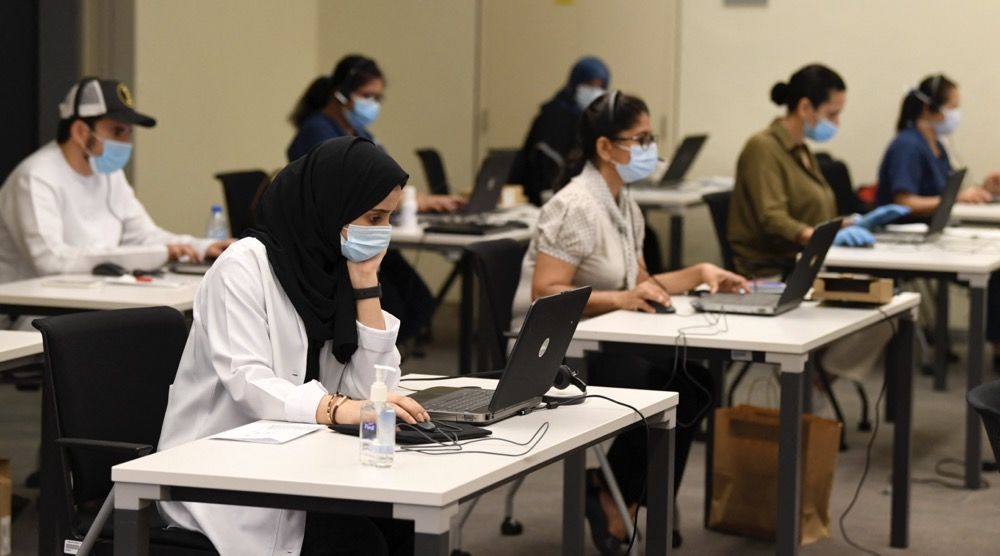 Saudi Arabia has made great strides toward female participation in
science and tech, while much of the world is facing a challenge of
doing the same.
Saudi Arabia has made great strides toward female participation in
science and tech, while much of the world is facing a challenge of
doing the same.
AlYahya pointed out that more than half of all ICT graduates in Saudi Arabia are female, adding that is “something that is very unique when the world is facing a challenge of attracting more women and girls to science and technology.”
The government of Saudi Arabia has worked with the private sector to bolster its digital infrastructure over the past five years, she said, including increasing internet connectivity in remote areas and the adoption of 5G mobile data networks.
While working as executive manager of Misk Innovation, a Saudi initiative which aims to encourage creativity and innovation among Saudi youth, AlYahya has overseen initiatives to teach coding and other computer skills to young Saudis, and to girls in particular. She believes a female perspective is critical to the development of digital tools.
“Just imagine an AI with only a man’s perspective — that would be dangerous in the future. We have to have both perspectives,” she said.
“So, we do have to increase the number of women scientists in AI and involve more women in the development of these innovations and creations. Universal access to the internet is almost fundamental for these issues. And that’s just the beginning, which is providing the right access to women.
“It scares me when I read reports that 350 million women will not have access to the internet by 2030. That by itself is a huge lost opportunity, not only socially but also economically.”
To minimize this lost opportunity, AlYahya recommends the teaching of skills such as coding, which “supports and helps in adapting and critical problem solving — analytical thinking — and therefore it gives a broader perspective than just providing that skill and teaching (them) how to fish.”
She added: “I really do believe that we have to work with our youth to enable them with the right skills first, then to create new fishing tools and expand their perspective and their mindset to other solutions and how to analyze problems to create the right solutions.”