Arab Press

بالشعب و للشعب
Wednesday, Jul 15, 2026

Rich Russians turn to luxury jewellery, watches to shield savings

Rich Russians turn to luxury jewellery, watches to shield savings

Much like gold, which can serve as a store of value and a hedge against inflation, luxury watches and jewellery can hold or even increase in price amid economic turmoil.

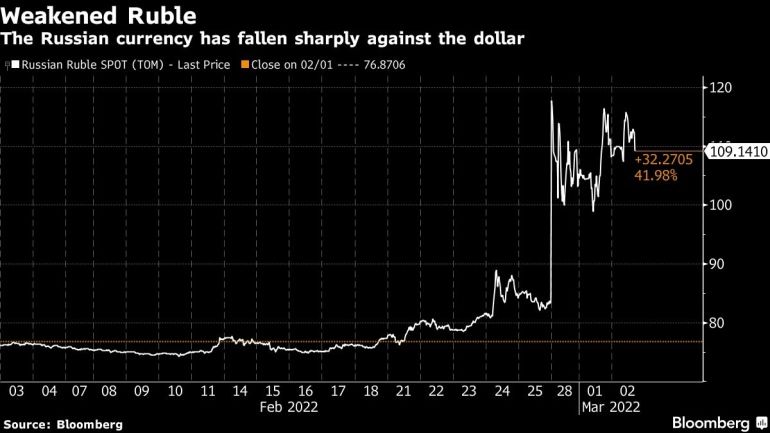
With sanctions on Russia sending the ruble plunging and keeping stock markets shuttered, the country’s wealthy are turning to luxury jewelry and watches in a bid to preserve the value of their savings.

Sales in Bulgari SpA’s Russian stores have risen in the last few days, the Italian jeweler’s chief executive officer said, after the international response to the nation’s invasion of Ukraine severely restricted the movement of cash.

“In the short term it has probably boosted the business,” Jean-Christophe Babin said in an interview with Bloomberg, describing Bulgari’s jewelry as a “safe investment.”

“How long it will last it is difficult to say, because indeed with the SWIFT measures, fully implemented, it might make it difficult if not impossible to export to Russia,” he said, referring to restrictions on Russian access to the SWIFT financial-messaging system.

Even as consumer brands from Apple Inc. to Nike Inc. and energy giants BP Plc, Shell Plc and Exxon Mobil Corp. pull out of Russia, Europe’s biggest luxury brands are, so far, trying to continue operating in the country.

Bulgari, owned by LVMH SE, is far from alone. Richemont’s Cartier is still selling jewelry and watches, and Swatch Group’s Omega timepieces are still available, as are Rolexes.

“We are there for the Russian people and not for the political world,” Babin said. “We operate in many different countries that have periods of uncertainty and tensions.”
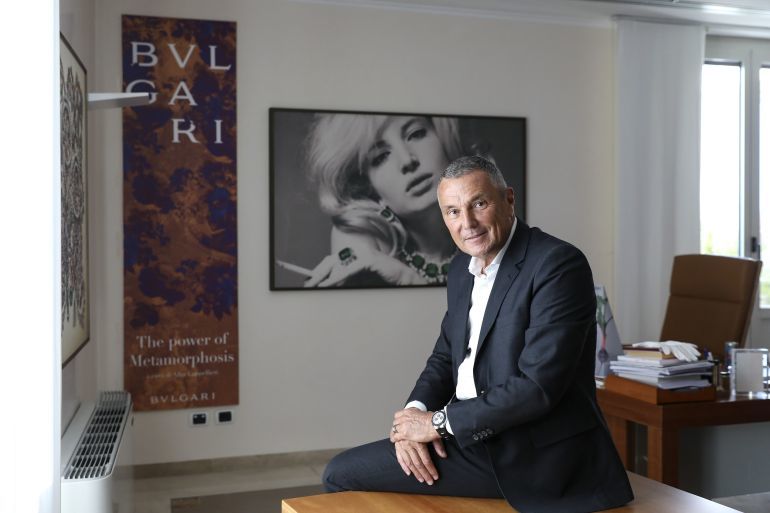
Jean-Christophe Babin at his office in Rome, on March 1


Much like gold, which can serve as a store of value and a hedge against inflation, luxury watches and jewelry can hold or even increase in price amid economic turmoil caused by war and conflict.

Popular watches can change hands on the secondary market for three or four times their retail price. Yet the impact of the invasion on the value of luxury items is creating a potential public relations issue.

“It is true that luxury brands could decide not to serve the Russian market. Rationally, this would be a cost to them, possibly outweighed by the positive communication image they get in other markets,” Bernstein analyst Luca Solca said by email.

Sales in Russia and to Russians abroad account for less than 2% of overall revenue at LVMH and Swatch Group and less than 3% at Richemont, a “relatively immaterial” level, according to a report this week by Edouard Aubin and fellow analysts at Morgan Stanley.

That’s due, in part, to Russian income and wealth disparities, with a small number of billionaire oligarchs living way beyond the means of ordinary people. The average monthly wage in Moscow is about 113,000 rubles ($1,350 at pre-invasion exchange rates), and much lower in rural regions.

A spokesperson for Swatch Group said the company was monitoring the situation in Russia and Ukraine very closely and declined to comment further. Spokespeople for Richemont, Rolex, Hermes, LVMH and Kering SA declined to comment on their operations in Russia.

Pressure on the major brands is growing. Trade publication Business of Fashion, backed by LVMH, urged retailers to shut down Russian stores and not to ship products online. In a widely shared editorial, Editor-in-chief Imran Amed said the move would be “largely symbolic” but that it would show “commitment to a strong moral position.”

Reaction has been muted, so far. Balenciaga, whose creative director Demna Gvasalia is Georgian, scrapped all fashion content from its Instagram page days before its autumn/winter show in Paris. In its place is the Ukrainian flag and a call to donate to the World Food Program. LVMH said it’s donating 5 million euros ($5.6 million) to the International Committee of the Red Cross to aid victims of the war. LVMH is also providing financial and operational assistance to its 150 employees in Ukraine, it added.

Bulgari, established in 1884 by Sotirio Bulgari and bought in 2011 by LVMH, is likely to raise prices in Russia at some point, according to the CEO.

“If the ruble loses half of its value, our costs remain euro costs, we cannot lose money on what we sell, so will have to adapt the prices,” he said.

Whatever sales bump they experience, luxury watch and jewelry-makers may soon have difficulty restocking stores. Moscow closed its airspace to European Union countries, and the continent’s biggest logistics firms have halted shipments to Russia. Burberry Group Plc said it has halted all shipments to Russia until further notice amid operational challenges.

Bulgari plans to keep its stores open and forge ahead with the development of a new hotel in Moscow despite the war. Nevertheless, if the crisis lasts for months “it would be difficult to supply the country,” Babin said.

Newsletter

Related Articles

Arab Press
0:00
0:00
Close
Spain in Ecstasy: "We Feel Unbeatable, We Taught the Whole World a Lesson"
Harvard Astrophysicist to Lead U.S. Scientific Advisory on Unidentified Aerial Phenomena
Emergency Sirens Activated Across Bahrain as Interior Ministry Issues Shelter Directives
World Cup Visitors Turn American Big-Box Stores Into Souvenir Stops
Netflix Weighs Always-On Channels, Bundles and Short-Form Video
The AI Invoice Shock: Layoffs Didn't Save Managers Money — They Cost Them More
Concern: Sexually Transmitted Bacterium Among Men Develops Antibiotic Resistance
Passenger Partially Pulled Out of Ryanair Jet After Cabin Window Fails Mid-Flight
Severe Heatwave Drives Dangerous Ground-Level Ozone Pollution Across Two Thirds of European Union
The Physical and Electronic Barriers Disrupting Domestic Wireless Networks
France and Morocco Open World Cup Quarter-Finals as Collina Defends Refereeing
Tech Pulse: The Future of AI and Screen Culture
Global News Briefing: Escalating Geopolitical Tensions and Corporate Shakeups
Global News Brief: Escalating Conflicts, Public Health Crises, and World Cup Drama
Europe's Growing Struggle with Extreme Heat and Air Conditioning
Anthropic Reengineers Agentic Architecture to Shift Autonomous Workplace Automation to the Cloud
Logic Flaw in Windows 11 Permission Architecture Silently Consumes Hundreds of Gigabytes of Local Storage
Apple Advances Late-Stage Operating Systems with Fourth Beta Deployments
Global Crisis Alert: Escalating Middle East Tensions and UK Political Upheaval
Japanese Technology Firm Fujitsu Launches Advanced Artificial Intelligence Tool for Corporate Disclosures
South Africa Officially Launches Nationwide Campaign for Highly Contested Local Government Elections
United Kingdom Commits Additional Funding for Unexploded Ordnance Clearance in Laos
Singapore Announces Stringent New Greenhouse Gas Regulations for Commercial Cooling Systems
Cambodia and Thailand Hold High-Level Border Security Talks at United Nations Headquarters
Myanmar Military Government and China Sign Major Agreement to Upgrade Media and Cultural Cooperation
Knife Attack at Swiss Train Station Leaves Three Injured in Suspected Act of Domestic Terrorism
Transnational Extortion Gang Threatens Canadian Police With Army of One Thousand Armed Operatives
Australia Imposes Forty-Two-Day Quarantine on Cruise Ship Passengers Following Deadly Hantavirus Outbreak
International Monetary Fund Unlocks Seven Hundred Million United States Dollars for Sri Lanka Following Economic Reforms
Australia Launches Record One Point Four Billion Dollar Lawsuit Against Chemical Giant 3M Over Contamination
China and Canada Foreign Ministers Meet in Ottawa in Effort to Stabilize Strained Diplomatic Ties
Indonesia Demands Urgent United Nations Security Council Reform Amid Escalating Global Conflicts
Extreme Weather Patterns Trigger Severe Drought in Madagascar and Destructive Flooding in East Africa
Indian State of Karnataka Faces Political Upheaval as Chief Minister Siddaramaiah Abruptly Resigns
Philippines and Japan Reaffirm Defense Ties as Crucial for Indo-Pacific Regional Stability
Norway Joins French Nuclear Deterrence Initiative in Major Shift for European Security Architecture
Global Critical Mineral Alliances Expand as Western Nations Move to Counter Chinese Supply Dominance
United States Imposes Fifty Percent Tariffs on Mexican Steel and Aluminum Ahead of Trade Pact Review
European Union and China Head Toward Major Trade Conflict Over Clean Technology Exports
United States Economic Growth Severely Downgraded to One Point Six Percent as Stagflation Fears Mount
World Health Organization Warns Central African Ebola Epidemic is Outpacing Containment Efforts
United States Treasury Department Conditions Sanctions Relief on Reopening of the Strait of Hormuz
Iranian Air Defenses Intercept and Destroy United States Military Drone Over Bushehr Province
Iranian Armed Forces Launch Ballistic Missiles Toward Unspecified Targets Prompting Regional Condemnation
United Nations Secretary-General Warns Global Order Facing Highest Level of Conflict Since 1945
Israel Issues Sweeping Evacuation Orders in Southern Lebanon Amid Intensified Hezbollah Conflict
Russia Announces Systemic Military Strikes Targeting Ukrainian Defense and Energy Infrastructure
United States and Iranian Negotiators Reach Draft Agreement to Extend Ceasefire and Resume Nuclear Talks
United Nations Security Council Deeply Divided Over United States Capture of Venezuelan President
US and Iran Exchange Direct Military Strikes Amid Fragile Gulf Ceasefire
×