

The innovative technology that powered the Inca
In the 15th and early 16th Centuries, a small island in Lake Titicaca was one of South America's most important religious sites. Revered as the birthplace of the Sun, the Moon and the Inca dynasty, Isla del Sol ("Island of the Sun") drew pilgrims from across the Andes.
A few years ago, I followed in their footsteps, catching a boat from the Bolivian town of Copacabana across the choppy, gunboat-grey lake, which sits an altitude of 3,812m, making it the only place on the planet a traveller can "suffer from sea-sickness and mountain-sickness at the same time", according to British explorer Percy Harrison Fawcett, who visited in the early 1900s.
After docking on Isla del Sol's north-east coast, I followed a centuries-old trail past a host of Inca and pre-Inca ruins – tambos (waystations), shrines, temples, plazas, altars and a ceremonial complex that includes Titikala, a slab of sandstone from which Andean creator god Viracocha is said to have brought forth the Sun and the Moon.
These deceptively simple feats of agricultural engineering helped the Inca to build the largest empire in South American history
Captivated by the ancient sites and the views of the snow-streaked Cordillera Real in the distance, I paid little attention to the terraced fields snaking along the hillsides of the island. Yet these deceptively simple feats of agricultural engineering helped the Inca to build the largest empire in South American history.
Known as andenes (Spanish for "platforms"), these terraced fields are scattered across the central Andes. First constructed around 4,500 years ago by ancient cultures across the region, they were perfected by the Inca, who emerged in the 12th Century and were masters of adopting and adapting techniques, strategies and belief systems from other societies. Andenes, says Cecilia Pardo Grau, curator of the British Museum's current Peru: a journey in time exhibition, were "a creative way of defying the terrain… that allows for an efficient way of growing [crops]".
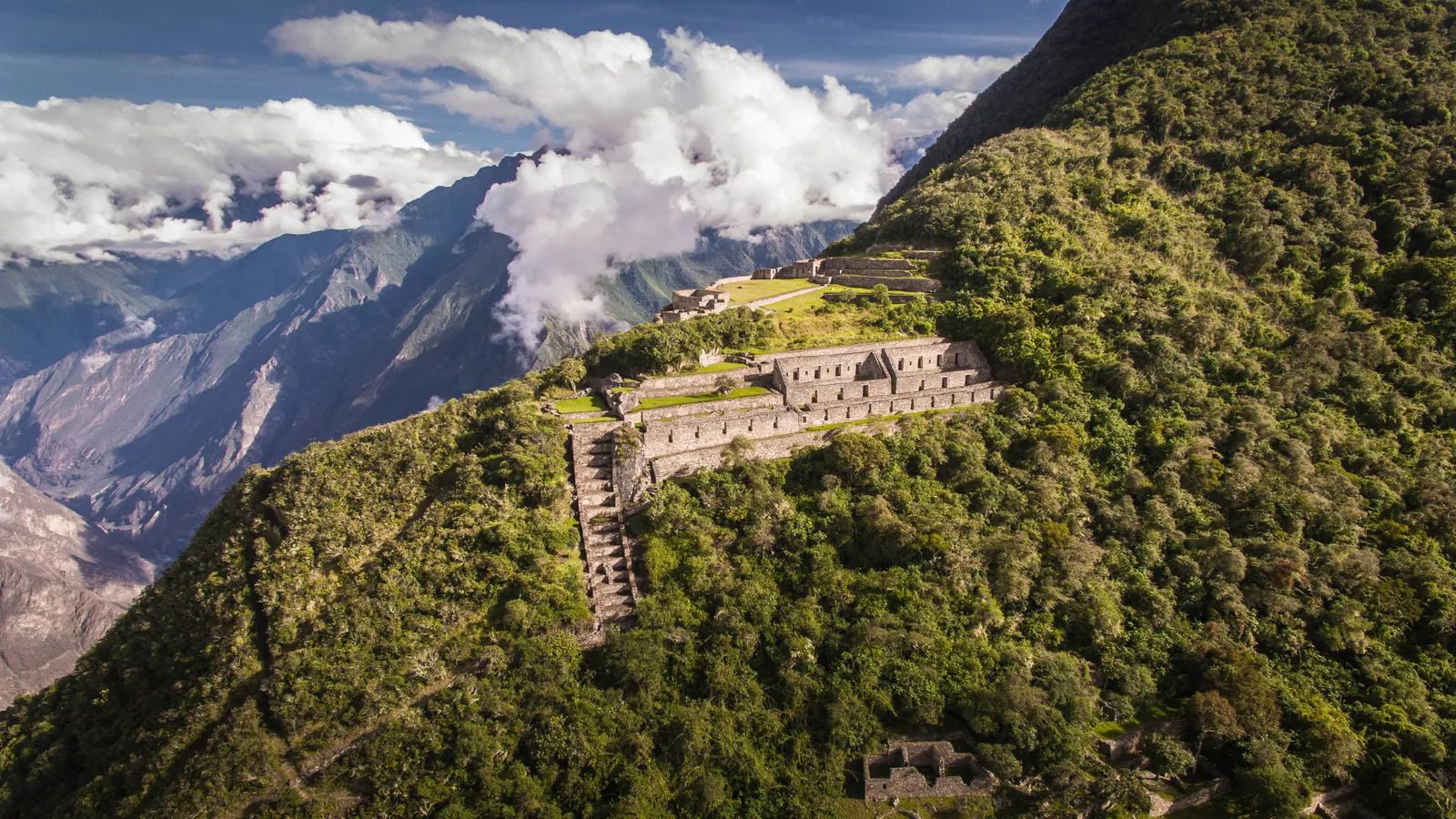 Choquequirao was built during the height of the Inca empire in the late 15th Century
They allowed Andean communities to overcome challenging environments, including steep slopes, thin soils, extreme and sharply fluctuating temperatures, and scant or seasonal rainfall. Fed by artificial pools and elaborate irrigation systems, andenes significantly expanded the area of cultivable land. They also conserved water, reduced soil erosion and – thanks to stone walls that absorbed heat during the day and then released it at night – protected plants from severe frosts.
This enabled farmers to grow dozens of different crops, from maize and potatoes to quinoa and coca, many of which would not otherwise have survived in the region. The upshot was a dramatic increase in the overall amount of food produced.
Beyond their ingenuity, andenes also have an artistic quality, forming vast geometric patterns on the landscapes of the Andes. Some look like giant green staircases carved into the mountainside, while others are made up of sets of concentric circles, capturing the attention like an optical illusion.
One of the most impressive is the Peruvian archaeological site of Moray, which resembles a natural amphitheatre. Located around 50km north of the former Inca capital of Cuzco and 3,500m above sea level, it demonstrates how andenes were used to create a range of microclimates. Thanks to the varying designs, sizes, depths and orientations of the terraces, the temperature differential between the highest and lowest is around 15C. Moray has been described as an "agricultural research station": soil samples from across the empire have been discovered here and researchers argue the Inca may have used the site to experiment with practices like crop rotation, domestication and hybridisation.
Sophisticated agricultural techniques such as andenes played a vital role in the expansion of the Inca empire, which was known as Tawantinsuyu and spanned much of modern-day Peru, western Bolivia, south-west Ecuador, south-west Colombia, north-west Argentina and northern Chile at its height. One of the oldest surviving accounts of their use comes from Garcilaso de la Vega (1539-1616), the son of an Inca noblewoman and a Spanish conquistador. After capturing a new territory, the Inca started to expand the amount of agricultural land by bringing in skilled engineers, de la Vega noted in his book, Royal Commentaries of the Incas.
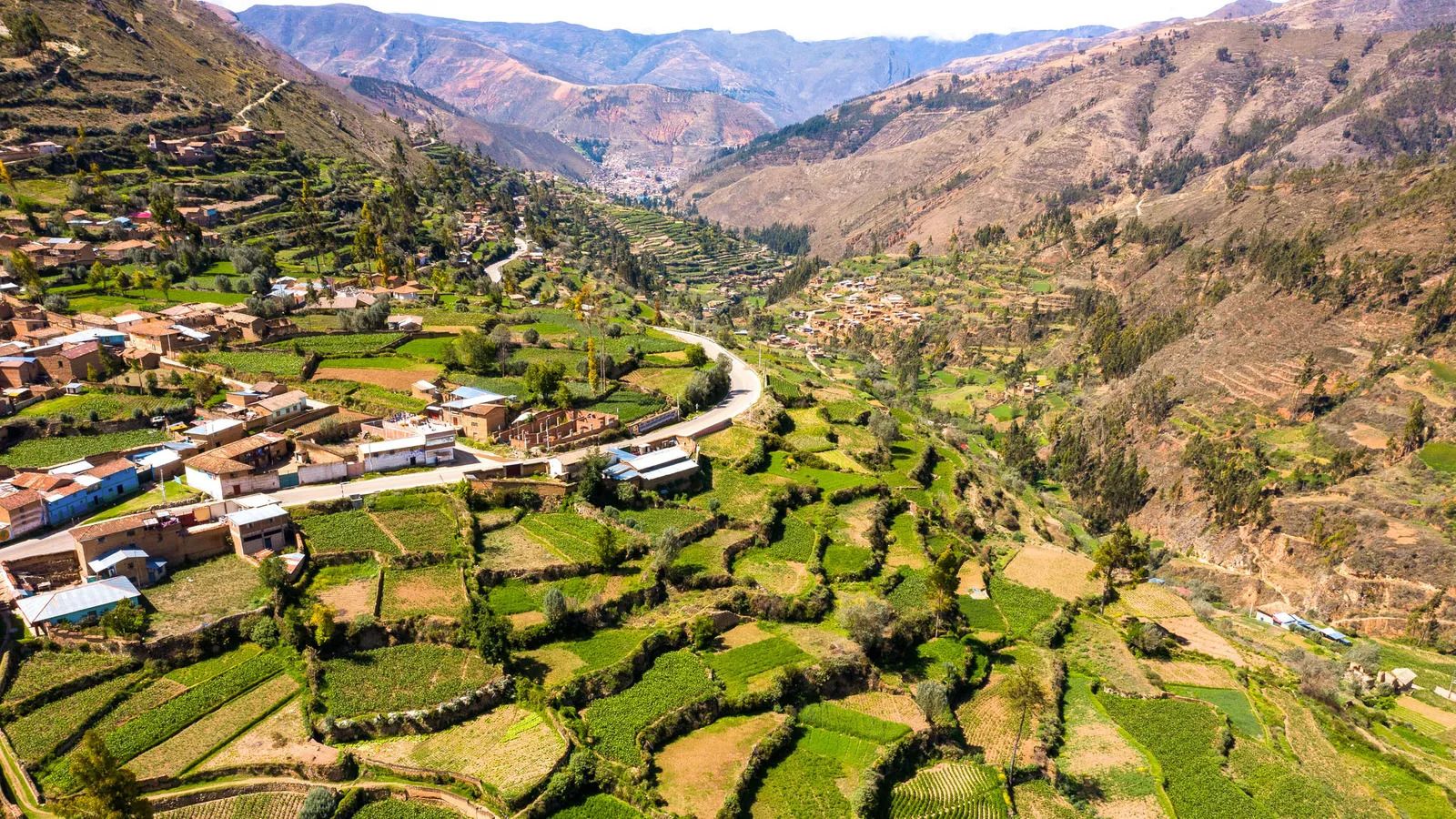 The terraced fields can be found scattered across the steep slopes of the central Andes
"Having dug the [irrigation] channels, they levelled the fields and squared them so that the irrigation water could be adequately distributed," he wrote. "They built terraces on the mountains and hillsides, wherever the soil was good… In this way the whole hill was gradually brought under cultivation, the platforms being flattened out like stairs in a staircase and all the cultivable and irrigable land being put to use."
The newly expanded land was subsequently split into three parts: one for the Inca emperor; one for religious purposes; and one for the community, tranches of which were then distributed by local leaders. Although they were not taxed, farmers were required to spend time working on the emperor's and the religious lands, as well as their own.
Techniques such as andenes were combined with policies such as mitma, where people were moved to recently conquered territories to help cement Inca control; and mit'a, a form of compulsory public service used to provide manpower to build infrastructure, including a road network tens of thousands of kilometres long.
This approach to agricultural, community and imperial organisation allowed the Inca to amass large surpluses of food for use during droughts, floods, conflicts and other lean periods. These stockpiles – which included chuño, freeze-dried potatoes produced by repeated exposure to frost and bright sunshine – were kept in huge storehouses called qullqas. In the absence of a written language, the Inca used a complex system of multicoloured knotted strings known as quipu (or khipu) to maintain inventories, as well as keep track of population and astronomical data. Some academics believe quipu may even have been used to record narratives such as stories, songs and poems.
Grau argues that quipu – examples of which are on display in the British Museum's exhibition – were central to Inca society. "They inherited this knowledge from the Wari, a society that existed in the southern highlands, 400 years before the Inca," she said. "The Inca used a decimal system: they had a different knot for every number from one to nine, and then for tens, hundreds and thousands... the quipu was key in the way the empire functioned and was organised."
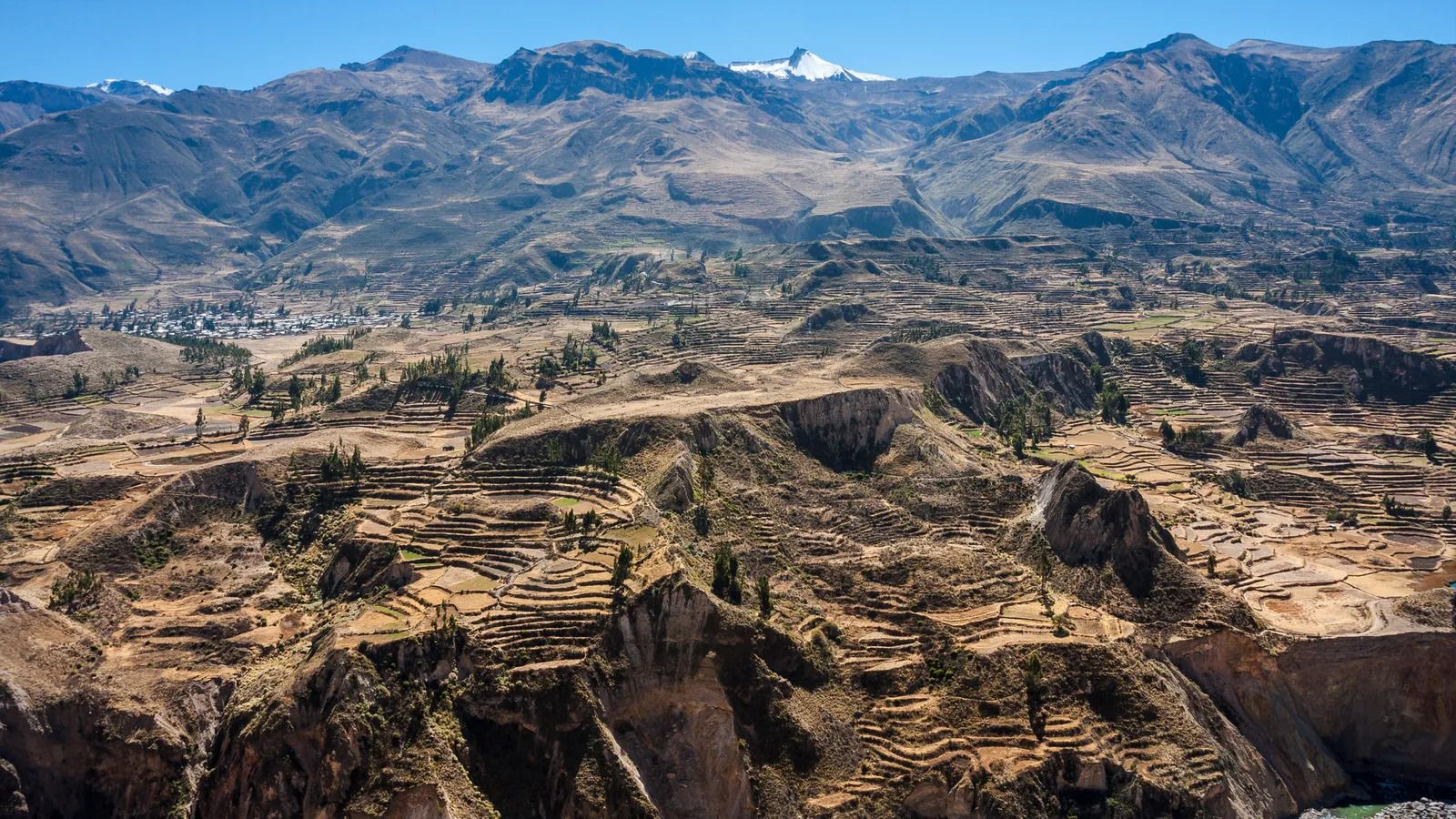 The dramatic Colca Canyon in southern Peru is twice as deep as the Grand Canyon
Ultimately, the andenes, stockpiles and quipus helped the Inca to steadily expand an empire that eventually dominated a great swath of South America, encompassed 12 million people and produced majestic citadels such as Machu Picchu.
But the arrival of the Spanish conquistadors in the 16th Century triggered the overthrow of the Inca and the decline of the andenes. Colonial violence, epidemics of European diseases and forced displacement devastated the indigenous populations of the central Andes. European crops and agriculture practices were introduced and quickly spread throughout the region.
Yet while many andenes were abandoned or fell into disrepair, they never disappeared completely. Drawing on knowledge passed down over the generations, many Andean farmers continue to use them today, and though often overlooked by travellers, they remain a common sight in places such as Isla del Sol and the wider Titicaca region, the Sacred Valley near Machu Picchu, and the Colca Canyon in southern Peru, a fissure twice the depth of the Grand Canyon.
In recent years, there has also been renewed academic interest in andenes as a form of sustainable agriculture that could help the world cope with the climate crisis, water scarcity and soil erosion. The Food and Agriculture Organization of the UN, for example, describes traditional Andean culture as "one of the best examples of the adaptation and knowledge of farmers to their environment", and highlights its sustainable approach to land usage, water management, soil protection and crop biodiversity.
Four and a half thousand years after they first emerged, the terraced fields of the Andes appear to be ahead of their time.