

The surprising power of internet memes
To most of the world they are just amusing pictures of an adorable cartoon bunny sitting beside, or sometimes inexplicably amidst, a bowl of rice. But in China, where these images have been circulating on social media, they carry a deeper, and more serious meaning.
"Rice bunny" (米兔), as this collection of images and emojis are known, emerged in 2018 as part of the global #MeToo movement among women to expose sexual harassment. In China, where state censorship saw hashtags related the campaign being blocked, internet users had to find an alternative to coordinate the movement in their country. Enter the rice bunny. As an image it looks innocuous enough, but when the words for the two seemingly unrelated subjects are said aloud, the true meaning becomes clear – they are pronounced "mi tu".
Through the use of this translinguistic homophone, women in China were able for a time to share their stories and spread the word about the #MeToo movement within a country that can be highly suspicious of organised social movements.
On the surface, internet memes are a ubiquitous source of light entertainment – a way for people to express themselves through cleverly remixed templates of text, images and videos. They are arguably the wallpaper of our social media feeds and often provide us with a few minutes of idle, amusing fodder for procrastination during our day.
But memes also have a serious side, according to researchers looking at modern forms of communication. They are a language in themselves, with a capacity to transcend cultures and construct collective identities between people. These sharable visual jokes can also be powerful tools for self-expression, connection, social influence and even political subversion.
Internet memes "are one of the clearest manifestations of the fact there is such a thing as digital culture", says Paolo Gerbaudo, a reader in digital politics and director of the Centre for Digital Culture at Kings College London.
Gerbaudo describes memes as a "sort of a ready-made language with many kinds of stereotypes, symbols, situations. A palette that people can use, much like emojis, in a way, to convey a certain content".
According to social media site Instagram, at least one million posts mentioning "meme" were shared every day in 2020. But what is it that makes the internet meme so popular and why is it such an effective way of conveying ideas?
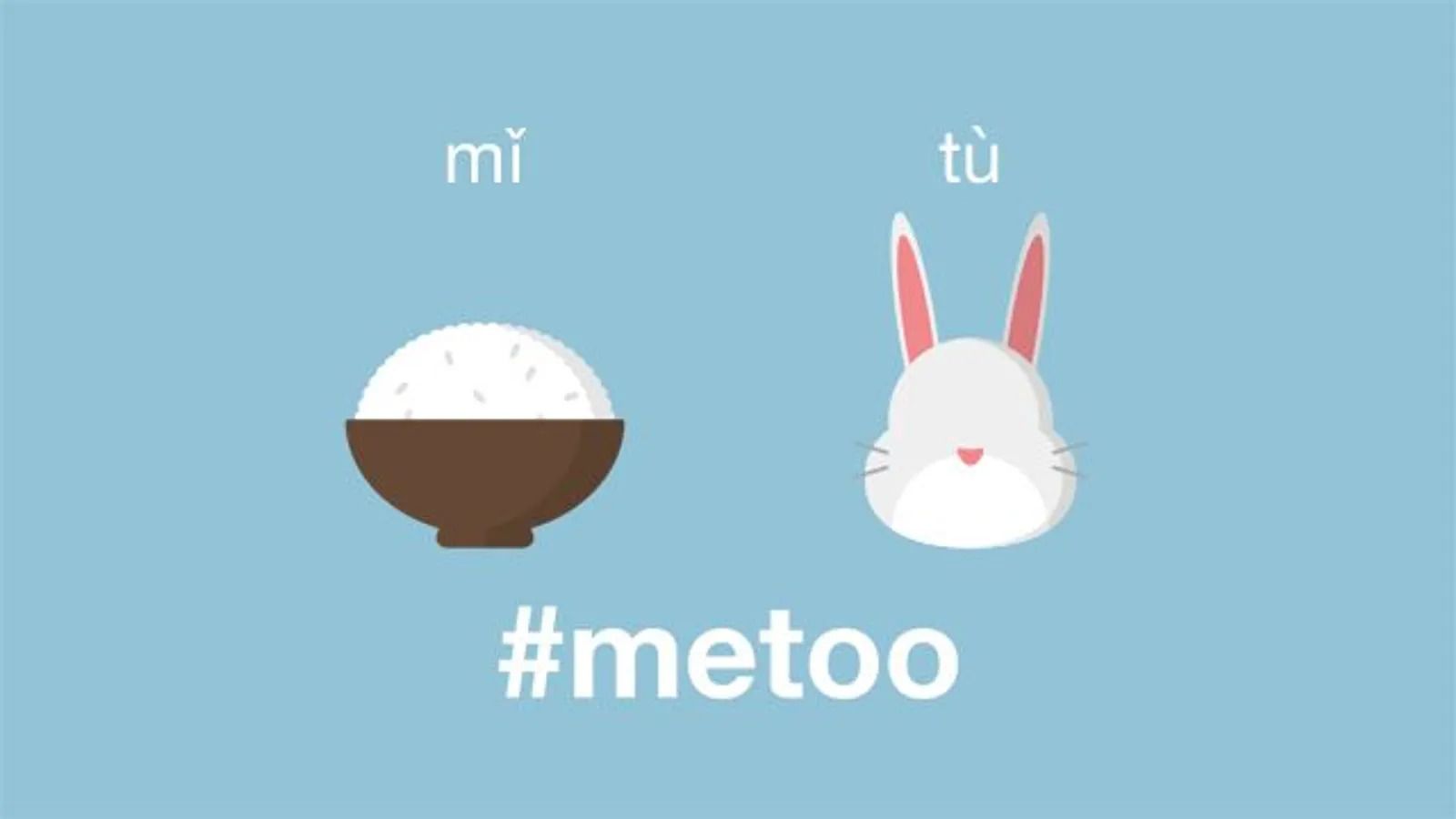 Images of rice and bunnies were used by women in China to spread word about the #MeToo movement in the country
Of course, memes have been around long before the rise and reproduction of familiar internet memes like the Distracted Boyfriend or the many wise faces of "Doge".
Richard Dawkins, the evolutionary biologist, coined the term "meme" in his 1976 book The Selfish Gene, likening discrete bits of human culture that propagate between people to genes. Dawkins shortened the ancient Greek word "mimeme" – with an apology to his classicist colleagues – to meme, to rhyme with "cream". He suggested that memes were melodies, ideas, catchphrases or bits of information that leap from brain to brain through imitation, expediting their transmission.
He coined the term to highlight just how human culture can replicate itself. And in that sense memes have been around probably since humans have had cultures they have shared. But we can also see the kernels of what makes modern internet memes so successful in ancient forms of popular culture.
"We see the replication of mundane reality in many forms of art," says Idil Galip, a doctoral researcher at the University of Edinburgh, and founder of the Meme Studies Research Network. "Even going back to, let's say, Hellenic times, you've got something like tragic theatre, that takes things that happen to you that are upsetting and real-life and makes them into comedic things, which is what memes do."
With the arrival of the internet, however, memes have become a more tangible phenomenon that can be observed as they grow, spread and mutate. "In a way, it's like internet users paving the way for academics to look at memes more scientifically," says Limor Shifman, a professor of communication at the Hebrew University of Jerusalem. Researchers at Facebook showed in a study in 2014 just how widely memes posted on the social media site can spread and evolve. In one example, they found 121,605 different variants of one particular meme posted across 1.14 million status updates.
Shifman's definition of memes, now widely used in the field, describes them as "a group of texts with shared characteristics, with a shared core of content, form, and stance". Broadly, "content" refers to ideas and ideologies, while "form" to our sensory experiences such as audio or visual, and "stance" to the tone or style, structures for participation, and communicative functions of the meme.
Fundamentally, no meme is an island. "A text that just spreads well, and a lot of people see it, is not a meme," says Shifman. "It's viral. But if a lot of people create their own versions then it becomes a group of texts and then it's a meme."
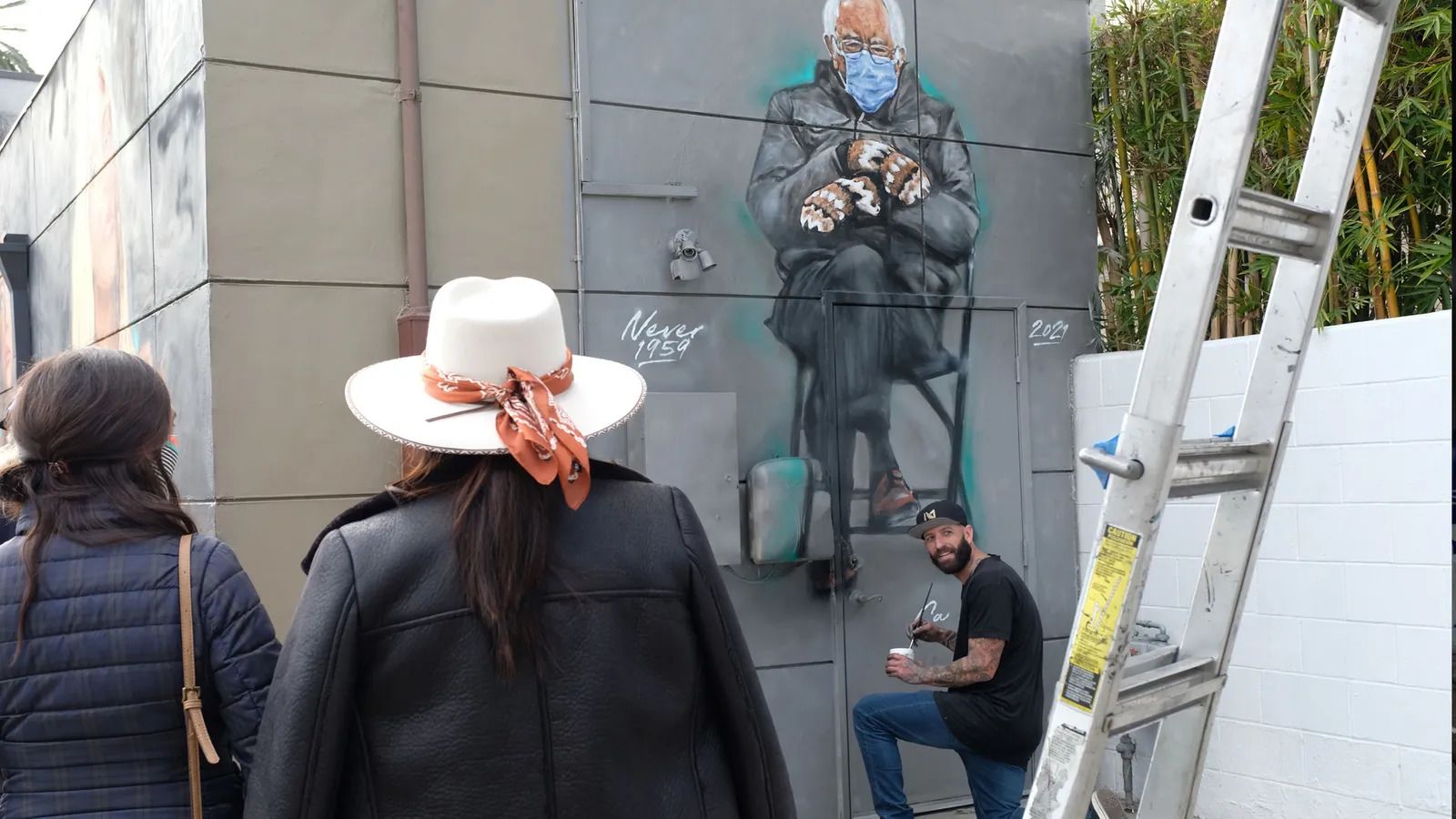 The popularity of the meme featuring Bernie Sanders wearing mittens helped to raise $1.8m for charity
Memes tap into collective consciousness online and have been referred to as digital folklore – or "Netlore". "We can see not just the new ways people do things or the new ways people express themselves in public but also some of the themes, some of the anxieties or desires people have. All of these complex issues are reflected in things like memes," says Gerbaudo.
But for an idea to become a meme, it needs to be shared. Most successful internet memes – in that they spread wide and far – share a few key attributes.
"Usually the most viral, most loved memes are memes that are about things that are very recent in public memory," says Galip. But often they are also "something that was important to many people", she says. "Viral memes usually appeal to the most common denominator. So you don't have to necessarily be embedded in internet subculture to understand what it's saying. And the final thing I think is, it's the most basic thing but it's very hard to replicate, is that it should be fun to look at, and fun to share."
One study found memes sparking a stronger emotional response were more likely to be shared. People were also more likely to forward funny videos over cute, disgusting, or anger-inducing ones.
Many of us gained a new appreciation for memes during the pandemic as a welcome source of light relief. Research conducted during the 2020 lockdown in Spain by Lucía-Pilar Cancelas-Ouviña, a professor of didactics of language and literature at the University of Cadiz, found humour was a core feature of memes shared using the messaging application WhatsApp. Cancelas-Ouviña suggests it helped take the sting out of the fear and uncertainty that was widespread at the height of the Covid-19 pandemic, a finding supported by other studies elsewhere.
Reese Witherspoon's 2020 Challenge was one viral pandemic meme that summed up the year in a highly relatable calendar format, which subsequently spurred versions featuring other celebrities such as Mindy Kaling and Oprah Winfrey.
But memes don't always have to tickle our funny bones to get our attention. "Humour is important in popularising this form of expression and people like spreading cheerful content," says Shifman. That being said, "even if it's not funny, if it's disturbing, if it makes them angry, if it makes them feel things, they would still circulate it", Shifman adds. The sharing of memes about the war in Ukraine could be regarded as one example of this.
Internet memes can contribute to the formation of a collective identity among marginalised groups
Memes also have an uncanny way of capturing a feeling, experience, or state of mind which resonates with people, depending on the "niche-ness" of the meme. One small recent study found that people with depression rated depression-related memes as more humorous, relatable and shareable. The researchers suggest memes elegantly portray the experience of depression which some may find hard to vocalise. And because they are highly relatable among people with depression, they could offer the perception of social support and emotional connection. The findings echo those in other studies that have suggested internet memes can contribute to the formation of a collective identity among marginalised groups such as the LGBTQ+ community or among disparate networks of people, such as those who have been conceived with donated sperm or eggs.
"Niche memes are not meant to go viral," says Galip. "They're meant usually to create things like in-group belonging, something that kind of strengthens a sense of identity." In her work exploring digital subcultures, she has found "memes facilitate community not only on the internet but it also it kind of bleeds out into, let's say, the real world or the offline world".
In 2015, female scientists shared ironic memes of themselves dressed in lab overalls and protective clothing with the hashtag #distractinglysexy, following comments about "girls" in laboratories by Nobel Prize winner Tim Hunt. The hashtag gathered more than 10,000 posts on social media in just a few hours and led to wider discussions about sexism in science in the mainstream media.
If you are wondering if you're part of a meme subculture, Gerbaudo says if you're looking at a meme and "you get through the kind of enigma or mystery around that at face value" you are probably part of the group it is aimed at. "You understand [the] language, you understand the assumptions of the group," he says.
But memes can also have an influence on our point of view. One perspective put forward by Joshua Nieubuurt, who studies misinformation and disinformation at the University of Maryland in the US and the University of Okinawa in Japan, is that memes can be regarded as a modern digital equivalent of the propaganda leaflet. He points to the way memes have been used to support or undermine arguments for Covid-19 restrictions and vaccinations, using humour and sarcasm to delegitimise the stances of people on either side of the debate.
And political memes are an effective way to ignite political participation. According to one study, 30 video or gif political memes (largely created by citizens) amassed more than 45 million views during the 2017 UK General Election.
A set of memes known as Caća se vrača (the father is coming back), which depicted former Croatian prime minister Ino Sanadar as a problem-solver after his release from prison, may have influenced media reporting about him that became more positive in tone, according to one study. Another study in Uganda found political memes were an effective form of political participation among millennials, even suggesting that greater exposure to memes was positively related to participation.
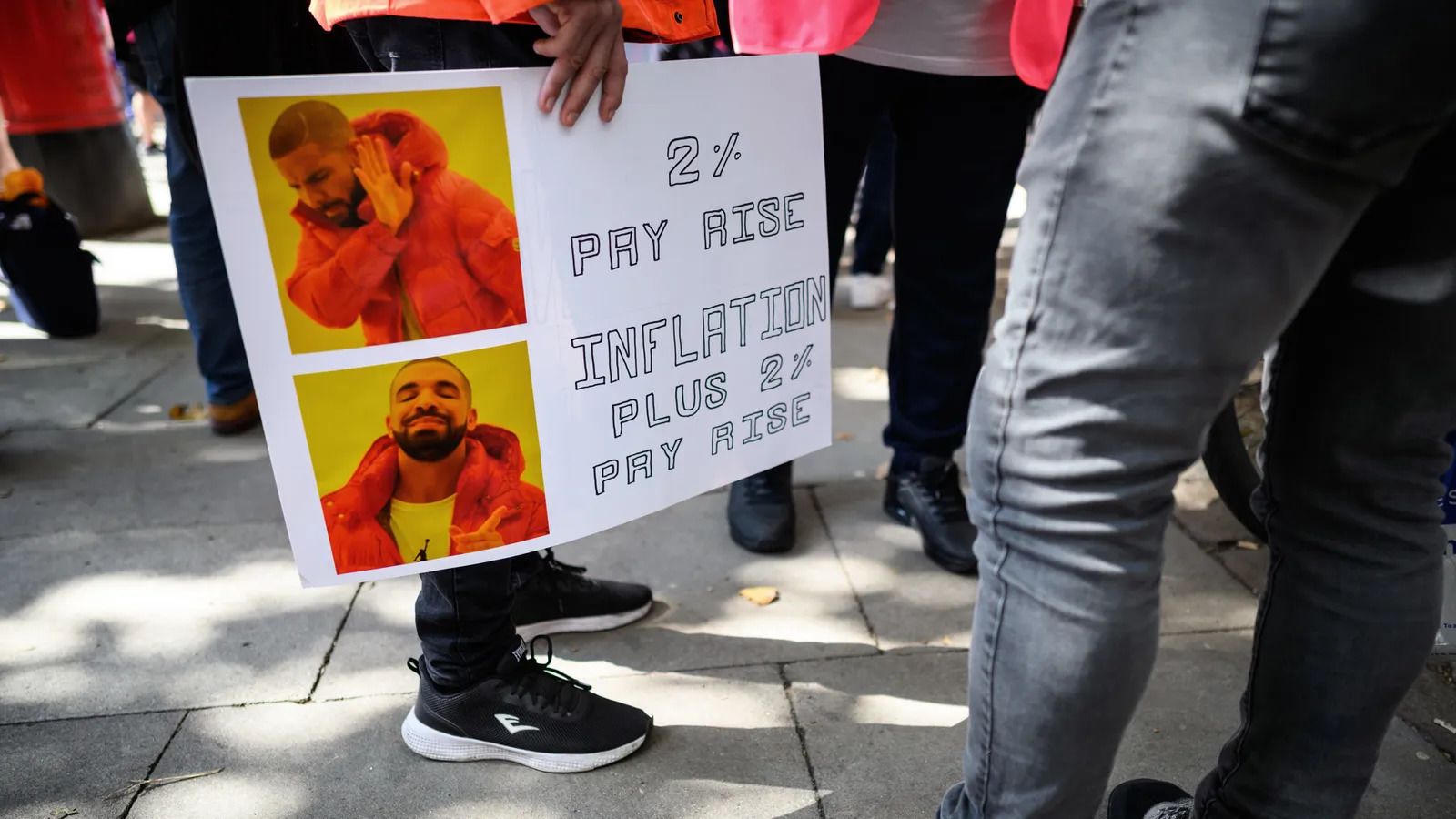 Protestors and activists have been using popular internet memes online and in the real world to convey their messages
More recently, the Ukrainian government began publishing memes on its official Twitter account in the lead up to the war with Russia as a way to gather popular support. One meme, posted in November 2021, used humour to publicly undermine Russia's denial of its plan to attack Ukraine. Another used a lighthearted headache meme to communicate the stress of being a neighbour to Russia. Although simple and humorous, these memes encouraged thousands of people to participate in a conversation about the disturbing reality of the impending war.
In the US, researchers Mia Moody-Ramirez and Andrew Church, explored Facebook memes during the 2016 Presidential Election. In general, they found Facebook meme pages about presidential candidates, Donald Trump and Hilary Clinton, had a negative tone. Trump-memes were more likely to reference his hairstyle and facial expressions, whereas Clinton-memes referenced her email scandal and relationships. The authors suggest that grassroots meme-culture allows everyday people to bypass the mainstream media, which has historically been a "gatekeeper" of political themes and discourse in presidential campaigns. Now, creators of memes (both citizens and candidates) have the power to share ideas with a vast online audience, shape political conversations, and ultimately, influence voting decisions.
Unsurprisingly, we're more likely to share memes consistent with our political views and we also tend to subject political memes to greater scrutiny than those that are non-political. But as well as adding to the din we are exposed to on social media, political memes offer a subversive means to challenge dominant discourses of authoritarian governments.
Gerbaudo says the use of memes "as a means of political contestation, is coloured by the prevalence of sarcasm and irony, which is very common to memes, exposing the weakness, or vileness, or stupidity of the enemy, poking fun at excessive pompousness, excessive arrogance of the powerful". But they can also be used as vehicles for anger and political discontent.
Digital activism in the form of memes is an important form of expression for people living within oppressive regimes where overt anti-establishment debate is unacceptable in mainstream media.
Protestors are taking internet meme culture back onto the streets in an attempt to use the humour and imagery they have honed on social media to drive their point home
One research study found satirical memes posted on Moroccan Facebook pages that were ostentatiously defined as "just for fun" or "entertainment" actually led to subversive political conversations about the monarchy, which ultimately encouraged political participation.
Of course, in more authoritarian political regimes, there's always a chance that subversive political memes are censored one way or another, such as the Winnie the Pooh meme that mocked Chinese President Xi Jinping and was believed to be behind the ban of a Disney live action film adaptation of the Winnie the Pooh books, Christopher Robin. In an article published in the Journal of Visual Culture, technologist and writer An Xiao Mina suggests political memes in China are covertly subversive in order to dodge scrutiny from human or machine-powered state censors. Carefully embedding activist messages in simple imagery, like a cute cat or a llama, can disguise these memes as trivial, apolitical content that are less likely to get flagged and blocked, she argues.
"In today's world, memes are the seeds from which social movements grow," Xiao Mina says in her book Memes to Movements. "But to flower, they must find their homes in the fertile ground of minds and cultures."
In some cases protestors are taking internet meme culture back onto the streets, such as in Myanmar and the 2017 Women's March on Washington in the US, in an attempt to use the humour and imagery they have honed on social media to drive their point home.
During Russia's annexation of Crimea in 2014, memes were also used by both anti-government and pro-government activists to spread ideas, according to research by Anastasia Denisova, a senior lecturer in journalism at the University of Westminster and author of a book on internet memes and society. She says they provided a powerful form of alternative discourse outside of the "restricted Russian media ecology".
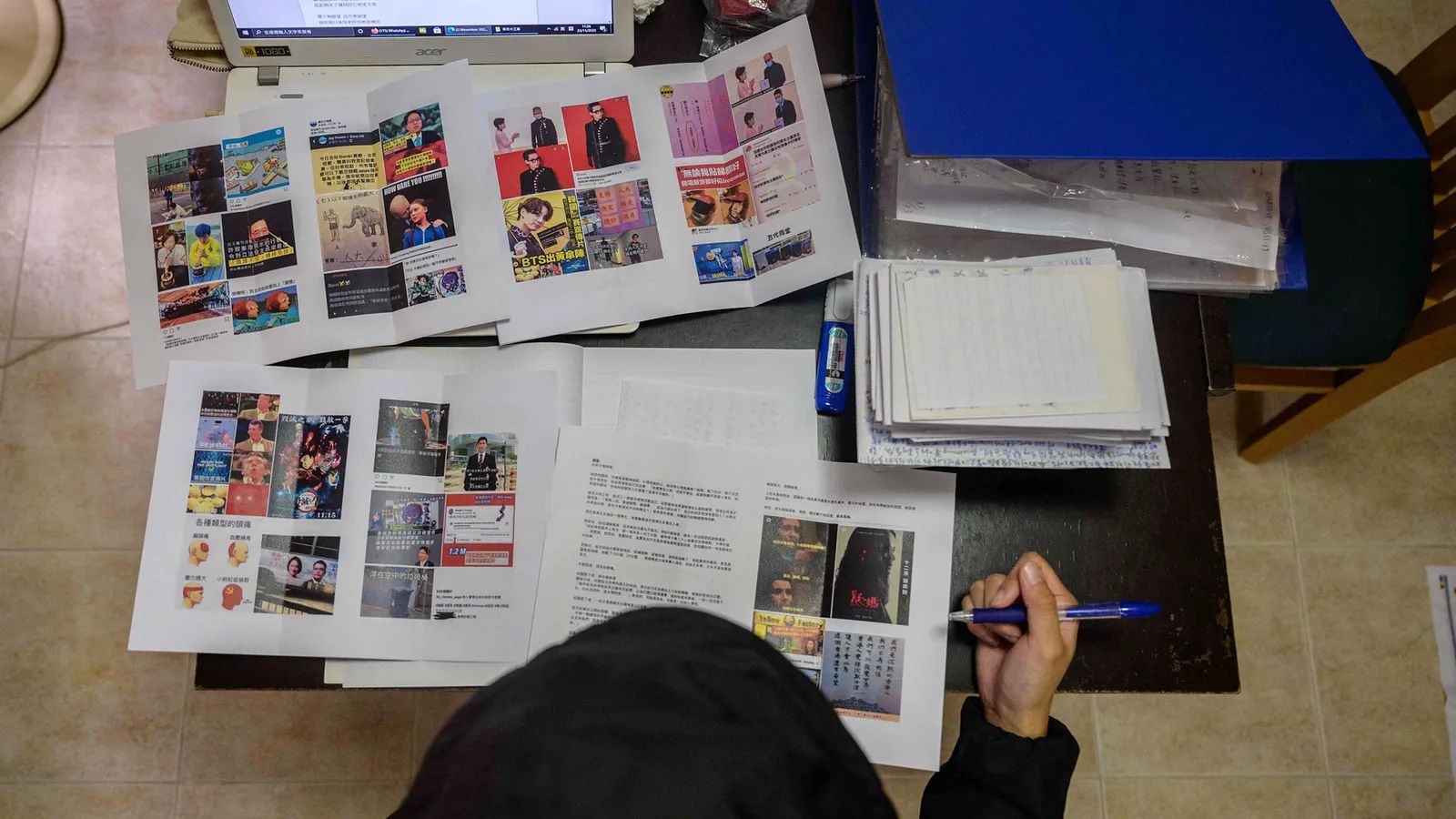 Memes have been an important form of communication and symbolism in the pro-democracy protests in Hong Kong
Shifman highlights that memes are used as political devices on all sides of a debate. "[Memes] unsettle power balances and allow normal people to express their voice, to express their anxieties," she says. "On the other hand… memes could also be forces of governments, they're now used by powerful corporations, they're also used by extremists of all kinds."
But memes can have an even darker side – helping to spread misinformation and conspiracy theories that can have impacts in the real world, as became apparent during the Covid-19 pandemic. Rather than being a way to present elaborate theories, memes have been described as offering "bite-sized" conspiracies that can be repeated, adapted and widely shared.
In the case of Covid-19, many of the conspiracy memes that surfaced were attempts to fill gaps in knowledge as the pandemic unfolded. "If you don't know enough, you will fill the gaps, with whatever knowledge you can find," says Alexander Jack, a forensic psychologist at Birmingham and Solihull Mental Health Foundation Trust who studied how Covid-19 conspiracy memes spread among mental health patients.
For those with mental health issues, conspiracy memes may be more problematic, warns co-researcher and forensic psychiatrist, Reena Panchal. "If you're a vulnerable person, and you find someone or a group of people who share your views, you immediately feel a sense of belonging, and that kind of adds strength to your beliefs," she says.
But while memes spread and shapeshift at a lightning rate, can we expect them to hang around as a form of expression in the future?
"This format of communication is here to stay because it's a very stable way of expressing your individuality and your communality," says Shifman. Gerbaudo notes that memes are already evolving – branching out more into video sharing. "TikTok videos are memetic in character," he says. "They respond to challenges, which have a certain format, where people need to kind of play with a given, pre-established set of interactions."
But whether memes are a force for "good" or "bad", is largely down to how we choose to use them. "They're neutral modes of communication," says Galip. "You can make meaning out of memes depending on what you want to express."
What's clear is that the modest meme should not be underestimated. They conceal complexity and culture beneath their simple exterior. Online, memes are important facilitators of communication, belonging, and digital activism, that can both unite and divide us, depending on who we are and how we participate with them.