

These Images From The War In Afghanistan Raise A Lot Of Questions About What's Next
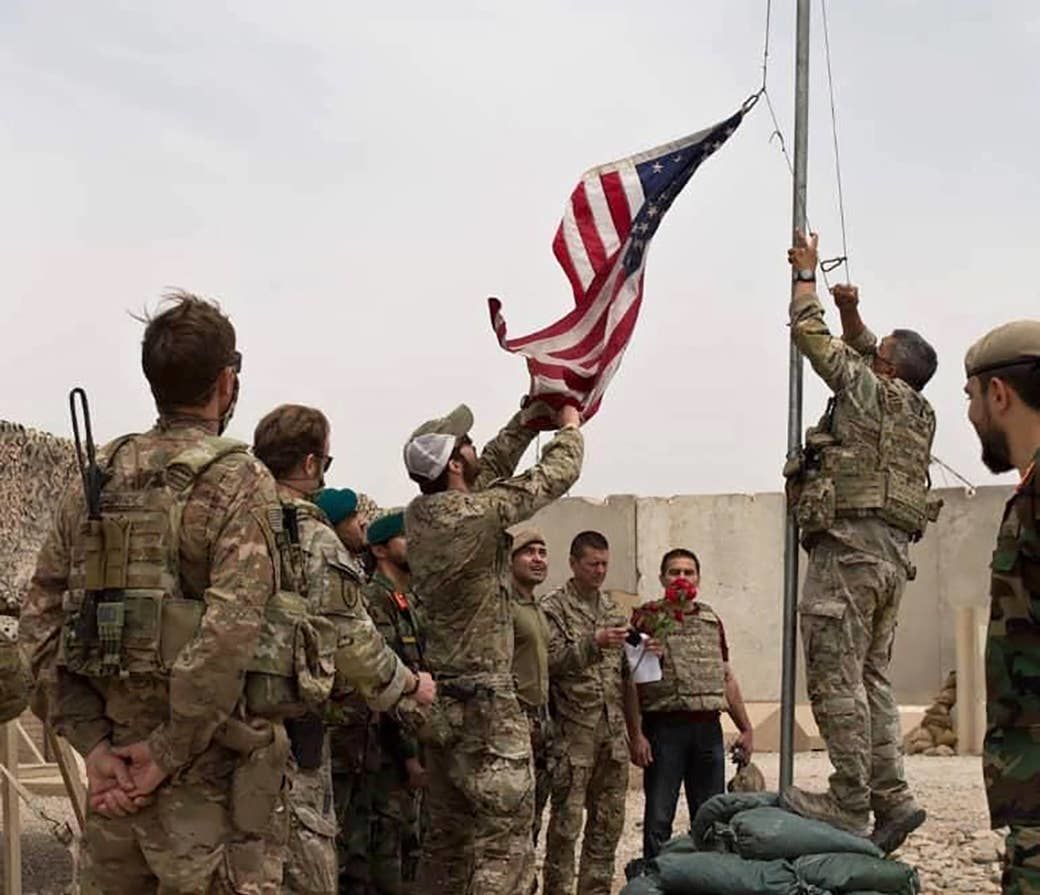 A US flag is lowered as American and Afghan soldiers attend a handover
ceremony from the US Army to the Afghan National Army, at Camp Anthonic
in the Helmand province of southern Afghanistan on May 2, 2021.
A US flag is lowered as American and Afghan soldiers attend a handover
ceremony from the US Army to the Afghan National Army, at Camp Anthonic
in the Helmand province of southern Afghanistan on May 2, 2021.
We've known for a long time that the Afghanistan War was not going to end with a triumphant victory. Last week, US troops formally left Bagram Airfield with little fanfare. President Joe Biden has said the US’s military mission will end by Aug. 31, something of an anticlimactic end to a war that has lasted almost 20 years.
For Afghans, the conflict is ongoing. Thousands have left the country already, and the departure of US and allied forces, while anticipated, has undermined the slim sense of security that people felt. The country has been slowly sliding toward civil war for months now, if not years. The Taliban, the enemy the West originally set out to defeat, is also poised to reclaim power in many areas outside the capital of Kabul, where the mood is anxious.
"I think this is in many ways the worst possible outcome that would have been visualized during those peace talks leading up to Doha — that the US is withdrawing, but without an end to the war that is continuing in Afghanistan between the two sides there," Madiha Afzal, a David M. Rubenstein fellow for foreign policy at Brookings Institution, told BuzzFeed News, referring to the ongoing peace talks between the Afghan government and the Taliban in Qatar. In a recent speech, Biden defended the departure and accelerated the timeline. All but a few hundred troops are expected to withdraw by the end of August, well before the Sept. 11 deadline he initially set earlier this year.
The photos taken during the war in Afghanistan never told the full story — the US military got wise to the fact that telling the truth tended to raise questions (and opposition) back home after the Vietnam War. They clamped down on overall access and, at times, outright banned many types of images that were common in earlier eras, such as injured soldiers or returning caskets. The early years of the war were also shrouded in both secrecy and a sense of entitlement after the Sept. 11 attacks, which warped the sense of truth that was reported back home.
This limited access caused a curious flattening of the coverage in Afghanistan — it was harder to understand what was happening there beyond basic patrols. This meant in the US it became easier to ignore, even as the war spanned four presidencies, killed over 70,000 Afghan people and 2,400 Americans, and caused over 20,000 US casualties and untold numbers of Afghan citizens to flee, all at an average cost of $3 billion per month, according to the Pentagon.
After Osama bin Laden was killed in 2011 and the so-called green-on-blue attacks took place in the years that followed, the American public and members of Congress repeatedly posed one existential question: "Should we still be in Afghanistan?" A formal drawdown of troops started in 2014. Seven years later, we're almost fully out of Afghanistan. But big questions remain: Does this mean terrorism is defeated? What about all those girls who can finally go to school and participate in public life? All those kids who watched the soldiers, played with them, and were occasionally orphaned by them — what do they think now? And those same soldiers — so many of whom are barely old enough to legally drink, let alone practice nation building on the other side of the world — how are they doing? Was this worth it? What did we learn here? What will happen next?
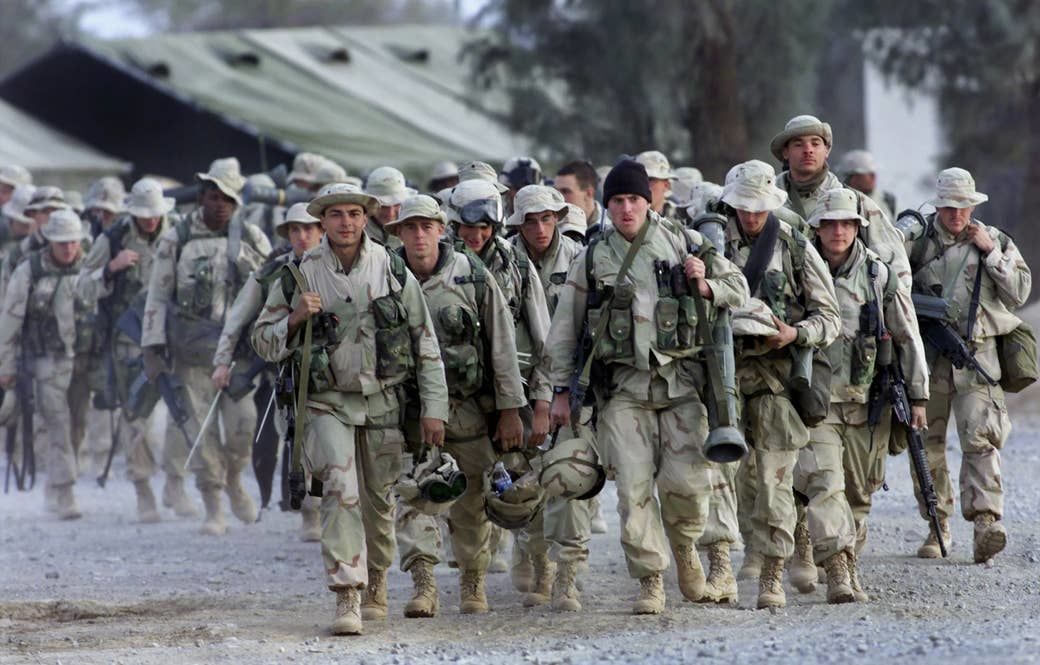 US Marines with full battle gear prepare to leave the US military
compound at Kandahar Airport for a mission to an undisclosed location on
Dec. 31, 2001.
US Marines with full battle gear prepare to leave the US military
compound at Kandahar Airport for a mission to an undisclosed location on
Dec. 31, 2001.
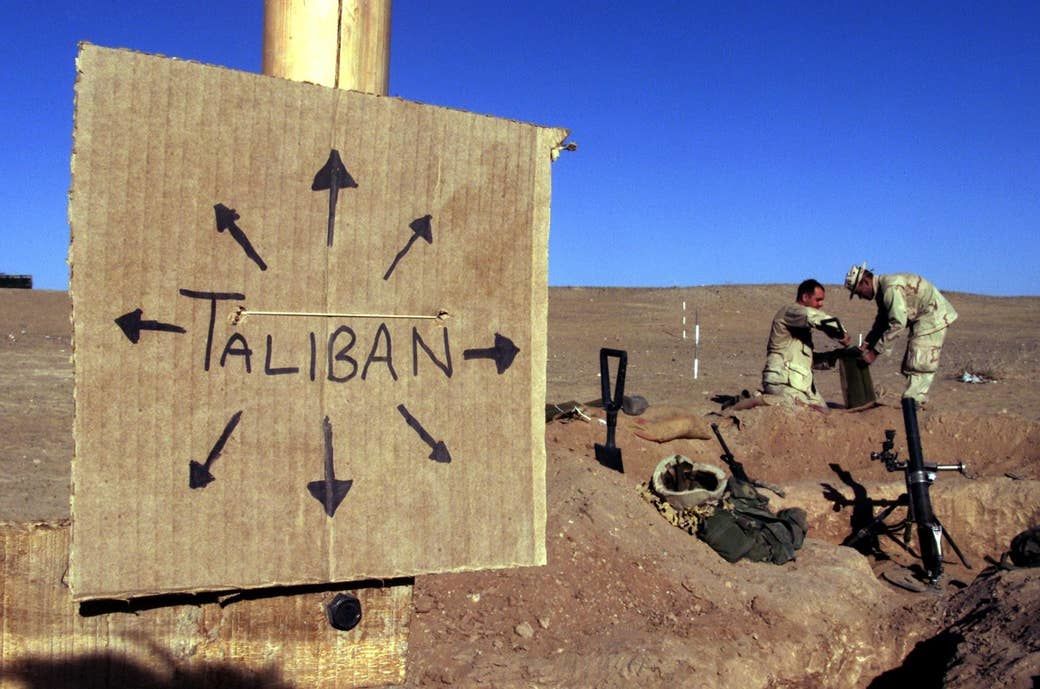 Marines fill sandbags around their light mortar position on the
frontlines of the US Marine Corps base in southern Afghanistan November
2001 near a cardboard sign reminding troops that Taliban forces could be
anywhere and everywhere.
Marines fill sandbags around their light mortar position on the
frontlines of the US Marine Corps base in southern Afghanistan November
2001 near a cardboard sign reminding troops that Taliban forces could be
anywhere and everywhere.
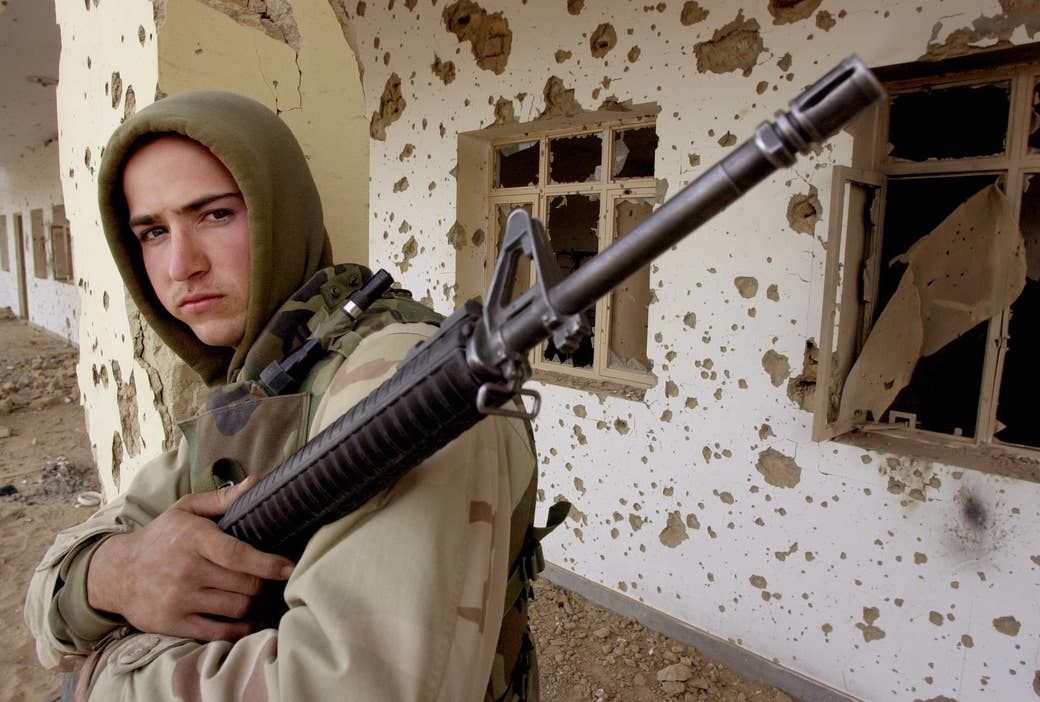 US Marine Lance Corporal Justin Kelly Little, from Scottsdale, Arizona,
stands next to a bullet-riddled building at Camp Rhino in southern
Afghanistan in December 2001.
US Marine Lance Corporal Justin Kelly Little, from Scottsdale, Arizona,
stands next to a bullet-riddled building at Camp Rhino in southern
Afghanistan in December 2001.
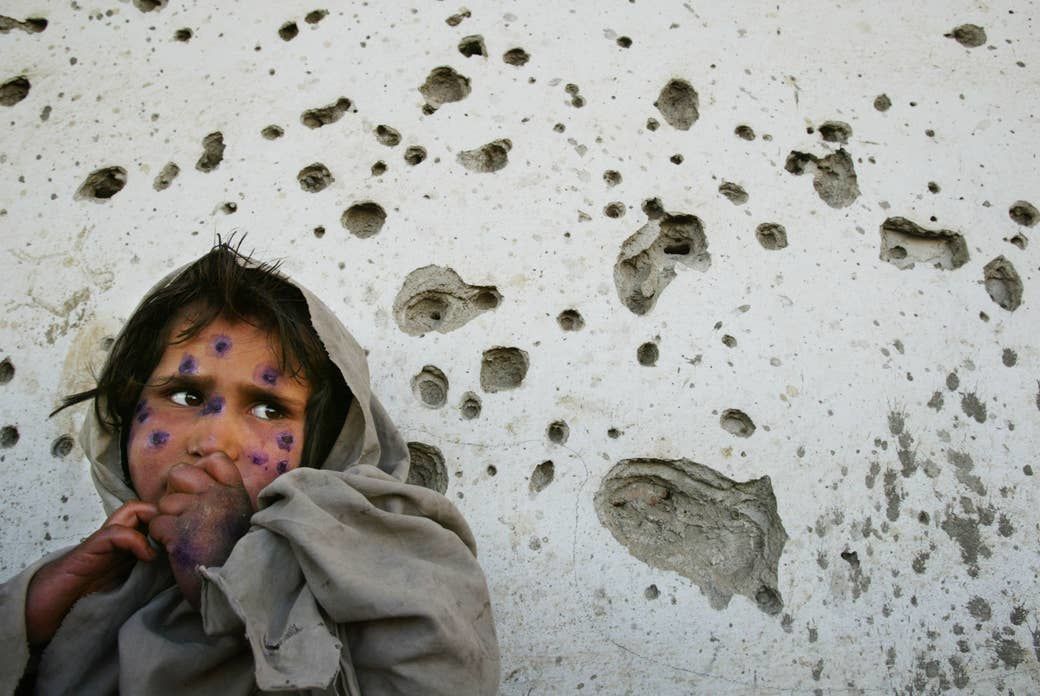 Mohboba, 7, stands against a bullet-ridden wall as she waits to be seen
at a health clinic March 1, 2002, in Kabul, Afghanistan. Mohboba has a
skin ailment called leishmaniasis, which is a bacterial infection that
plagues a great deal of poverty-stricken children in Afghanistan.
Mohboba, 7, stands against a bullet-ridden wall as she waits to be seen
at a health clinic March 1, 2002, in Kabul, Afghanistan. Mohboba has a
skin ailment called leishmaniasis, which is a bacterial infection that
plagues a great deal of poverty-stricken children in Afghanistan.
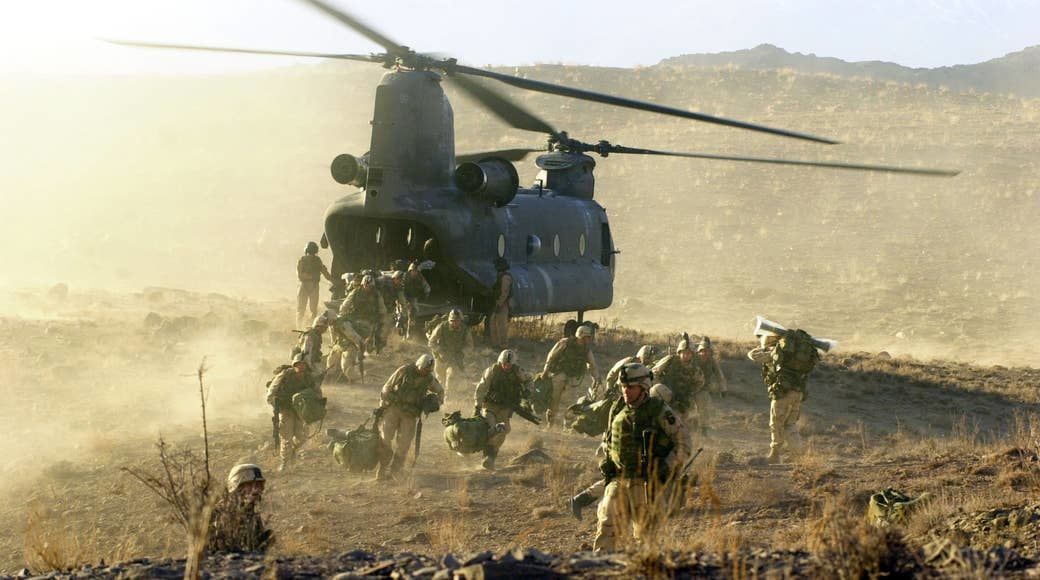 US Army soldiers from the 101st Airborne Division offload during a
combat mission in eastern Afghanistan in March 2002. The soldiers were
participating in the largest American offensive since the beginning of
the war.
US Army soldiers from the 101st Airborne Division offload during a
combat mission in eastern Afghanistan in March 2002. The soldiers were
participating in the largest American offensive since the beginning of
the war.
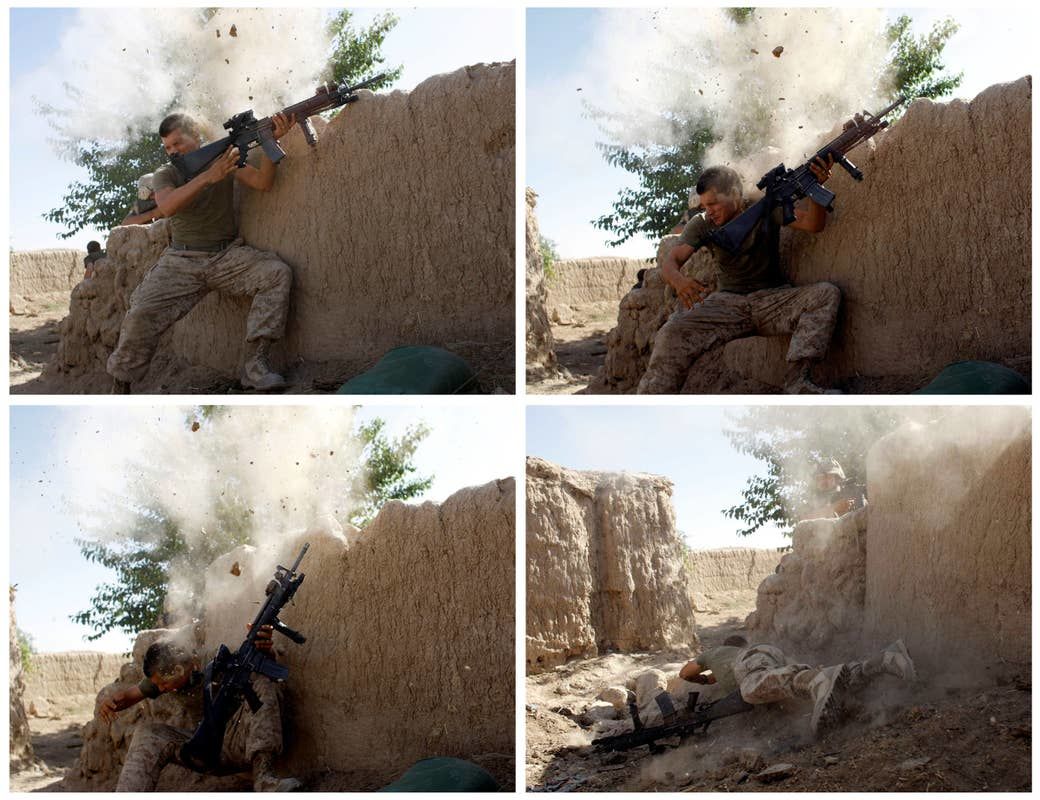 A combination of pictures shows Sgt. William Olas Bee, a US Marine from
the 24th Marine Expeditionary Unit, having a close call after Taliban
fighters opened fire near Garmser in the Helmand province of Afghanistan
on May 18, 2008. The Marine was not injured.
A combination of pictures shows Sgt. William Olas Bee, a US Marine from
the 24th Marine Expeditionary Unit, having a close call after Taliban
fighters opened fire near Garmser in the Helmand province of Afghanistan
on May 18, 2008. The Marine was not injured.
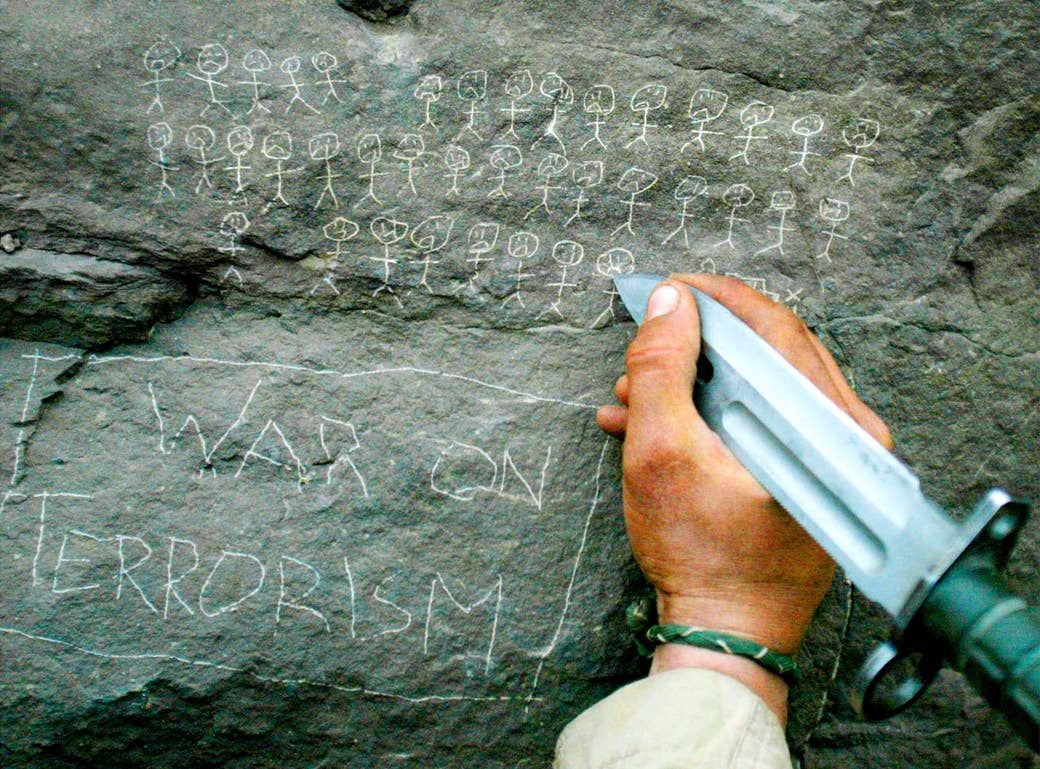 United States Army 10th Mountain Division soldier Jorge Avino from Miami
carves their mortar team's body count on a rock near the villages of
Sherkhankheyl, Marzak, and Bobelkiel in Afghanistan on March 9, 2002.
United States Army 10th Mountain Division soldier Jorge Avino from Miami
carves their mortar team's body count on a rock near the villages of
Sherkhankheyl, Marzak, and Bobelkiel in Afghanistan on March 9, 2002.
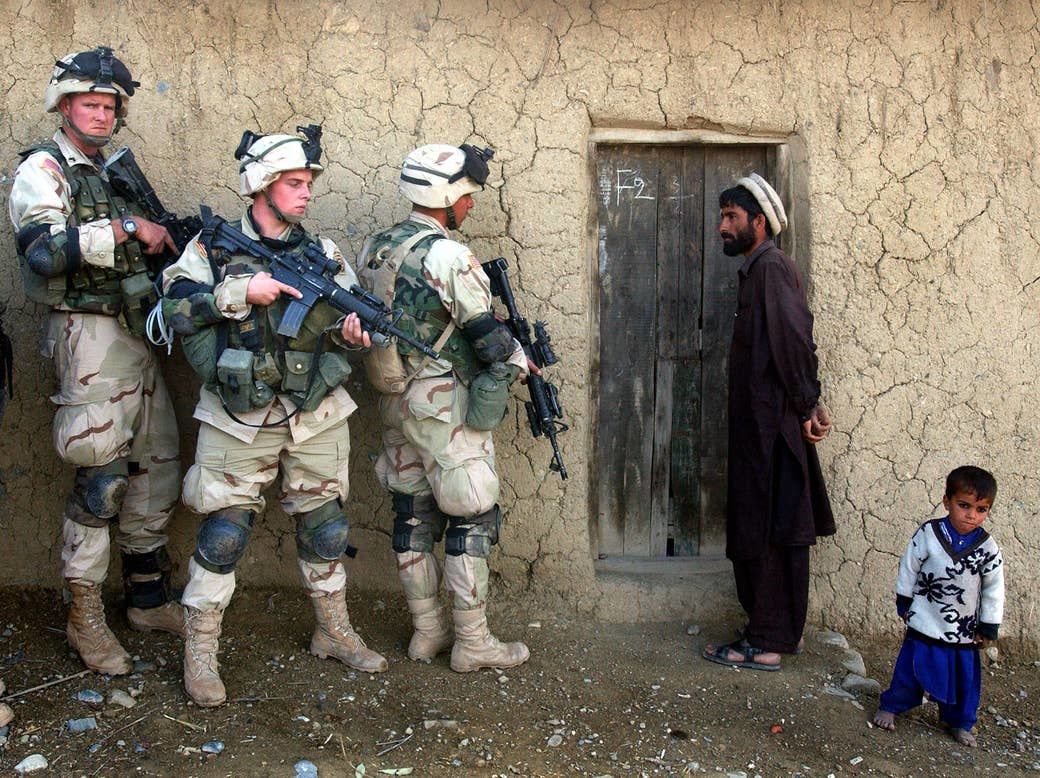 An Afghan man and his son watch as soldiers from the US Army 82nd
Airborne Division prepare to sweep their home on November 7, 2002, in
southeastern Afghanistan.
An Afghan man and his son watch as soldiers from the US Army 82nd
Airborne Division prepare to sweep their home on November 7, 2002, in
southeastern Afghanistan.
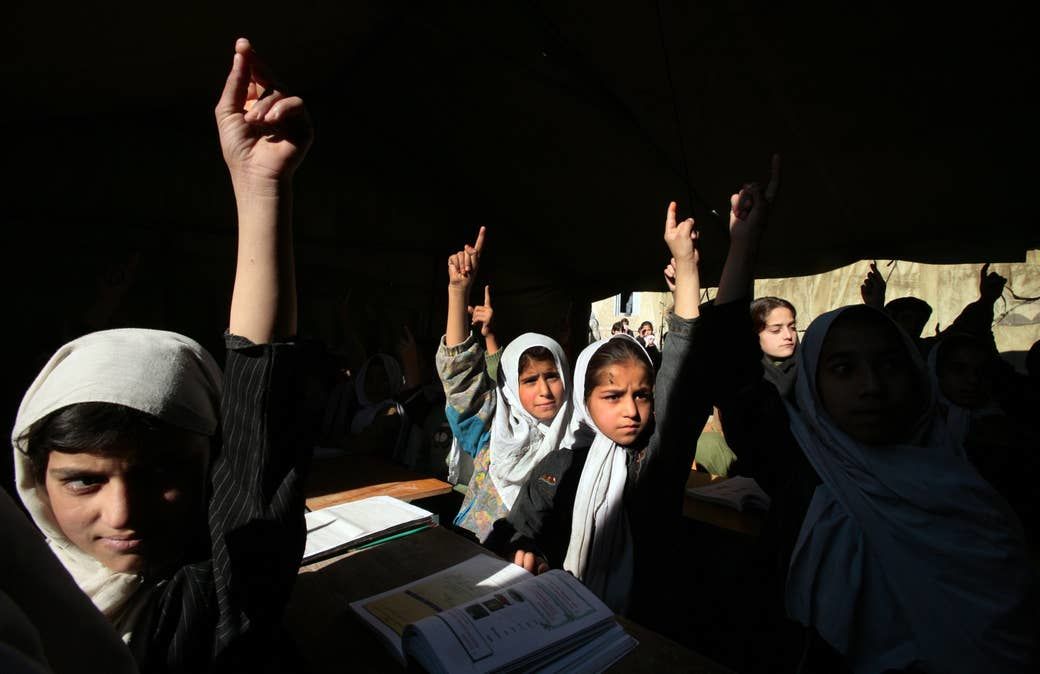 Afghan girls raise their hands during English class at the Bibi Mahroo
high school in Kabul, Afghanistan, on November 22, 2006. Five years
after the fall of the Taliban, millions of students have returned to
packed schools, making education one of the few success stories in the
struggle for a peaceful country.
Afghan girls raise their hands during English class at the Bibi Mahroo
high school in Kabul, Afghanistan, on November 22, 2006. Five years
after the fall of the Taliban, millions of students have returned to
packed schools, making education one of the few success stories in the
struggle for a peaceful country.
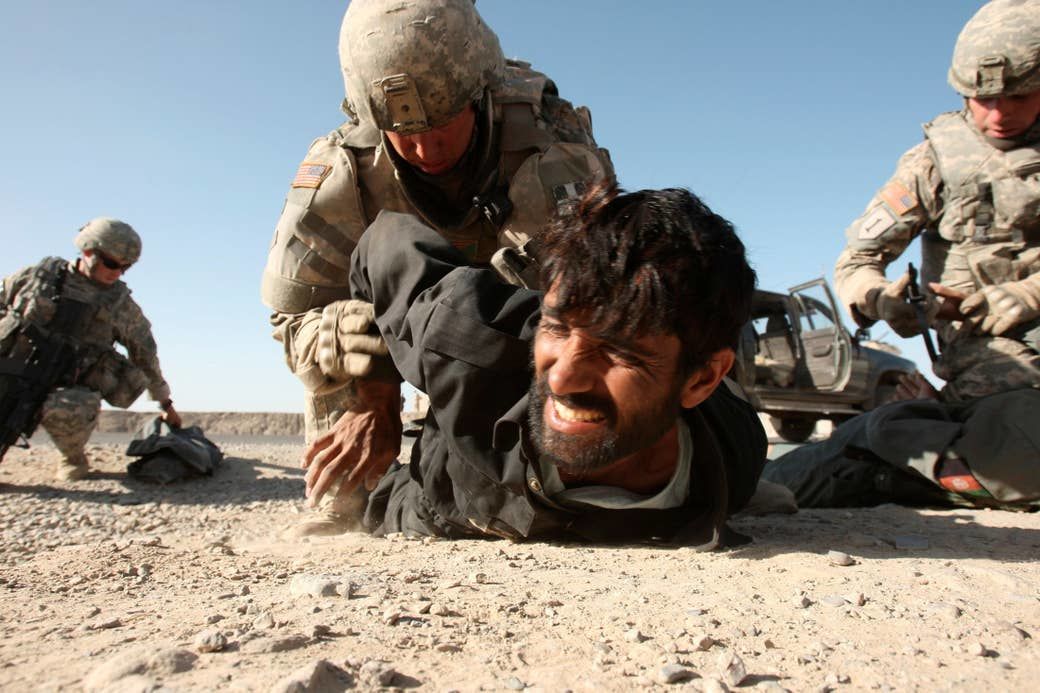 US soldiers search for weapons on Afghan men, who work for a private
security firm escorting truck convoys, after they found illegal weapons
in their vehicle, in a village near Kandahar on April 27, 2008.
US soldiers search for weapons on Afghan men, who work for a private
security firm escorting truck convoys, after they found illegal weapons
in their vehicle, in a village near Kandahar on April 27, 2008.
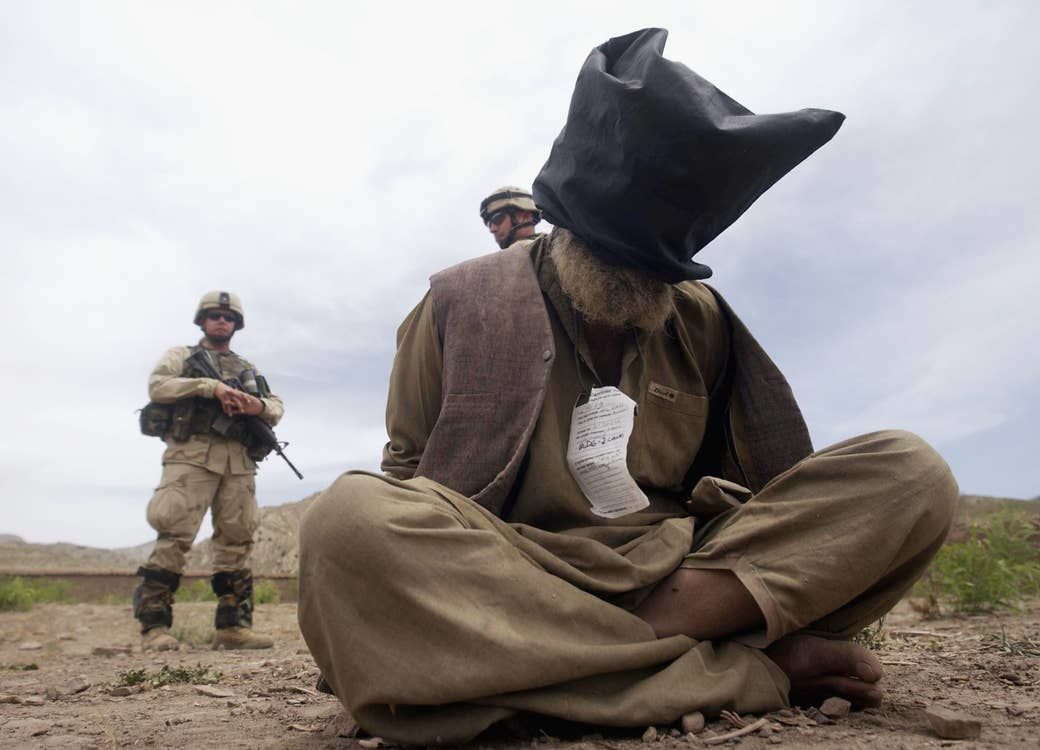 US soldiers of the 82nd Airborne Division watch over Afghan prisoners
during Operation Dragon Fury on June 2, 2003, in eastern Afghanistan.
US soldiers of the 82nd Airborne Division watch over Afghan prisoners
during Operation Dragon Fury on June 2, 2003, in eastern Afghanistan.
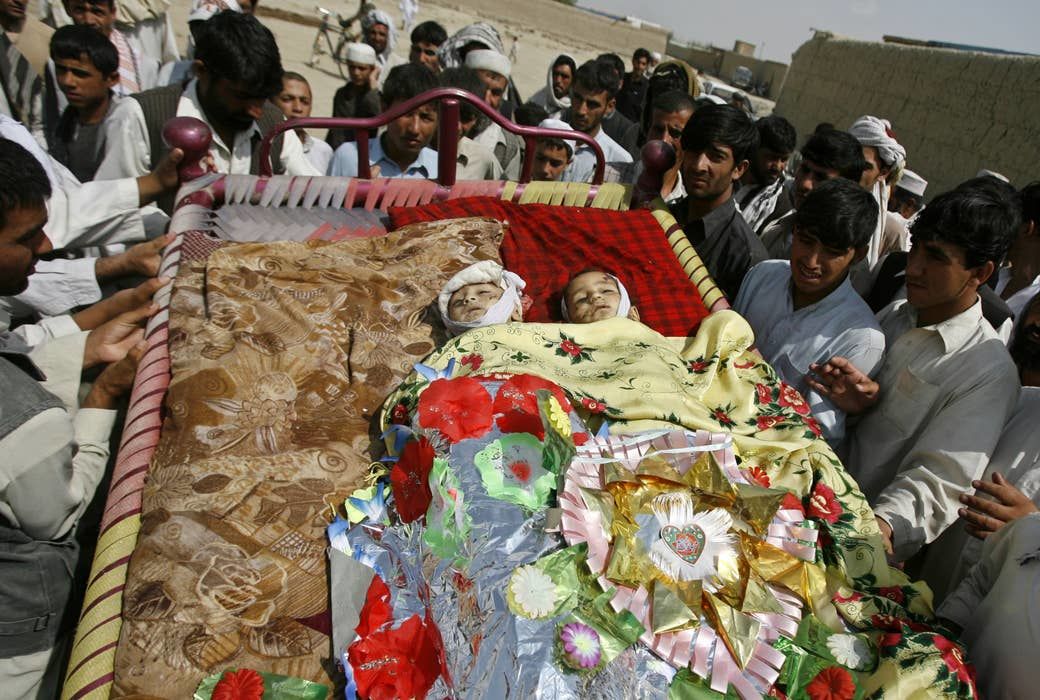 Afghans carry the bodies of two children who they say were killed by
US-led troops in Kabul early on Sept. 1, 2008. Hundreds of protesters
blocked a road in Kabul accusing US-led troops of killing three members
of a family, including two children, in a raid in the city, residents
and witnesses said.
Afghans carry the bodies of two children who they say were killed by
US-led troops in Kabul early on Sept. 1, 2008. Hundreds of protesters
blocked a road in Kabul accusing US-led troops of killing three members
of a family, including two children, in a raid in the city, residents
and witnesses said.
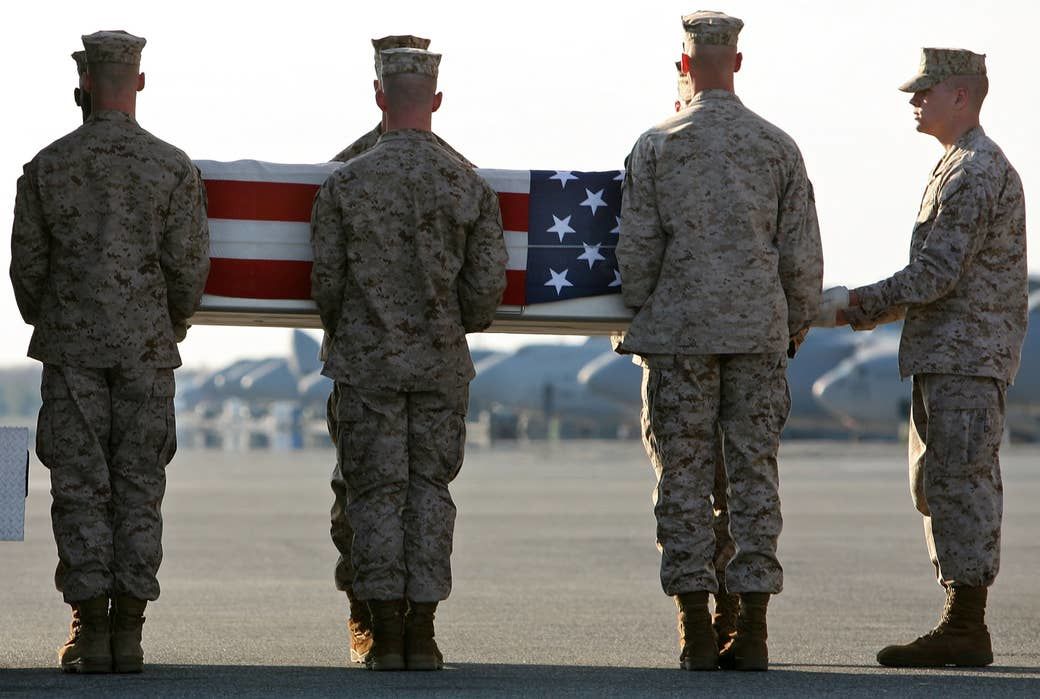 US Marines prepare to load a flag-draped transfer case holding the
remains of Marine Lance Cpl. Blaise A. Oleski at Dover Air Force Base on
April 9, 2009, in Dover, Delaware. Oleski was killed on April 8 while
supporting combat operations in the Helmand province of Afghanistan. A
new policy overturned an 18-year ban on news coverage of returning war
dead, giving families a choice of whether to admit the media to these
events.
US Marines prepare to load a flag-draped transfer case holding the
remains of Marine Lance Cpl. Blaise A. Oleski at Dover Air Force Base on
April 9, 2009, in Dover, Delaware. Oleski was killed on April 8 while
supporting combat operations in the Helmand province of Afghanistan. A
new policy overturned an 18-year ban on news coverage of returning war
dead, giving families a choice of whether to admit the media to these
events.
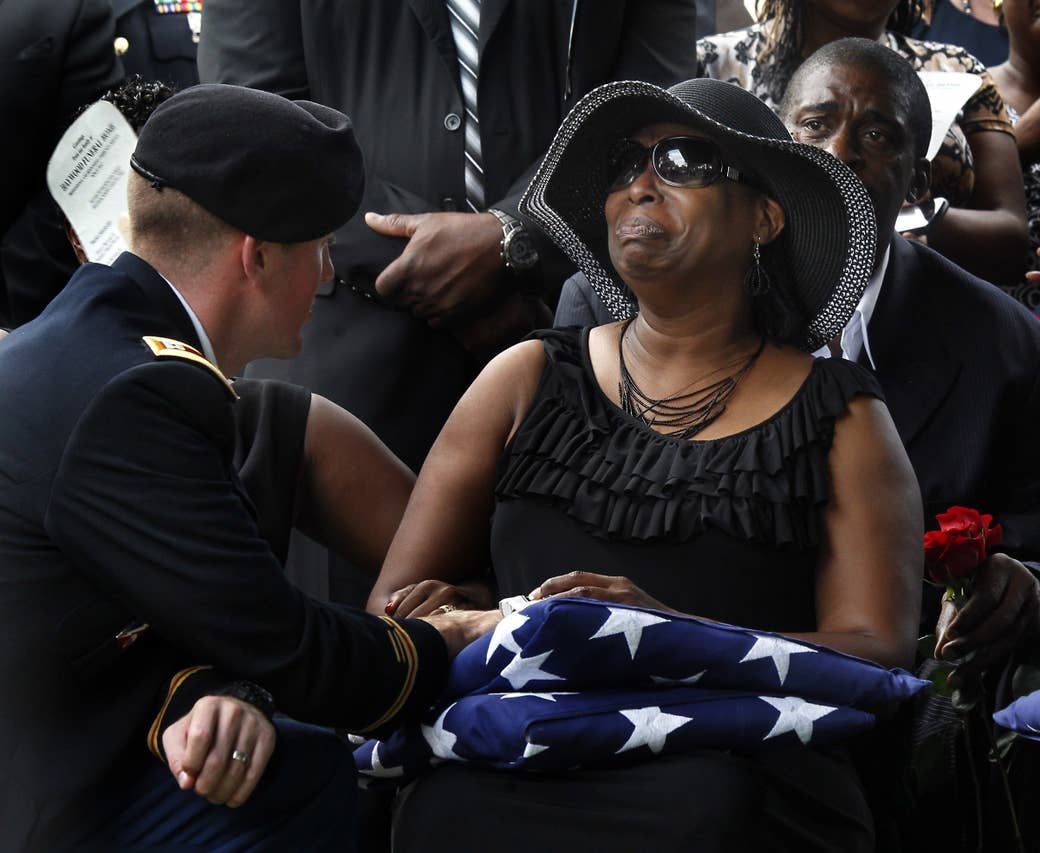 Casualty Affairs officer Capt. Miles Wilhelm comforts Tracy M. Hicks
during the interment of her son Cpl. Darrion Terrell Hicks at Raleigh
National Cemetery on Aug. 1, 2012, in Raleigh, North Carolina. Hicks
died from injuries sustained from an improvised explosive device in
Ghazni, Afghanistan on July 19, 2012.
Casualty Affairs officer Capt. Miles Wilhelm comforts Tracy M. Hicks
during the interment of her son Cpl. Darrion Terrell Hicks at Raleigh
National Cemetery on Aug. 1, 2012, in Raleigh, North Carolina. Hicks
died from injuries sustained from an improvised explosive device in
Ghazni, Afghanistan on July 19, 2012.
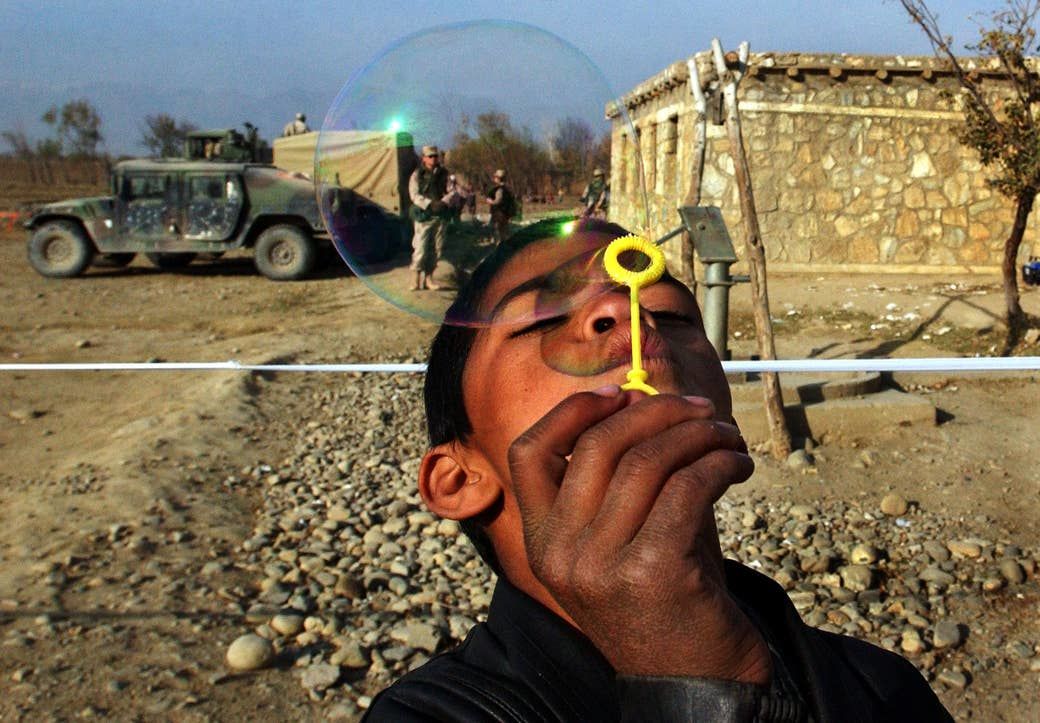 An Afghan boy blows bubbles given to him by US Army troops (seen in the
background) on Dec. 3, 2002, during a US military–civil humanitarian
mission in the village of Tadokhile in central Afghanistan. US military
leaders have recently indicated a shift away from combat operations in
the war in Afghanistan while increasing the emphasis on civil
humanitarian efforts to rebuild the country and provide stability for
the new government.
An Afghan boy blows bubbles given to him by US Army troops (seen in the
background) on Dec. 3, 2002, during a US military–civil humanitarian
mission in the village of Tadokhile in central Afghanistan. US military
leaders have recently indicated a shift away from combat operations in
the war in Afghanistan while increasing the emphasis on civil
humanitarian efforts to rebuild the country and provide stability for
the new government.
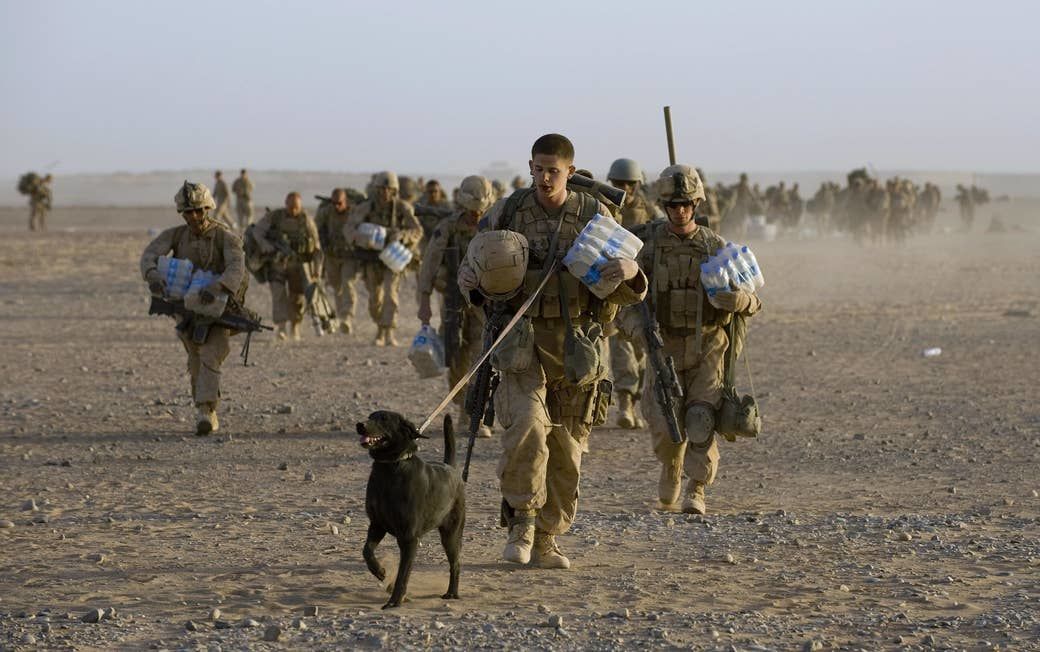 US Marines from the 2nd Battalion, 8th Marine Regiment of the 2nd
Marine Expeditionary Brigade walk toward helicopter transport as part of
Operation Khanjar at Camp Dwyer in the Helmand province in Afghanistan
on July 2, 2009.
US Marines from the 2nd Battalion, 8th Marine Regiment of the 2nd
Marine Expeditionary Brigade walk toward helicopter transport as part of
Operation Khanjar at Camp Dwyer in the Helmand province in Afghanistan
on July 2, 2009.
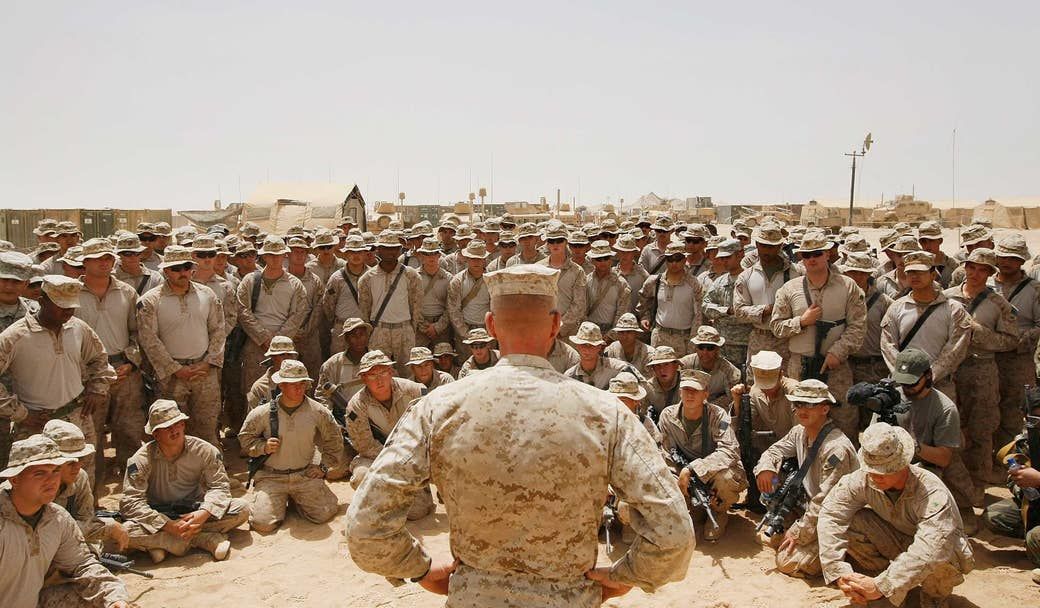 Lt. Col. Christian Cabaniss speaks to his Marines at Camp Dwyer on
July 1, 2009, in the Helmand province of Afghanistan. The Marines are
part of a stepped-up effort by American troops fighting Taliban fighters
in southern Afghanistan.
Lt. Col. Christian Cabaniss speaks to his Marines at Camp Dwyer on
July 1, 2009, in the Helmand province of Afghanistan. The Marines are
part of a stepped-up effort by American troops fighting Taliban fighters
in southern Afghanistan.
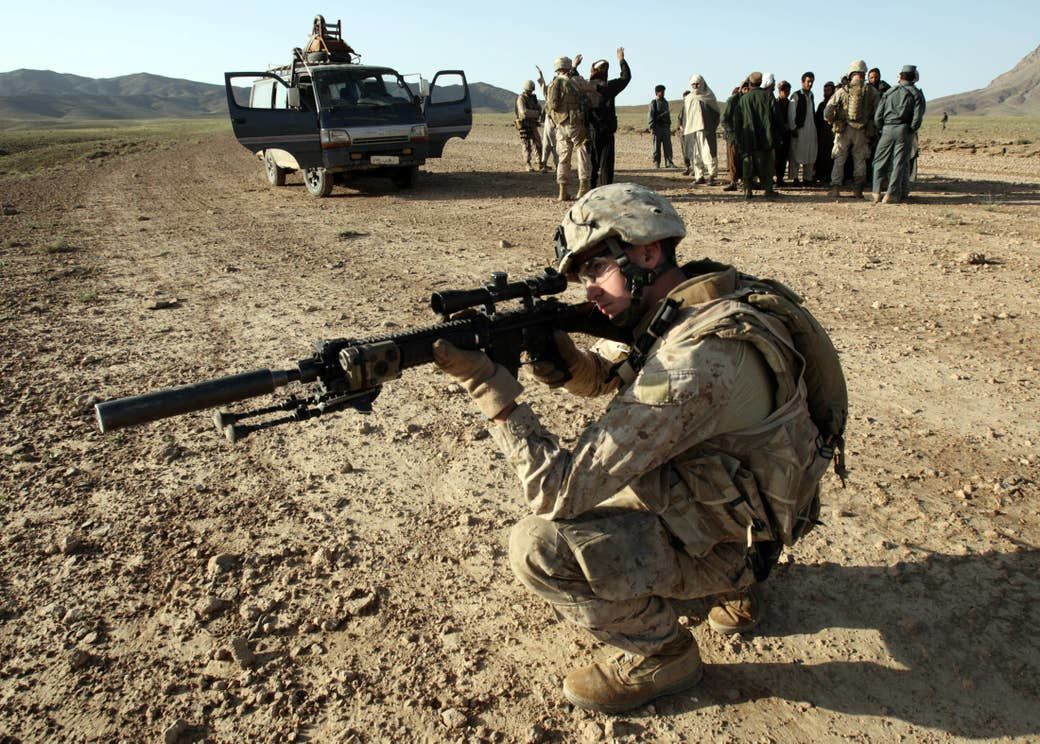 A US Marine keeps watch as others search Afghans for weapons during a
patrol in the Golestan district of Farah province, May 4, 2009.
A US Marine keeps watch as others search Afghans for weapons during a
patrol in the Golestan district of Farah province, May 4, 2009.
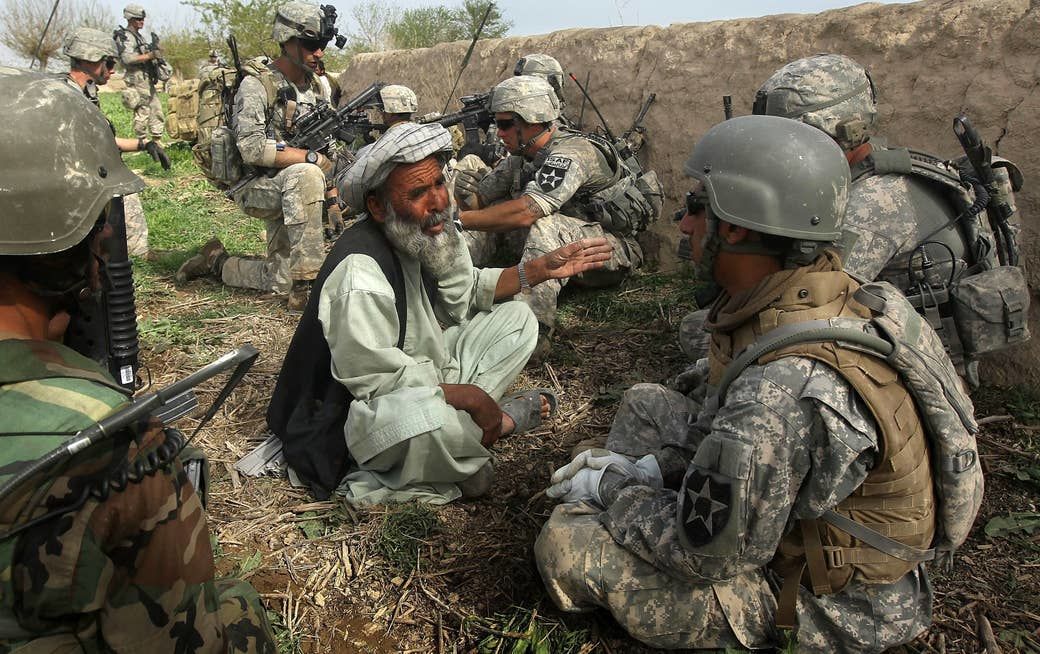 US and Afghan Army soldiers question a farmer after a firefight with
Taliban insurgents on March 14, 2010, at Howz-e-Madad in Kandahar
province, Afghanistan.
US and Afghan Army soldiers question a farmer after a firefight with
Taliban insurgents on March 14, 2010, at Howz-e-Madad in Kandahar
province, Afghanistan.
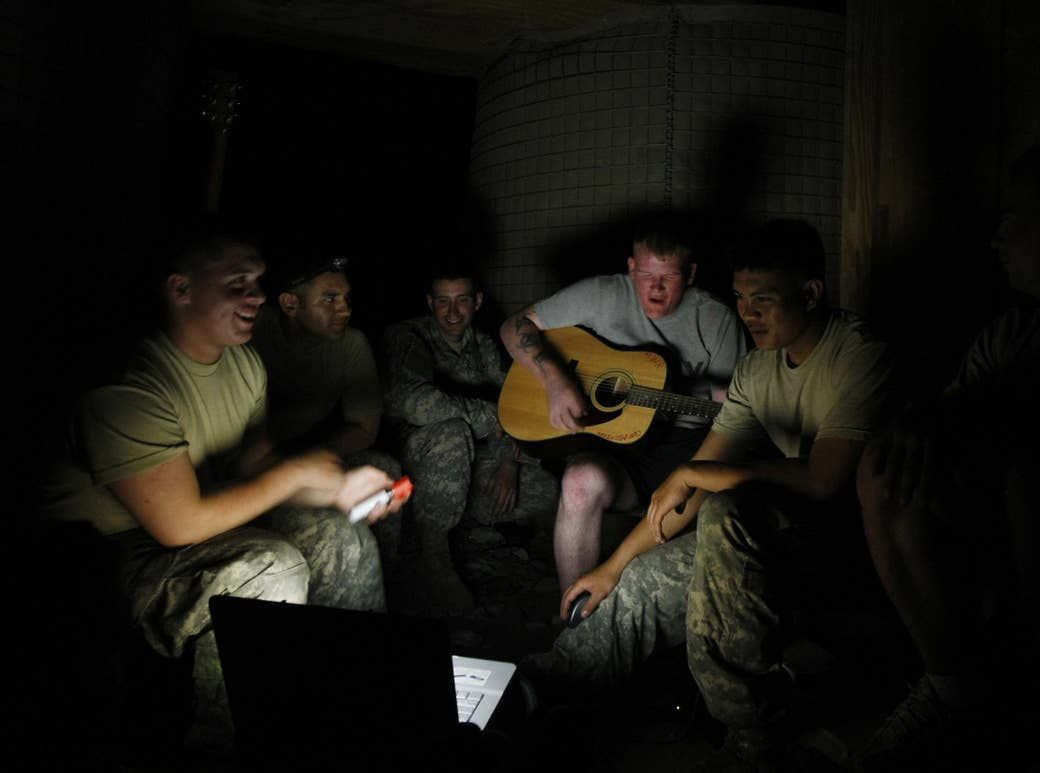 US soldiers from Dagger Company, 2-12 Infantry, 4th Brigade sing
karaoke at Michigan Base in the Pesh Valley in Afghanistan's Kunar
Province on July 24, 2009.
US soldiers from Dagger Company, 2-12 Infantry, 4th Brigade sing
karaoke at Michigan Base in the Pesh Valley in Afghanistan's Kunar
Province on July 24, 2009.
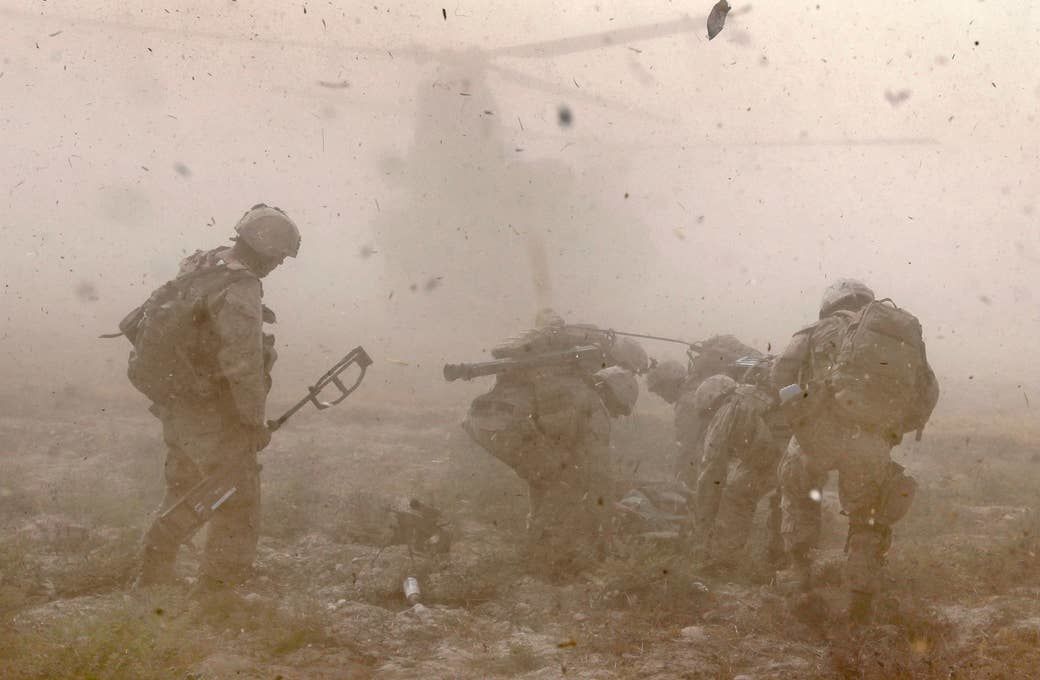 Marines prepare to carry Cpl. Jorge Villarreal to a medevac helicopter
near Forward Operating Base Zeebrugge on October 17, 2010, in Kajaki,
Afghanistan. Villarreal was killed on the patrol after stepping on an
improvised explosive device.
Marines prepare to carry Cpl. Jorge Villarreal to a medevac helicopter
near Forward Operating Base Zeebrugge on October 17, 2010, in Kajaki,
Afghanistan. Villarreal was killed on the patrol after stepping on an
improvised explosive device.
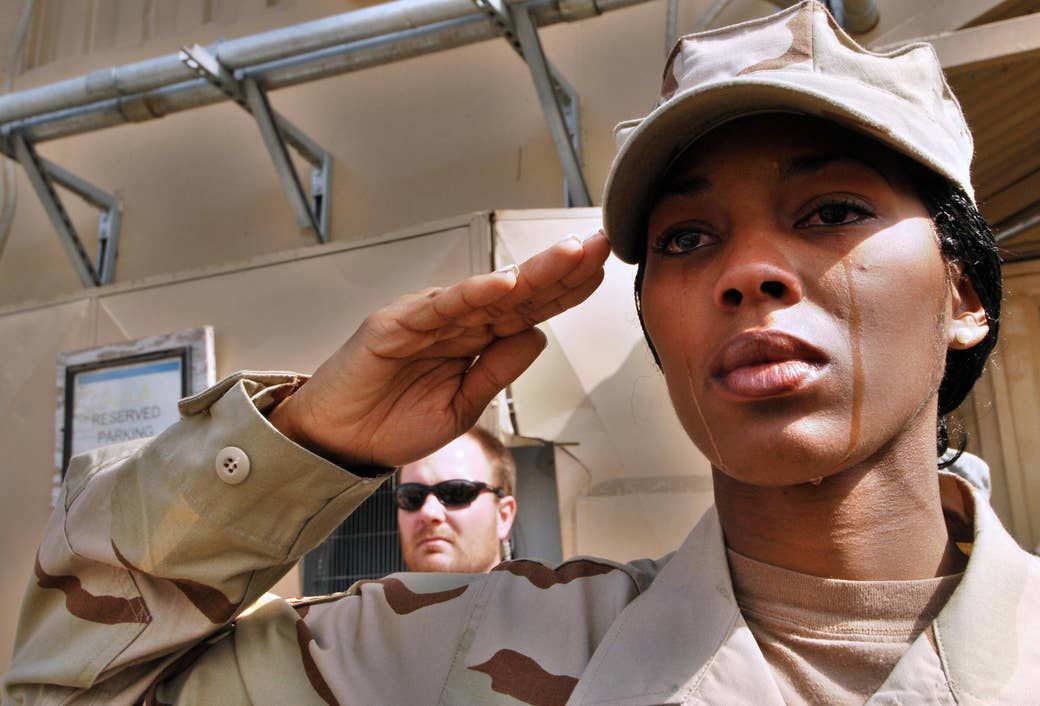 A weeping U.S soldier salutes as she takes part in a ceremony at Camp
Eggers in Kabul on Sept. 11, 2006, to remember the victims of the 9/11
attacks in New York and Washington, DC.
A weeping U.S soldier salutes as she takes part in a ceremony at Camp
Eggers in Kabul on Sept. 11, 2006, to remember the victims of the 9/11
attacks in New York and Washington, DC.
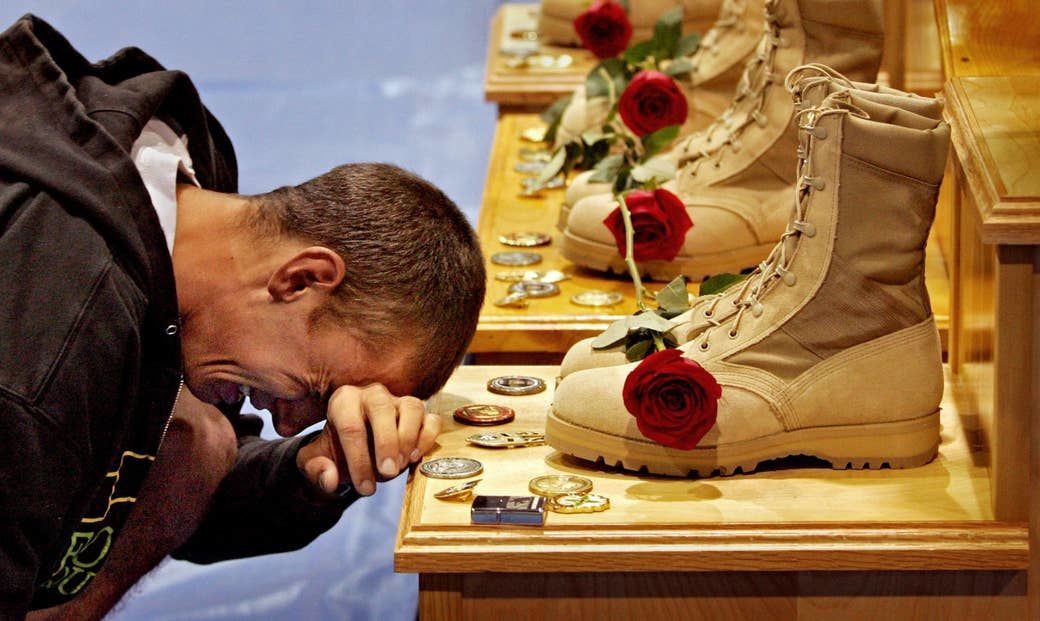 Spc. Jeffrey Hodge mourns the loss of four soldiers from his unit
following their memorial service at Soldiers Field House at Fort Lewis,
Washington, on Sept. 9, 2009. The four soldiers were members of the 1st
Battalion, 17th Infantry Regiment killed in Afghanistan on Aug. 25, when
their vehicle was struck by an improvised explosive device.
Spc. Jeffrey Hodge mourns the loss of four soldiers from his unit
following their memorial service at Soldiers Field House at Fort Lewis,
Washington, on Sept. 9, 2009. The four soldiers were members of the 1st
Battalion, 17th Infantry Regiment killed in Afghanistan on Aug. 25, when
their vehicle was struck by an improvised explosive device.
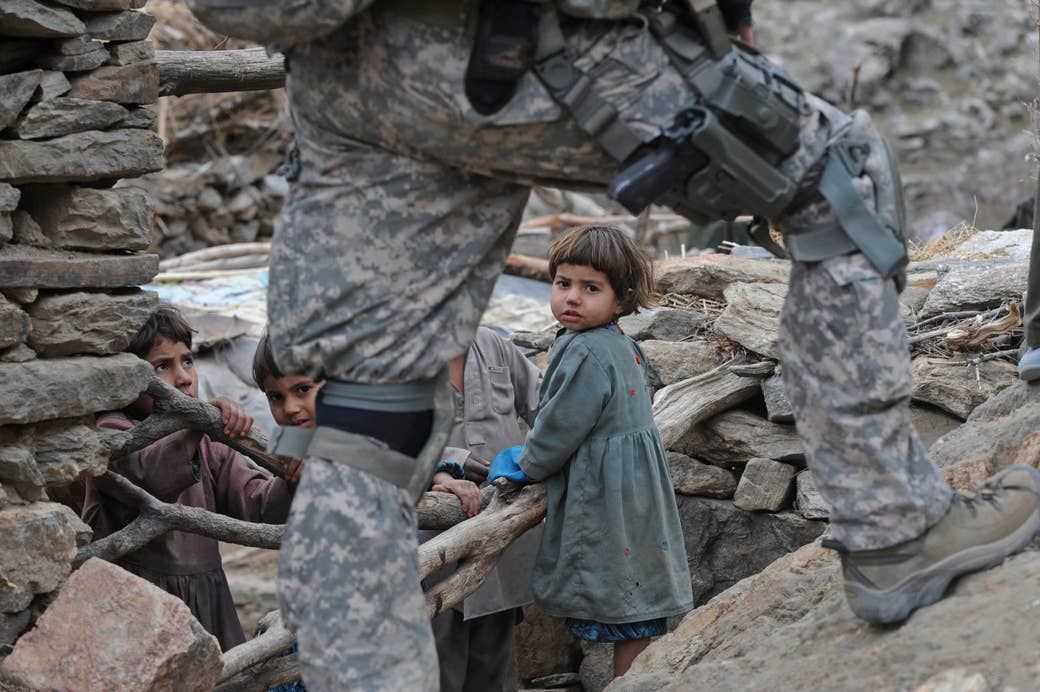 Afghan children look on as a US soldier from the Provincial
Reconstruction team Steel Warriors patrols in the mountains of Nuristan
province on Dec. 19, 2009.
Afghan children look on as a US soldier from the Provincial
Reconstruction team Steel Warriors patrols in the mountains of Nuristan
province on Dec. 19, 2009.
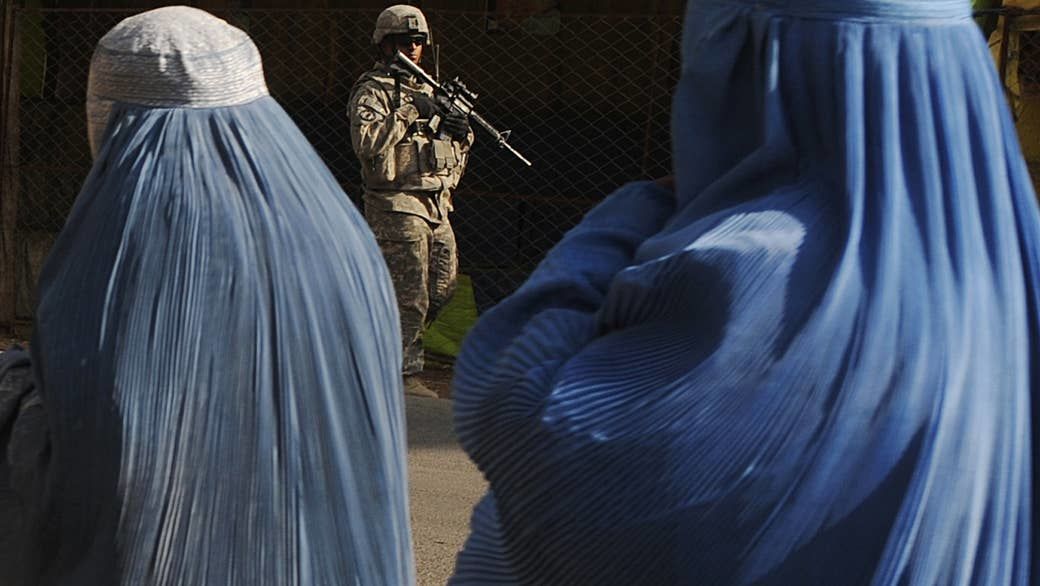 Afghan women walk past a US soldier in Parwan province in January 2010.
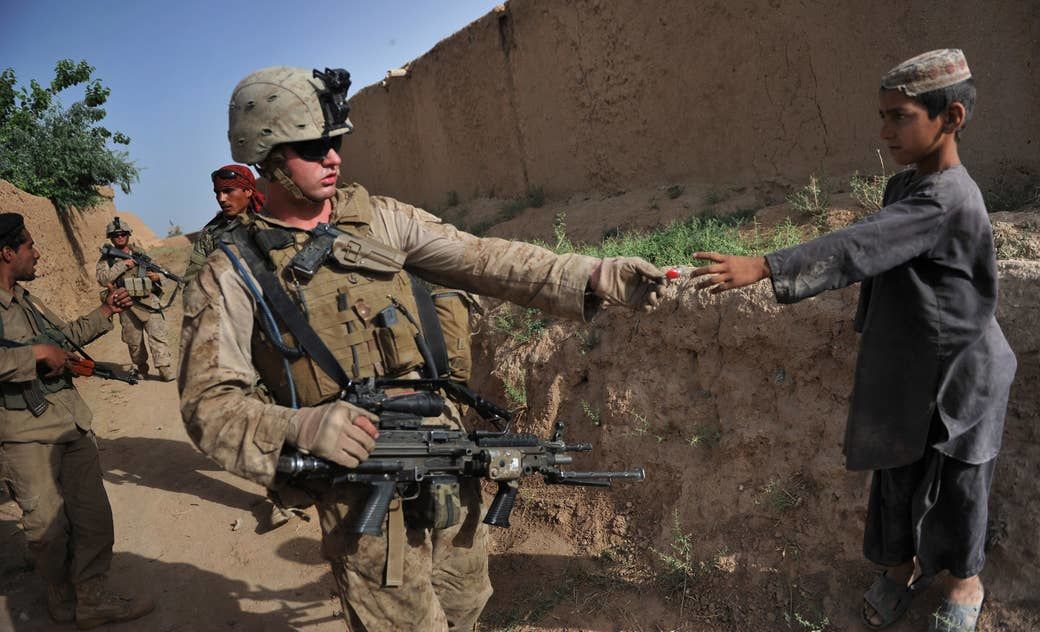 S Marines Lance Cpl. Michael Horne from 2nd Marine 8th Battalion gives a
piece of candy to an Afghan boy in Sistani, Helmand province, on May 5,
2011, as the Marines search for insurgents.
S Marines Lance Cpl. Michael Horne from 2nd Marine 8th Battalion gives a
piece of candy to an Afghan boy in Sistani, Helmand province, on May 5,
2011, as the Marines search for insurgents.
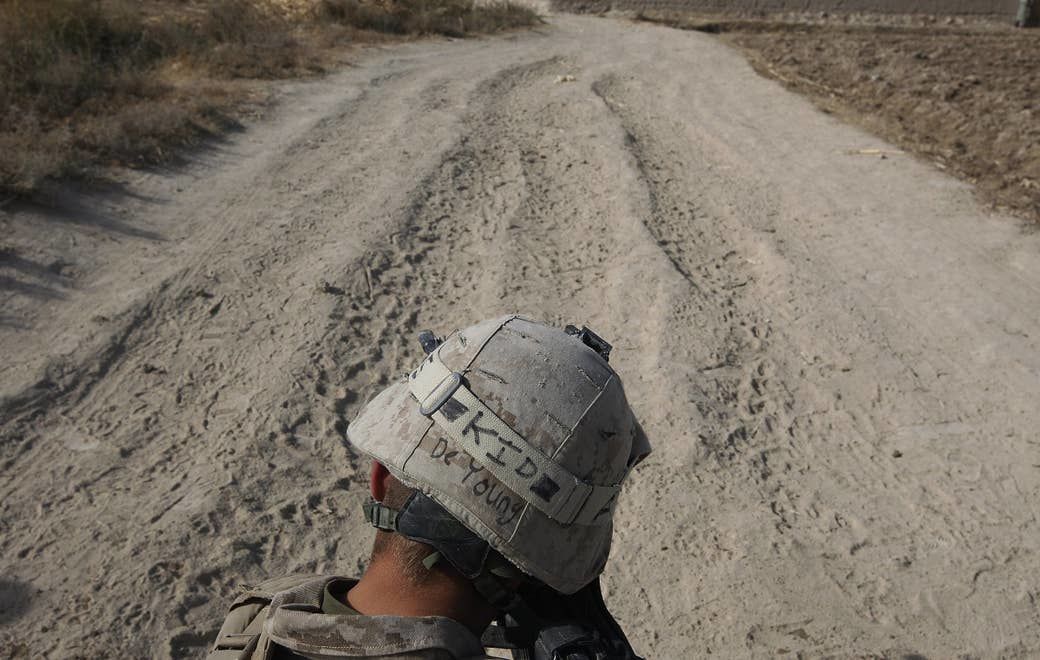 Marine Cpl. Jeff De Young of Holland, Michigan, is nicknamed "Kid" by the other Marines for his youthful appearance.
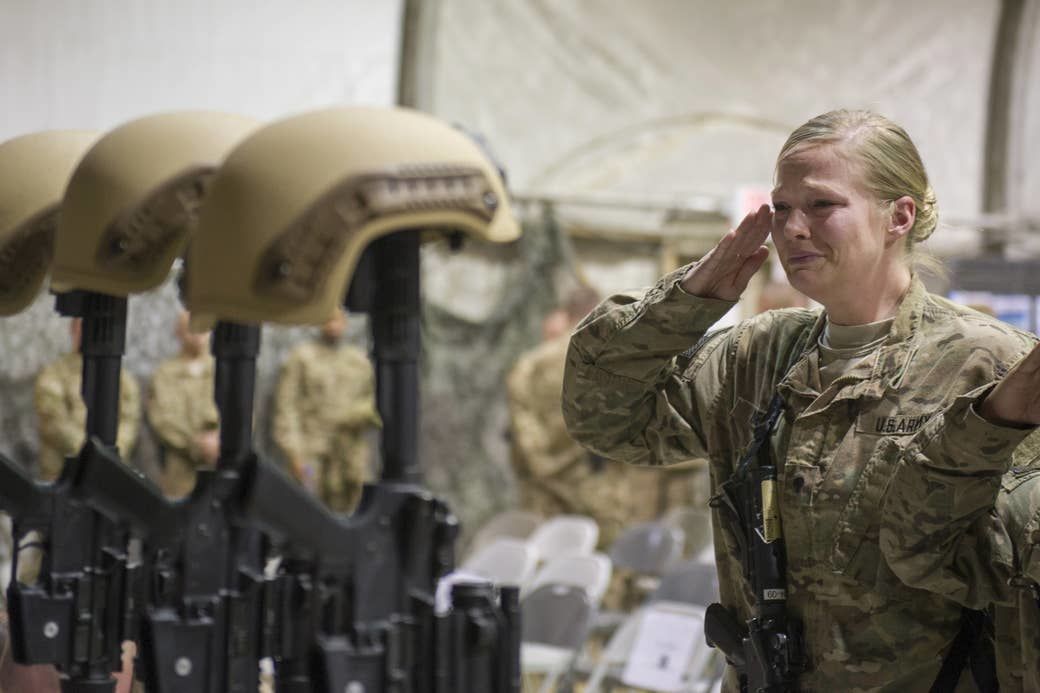 A US service member salutes her fallen comrades during a memorial
ceremony for six airmen killed in a suicide attack at Bagram Airfield in
Afghanistan on Dec. 23, 2015.
A US service member salutes her fallen comrades during a memorial
ceremony for six airmen killed in a suicide attack at Bagram Airfield in
Afghanistan on Dec. 23, 2015.
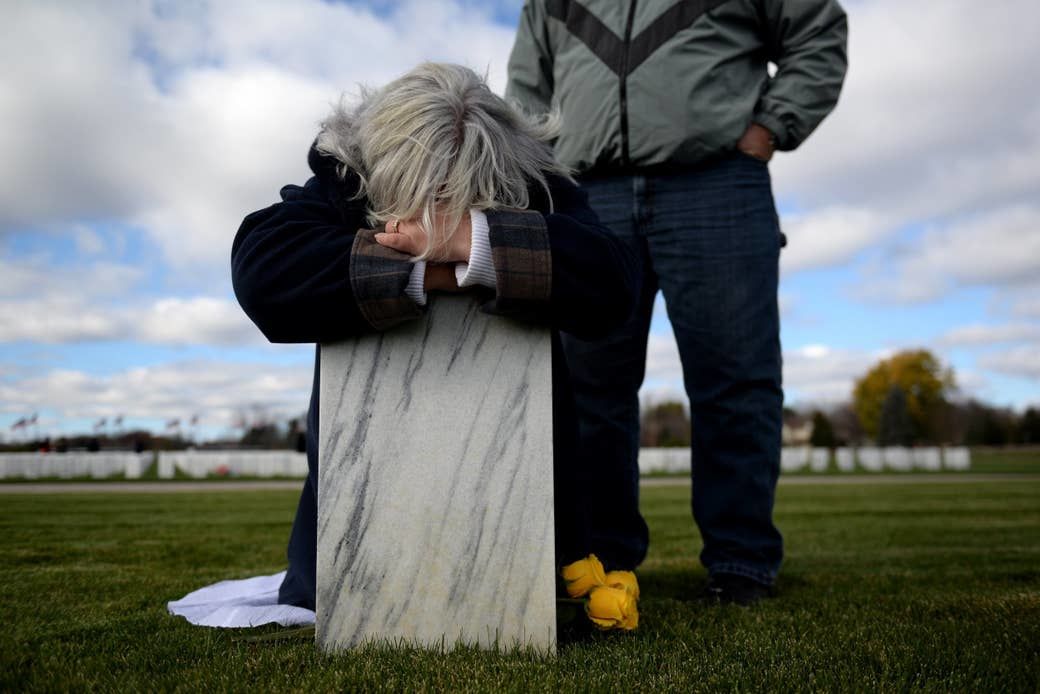 Teri Johnson wraps her arms around her son's grave as hundreds gather to
commemorate the lives of American veterans on Nov. 11, 2016, at the
Great Lakes National Cemetery in Holly Township, Michigan, for Veterans
Day. Johnson's son, Joe, was killed in Afghanistan in 2010.
Teri Johnson wraps her arms around her son's grave as hundreds gather to
commemorate the lives of American veterans on Nov. 11, 2016, at the
Great Lakes National Cemetery in Holly Township, Michigan, for Veterans
Day. Johnson's son, Joe, was killed in Afghanistan in 2010.
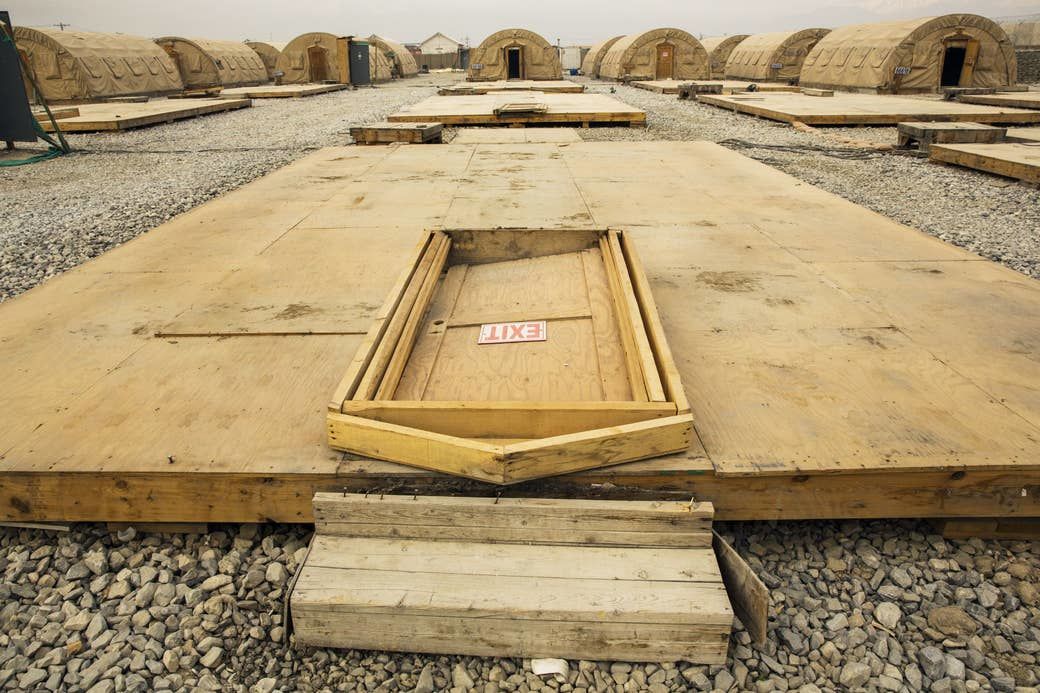 A door rests on the floor of a tent that has been dismantled as part of
areas being demolished on the massive Bagram Airfield in the Parwan
province of Afghanistan on January 2, 2015.
A door rests on the floor of a tent that has been dismantled as part of
areas being demolished on the massive Bagram Airfield in the Parwan
province of Afghanistan on January 2, 2015.
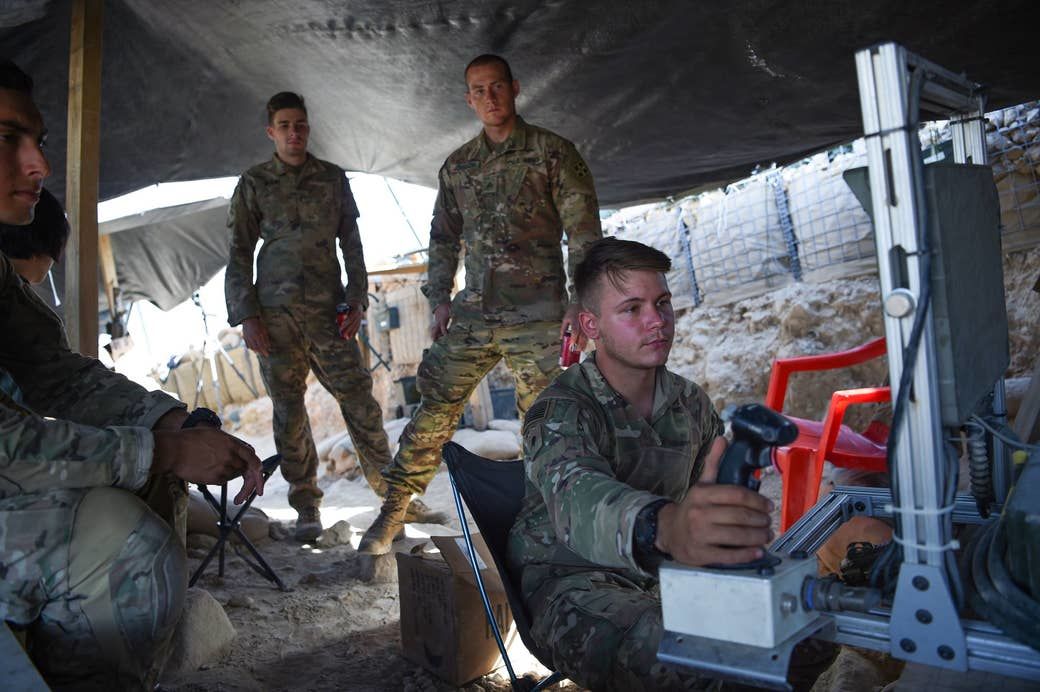 US Army soldiers from NATO use a cruise system in a checkpoint during a
patrol against Islamic State militants in Nangarhar province,
Afghanistan, in July 2018.
US Army soldiers from NATO use a cruise system in a checkpoint during a
patrol against Islamic State militants in Nangarhar province,
Afghanistan, in July 2018.
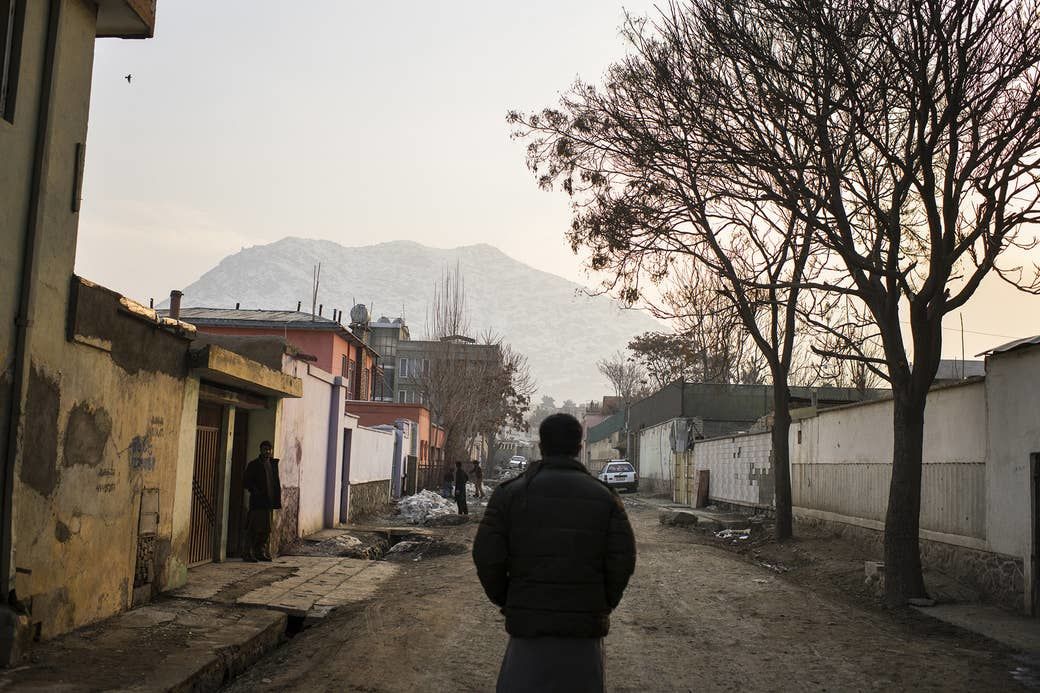 Naseri, formerly an interpreter for the United States Marine Corps in
Afghanistan, poses for a portrait in the home of his father-in-law in
Kabul, 2019. Naseri moved to the home of his wife's father because his
work with the Americans in the past was well known and frowned upon by
residents from his village.
Naseri, formerly an interpreter for the United States Marine Corps in
Afghanistan, poses for a portrait in the home of his father-in-law in
Kabul, 2019. Naseri moved to the home of his wife's father because his
work with the Americans in the past was well known and frowned upon by
residents from his village.
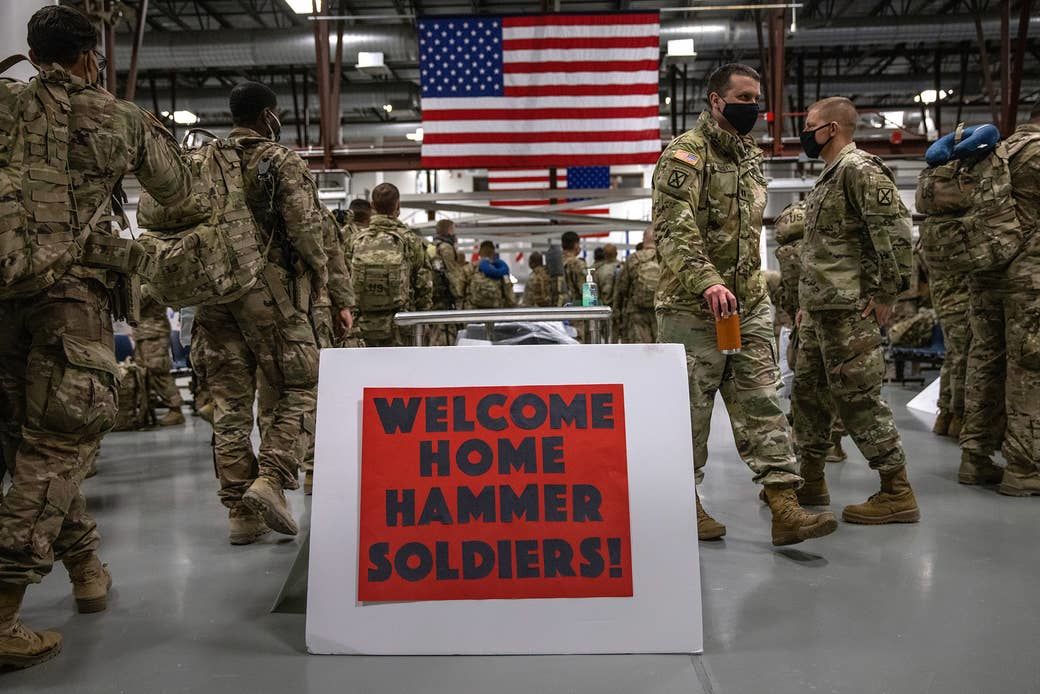 US Army soldiers from the 10th Mountain Division arrive home from a
nine-month deployment in Afghanistan on December 8, 2020, in Fort Drum,
New York.
US Army soldiers from the 10th Mountain Division arrive home from a
nine-month deployment in Afghanistan on December 8, 2020, in Fort Drum,
New York.
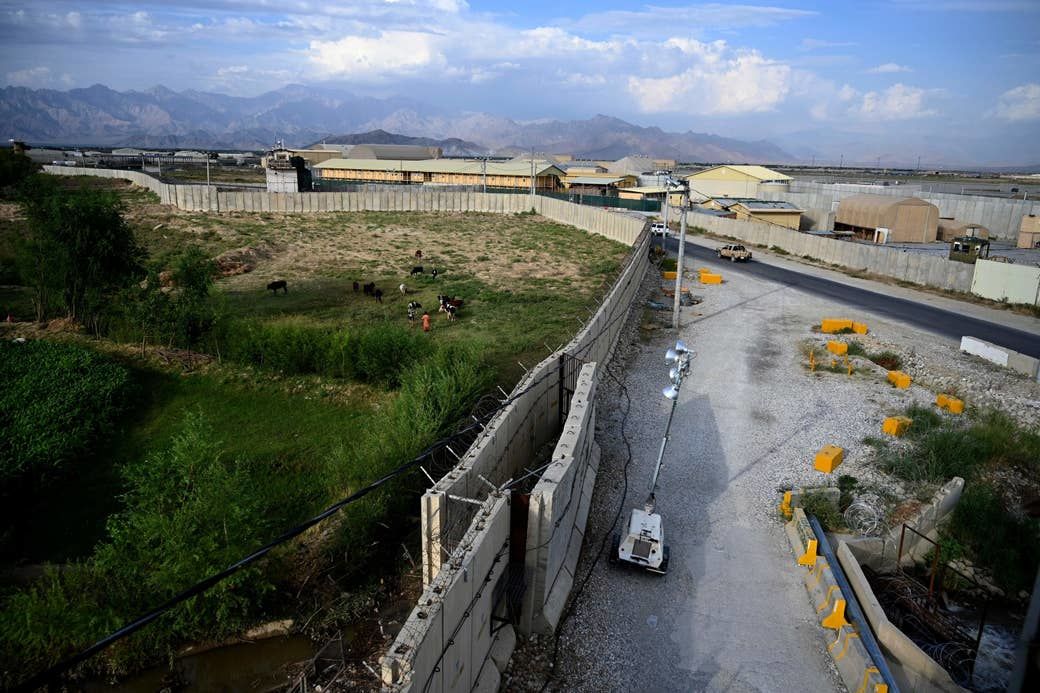 A general view of the Bagram US air base is pictured after all US and
NATO troops left, some 70 kilometers north of Kabul, on July 5, 2021.
A general view of the Bagram US air base is pictured after all US and
NATO troops left, some 70 kilometers north of Kabul, on July 5, 2021.