
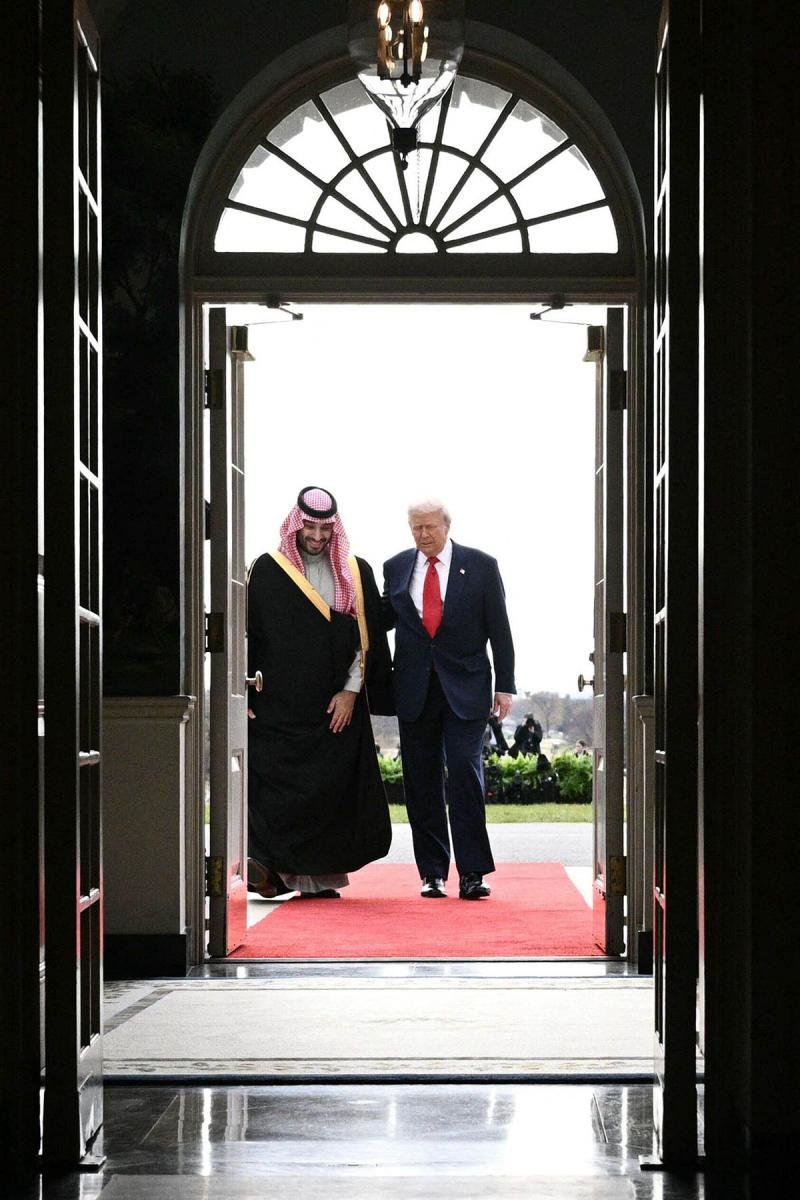
US Supports Multi-Billion-Dollar Civil Nuclear Partnership with Saudi Arabia as Energy Strategy Shifts
Washington signals backing for nuclear cooperation with Riyadh amid efforts to expand Saudi energy capacity and reshape regional power infrastructure
The development of a civil nuclear partnership between the United States and Saudi Arabia reflects a system-driven shift in global energy and strategic infrastructure policy, where nuclear technology is increasingly being used as both an energy diversification tool and a geopolitical instrument.
The reported multi-billion-dollar framework highlights the deepening intersection between energy security, industrial development, and international non-proliferation politics.
At the center of the initiative is Saudi Arabia’s long-term plan to diversify its energy mix and reduce reliance on oil for domestic power generation.
The kingdom has pursued civil nuclear capabilities for years as part of its broader economic transformation agenda, which aims to expand electricity production capacity, support desalination infrastructure, and free up more crude oil for export markets.
The United States’ support for a partnership of this scale signals alignment on several strategic objectives, including strengthening bilateral ties, maintaining influence over nuclear development standards, and ensuring that any Saudi nuclear program remains under civilian oversight frameworks.
Civil nuclear cooperation agreements typically involve strict safeguards, technology transfer conditions, and monitoring mechanisms tied to international non-proliferation rules.
Saudi Arabia’s interest in nuclear energy is also shaped by rapid domestic demand growth driven by industrial expansion, urbanization, and large-scale infrastructure projects.
Nuclear power is viewed by policymakers as a stable baseload energy source that can complement renewable investments such as solar and wind, which are also central to the country’s long-term energy strategy.
However, civil nuclear partnerships in the Middle East carry broader geopolitical implications due to regional security dynamics and longstanding rivalries.
Any expansion of nuclear capability in Saudi Arabia is closely watched by neighboring states and international actors concerned about potential dual-use risks, where civilian nuclear infrastructure could theoretically be leveraged for non-civilian purposes under different political conditions.
The economic dimension of the partnership is significant, with multi-billion-dollar investment frameworks typically involving reactor development, fuel supply chains, engineering services, and long-term operational support.
Such agreements often span decades and embed deep technological dependencies between supplier and host country.
For Washington, participation in the project reflects a balancing act between commercial opportunities for its nuclear industry and strategic oversight of nuclear expansion in a sensitive region.
For Riyadh, it represents a step toward achieving greater energy autonomy and technological capability while reinforcing its position as a central player in global energy markets.
The emerging framework therefore reflects a convergence of energy transition goals and geopolitical strategy, where nuclear cooperation becomes both an infrastructure project and a mechanism of long-term strategic alignment between two major international partners.
The reported multi-billion-dollar framework highlights the deepening intersection between energy security, industrial development, and international non-proliferation politics.
At the center of the initiative is Saudi Arabia’s long-term plan to diversify its energy mix and reduce reliance on oil for domestic power generation.
The kingdom has pursued civil nuclear capabilities for years as part of its broader economic transformation agenda, which aims to expand electricity production capacity, support desalination infrastructure, and free up more crude oil for export markets.
The United States’ support for a partnership of this scale signals alignment on several strategic objectives, including strengthening bilateral ties, maintaining influence over nuclear development standards, and ensuring that any Saudi nuclear program remains under civilian oversight frameworks.
Civil nuclear cooperation agreements typically involve strict safeguards, technology transfer conditions, and monitoring mechanisms tied to international non-proliferation rules.
Saudi Arabia’s interest in nuclear energy is also shaped by rapid domestic demand growth driven by industrial expansion, urbanization, and large-scale infrastructure projects.
Nuclear power is viewed by policymakers as a stable baseload energy source that can complement renewable investments such as solar and wind, which are also central to the country’s long-term energy strategy.
However, civil nuclear partnerships in the Middle East carry broader geopolitical implications due to regional security dynamics and longstanding rivalries.
Any expansion of nuclear capability in Saudi Arabia is closely watched by neighboring states and international actors concerned about potential dual-use risks, where civilian nuclear infrastructure could theoretically be leveraged for non-civilian purposes under different political conditions.
The economic dimension of the partnership is significant, with multi-billion-dollar investment frameworks typically involving reactor development, fuel supply chains, engineering services, and long-term operational support.
Such agreements often span decades and embed deep technological dependencies between supplier and host country.
For Washington, participation in the project reflects a balancing act between commercial opportunities for its nuclear industry and strategic oversight of nuclear expansion in a sensitive region.
For Riyadh, it represents a step toward achieving greater energy autonomy and technological capability while reinforcing its position as a central player in global energy markets.
The emerging framework therefore reflects a convergence of energy transition goals and geopolitical strategy, where nuclear cooperation becomes both an infrastructure project and a mechanism of long-term strategic alignment between two major international partners.