
Iraq Moves to Contain Militia Fallout After Drone Strikes on Saudi Arabia
Baghdad condemns attacks on Saudi territory and signals cooperation as Gulf tensions rise over suspected Iran-linked drone launches from Iraqi airspace
A system-level struggle over Iraq’s ability to control armed groups operating on its territory is intensifying after Saudi Arabia reported drone interceptions linked to Iraqi airspace, triggering fresh diplomatic pressure on Baghdad and renewed scrutiny of Iran-aligned militias.
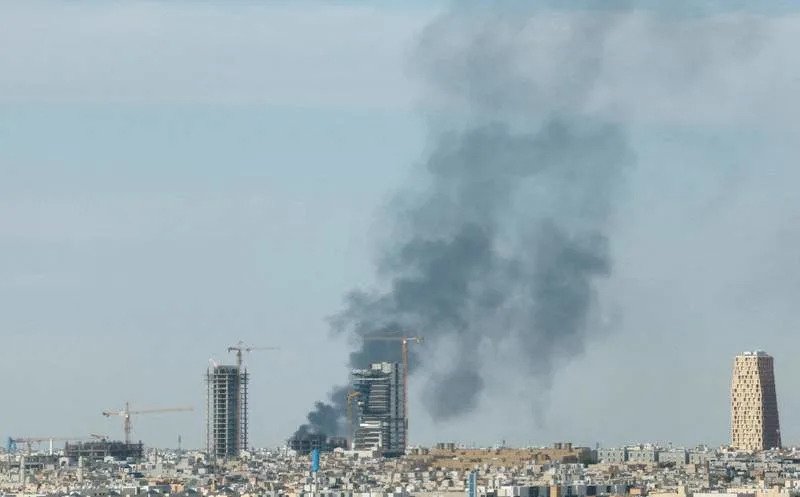
What is confirmed is that Saudi Arabia’s air defenses intercepted multiple drones that entered its airspace from the direction of Iraq.
Gulf officials have described the incident as a serious security breach, and regional bodies have publicly condemned the use of Iraqi territory or airspace for cross-border attacks.
Iraqi authorities, for their part, have condemned the strikes and stated they will investigate and cooperate with Saudi Arabia.
The Iraqi government has also reiterated that it rejects any use of its territory for attacks against neighboring states.
Officials in Baghdad have said that, so far, domestic military monitoring systems have not detected clear evidence identifying the launch details of the drones, but they have expressed willingness to coordinate intelligence-sharing with Riyadh to clarify the incident.
The key issue is Iraq’s limited ability to control a fragmented security environment in which state institutions coexist with powerful armed factions.
Several of these groups operate under the umbrella of the Popular Mobilization Forces, a state-linked but politically diverse network that includes units widely regarded as aligned with Iran.
These factions have previously been accused of launching drones and rockets toward Gulf states, U.S. facilities, and other regional targets.
Saudi officials have stated that at least some of the drones originated from Iraqi airspace and were intercepted before reaching critical infrastructure.
Regional partners have echoed concerns, framing the incident as part of a broader pattern of cross-border drone activity that has increased since the escalation of regional conflict involving Iran, the United States, and allied states.
The situation places Iraq’s new government under direct external pressure.
Gulf states are demanding that Baghdad demonstrate stronger control over armed groups operating within its borders, while the United States has been pressing Iraqi authorities to curb militia activity linked to Iranian influence.
These demands converge on a central question: whether Iraq can enforce a monopoly over the use of force on its territory without triggering internal political destabilization.
Militia-linked groups operating in Iraq have denied involvement in some recent cross-border incidents, and no single organization has formally claimed responsibility for the Saudi-bound drones.
However, regional security assessments consistently link past similar attacks to Iran-aligned networks operating with varying degrees of independence from Baghdad’s central command.
Diplomatically, Iraq has moved quickly to limit escalation.
Officials have emphasized cooperation with Gulf governments and reiterated commitments to regional stability, while also rejecting accusations that Iraqi state institutions directly facilitated the attacks.
This balancing act reflects Baghdad’s reliance on both Western security partnerships and economic ties with Gulf states, alongside the domestic political reality of influential armed groups integrated into parts of the state structure.
The broader consequence is an accelerating test of Iraq’s sovereignty under conditions of regional proxy conflict.
Each cross-border drone incident increases pressure on Baghdad to either rein in militias more aggressively or risk further diplomatic friction with key Arab neighbors, while any heavy-handed internal crackdown risks political confrontation inside Iraq’s already fragile governing coalition.
As investigations proceed and intelligence is exchanged between Baghdad and Riyadh, regional security agencies are treating the incident as part of an expanding pattern of drone-based escalation across Gulf airspace, reinforcing the urgency of tighter airspace control and militia containment mechanisms in Iraq.
What is confirmed is that Saudi Arabia’s air defenses intercepted multiple drones that entered its airspace from the direction of Iraq.
Gulf officials have described the incident as a serious security breach, and regional bodies have publicly condemned the use of Iraqi territory or airspace for cross-border attacks.
Iraqi authorities, for their part, have condemned the strikes and stated they will investigate and cooperate with Saudi Arabia.
The Iraqi government has also reiterated that it rejects any use of its territory for attacks against neighboring states.
Officials in Baghdad have said that, so far, domestic military monitoring systems have not detected clear evidence identifying the launch details of the drones, but they have expressed willingness to coordinate intelligence-sharing with Riyadh to clarify the incident.
The key issue is Iraq’s limited ability to control a fragmented security environment in which state institutions coexist with powerful armed factions.
Several of these groups operate under the umbrella of the Popular Mobilization Forces, a state-linked but politically diverse network that includes units widely regarded as aligned with Iran.
These factions have previously been accused of launching drones and rockets toward Gulf states, U.S. facilities, and other regional targets.
Saudi officials have stated that at least some of the drones originated from Iraqi airspace and were intercepted before reaching critical infrastructure.
Regional partners have echoed concerns, framing the incident as part of a broader pattern of cross-border drone activity that has increased since the escalation of regional conflict involving Iran, the United States, and allied states.
The situation places Iraq’s new government under direct external pressure.
Gulf states are demanding that Baghdad demonstrate stronger control over armed groups operating within its borders, while the United States has been pressing Iraqi authorities to curb militia activity linked to Iranian influence.
These demands converge on a central question: whether Iraq can enforce a monopoly over the use of force on its territory without triggering internal political destabilization.
Militia-linked groups operating in Iraq have denied involvement in some recent cross-border incidents, and no single organization has formally claimed responsibility for the Saudi-bound drones.
However, regional security assessments consistently link past similar attacks to Iran-aligned networks operating with varying degrees of independence from Baghdad’s central command.
Diplomatically, Iraq has moved quickly to limit escalation.
Officials have emphasized cooperation with Gulf governments and reiterated commitments to regional stability, while also rejecting accusations that Iraqi state institutions directly facilitated the attacks.
This balancing act reflects Baghdad’s reliance on both Western security partnerships and economic ties with Gulf states, alongside the domestic political reality of influential armed groups integrated into parts of the state structure.
The broader consequence is an accelerating test of Iraq’s sovereignty under conditions of regional proxy conflict.
Each cross-border drone incident increases pressure on Baghdad to either rein in militias more aggressively or risk further diplomatic friction with key Arab neighbors, while any heavy-handed internal crackdown risks political confrontation inside Iraq’s already fragile governing coalition.
As investigations proceed and intelligence is exchanged between Baghdad and Riyadh, regional security agencies are treating the incident as part of an expanding pattern of drone-based escalation across Gulf airspace, reinforcing the urgency of tighter airspace control and militia containment mechanisms in Iraq.