Saudi Arabia Expands Heat Defenses and Emergency Care as Hajj Faces Extreme Temperature Threat
Authorities are deploying large-scale cooling systems, medical infrastructure and heat-control measures after deadly heatwaves exposed the physical limits of the world’s largest annual pilgrimage.
Saudi Arabia’s Hajj safety system is undergoing a major stress test as authorities confront another pilgrimage season shaped by extreme heat, mass crowd density and rising medical risk.
The government has intensified heat protection measures and expanded emergency healthcare services across Makkah, Mina, Arafat and the wider pilgrimage corridor as temperatures are forecast to approach forty-seven degrees Celsius during the annual Islamic pilgrimage.
The central issue is not simply hot weather.
Hajj combines prolonged outdoor exposure, physically demanding movement, limited recovery time and one of the largest recurring human gatherings on earth.
Millions of pilgrims travel through exposed desert terrain over several days, often walking long distances while elderly worshippers and people with chronic illnesses face severe dehydration and cardiovascular strain.
Saudi authorities are now treating heat mitigation as a core operational security issue rather than a seasonal inconvenience.
The urgency follows the deadly heat crisis during the previous Hajj season, when temperatures exceeded fifty degrees Celsius in some locations and more than one thousand pilgrims died.
Many victims were reported to have suffered heat stress, dehydration and sunstroke.
Unregistered pilgrims were especially vulnerable because they lacked access to regulated shelter, transport and cooling infrastructure.
The scale of those deaths intensified scrutiny of crowd safety, emergency response capacity and climate resilience inside the pilgrimage system.
What is confirmed this year is that Saudi Arabia has substantially expanded visible heat-protection measures.
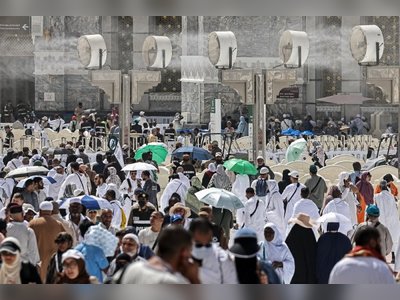
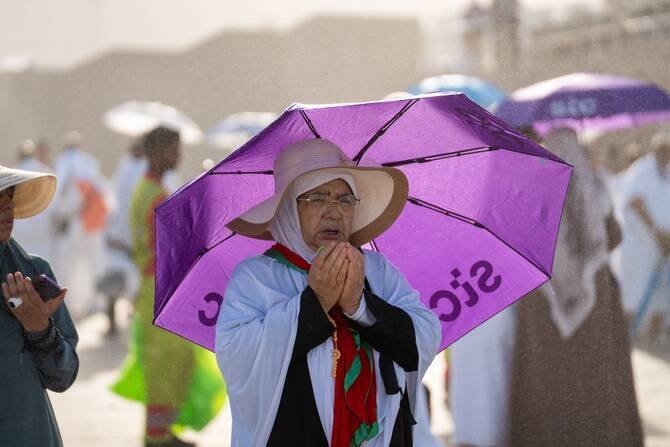
Health authorities are urging pilgrims to carry umbrellas, avoid direct sun exposure during peak daytime hours, maintain constant hydration and remain inside shaded or cooled areas whenever possible.
Officials say umbrellas can reduce perceived heat exposure significantly by lowering surrounding temperatures and limiting direct solar radiation.
Medical preparations have also been enlarged.
Specialized clinics equipped with emergency diagnostic tools and round-the-clock medical teams have been deployed near pilgrimage sites.
Saudi health authorities say tens of thousands of medical services are already being delivered during the early stages of the Hajj season, including emergency treatment, intensive care support and cardiac procedures.
The healthcare network now includes primary care facilities, emergency response teams, mobile units and heat-stress monitoring systems positioned throughout key pilgrimage routes.
The infrastructure response extends beyond hospitals.
Saudi Arabia has expanded shaded pathways, water distribution systems, misting stations and cooled pedestrian surfaces designed to reduce ground temperatures.
Authorities have also promoted the use of flexible road materials and heat-reducing pavement technology around major gathering zones.
Air-conditioned tents and cooling corridors have become central features of crowd-management planning.
The operational challenge is enormous because Hajj rituals cannot simply be paused during dangerous temperature spikes.
Pilgrims move according to fixed religious schedules tied to specific times and locations.
That means the state must manage simultaneous flows of people through confined areas while preventing stampedes, heat collapse and transport bottlenecks.
The most dangerous periods historically occur during the daytime rituals at Arafat and the movement between Mina and the Jamarat complex, where exposure and crowd density combine.
Climate conditions are making the problem harder.
Researchers and public health specialists increasingly warn that parts of the pilgrimage season are approaching thresholds where sustained outdoor exposure becomes dangerous even for healthy adults.
High humidity can worsen the danger by limiting the body’s ability to cool itself through sweating.
Heat stress can escalate rapidly into organ failure, especially among elderly pilgrims, diabetics and people with heart disease.
Saudi officials are framing the expanded response as part of the kingdom’s broader modernization strategy under Vision 2030, which aims to improve pilgrim services, healthcare capacity and infrastructure management.
The government has invested heavily in transportation systems, crowd analytics, emergency planning and urban redevelopment around the holy sites.
Hajj management has become both a religious obligation and a demonstration of state capability.
The geopolitical and economic stakes are also significant.
Hajj and Umrah pilgrimages form a major pillar of Saudi Arabia’s non-oil economy and international religious influence.
Any major failure in pilgrim safety carries diplomatic consequences because the dead and injured come from dozens of countries each year.
Effective crowd protection therefore serves not only domestic governance goals but also Saudi Arabia’s global standing in the Muslim world.
Authorities are now entering the most sensitive phase of the pilgrimage season with large-scale medical teams, expanded cooling infrastructure and stricter public safety guidance already active across the holy sites, marking one of the kingdom’s most aggressive heat-management operations ever deployed during Hajj.
The government has intensified heat protection measures and expanded emergency healthcare services across Makkah, Mina, Arafat and the wider pilgrimage corridor as temperatures are forecast to approach forty-seven degrees Celsius during the annual Islamic pilgrimage.
The central issue is not simply hot weather.
Hajj combines prolonged outdoor exposure, physically demanding movement, limited recovery time and one of the largest recurring human gatherings on earth.
Millions of pilgrims travel through exposed desert terrain over several days, often walking long distances while elderly worshippers and people with chronic illnesses face severe dehydration and cardiovascular strain.
Saudi authorities are now treating heat mitigation as a core operational security issue rather than a seasonal inconvenience.
The urgency follows the deadly heat crisis during the previous Hajj season, when temperatures exceeded fifty degrees Celsius in some locations and more than one thousand pilgrims died.
Many victims were reported to have suffered heat stress, dehydration and sunstroke.
Unregistered pilgrims were especially vulnerable because they lacked access to regulated shelter, transport and cooling infrastructure.
The scale of those deaths intensified scrutiny of crowd safety, emergency response capacity and climate resilience inside the pilgrimage system.
What is confirmed this year is that Saudi Arabia has substantially expanded visible heat-protection measures.
Health authorities are urging pilgrims to carry umbrellas, avoid direct sun exposure during peak daytime hours, maintain constant hydration and remain inside shaded or cooled areas whenever possible.
Officials say umbrellas can reduce perceived heat exposure significantly by lowering surrounding temperatures and limiting direct solar radiation.
Medical preparations have also been enlarged.
Specialized clinics equipped with emergency diagnostic tools and round-the-clock medical teams have been deployed near pilgrimage sites.
Saudi health authorities say tens of thousands of medical services are already being delivered during the early stages of the Hajj season, including emergency treatment, intensive care support and cardiac procedures.
The healthcare network now includes primary care facilities, emergency response teams, mobile units and heat-stress monitoring systems positioned throughout key pilgrimage routes.
The infrastructure response extends beyond hospitals.
Saudi Arabia has expanded shaded pathways, water distribution systems, misting stations and cooled pedestrian surfaces designed to reduce ground temperatures.
Authorities have also promoted the use of flexible road materials and heat-reducing pavement technology around major gathering zones.
Air-conditioned tents and cooling corridors have become central features of crowd-management planning.
The operational challenge is enormous because Hajj rituals cannot simply be paused during dangerous temperature spikes.
Pilgrims move according to fixed religious schedules tied to specific times and locations.
That means the state must manage simultaneous flows of people through confined areas while preventing stampedes, heat collapse and transport bottlenecks.
The most dangerous periods historically occur during the daytime rituals at Arafat and the movement between Mina and the Jamarat complex, where exposure and crowd density combine.
Climate conditions are making the problem harder.
Researchers and public health specialists increasingly warn that parts of the pilgrimage season are approaching thresholds where sustained outdoor exposure becomes dangerous even for healthy adults.
High humidity can worsen the danger by limiting the body’s ability to cool itself through sweating.
Heat stress can escalate rapidly into organ failure, especially among elderly pilgrims, diabetics and people with heart disease.
Saudi officials are framing the expanded response as part of the kingdom’s broader modernization strategy under Vision 2030, which aims to improve pilgrim services, healthcare capacity and infrastructure management.
The government has invested heavily in transportation systems, crowd analytics, emergency planning and urban redevelopment around the holy sites.
Hajj management has become both a religious obligation and a demonstration of state capability.
The geopolitical and economic stakes are also significant.
Hajj and Umrah pilgrimages form a major pillar of Saudi Arabia’s non-oil economy and international religious influence.
Any major failure in pilgrim safety carries diplomatic consequences because the dead and injured come from dozens of countries each year.
Effective crowd protection therefore serves not only domestic governance goals but also Saudi Arabia’s global standing in the Muslim world.
Authorities are now entering the most sensitive phase of the pilgrimage season with large-scale medical teams, expanded cooling infrastructure and stricter public safety guidance already active across the holy sites, marking one of the kingdom’s most aggressive heat-management operations ever deployed during Hajj.