
Saudi Arabia Tightens Hajj Political Restrictions Amid Heightened Regional Tensions
Authorities reinforce bans on political slogans during pilgrimage as security concerns shape crowd control and religious management rules
Saudi Arabia’s management of the annual Hajj pilgrimage is governed by strict regulations designed to separate religious worship from political expression, and recent guidance has reinforced the prohibition on political slogans, banners, or demonstrations during the pilgrimage period.
The measure is rooted in long-standing policy that treats the Hajj as a strictly religious event under centralized state supervision, with violations subject to removal, fines, or deportation depending on severity and jurisdiction.
The enforcement emphasis comes at a time of heightened regional tension across parts of the Middle East, where conflicts involving multiple states have increased sensitivities around mass gatherings that bring together millions of pilgrims from diverse national backgrounds.
While specific external conflicts are not part of Hajj governance policy itself, Saudi authorities routinely adjust security and crowd-management protocols in response to broader geopolitical risk environments, prioritizing the prevention of unrest or politically charged incidents within the pilgrimage.
What is confirmed in practice is that Saudi regulations consistently prohibit political messaging in and around holy sites in Mecca and Medina.
These rules apply to printed materials, public chanting, signage, and coordinated displays that could be interpreted as affiliating the pilgrimage with state, factional, or ideological disputes.
Enforcement is typically carried out by religious affairs officials and security services working jointly to ensure compliance across entry points, accommodation zones, and ritual sites.
The rationale behind the policy is operational as much as doctrinal.
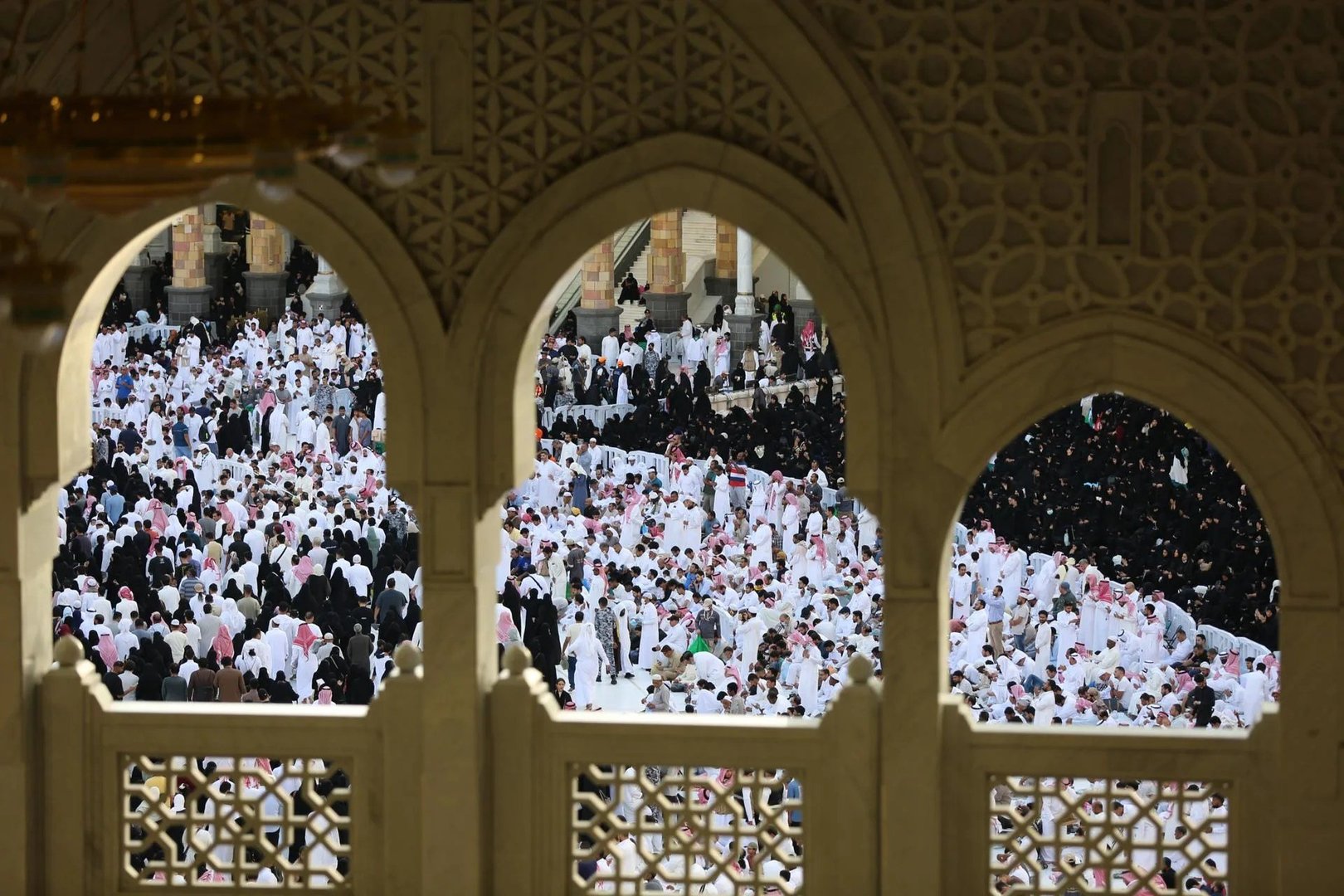
The Hajj brings together more than a million pilgrims in concentrated spaces over a short period, creating one of the largest managed gatherings in the world.
Authorities prioritize crowd control, safety, and uniform conduct standards to reduce the risk of stampedes, confrontation, or disruptions that could escalate in densely packed conditions.
Political expression is viewed as a variable that could undermine that controlled environment.
In parallel, Saudi Arabia has continued to modernize logistical systems for the Hajj, including digital registration platforms, quota management by country, and real-time monitoring of crowd flows across key ritual sites.
These systems are designed to minimize congestion and improve emergency response capability, reflecting a broader shift toward technology-driven pilgrimage management.
The current reinforcement of restrictions underscores a consistent policy direction rather than a new legal framework.
It signals continued emphasis on depoliticizing religious spaces at a time when regional instability increases the sensitivity of mass international gatherings, while ensuring that the operational integrity of the pilgrimage remains tightly controlled under state oversight.
The measure is rooted in long-standing policy that treats the Hajj as a strictly religious event under centralized state supervision, with violations subject to removal, fines, or deportation depending on severity and jurisdiction.
The enforcement emphasis comes at a time of heightened regional tension across parts of the Middle East, where conflicts involving multiple states have increased sensitivities around mass gatherings that bring together millions of pilgrims from diverse national backgrounds.
While specific external conflicts are not part of Hajj governance policy itself, Saudi authorities routinely adjust security and crowd-management protocols in response to broader geopolitical risk environments, prioritizing the prevention of unrest or politically charged incidents within the pilgrimage.
What is confirmed in practice is that Saudi regulations consistently prohibit political messaging in and around holy sites in Mecca and Medina.
These rules apply to printed materials, public chanting, signage, and coordinated displays that could be interpreted as affiliating the pilgrimage with state, factional, or ideological disputes.
Enforcement is typically carried out by religious affairs officials and security services working jointly to ensure compliance across entry points, accommodation zones, and ritual sites.
The rationale behind the policy is operational as much as doctrinal.
The Hajj brings together more than a million pilgrims in concentrated spaces over a short period, creating one of the largest managed gatherings in the world.
Authorities prioritize crowd control, safety, and uniform conduct standards to reduce the risk of stampedes, confrontation, or disruptions that could escalate in densely packed conditions.
Political expression is viewed as a variable that could undermine that controlled environment.
In parallel, Saudi Arabia has continued to modernize logistical systems for the Hajj, including digital registration platforms, quota management by country, and real-time monitoring of crowd flows across key ritual sites.
These systems are designed to minimize congestion and improve emergency response capability, reflecting a broader shift toward technology-driven pilgrimage management.
The current reinforcement of restrictions underscores a consistent policy direction rather than a new legal framework.
It signals continued emphasis on depoliticizing religious spaces at a time when regional instability increases the sensitivity of mass international gatherings, while ensuring that the operational integrity of the pilgrimage remains tightly controlled under state oversight.