

Who is Satoshi Nakamoto? Two men claimed to be the inventor of Bitcoin
Or both.
In a court case now unfolding in West Palm Beach, Fla., Ira Kleiman, the brother of the late computer-security specialist David Kleiman, maintains that his brother and Wright developed the original digital currency credited to the Nakamoto pseudonym.
Ira claims that, as a result, he is entitled to half of Wright’s crypto trove: some $64 billion in Bitcoin (by Friday’s valuation).
If Wright is Satoshi, as he claims on his private Instagram page (which contains just one post), then he holds 1.1 million Bitcoin and is worth tens of billions of dollars.
“The theory of the case is that a partnership was formed to create and mine a significant amount of Bitcoin under the name Satoshi Nakamoto,” Vel Freedman, the attorney representing Ira Kleiman, told The Post. “Evidence [in the form of emails] shows that Craig and Dave agreed to keep their partnership a secret. Nobody knew about it until Craig began telling [the Kleiman] family some details after Dave passed away [in 2013] and Craig decided to keep the fortune for himself.”
 Ira Kleiman (above) claims that his deceased brother David and Wright were co-creators of Bitcoin.
“We believe the court will find there’s nothing to indicate or record that they were in a partnership,” said Andrés Rivero, a lawyer for Wright.
Kleiman, a paraplegic, died under terrible conditions. When he was discovered, his body had begun to decompose, open bottles of alcohol were scattered around and, according to the complaint, there was “a loaded handgun next to him. A bullet hole in his mattress was found. The exact details surrounding his death remain unknown.”
If he himself had a stash of Bitcoin, it was never recovered and there was no known password.
Bitcoin started in 2008, after “Nakamoto” published online an open-source paper introducing a new form of digital currency: designed to be used without the need for a central bank. Its initial worth was less than a penny. Today, the value is nearly $58,000 per coin.
 David Kleiman was a digital-security expert who left behind no trace of
Bitcoin when he died — but could he be one-half of the team behind the
currency’s pseudonymous creator, Satoshi Nakamoto?
David Kleiman was a digital-security expert who left behind no trace of
Bitcoin when he died — but could he be one-half of the team behind the
currency’s pseudonymous creator, Satoshi Nakamoto?
Nakamoto came up with the idea for “coins” created by solving increasingly complex calculations that would eventually require extremely powerful computers. The number of Bitcoins in circulation will top out after a finite 21 million are mined — unlike traditional currency, which can be endlessly minted.
The identity of Nakamoto has become one of the great mysteries of our time, with everyone from Elon Musk to Swedish video-game developer Vili Lehdonvirta to American computer scientist Nick Szabo being tossed around as the man behind the myth. Wright, however, is the one person to step up and actually claim to be Satoshi Nakamoto.
While testifying on the witness stand earlier this month, Wright, according to coindesk.com, claimed to have written the white paper that laid out the inner workings of Bitcoin and was credited to Satoshi Nakamoto.
But there are vehement doubters who do not believe that Wright is the real Nakamoto.
“He’s lying, full stop,” maintained the well-regarded security researcher Dan Kaminsky via Twitter. “Satoshi signed a transaction in 2009. Wright copied that specific signature and tried to pass it off as new.”
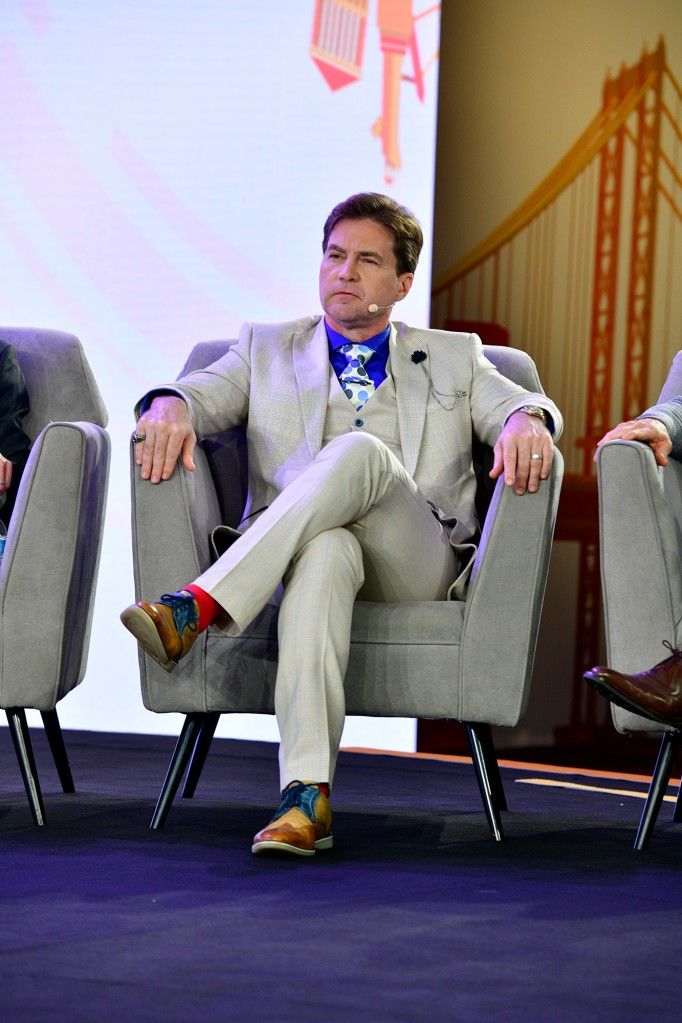 Craig Wright, an Australian computer scientist, has long claimed he is
Nakamoto — and that only he is — but has never offered up definitive
proof.
Craig Wright, an Australian computer scientist, has long claimed he is
Nakamoto — and that only he is — but has never offered up definitive
proof.
Others believe that neither Wright nor Kleiman had anything to do with the creation of cryptocurrency. “I’m convinced that neither one of these guys are Satoshi,” Bitcoin expert Arthur van Pelt told The Post. “[The real Nakamoto] didn’t want to be the leader. He wanted to hand it over to the community.”
Wright grew up in Brisbane, Australia, and says he has a PhD in computer science from Charles Stuart University in his home country.
“Craig has Aspergers and he is a little different from most people,” Calvin Ayre, a venture capitalist who first made his bones with the controversial online gambling site Bodog.com and is an investor in nChain, where, according to CrunchBase, Wright is a founder and chief scientist. “He’s a polymath who sleeps four hours a night and [in his sleep] listens to text books at four times the speed.”
In the early 2000s, Wright was working for BDO, an accounting firm in Sydney, Australia, when he was assigned to do a security audit for a different online gambling operation. That’s when he met the gambling site’s chief technology officer, Stefan Matthews.
“If he’s had a stressful day and needs to unwind, he reads a f–king textbook. He is wired differently from anyone I know,” Matthews told The Post. “He’s got dozens of technical certifications for things like networks, firewalls, penetration testing.”
Not long after they met, “He talked to me about digital gold and digital cash and he had eight or nine different concepts for them,” Matthews, formerly the CEO of nChain and now chairman of TAAL Distributed Information Technologies, recalled.
In 2008, Wright presented Matthews with a flash drive and asked him to download the document from it, with the hope that he would read it and offer his opinion on the work.
“It was a white paper [for Bitcoin, summing up the digital currency] that covered a lot of what we had discussed,” said Matthews. “The final, published version, in October 2008, has Satoshi’s name on it. In January 2009 [someone posing as Nakamoto] launched the Bitcoin code.
 Stefan Matthews, Wright’s former employer, believe Wright is Nakamoto and says he has seen papers that show it to be true.
“Craig and Dave [Kleiman] first communicated in 2007 or 2008,” he recalled. “Craig told me that David helped him to edit the white paper. Craig has a problem with staying within word lengths.”
Kleiman was a soldier turned cop turned computer forensics expert. While working as an officer for the Palm Beach County Sheriff’s Office, he was paralyzed in a 1995 motorcycle accident that left him confined to a wheelchair.
According to court documents, “Dave and Craig met in an online cryptography forum in 2003. Both men had a longtime interest in cyber security, digital forensics and the future of money.” They maintained correspondence over the years and “in 2007 they coauthored a paper on the mechanics of overwriting hard drive data.”
One year later, the court document confirms, Wright asked Kleiman to help edit the white paper. Then, it maintains, “for the next few months, Craig and Dave worked to get Bitcoin operational.”
The court document states that on Thanksgiving Day in 2009, Dave told his brother Ira “he was creating ‘digital money’ with a wealthy foreign man, i.e., Craig.”
Kleiman’s ex-wife Maria Frechette is not surprised if this was the case. “I don’t know if he invented [Bitcoin],” she told The Post. “But he was no dummy.”
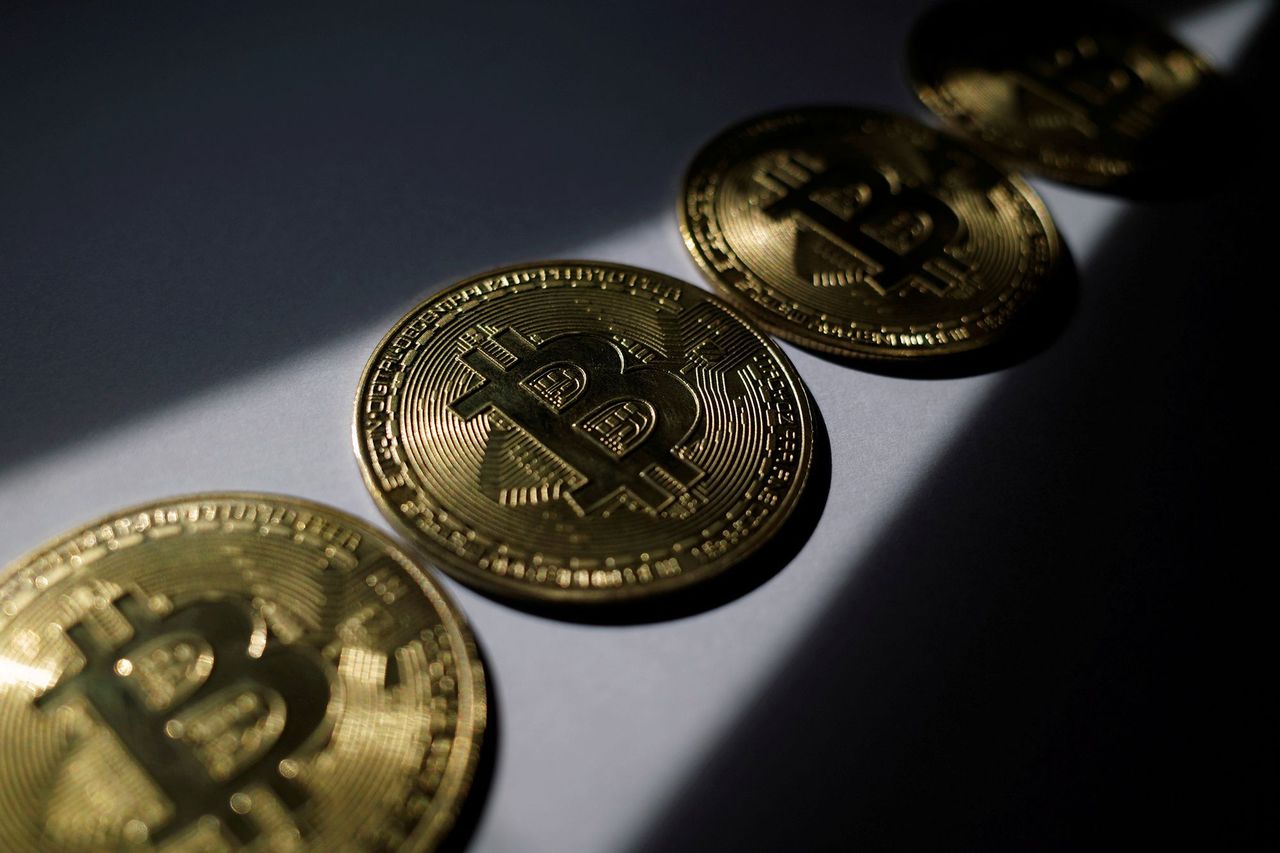 As of Nov. 19, 2021, a single Bitcoin was valued at $58,000.
During the first several years of Bitcoin, Nakamoto communicated regularly with a small group of crypto obsessives, via email and various message boards, but never on the telephone or in person.
Then, on April 26, 2011, Nakamoto disappeared — posting a farewell message to the community that concluded, “I’ve moved on to other things” — and has not been definitively heard from since.
Things were quiet for the next four years.
Wright had been keeping his alleged Satoshi identity on the down-low until December 2015. That’s when Wired and Gizmodo outed him.
“They had been sending Craig emails for weeks and wanted to do an interview with him,” Matthews said. “The advice was for Craig to do nothing because no one will break the story without Craig corroborating what they say. Of course that was wrong advice and they both did. Craig was torn up about that.”
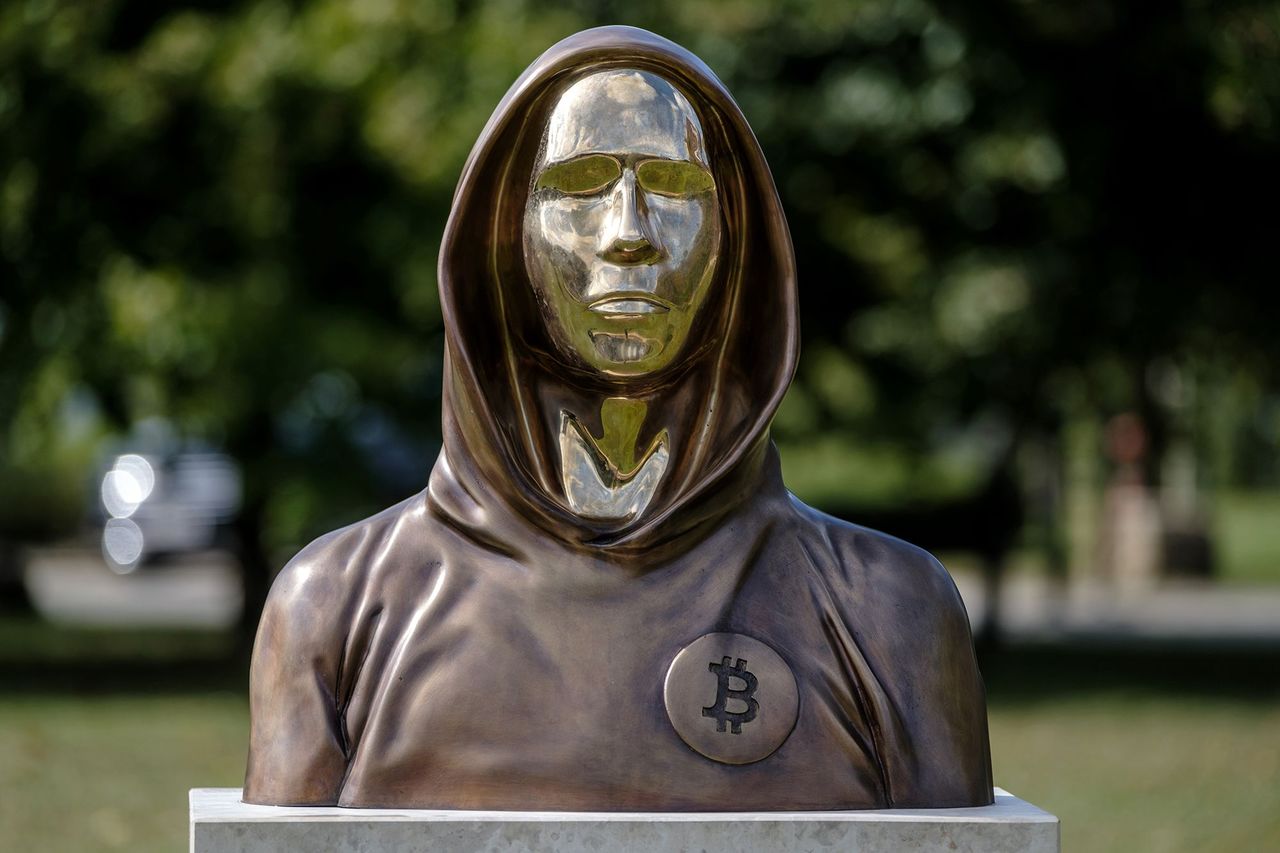 A statue of Satoshi Nakamoto, a presumed pseudonym used by the inventor
of Bitcoin, is displayed in Graphisoft Park in Budapest, Hungary.
A statue of Satoshi Nakamoto, a presumed pseudonym used by the inventor
of Bitcoin, is displayed in Graphisoft Park in Budapest, Hungary.
But by May 2016, he had reversed course. Wright vowed to cash out some of Satoshi’s coins in order to prove that he was Satoshi. Then he backed out with a claim, according to Bitcoin magazine , that the transaction could reveal an early “security flaw … that would make it risky for him to move Bitcoin, exposing him to exploitation or theft.”
“I believed that I could put the years of anonymity and hiding behind me. But as the events of this week unfolded and I prepared to publish the proof of access to the earliest keys, I broke,” he wrote in an online post. “I do not have the courage. I cannot.”
Soon after, Matthews reached out to Gavin Andresen. The Massachusetts-based software developer became the “core maintainer” of Bitcoin’s open-source code — hand-selected by Nakamoto, though they never met — when the founder reportedly left the project in 2011.
Andresen is well versed in the workings of Bitcoin: Records of mined coins are stored in blocks on the so-called blockchain, a digital ledger that keeps track of freshly mined coins. He knew that getting into each block required a unique key — a string of numbers and letters — that would allow Bitcoin to be transferred out (or messages to be left) plus a so-called “public key” that allows anyone to look at activity inside a given block.
Matthews invited Andresen to fly to London to meet Wright. At first, Andresen was skeptical, but, as he wrote on his website, “An initial email conversation convinced me that there was a very good chance he was the same person [i.e., Satoshi] I’d communicated with in 2010 and early 2011.”
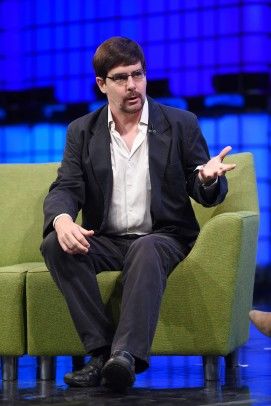 Gavin Andresen, Chief Scientist of Bitcoin Foundation, used to believe
Wright was Nakamoto. Lately, though, he’s changed his mind.
Gavin Andresen, Chief Scientist of Bitcoin Foundation, used to believe
Wright was Nakamoto. Lately, though, he’s changed his mind.
Convinced, Andresen took Matthews up on his offer. Upon landing in London, Andresen told The Post, “I went to the basement of a hotel. Craig and I compiled code and did a whole bunch of geeky things. Then Craig signed a [unique] message — I think it may have been ‘Gavin’s favorite number is 11’ — in a block that Satoshi created. He had to have the private key to do it. That made me think Craig was Satoshi.”
In fact, Andresen was so convinced that he posted as much on his website: “I believe Craig Steven Wright is the person who invented Bitcoin … During our meeting, I saw the brilliant, opinionated, focused, generous — and privacy-seeking — person that matches the Satoshi I worked with.”
His opinion has since changed.
“Now,” Andresen told The Post, “I have my doubts. It’s possible that Satoshi got hacked and lost the key. It’s possible I was fooled — I was jet-lagged. The more that time goes on and we have not seen any movement in those early blocks, I have to ask myself why.”
After Kleiman passed away from unknown causes in 2013, Matthews said, Wright reached out to Kleiman’s family.
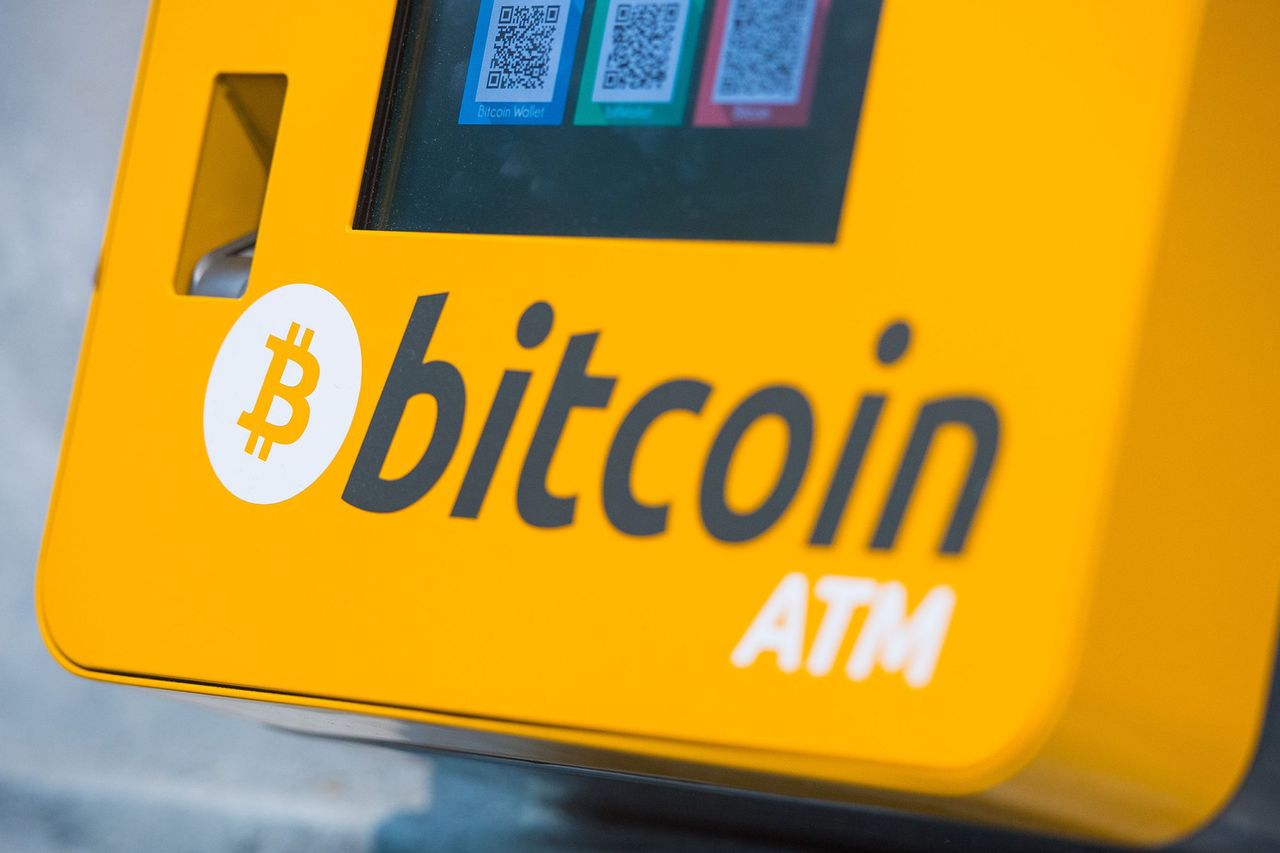 Bitcoin started in 2008.
“From my recollection, when Craig found out that Dave passed away, it hit him really hard,” Matthews told The Post. “I understand he wrote an email to Dave’s [now deceased] father, saying that Dave was involved with Craig and that if Dave has encrypted drives, he may have mined Bitcoin and may have digital assets on them.”
Said Ayre: “He wanted Dave’s family to be proud of Dave, so he exaggerated Dave’s involvement.”
Doubter van Pelt finds it ironic that Wright’s claims are exactly what got him in hot water. “[Wright] made himself out to be Satoshi and now is paying a price for it. He gave Ira Kleiman the appearance of being Satoshi Nakomoto. It works both ways. Craig is shameless.”