

Why Lloyd's of London could be saying farewell to the iconic HQ designed to bring people together
It is one of the most recognisable buildings in Britain.
The Lloyd's Building on Lime Street in the City, designed for the world's oldest insurance market by the visionary architect Richard Rogers, revolutionised the way we look at buildings by positioning lifts and ducts on the outside in order to maximise available space on the inside.
By the end of the decade, though, it may be being used by a different tenant from the one that provides its name.
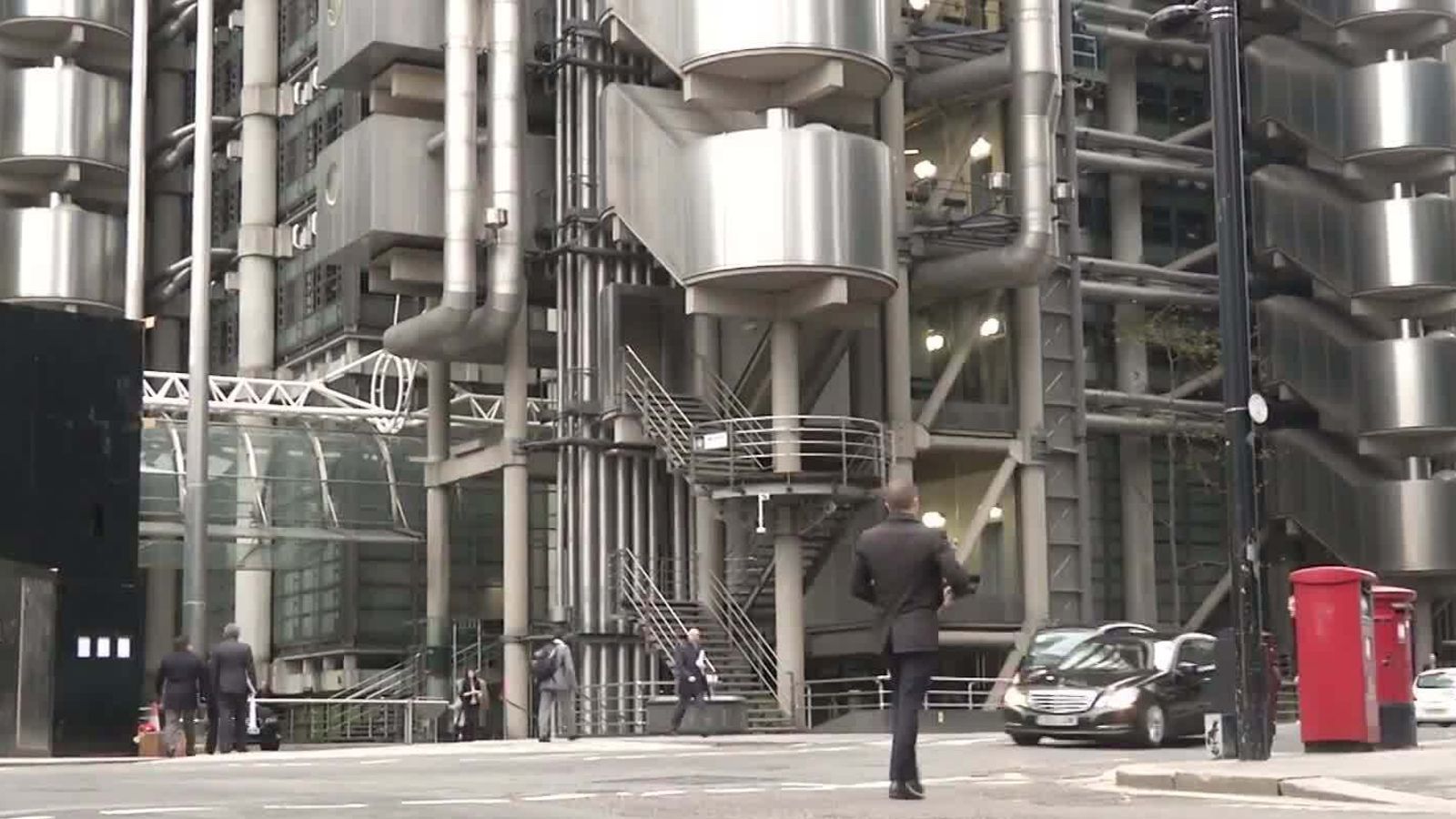 The design revolutionised the way we look at buildings by positioning lifts and ducts on the outside
The market is holding a review in response to changing working habits and React News, the real estate market intelligence provider, reports that, although Lloyd's of London's lease on the building does not run out until 2031, there is a break in the contract that it could exercise in 2026 if it wants to leave early.
Lloyd's was quick to close its underwriting room - specifically designed to bring people together to write reinsurance contracts face to face - at the start of the pandemic.
From a capacity of up to 7,000 people in the room, prior to the pandemic, just several hundred people were working there by the middle of 2020.
Now the market is having to think about how many people, in future, will be seeking to locate themselves physically in the building.
Lloyd's said: "As we adapt to new structures and flexible ways of working, we are continuing to carefully think about the future requirements for the spaces and services our marketplace needs.
"Currently, like many other organisations, we are considering a range of options around our workspace strategy and the future leasing arrangements for Lloyd's."
Were Lloyd's to leave the Lloyd's Building, it would be an extraordinary moment.
The word iconic is overused, but when it comes to this building, it is entirely appropriate.
The Lloyd's Building, which took eight years to build at a cost of £75m, was a symbol of the City of London's renaissance when it was officially opened by the Queen on 18 November 1986.
Mrs Thatcher's Big Bang reforms had been enacted the previous month - unleashing competition across the Square Mile and attracting a wave of investment into the City by American, Japanese and German banks.
And, while Big Bang was a reform of equity markets and not insurance, the bold design of the Lloyd's Building was a supreme statement of confidence.
It projected to the outside world that the City, despite its institutions being centuries-old in some cases, was embracing modernity.
Like all great architectural works, it was not to everyone's taste, initially.
An un-named Lloyd's underwriter complained to the Financial Times shortly after relocating to the new headquarters that the building was dark and gloomy and suffered from poor air-conditioning, that the glass lifts were covered in bird droppings and looked "tatty" and that problems with the new escalators - a key part of the design - were taking it longer to transact business.
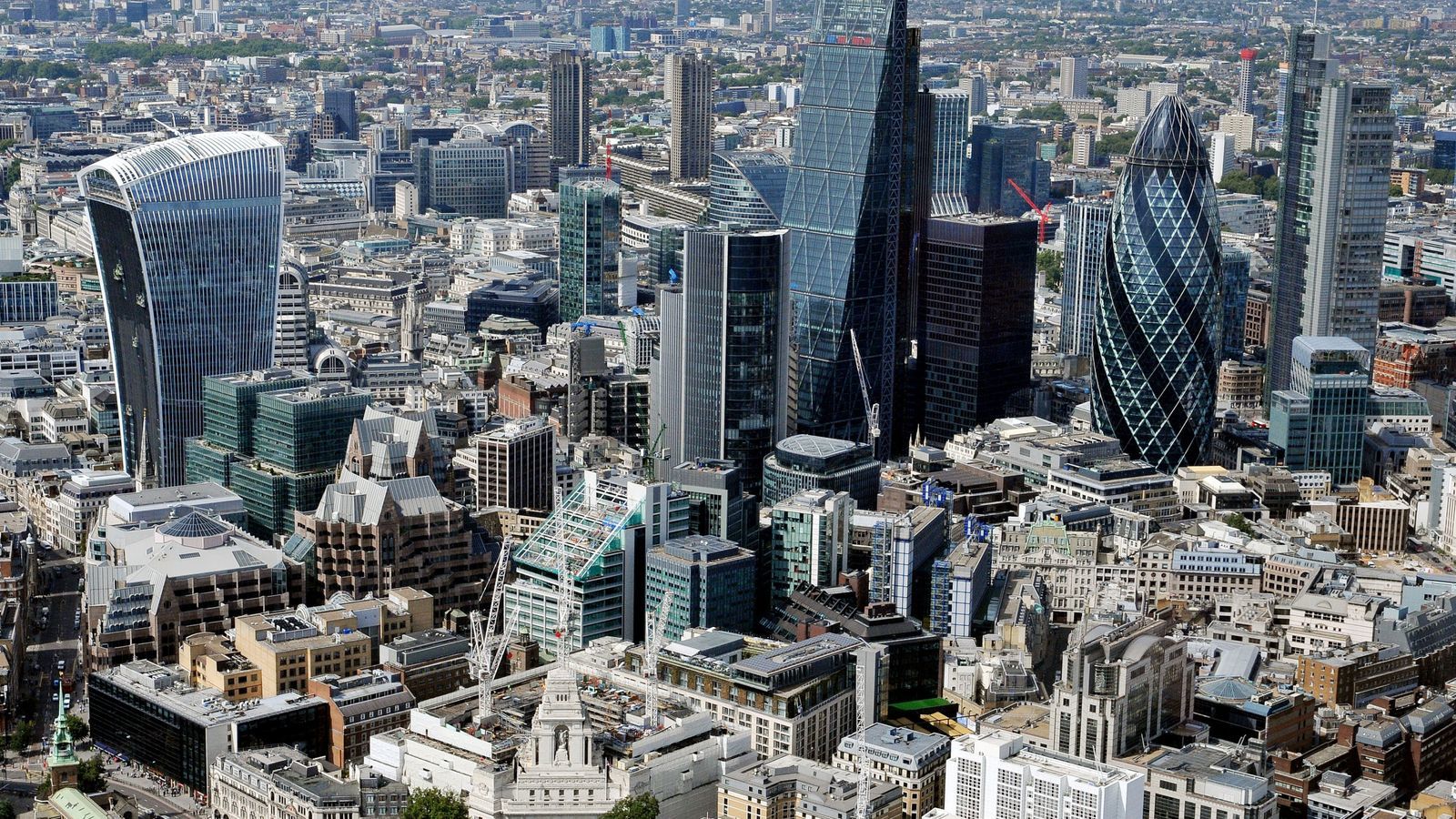 The Walkie-Talkie, the Cheesegrater and the Gherkin were part of a wave of transformation kicked off by the Lloyd's Building
This denizen of what was always regarded as a highly conservative institution grumbled: "I don't know whether the air-conditioning will work when the next heatwave comes along, but I suspect that even if it improves, we will still see people taking their jackets off.
"This never happened in all my 26 years in the old building."
The opening of the Lloyd's Building, though, heralded a wave of thrilling new buildings across the Square Mile and competition among architects and developers to come up with the most imaginative designs.
These transformed the City's landscape.
Hot on the heels of the Lloyd's Building came the Broadgate Circle, developed by Sir Stuart Lipton and Godfrey Bradman and designed by Arup, built on the site of the old Broad Street railway station.
Famous for its amphitheatre, which in the winter was host to what was London's first "turn up and skate" open ice rink, it too is now one of the City's most recognisable landmarks.
Across the City, meanwhile, the ugly concrete blocks that had sat alongside St Paul's Cathedral since the 1960s were torn down and replaced in 2003 by the striking Paternoster Square development, which quickly became the new home for the London Stock Exchange.
The following year, the development was completed when Sir Christopher Wren's historic Temple Bar Gate - the traditional entry point to the west of the Square Mile - was relocated there.
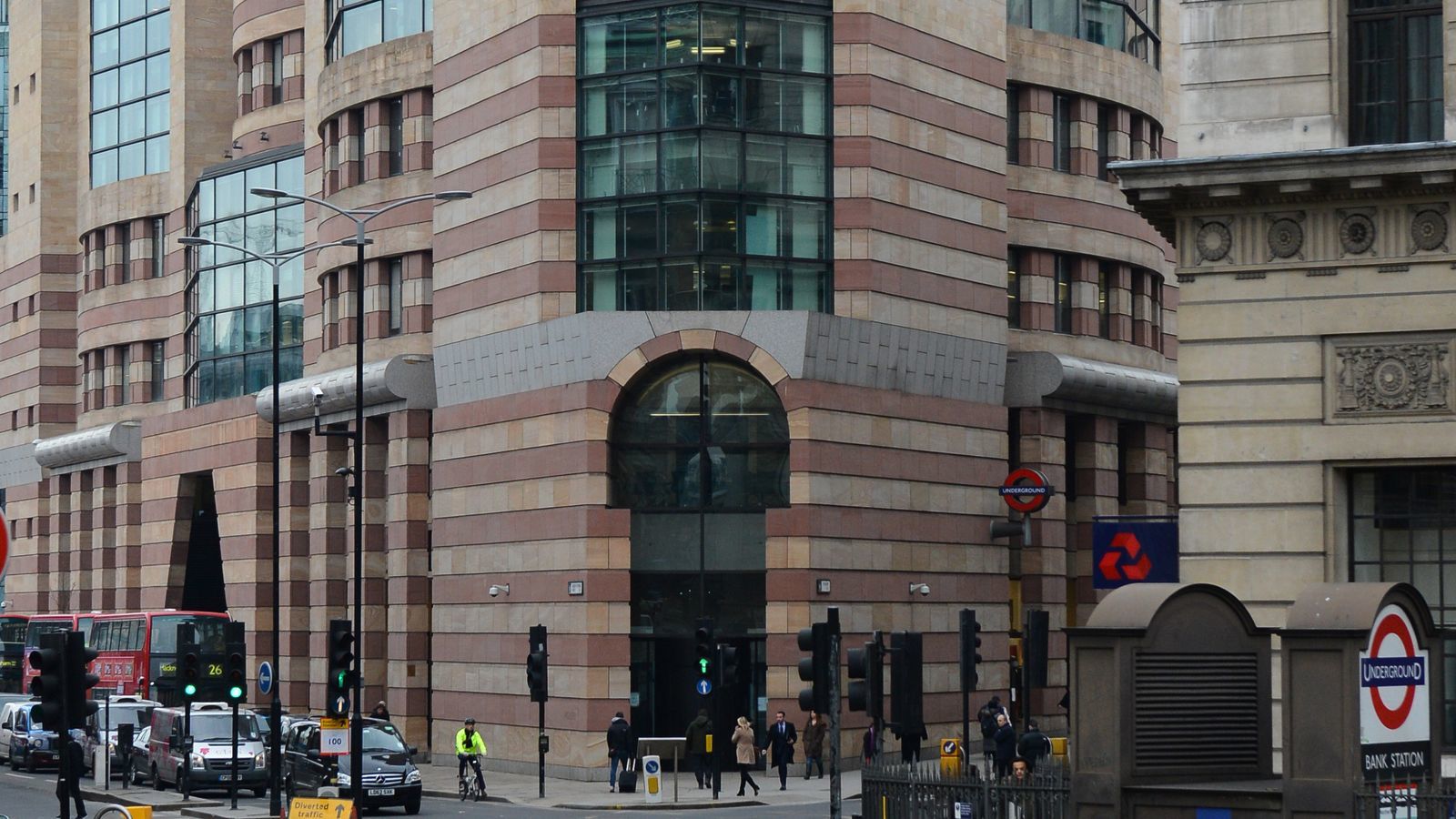 The design for No 1 Poultry was denounced by Prince Charles as resembling a '1930s wireless set'
These buildings and developments did not go up without what were often long and drawn-out hold-ups to the planning process.
One of the most bitter concerned the redevelopment of No 1 Poultry, next to the Mansion House, which had previously been a gothic Victorian building that housed the headquarters of jewellers Mappin and Webb.
It took several decades of campaigning by Lord Palumbo and the architect James Stirling to redevelop the site.
The design for the new building was denounced by Prince Charles as resembling a "1930s wireless set" but it is now so much a part of the City's fabric that its rooftop restaurant, Coq d'Argent, was even used as the site for the Queen's fictional helicopter departure point in the 2012 Olympics opening ceremony.
Other remarkable buildings followed as the City of London Corporation sought to out-do the giant glass and steel temples being erected a few miles to the east in Canary Wharf.
They included the Gherkin, which opened in April 2004 and the Heron Tower (now the Salesforce Tower), developed by Gerald Ronson and designed by the US architects Kohn Pederson Fox. It opened in 2011.
Next came the Walkie-Talkie (20 Fenchurch Street), which opened in April 2014 and the Cheesegrater (122 Leadenhall Street), which opened three months later.
More recently has come the stunning 22 Bishopsgate, the City's tallest building, developed by Sir Stuart Lipton and Peter Rogers, the younger brother of Richard Rogers.
This wave of transformation was all kicked off by the opening of the Lloyd's Building and it is no coincidence that the Gherkin, the Cheesegrater and the Walkie-Talkie, three of the most controversial of the new towers, are close to it in the EC3 postcode, long regarded as the City's "insurance quarter".
Lloyd's has been through much cultural change in recent years and a move away from its headquarters would no doubt be as much of wrench as it was to the crusty old underwriters who moved in there 35 years ago.
But it would be totally in keeping with the way this venerable City institution is evolving.