

Young influencers get billions of views peddling junk food to kids, study says
Researchers described the use of children with ‘wildly popular’ YouTube channels to frequently promote unhealthy food and drinks in their videos to other kids as a ‘perfect storm for encouraging poor nutrition.’
American food and drink firms spend US$1.8 billion a year (£1.37 billion) marketing their products to young people.
Although TV advertising is a major source of food marketing, companies have dramatically increased online advertising in response to growing social media use.
Study senior author Dr Marie Bragg, of NYU School of Global Public Health, said: ‘Kids already see several thousand food commercials on television every year, and adding these YouTube videos on top of it may make it even more difficult for parents and children to maintain a healthy diet.
‘We need a digital media environment that supports healthy eating instead of discouraging it.’

YouTube is the second most visited website in the world and is a popular destination for kids seeking entertainment.
More than 80 per cent of parents with a child under 12 allows them to watch YouTube, and 35 per cent of parents report that their child watches YouTube regularly.
Dr Bragg said: ‘The allure of YouTube may be especially strong in 2020 as many parents are working remotely and have to juggle the challenging task of having young kids at home because of Covid-19.’
She said that when finding videos for young children to watch, millions of parents turn to videos of ‘kid influencers’ – children whose parents film them doing activities such as science experiments, playing with toys, or celebrating their birthdays.
The growing popularity of such YouTube videos has caught the attention of companies, who advertise or sponsor posts to promote their products before or during videos. The highest-paid YouTube influencer of the past two years was actually an eight-year-old who earned $26 million(£19.8 million) last year.
Dr Bragg said: ‘Parents may not realise that kid influencers are often paid by food companies to promote unhealthy food and beverages in their videos.
‘Our study is the first to quantify the extent to which junk food product placements appear in YouTube videos from kid influencers.’
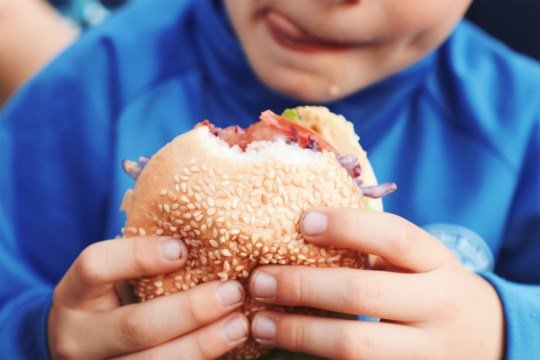
Dr Bragg and her colleagues identified the five most popular kid influencers on YouTube of 2019 – whose ages ranged from three to 14 years old – and analysed their most-watched videos.
Focusing on a sample of 418 YouTube videos, they recorded whether food or drinks were shown, what items and brands were shown, and assessed their nutritional quality.
Their findings, published in the journal Pediatrics, showed that nearly half of the most popular videos from kid influencers (42.8 per cent) promoted food and drinks.
More than 90 per cent of the products shown were unhealthy branded food, drinks, or fast food toys, with fast food as the most frequently featured junk food, followed by chocolate and fizzy drinks.
Only a few videos featured unhealthy unbranded items such as hot dogs (four per cent), healthy unbranded items such as fruit (three per cent), and healthy branded items such as yoghurt (two per cent).
The videos featuring junk food product placements were viewed more than one billion times – a ‘staggering’ level of exposure for food and drink firms.
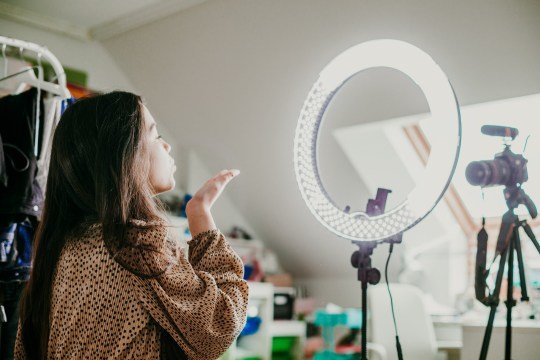
Dr Bragg said: ‘It was concerning to see that kid influencers are promoting a high volume of junk food in their YouTube videos, and that those videos are generating enormous amounts of screen time for these unhealthy products.’
While the researchers don’t know which food and drink product placements were paid endorsements, they find the videos ‘problematic’ for public health because they enable food firms to directly, yet subtly, promote unhealthy food to young children and their parents.
Dr Bragg added: ‘It’s a perfect storm for encouraging poor nutrition – research shows that people trust influencers because they appear to be ‘everyday people,’ and when you see these kid influencers eating certain foods, it doesn’t necessarily look like advertising.
‘But it is advertising, and numerous studies have shown that children who see food ads consume more calories than children who see non-food ads, which is why the National Academy of Medicine and World Health Organsation identify food marketing as a major driver of childhood obesity.’
The research team called on regulators to strengthen and enforce rules on junk food advertising by kid influencers.
Study co-author Dr Jennifer Pomeranz, Assistant Professor of public health policy and management at NYU School of Global Public Health, added: ‘We hope that the results of this study encourage the Federal Trade Commission and state attorneys general to focus on this issue and identify strategies to protect children and public health.’