Can Iraq's New Leaders Withstand the Storm of Prolonged US-Iran Confrontation?
As tensions between the US and Iran continue, Iraq finds itself caught in the middle, facing challenges in balancing its relationships with both nations.
DUBAI/LONDON: As the conflict between the US and Iran persists despite a ceasefire, Iraq is at risk of being pulled back into a role it has been trying to escape — as a battleground for regional conflict.
This situation is driven by its inability to curb the activities of Iran-backed militias.
The risk of this scenario coincides with a pivotal political shift in Iraq.
The newly elected president has nominated businessman Ali Al-Zaidi as prime minister-designate, asking him to form a government after weeks of deadlock.
The appointment was met with intense pressure from Washington, which opposed the return of former premier Nouri Al-Maliki, closely aligned with Iran.
Ultimately, Shiite parties coalesced around Zaidi — a little-known compromise candidate — in an attempt to avoid punitive US measures and preserve external support.
Zaidi's nomination underscores the tightrope that Iraq continues to walk between Washington and Tehran.
The country's geography and post-2003 political order, combined with Iran's projection of influence and a web of sectarian and ideological divisions, have placed it squarely in the line of fire.
Analysts warn that regional spillover could disrupt social stability, damage the economy, and destabilize internal politics.
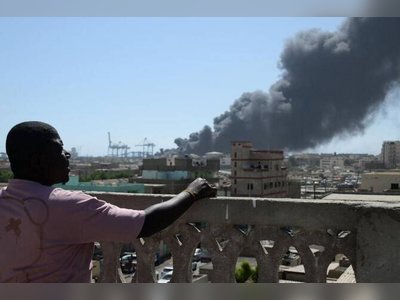
Iraq has already become an unwilling yet critical secondary battlefield.
Iran-backed Iraqi militias have launched hundreds of drone attacks across the Gulf, targeting sensitive infrastructure.
Over a five-week period beginning in late February, nearly half of the estimated 1,000 drone strikes recorded in the Gulf originated from Iraqi territory, largely conducted by factions operating under the “Islamic Resistance in Iraq”.
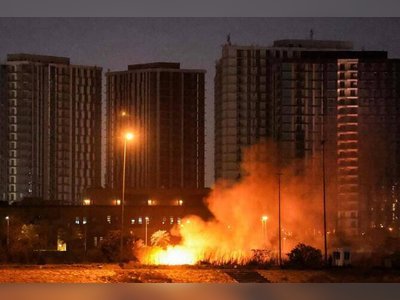
The conflict is also playing out within Iraq's borders.
Iran-backed militias have launched drone and missile attacks on US diplomatic and military facilities in Baghdad and Irbil.
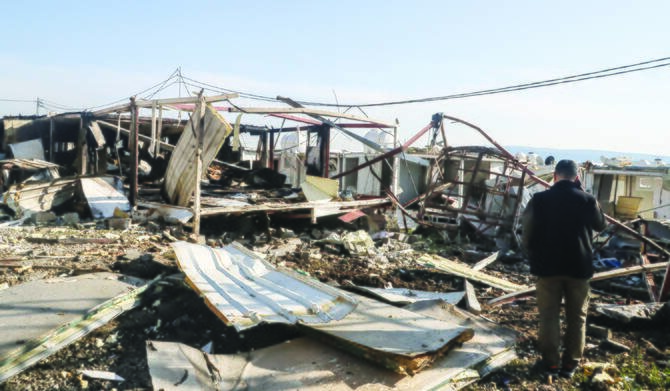
The US has retaliated with airstrikes on militia bases, weapons facilities, and command positions linked to groups such as Kataib Hezbollah and other factions within the Popular Mobilization Forces.
The semiautonomous Kurdistan Region of Iraq has emerged as a distinct flashpoint, symbolizing the country's vulnerability.
For decades, the region has hosted Iranian Kurdish opposition groups, whose presence Tehran views as a persistent security threat.
The lead-up to the current conflict saw reports that Washington considered backing a Kurdish-led offensive from northern Iraq into Iran, which appears to have sharpened Tehran’s threat perception.
In response, Iranian forces have carried out strikes against Kurdish infrastructure, military sites, and senior officials, signaling a broader effort to pressure the Kurdistan Regional Government and limit its alignment with the US.
The escalation comes at a moment of political transition in Baghdad.
Zaidi, a businessman and political outsider, has never held government office and would become Iraq’s youngest prime minister at 40 if he succeeds in forming a cabinet.
Iraq's next government will be expected to respond to Washington’s longstanding demand to disarm Iran-backed groups, while also managing relations with Tehran and repairing ties with Gulf states angered by cross-border attacks.
The country must confront mounting economic pressure as disruption in the Strait of Hormuz threatens oil exports, which account for about 90 percent of state revenues.
Sudani had attempted to walk a tightrope, positioning Iraq as a partner to both Iran and the US, but conditions are now becoming increasingly volatile.
The conflict could lead to unrest and disillusionment among ordinary Iraqis, and deepen the vacuum that has already emboldened competing political and armed actors.
The militias in question — primarily Kataib Hezbollah and Asaib Ahl Al-Haq — have grown into a force of about a quarter of a million members, with several billion dollars in funding, and an arsenal that includes long-range missiles.
In this challenging environment, Iraq's leaders will need to navigate complex political and economic issues while attempting to maintain stability.
The outcome of these efforts will have significant implications for the future of the country and the region as a whole.
This situation is driven by its inability to curb the activities of Iran-backed militias.
The risk of this scenario coincides with a pivotal political shift in Iraq.
The newly elected president has nominated businessman Ali Al-Zaidi as prime minister-designate, asking him to form a government after weeks of deadlock.
The appointment was met with intense pressure from Washington, which opposed the return of former premier Nouri Al-Maliki, closely aligned with Iran.
Ultimately, Shiite parties coalesced around Zaidi — a little-known compromise candidate — in an attempt to avoid punitive US measures and preserve external support.
Zaidi's nomination underscores the tightrope that Iraq continues to walk between Washington and Tehran.
The country's geography and post-2003 political order, combined with Iran's projection of influence and a web of sectarian and ideological divisions, have placed it squarely in the line of fire.
Analysts warn that regional spillover could disrupt social stability, damage the economy, and destabilize internal politics.
Iraq has already become an unwilling yet critical secondary battlefield.
Iran-backed Iraqi militias have launched hundreds of drone attacks across the Gulf, targeting sensitive infrastructure.
Over a five-week period beginning in late February, nearly half of the estimated 1,000 drone strikes recorded in the Gulf originated from Iraqi territory, largely conducted by factions operating under the “Islamic Resistance in Iraq”.
The conflict is also playing out within Iraq's borders.
Iran-backed militias have launched drone and missile attacks on US diplomatic and military facilities in Baghdad and Irbil.
The US has retaliated with airstrikes on militia bases, weapons facilities, and command positions linked to groups such as Kataib Hezbollah and other factions within the Popular Mobilization Forces.
The semiautonomous Kurdistan Region of Iraq has emerged as a distinct flashpoint, symbolizing the country's vulnerability.
For decades, the region has hosted Iranian Kurdish opposition groups, whose presence Tehran views as a persistent security threat.
The lead-up to the current conflict saw reports that Washington considered backing a Kurdish-led offensive from northern Iraq into Iran, which appears to have sharpened Tehran’s threat perception.
In response, Iranian forces have carried out strikes against Kurdish infrastructure, military sites, and senior officials, signaling a broader effort to pressure the Kurdistan Regional Government and limit its alignment with the US.
The escalation comes at a moment of political transition in Baghdad.
Zaidi, a businessman and political outsider, has never held government office and would become Iraq’s youngest prime minister at 40 if he succeeds in forming a cabinet.
Iraq's next government will be expected to respond to Washington’s longstanding demand to disarm Iran-backed groups, while also managing relations with Tehran and repairing ties with Gulf states angered by cross-border attacks.
The country must confront mounting economic pressure as disruption in the Strait of Hormuz threatens oil exports, which account for about 90 percent of state revenues.
Sudani had attempted to walk a tightrope, positioning Iraq as a partner to both Iran and the US, but conditions are now becoming increasingly volatile.
The conflict could lead to unrest and disillusionment among ordinary Iraqis, and deepen the vacuum that has already emboldened competing political and armed actors.
The militias in question — primarily Kataib Hezbollah and Asaib Ahl Al-Haq — have grown into a force of about a quarter of a million members, with several billion dollars in funding, and an arsenal that includes long-range missiles.
In this challenging environment, Iraq's leaders will need to navigate complex political and economic issues while attempting to maintain stability.
The outcome of these efforts will have significant implications for the future of the country and the region as a whole.