Trump: No Need for China's Help to End Iran War as Strait of Hormuz Tensions Escalate
US President Donald Trump maintains that his country does not require assistance from China to resolve the ongoing conflict with Iran, amid increasing tensions in the Strait of Hormuz.
US President Donald Trump expressed confidence on Tuesday that he will not need to enlist Chinese President Xi Jinping's support to bring an end to the conflict with Iran.
This statement comes as hopes for a lasting peace deal dwindle and Iran strengthens its control over the strategic Strait of Hormuz, through which one-fifth of the world's oil supply normally passes.
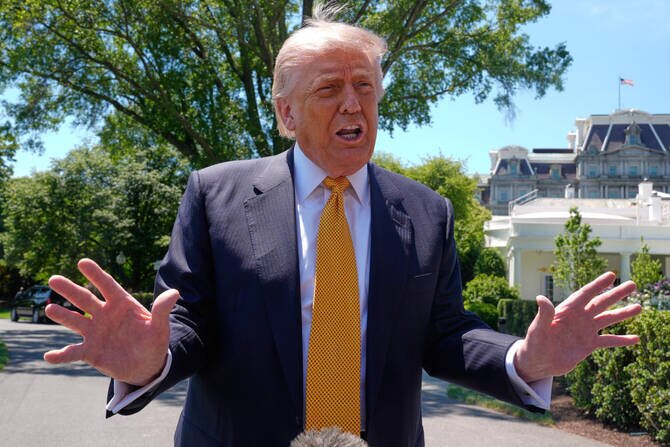
Trump stated during a press briefing that he believes the US will emerge victorious in the conflict either way, whether through peaceful means or otherwise.
Over a month after a tentative ceasefire took effect, both sides have yet to make significant progress on an agreement that would officially end hostilities.
In response to these developments, Iran has reportedly forged agreements with Iraq and Pakistan for shipping oil and liquefied natural gas from the region.
Additional countries are also in discussions about similar deals, indicating a potential normalization of Tehran's control over the waterway.
The Trump administration, on Tuesday, emphasized an agreement reached last month between senior US and Chinese officials that no country should impose tolls on traffic through the Strait of Hormuz.
While China, which maintains ties with Iran and remains a significant buyer of its oil, did not dispute this characterization, discussions about the conflict are expected to take place later this week when Trump meets with Xi.
US demands for an agreement include halting Iran's nuclear program and relaxing its grip on the Strait of Hormuz.
In turn, Iran has put forward its own set of demands, including compensation for war damages, an end to the US blockade, and a ceasefire in all conflict zones, such as Lebanon where Iran-backed Hezbollah is engaged in fighting alongside US ally Israel.
Trump dismissed these counter-demands as 'garbage' on Monday.
In light of this ongoing stalemate, Brent crude oil futures have surged past $107 per barrel.
The US Central Command confirmed the aircraft carrier Abraham Lincoln's presence in the Arabian Sea, where it has redirected 65 commercial vessels and disabled four others.
According to Pentagon estimates, the conflict's cost has risen to $29 billion so far, an increase of $4 billion from a previous estimate.
The war has also contributed to rising gasoline prices in the US, with consumer prices experiencing their largest annual inflation rate in nearly three years.
Public opinion in the US concerning the war remains divided, with a Reuters/Ipsos poll revealing that two out of every three Americans are uncertain about Trump's reasoning for initiating military action.
This sentiment is reflected even among Republicans and Democrats alike.
Despite mounting pressure, Iranian officials have continued to display defiance.
An Islamic Revolutionary Guard Corps official was cited by the Fars news agency as stating that Iran has expanded its definition of the Strait of Hormuz to include a broader area stretching from the city of Jask on the eastern coast to Siri Island in the west.
In Tehran, the Revolutionary Guards conducted drills focused on countering potential threats from enemy forces.
This statement comes as hopes for a lasting peace deal dwindle and Iran strengthens its control over the strategic Strait of Hormuz, through which one-fifth of the world's oil supply normally passes.
Trump stated during a press briefing that he believes the US will emerge victorious in the conflict either way, whether through peaceful means or otherwise.
Over a month after a tentative ceasefire took effect, both sides have yet to make significant progress on an agreement that would officially end hostilities.
In response to these developments, Iran has reportedly forged agreements with Iraq and Pakistan for shipping oil and liquefied natural gas from the region.
Additional countries are also in discussions about similar deals, indicating a potential normalization of Tehran's control over the waterway.
The Trump administration, on Tuesday, emphasized an agreement reached last month between senior US and Chinese officials that no country should impose tolls on traffic through the Strait of Hormuz.
While China, which maintains ties with Iran and remains a significant buyer of its oil, did not dispute this characterization, discussions about the conflict are expected to take place later this week when Trump meets with Xi.
US demands for an agreement include halting Iran's nuclear program and relaxing its grip on the Strait of Hormuz.
In turn, Iran has put forward its own set of demands, including compensation for war damages, an end to the US blockade, and a ceasefire in all conflict zones, such as Lebanon where Iran-backed Hezbollah is engaged in fighting alongside US ally Israel.
Trump dismissed these counter-demands as 'garbage' on Monday.
In light of this ongoing stalemate, Brent crude oil futures have surged past $107 per barrel.
The US Central Command confirmed the aircraft carrier Abraham Lincoln's presence in the Arabian Sea, where it has redirected 65 commercial vessels and disabled four others.
According to Pentagon estimates, the conflict's cost has risen to $29 billion so far, an increase of $4 billion from a previous estimate.
The war has also contributed to rising gasoline prices in the US, with consumer prices experiencing their largest annual inflation rate in nearly three years.
Public opinion in the US concerning the war remains divided, with a Reuters/Ipsos poll revealing that two out of every three Americans are uncertain about Trump's reasoning for initiating military action.
This sentiment is reflected even among Republicans and Democrats alike.
Despite mounting pressure, Iranian officials have continued to display defiance.
An Islamic Revolutionary Guard Corps official was cited by the Fars news agency as stating that Iran has expanded its definition of the Strait of Hormuz to include a broader area stretching from the city of Jask on the eastern coast to Siri Island in the west.
In Tehran, the Revolutionary Guards conducted drills focused on countering potential threats from enemy forces.