0:00
0:00
Debate Grows Over Saudi Arabia’s Role in Sudan War Amid US Alliance Questions
Critics argue Riyadh’s ties to Sudan’s army, which has links to Islamist networks, complicate its partnership with Washington during efforts to end the conflict
Saudi Arabia’s involvement in Sudan’s ongoing civil war is drawing renewed scrutiny as analysts debate whether the kingdom can maintain close alignment with the United States while backing Sudan’s regular military, a force whose alliances include Islamist-leaning factions.
The discussion centres on Riyadh’s relationship with Sudan’s army, led by General Abdel Fattah al-Burhan, which has been fighting the paramilitary Rapid Support Forces since civil war erupted in April twenty twenty three.
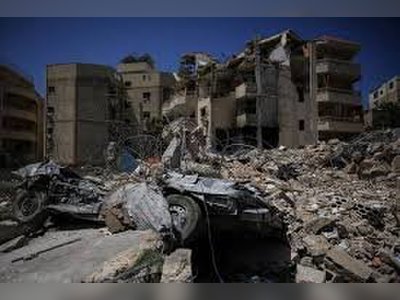
The conflict has caused tens of thousands of deaths and displaced millions of people, creating one of the world’s most severe humanitarian crises.
Saudi Arabia has historically maintained close ties with Sudan’s armed forces and has supported them diplomatically while also positioning itself as a mediator seeking to bring the war to an end.
Riyadh has hosted negotiations and worked alongside international partners to facilitate ceasefire talks aimed at protecting civilians and stabilising the country.
At the same time, the Sudanese army maintains complex relationships with political and militia groups inside the country, including factions with Islamist roots that emerged during earlier periods of Sudan’s political history.
Analysts say these overlapping alliances have raised questions in Western policy circles about how external partners should approach Sudan’s fractured political landscape.
Saudi officials have consistently framed their role as part of a broader diplomatic effort to restore stability in Sudan and prevent the conflict from spreading across the Red Sea and Horn of Africa regions.
The kingdom has also coordinated with international partners in mediation efforts, including initiatives launched jointly with the United States to encourage negotiations between Sudan’s warring factions.
President Donald Trump’s administration has emphasized cooperation with regional partners, including Saudi Arabia, as part of efforts to encourage a political settlement.
American officials have described the kingdom as an important diplomatic channel capable of engaging with Sudanese leaders and supporting humanitarian access in the war-torn country.
The geopolitical complexity surrounding Sudan reflects wider competition among regional powers.
Gulf states have pursued different strategies in the conflict, with some supporting rival factions while others have focused on mediation and political engagement.
Saudi Arabia has generally prioritized working with recognized state institutions and encouraging dialogue aimed at ending hostilities.
Experts say the debate illustrates the broader challenge facing international diplomacy in Sudan: balancing the need for cooperation with influential regional actors while addressing concerns about the alliances and internal dynamics of Sudan’s military leadership.
As fighting continues and humanitarian conditions deteriorate, diplomatic engagement by regional powers remains central to any potential path toward a ceasefire and long-term political settlement.
The discussion centres on Riyadh’s relationship with Sudan’s army, led by General Abdel Fattah al-Burhan, which has been fighting the paramilitary Rapid Support Forces since civil war erupted in April twenty twenty three.
The conflict has caused tens of thousands of deaths and displaced millions of people, creating one of the world’s most severe humanitarian crises.
Saudi Arabia has historically maintained close ties with Sudan’s armed forces and has supported them diplomatically while also positioning itself as a mediator seeking to bring the war to an end.
Riyadh has hosted negotiations and worked alongside international partners to facilitate ceasefire talks aimed at protecting civilians and stabilising the country.
At the same time, the Sudanese army maintains complex relationships with political and militia groups inside the country, including factions with Islamist roots that emerged during earlier periods of Sudan’s political history.
Analysts say these overlapping alliances have raised questions in Western policy circles about how external partners should approach Sudan’s fractured political landscape.
Saudi officials have consistently framed their role as part of a broader diplomatic effort to restore stability in Sudan and prevent the conflict from spreading across the Red Sea and Horn of Africa regions.
The kingdom has also coordinated with international partners in mediation efforts, including initiatives launched jointly with the United States to encourage negotiations between Sudan’s warring factions.
President Donald Trump’s administration has emphasized cooperation with regional partners, including Saudi Arabia, as part of efforts to encourage a political settlement.
American officials have described the kingdom as an important diplomatic channel capable of engaging with Sudanese leaders and supporting humanitarian access in the war-torn country.
The geopolitical complexity surrounding Sudan reflects wider competition among regional powers.
Gulf states have pursued different strategies in the conflict, with some supporting rival factions while others have focused on mediation and political engagement.
Saudi Arabia has generally prioritized working with recognized state institutions and encouraging dialogue aimed at ending hostilities.
Experts say the debate illustrates the broader challenge facing international diplomacy in Sudan: balancing the need for cooperation with influential regional actors while addressing concerns about the alliances and internal dynamics of Sudan’s military leadership.
As fighting continues and humanitarian conditions deteriorate, diplomatic engagement by regional powers remains central to any potential path toward a ceasefire and long-term political settlement.