
US and Israel Collaborate on Aid Distribution to Gaza amid Concerns Over Limited Access
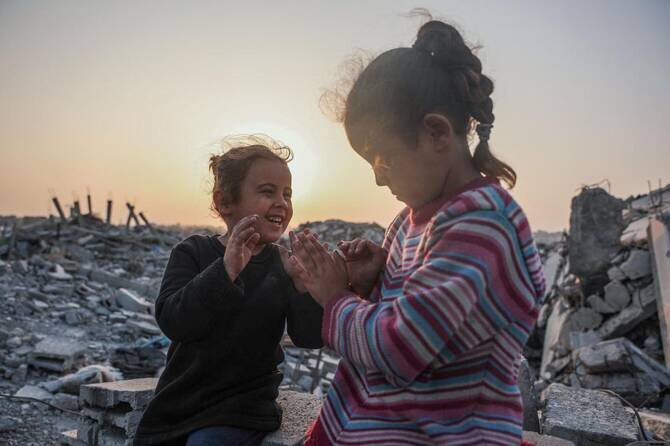
While a ceasefire brings hope for improved conditions in the Gaza Strip, challenges persist regarding aid delivery.
In a collaborative effort to oversee and coordinate aid into the Gaza Strip, US forces are working alongside Israeli authorities as part of President Donald Trump's ceasefire plan.
According to an Israeli security official, this partnership involves joint decision-making processes for policy, supervision, and monitoring.
The Civil-Military Coordination Center (CMCC), led by the United States, is integral to this initiative and aims to facilitate aid entry while ensuring security measures are maintained.
The CMCC officially began operations from southern Israel in late October, with a focus on enhancing stability and aiding the flow of humanitarian supplies into Gaza.
Established under the directives of the US Central Command, its primary objective is to stabilize conditions post-conflict, providing critical resources to the affected population.
However, despite the ceasefire agreement reached between Israel and Hamas, which aimed to alleviate the dire situation in Gaza following a devastating conflict triggered by cross-border attacks from Hamas in October 2023, concerns have been raised about the insufficient aid reaching the enclave.
Humanitarian agencies have reported that the current inflow of supplies remains drastically below expectations, emphasizing the urgent need for increased support.
Israel maintains its commitment to fulfilling its obligations under the ceasefire agreement, which envisions an average daily influx of 600 trucks carrying essential supplies into Gaza.
Recent reports suggest that the United States is considering new proposals designed to enhance humanitarian aid delivery, acknowledging ongoing challenges related to the list of approved non-governmental organizations and the restrictions on dual-use items deemed critical by Israel.
In summary, while efforts are underway to improve the situation in Gaza through coordinated US-Israeli action, significant hurdles remain regarding the efficient distribution of aid.
The CMCC's role is pivotal in this process, aiming to balance humanitarian needs with security considerations.
According to an Israeli security official, this partnership involves joint decision-making processes for policy, supervision, and monitoring.
The Civil-Military Coordination Center (CMCC), led by the United States, is integral to this initiative and aims to facilitate aid entry while ensuring security measures are maintained.
The CMCC officially began operations from southern Israel in late October, with a focus on enhancing stability and aiding the flow of humanitarian supplies into Gaza.
Established under the directives of the US Central Command, its primary objective is to stabilize conditions post-conflict, providing critical resources to the affected population.
However, despite the ceasefire agreement reached between Israel and Hamas, which aimed to alleviate the dire situation in Gaza following a devastating conflict triggered by cross-border attacks from Hamas in October 2023, concerns have been raised about the insufficient aid reaching the enclave.
Humanitarian agencies have reported that the current inflow of supplies remains drastically below expectations, emphasizing the urgent need for increased support.
Israel maintains its commitment to fulfilling its obligations under the ceasefire agreement, which envisions an average daily influx of 600 trucks carrying essential supplies into Gaza.
Recent reports suggest that the United States is considering new proposals designed to enhance humanitarian aid delivery, acknowledging ongoing challenges related to the list of approved non-governmental organizations and the restrictions on dual-use items deemed critical by Israel.
In summary, while efforts are underway to improve the situation in Gaza through coordinated US-Israeli action, significant hurdles remain regarding the efficient distribution of aid.
The CMCC's role is pivotal in this process, aiming to balance humanitarian needs with security considerations.