

Background of Rushdie attacker sheds light on Khomeini sympathizers in US
Rushdie was speaking at a literary festival in upstate New York when Matar rushed onto the stage and stabbed the prize-winning author multiple times, including in the face, arm and abdomen, police allege.
The suspect had a pass to attend the literary conference hosted by the Chautauqua Institution in Chautauqua, New York, according to police.
Hospital officials said that Rushdie, 75, is likely to lose an eye as a result of the attack.
The celebrated author suffered nerve damage to one arm, a serious injury to his liver and is on a ventilator.
Although police officials investigating the attack have not speculated on Matar’s motives, or possible official or unofficial ties to extremist pro-Iranian groups, many experts linked the incident to Iran’s longstanding, extremist terrorist agenda.
Matar’s Facebook cover page, which was widely shared on social media, shows the suspect is a follower of the Tehran regime’s hard-line agenda.
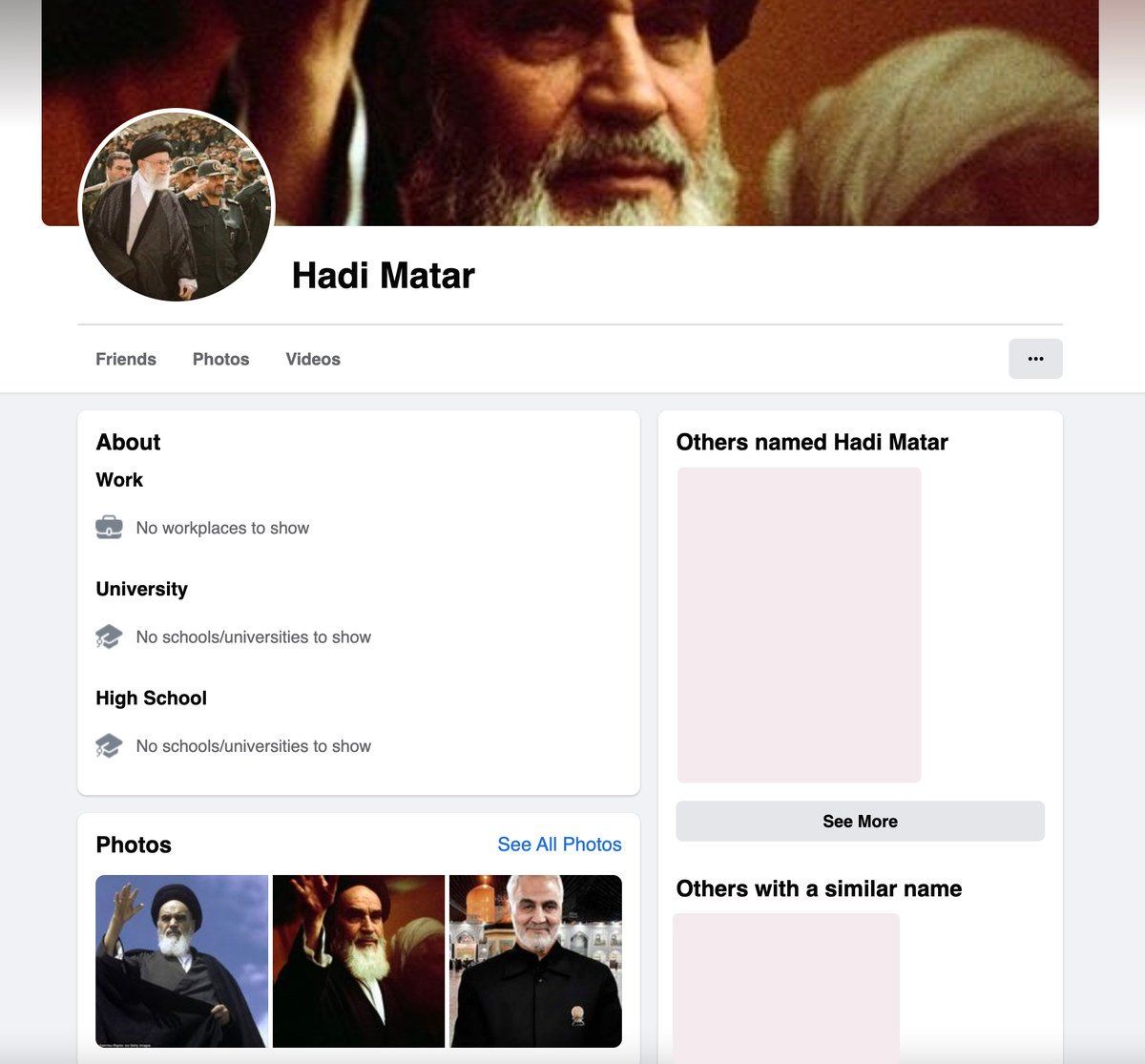
The page includes images of Khomeini, the regime’s founder, and current Supreme Leader Ali Khamenei, leaving no doubt about Matar’s indoctrination and sympathies with the Iranian regime.
“The attack on Salman Rushdie by a reportedly pro-Khomenei individual would seem to qualify as an act of terrorism. The documented threats to Americans by Iran are certainly terrorism,” Norman Roule, an adviser to the United Against Nuclear Iran coalition, based in Washington, posted on Twitter.
“How would we have responded if these were AQ-related attacks? Why the difference?”
Khalil Jahshan, executive director of the Washington-based Arab Center, a think tank focusing on US foreign policy in the Middle East, told Arab News that pockets of pro-Iranian activists exist in the US, but usually stay under the radar.
Jahshan said that he believed Matar might be a “lone wolf” motivated by the Iranian regime’s longstanding fatwa, and rhetoric against Rushdie and other Western officials, but is surprised the attack was carried out now.
“One would think, after so many years, this fatwa issued by Iran and supported by many in the region, including in Lebanon, has somewhat dissipated, diminished, if you will, in intensity and in emotional attachment to it,” Jahshan told Arab News.
The fatwa against Rushdie was tempered in 1998 after Khomeini’s death, with the Iranian leader’s successors saying they no longer supported calls for Rushdie’s killing. But the fatwa was never officially revoked.
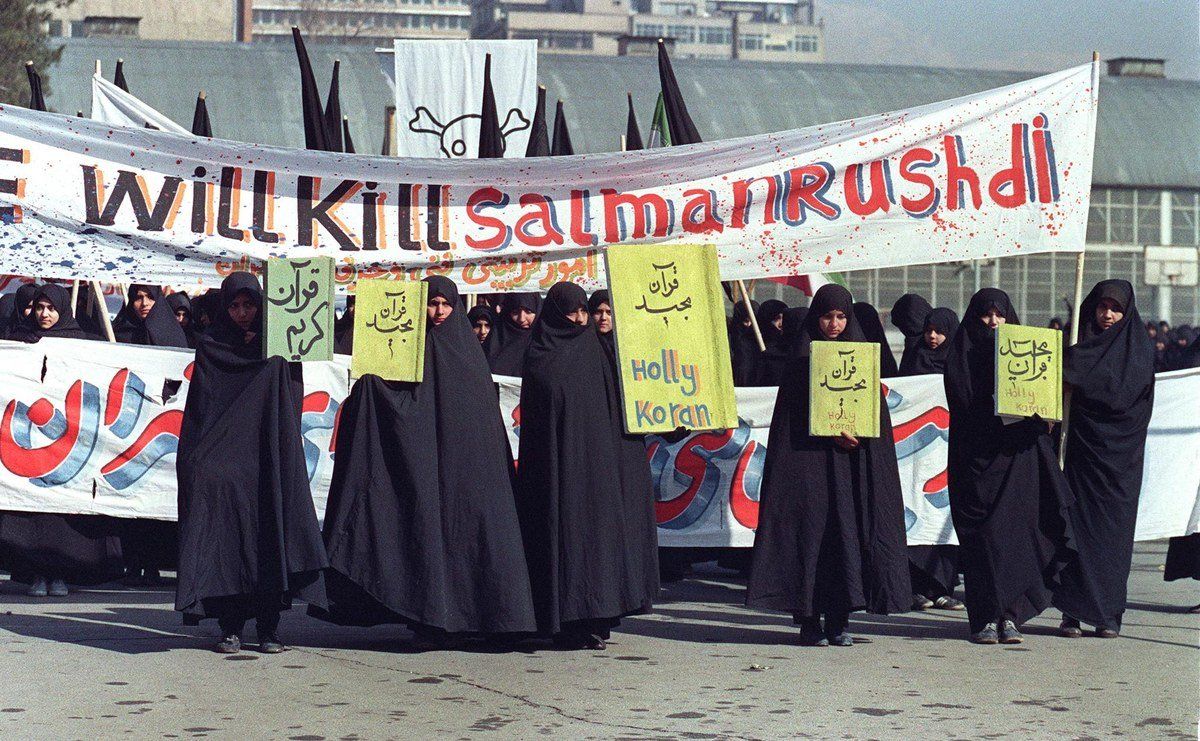
Jahshan said that the fatwa still holds relevance for some who continue to support Iran.
“I'm certainly not surprised that there are people who still take these things seriously. Support (for) terror attacks against civilians for political reasons have diminished in many parts of the world, but they continue to exist at least on the individual level,” he said.
“So the fact that it’s an individual who doesn’t seem to be tied to any particular organization or set-up, whether in this country or outside, is not surprising. That’s the fad right now. That’s a common trend. But, again, one has to wait for the investigation to proceed and see what connections they might come up with after the investigation.”
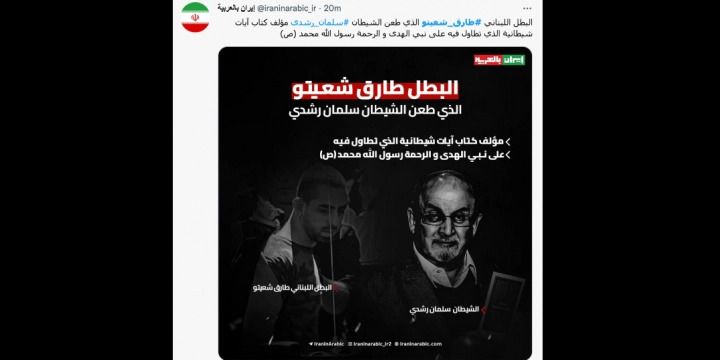
Immediately after the attack, pro-Iranian and pro-Hezbollah social media feeds lit up with praise for the alleged assailant, but many were later removed.
The IranArabic Twitter account with more than 90,000 followers called Matar a “Lebanese hero who stabbed Satan Salman Rushdie, author of 'The Satanic Verses,' in which he insulted the Prophet of guidance and mercy, the Messenger of God, Muhammad.”
Some activists in Detroit, where Lebanese Shiites and support for Hezbollah are strong, said they are not surprised by the attack, adding that pro-Iranian activism there is often high profile, but also that they feared speaking out publicly because of fears for their safety.
“People are afraid to speak out here in Detroit against Iran or Hezbollah,” one Detroit activist said, asking not to be identified.
The FBI issued an alert in 2020 warning of possible terrorism from pro-Iranian sympathizers and agents in the US after the drone assassination of Qassem Soleimani, head of Iran’s Quds Force and responsible for a series of violent terrorist attacks against anti-Iran regime dissidents.
The attack on Rushdie comes after the US Justice Department revealed a plot to assassinate former US National Security Adviser John Bolton.
Shahram Poursafi, identified by US officials as a member of Iran’s paramilitary Revolutionary Guard, is currently wanted by the FBI on charges related to the murder-for-hire plot.
Matar was born in the US, but may not have escaped the extremist indoctrination that many young people, and even children, are forced to go through in pro-Iranian Hezbollah strongholds. Exporting the extremist ideology of the Iranian "revolution" is a key goal of its proxies in the Middle East.
But they seem to have also established a presence in the American heartland as well.
Analysts discovered this summer that a pro-Iran mosque in Houston was forcing young children to take part in chants called “Salam Farmande,” or “Hello Commander” in Farsi. The ceremony, which has been posted on social media, closely mirrors Iranian and Hezbollah indoctrination intended to instill total loyalty to Khamenei.
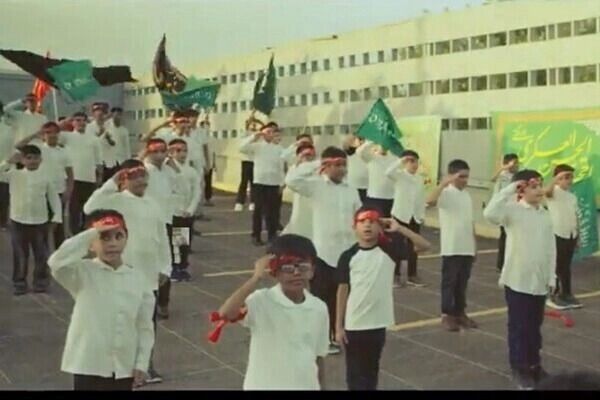
In a recent report published by the Middle East Forum, a think tank that monitors extremism, Adrian Calamel, an analyst specializing in the Middle East and terrorism, said that the song is part of the recruitment drive for the Iranian regime.
“It’s enlisting the children to be the next generation of martyrs,” he said. “The song itself says, ‘we are ready to die for the commander.’”
Calamel warns that Shiite mosques similar to the one in Houston are centers of Iranian influence in the US.
“Al-Qaeda can’t set up these centers, Daesh can’t set up these centers, but Iran can,” he said.
It is unclear how Matar was radicalized, but clearly there is a broader trend of political and religious indoctrination that is being pushed by sympathizers of Iran’s brand of religious extremism that justify and encourage attacks like the one against Rushdie.