Arab Press

بالشعب و للشعب
Saturday, Jan 10, 2026

Coronavirus: How Iran is battling a surge in cases

Coronavirus: How Iran is battling a surge in cases

Iran has seen a significant surge in the number of coronavirus infections, and the official death toll has now gone above 20,000.

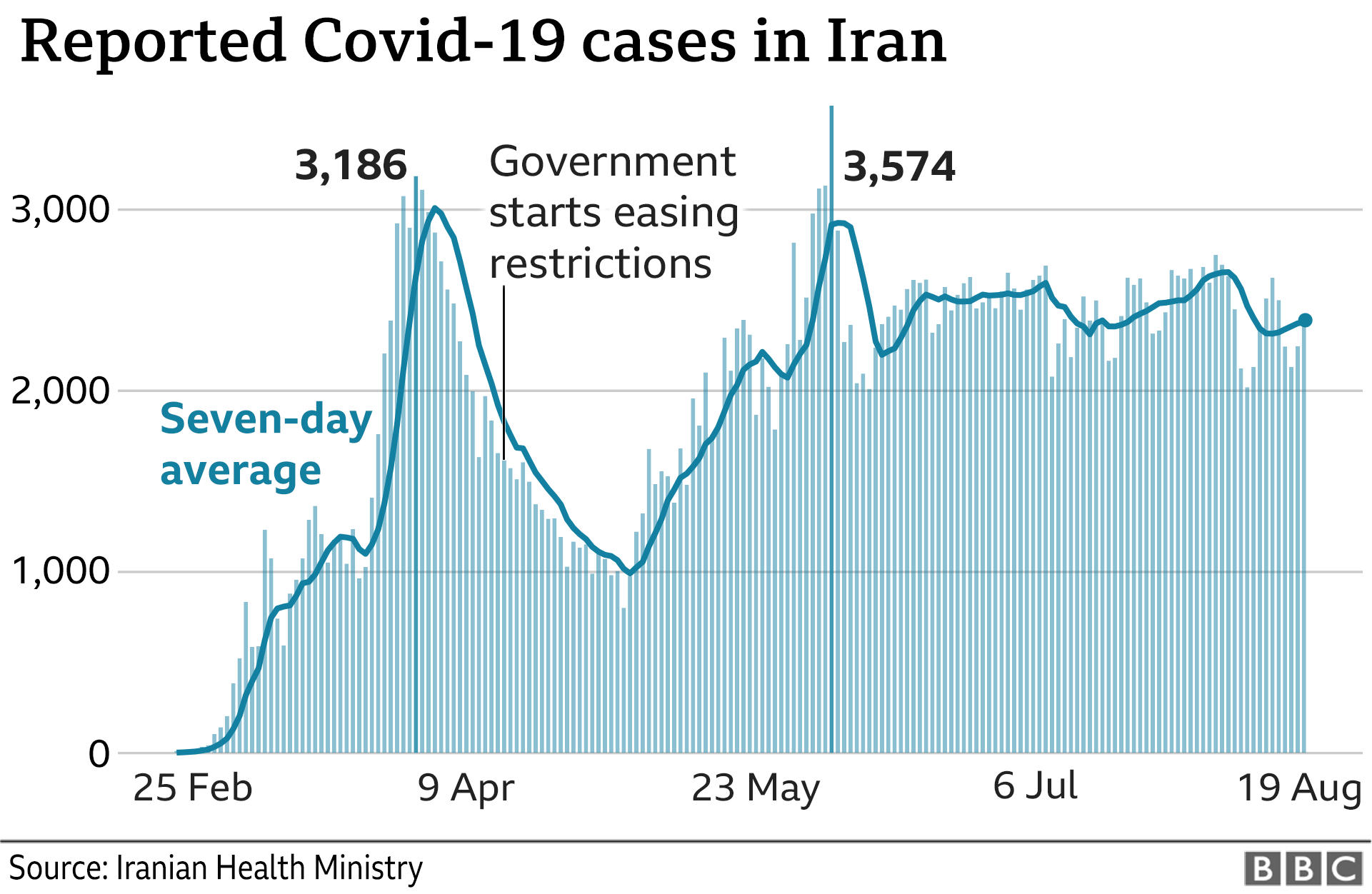
Cases spiked in mid-May and have remained high despite a re-imposition of some restrictions on movement.

The severity of the outbreak has been difficult to evaluate and there are concerns that the situation has been significantly worse than the government has revealed.

What do we know about the numbers in Iran?


Published data on new cases suggests that following a second peak at the start of June, the reported number of new cases has remained persistently high at well over 2,000 per day.


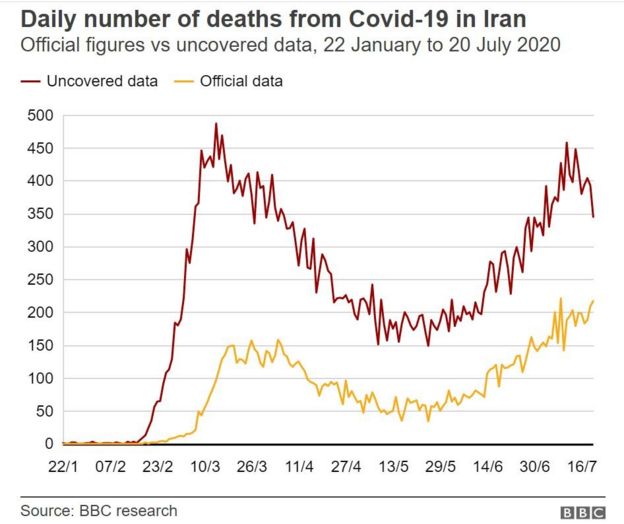
However, this may well be a significant underestimate, judging by documents which indicate that Iran has been withholding the true scale of the outbreak.

These documents - obtained by the BBC and believed to be unpublished Iranian official records - suggest a much higher death toll.

According to these figures, the pandemic could have killed as many as 42,000 Iranians by 21 July compared with some 14,000 deaths reported by the Health Ministry by that date.


Why have cases been rising?


In April, Iran began to ease its restrictions as daily infections fell:

* 20 April: Shopping malls and bazaars reopened and travel resumed between different provinces
* 22 April: Public parks and recreation areas reopened
* 12 May: Government allowed all mosques to reopen
* 25 May: Major Shia religious shrines reopened
* 26 May: Restaurants, cafes, museums and historical sites reopened

City transport systems across Iran, as well as banks and offices, have been packed with people.

The epidemic was initially concentrated in Qom and the capital, Tehran. But in the beginning of August, a flare-up was reported in the south-west, notably in Khuzestan province which borders Iraq.

Officials have suggested the renewed surge in new cases could be down to more testing, and President Hassan Rouhani has said this means you will find more cases.

Iran's chief epidemiologist at the country's health ministry, Mohammad-Mehdi Gouya, explained: "The main reason for the rising numbers is that we have started identifying [infected people] who have no or mild symptoms."

Iran increased its testing in June, and has tested about 31 people in every 100,000 people since then, considerably more than it did at the start of the pandemic.

But that's still less than the US or countries in Europe that have been hit by the virus.

The proportion of tests in Iran that return a positive result began to rise in late May and early June, reaching 14%. Since then it's stayed between nine and 10%.

That's about ten tests for each positive case.

The WHO has suggested at least 10 and as many as 30 tests per positive case is a good general benchmark for adequate testing, according to Our World in Data, which compiles coronavirus testing statistics.

That means that at the moment, Iran may not be doing quite enough testing to find all cases.


What steps have the authorities taken?


Health Minister Saeed Namaki said people were ignoring social distancing rules.
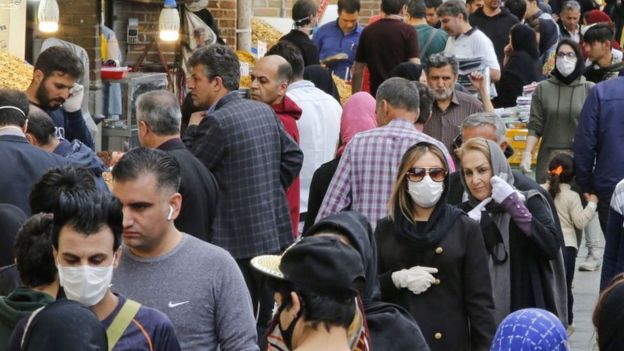

Officials have complained Iranians are not observing social distancing


"People have become completely careless regarding this disease," he told the Iranian news agency.

And a health ministry poll in June suggested only:

* 40% of the population were keeping the social-distancing rules, down from 90% earlier in the outbreak
* 32% were following the rules on self-isolation, down from 86%

During the initial outbreak, the Iranian authorities were criticised for their hesitation in closing down mosques and key religious sites, and for not moving quicker to introduce restrictions.

The leadership in Iran cannot afford to continue restrictions because of the state of the economy, according to BBC Persian's Rana Rahimpour.

She adds that it faces multiple challenges such as US sanctions, corruption and mismanagement.

President Rouhani has told Iranians they must wear face masks on public transport and in crowded areas, and said where necessary, the police and security forces will enforce the rules.
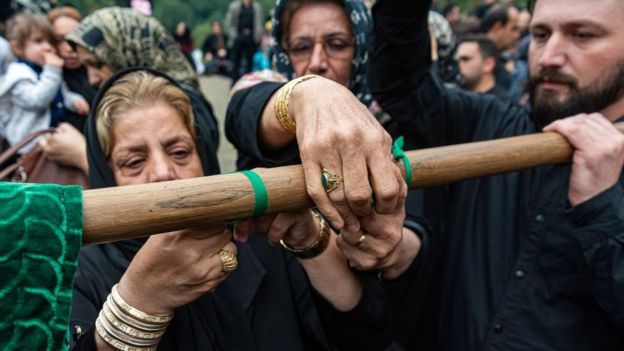

Muharram is an important event in the Iranian calendar


And Supreme Leader Ayatollah Ali Khamenei has called for action to stop the rising level of infections, and criticised those who don't wear face masks.

In July, the authorities in the capital, Tehran, announced restrictions were being temporarily re-imposed on some businesses and public gatherings, including wedding halls, coffee shops, tea houses, amusement parks and zoos.

With the holy month of Muharram starting on 20 August, the health ministry has prohibited any gatherings indoors.

"The slightest negligence will lead to a spike," Health Minister Alireza Raisi has said.

Newsletter

Related Articles

Arab Press
0:00
0:00
Close
There is no sovereign immunity for poisoning millions with drugs.
Mohammed bin Salman’s Global Standing: Strategic Partner in Transition Amid Debate Over His Role
Saudi Arabia Opens Property Market to Foreign Buyers in Landmark Reform
The U.S. State Department’s account in Persian: “President Trump is a man of action. If you didn’t know it until now, now you do—do not play games with President Trump.”
CNN’s Ranking of Israel’s Women’s Rights Sparks Debate After Misleading Global Index Comparison
Saudi Arabia’s Shifting Regional Alignment Raises Strategic Concerns in Jerusalem
OPEC+ Holds Oil Output Steady Amid Member Tensions and Market Oversupply
Iranian Protests Intensify as Another Revolutionary Guard Member Is Killed and Khamenei Blames the West
President Trump Says United States Will Administer Venezuela Until a Secure Leadership Transition
Delta Force Identified as Unit Behind U.S. Operation That Captured Venezuela’s President
Saudi-UAE Rift Adds Complexity to Middle East Diplomacy as Trump Signals Firm Leadership
OPEC+ to Keep Oil Output Policy Unchanged Despite Saudi-UAE Tensions Over Yemen
Saudi Arabia and UAE at Odds in Yemen Conflict as Southern Offensive Deepens Gulf Rift
Abu Dhabi ‘Capital of Capital’: How Abu Dhabi Rose as a Sovereign Wealth Power
Diamonds Are Powering a New Quantum Revolution
Trump Threatens Strikes Against Iran if Nuclear Programme Is Restarted
Why Saudi Arabia May Recalibrate Its US Spending Commitments Amid Rising China–America Rivalry
Riyadh Air’s First Boeing 787-9 Dreamliner Completes Initial Test Flight, Advancing Saudi Carrier’s Launch
Saudi Arabia’s 2025: A Pivotal Year of Global Engagement and Domestic Transformation
Saudi Arabia to Introduce Sugar-Content Based Tax on Sweetened Drinks from January 2026
Saudi Hotels Prepare for New Hospitality Roles as Alcohol Curbs Ease
Global Airports Forum Highlights Saudi Arabia’s Emergence as a Leading Aviation Powerhouse
Saudi Arabia Weighs Strategic Choice on Iran Amid Regional Turbulence
Saudi Arabia Condemns Sydney Bondi Beach Shooting and Expresses Solidarity with Australia
Washington Watches Beijing–Riyadh Rapprochement as Strategic Balance Shifts
Saudi Arabia’s Vision 2030 Drives Measurable Lift in Global Reputation and Influence
Alcohol Policies Vary Widely Across Muslim-Majority Countries, With Many Permitting Consumption Under Specific Rules
Saudi Arabia Clarifies No Formal Ban on Photography at Holy Mosques for Hajj 2026
Libya and Saudi Arabia Sign Strategic MoU to Boost Telecommunications Cooperation
Elon Musk’s xAI Announces Landmark 500-Megawatt AI Data Center in Saudi Arabia
Israel Moves to Safeguard Regional Stability as F-35 Sales Debate Intensifies
Cardi B to Make Historic Saudi Arabia Debut at Soundstorm 2025 Festival
U.S. Democratic Lawmakers Raise National Security and Influence Concerns Over Paramount’s Hostile Bid for Warner Bros. Discovery
Hackers Are Hiding Malware in Open-Source Tools and IDE Extensions
Traveling to USA? Homeland Security moving toward requiring foreign travelers to share social media history
Wall Street Analysts Clash With Riyadh Over Saudi Arabia’s Deficit Outlook
Trump and Saudi Crown Prince Cement $1 Trillion-Plus Deals in High-Profile White House Summit
Saudi Arabia Opens Alcohol Sales to Wealthy Non-Muslim Residents Under New Access Rules
U.S.–Saudi Rethink Deepens — Washington Moves Ahead Without Linking Riyadh to Israel Normalisation
Saudi Arabia and Israel Deprioritise Diplomacy: Normalisation No Longer a Middle-East Priority
As Trump Deepens Ties with Saudi Arabia, Push for Israel Normalization Takes a Back Seat
Thai Food Village Debuts at Saudi Feast Food Festival 2025 Under Thai Commerce Minister Suphajee’s Lead
Saudi Arabia Sharpens Its Strategic Vision as Economic Transformation Enters New Phase
Saudi Arabia Projects $44 Billion Budget Shortfall in 2026 as Economy Rebalances
OPEC+ Unveils New Capacity-Based System to Anchor Future Oil Output Levels
Hong Kong Residents Mourn Victims as 1,500 People Relocated After Devastating Tower Fire
Saudi Arabia’s SAMAI Initiative Surpasses One-Million-Citizen Milestone in National AI Upskilling Drive
Saudi Arabia’s Specialty Coffee Market Set to Surge as Demand Soars and New Exhibition Drops in December
Saudi Arabia Moves to Open Two New Alcohol Stores for Foreigners Under Vision 2030 Reform
Saudi Arabia’s AI Ambitions Gain Momentum — but Water, Talent and Infrastructure Pose Major Hurdles
×