

Don’t hate the phrase ‘Hong Kong, add oil’ – we need it now more than ever
No one can say for certain how the popular Hong Kong phrase “add oil” (ga yau) came about. To this day, its origins remain vague and sketchy at best.
For those of you who aren’t familiar with the term, it’s used to cheer people on and it’s much like the phrase, “go for it”.
Some say ga yau was coined as far back as the Ming dynasty (1368–1644). Personally, I lean towards the story that it originated during the Qing dynasty (1644-1912) when it literally meant adding oil to lamps.
This is how the story goes: one official at the time, who was a staunch education advocate, would order his staff to patrol the city late at night. If they saw students burning the midnight oil, so to speak, they would offer them oil for their lamps as a gesture of encouragement for their diligence.
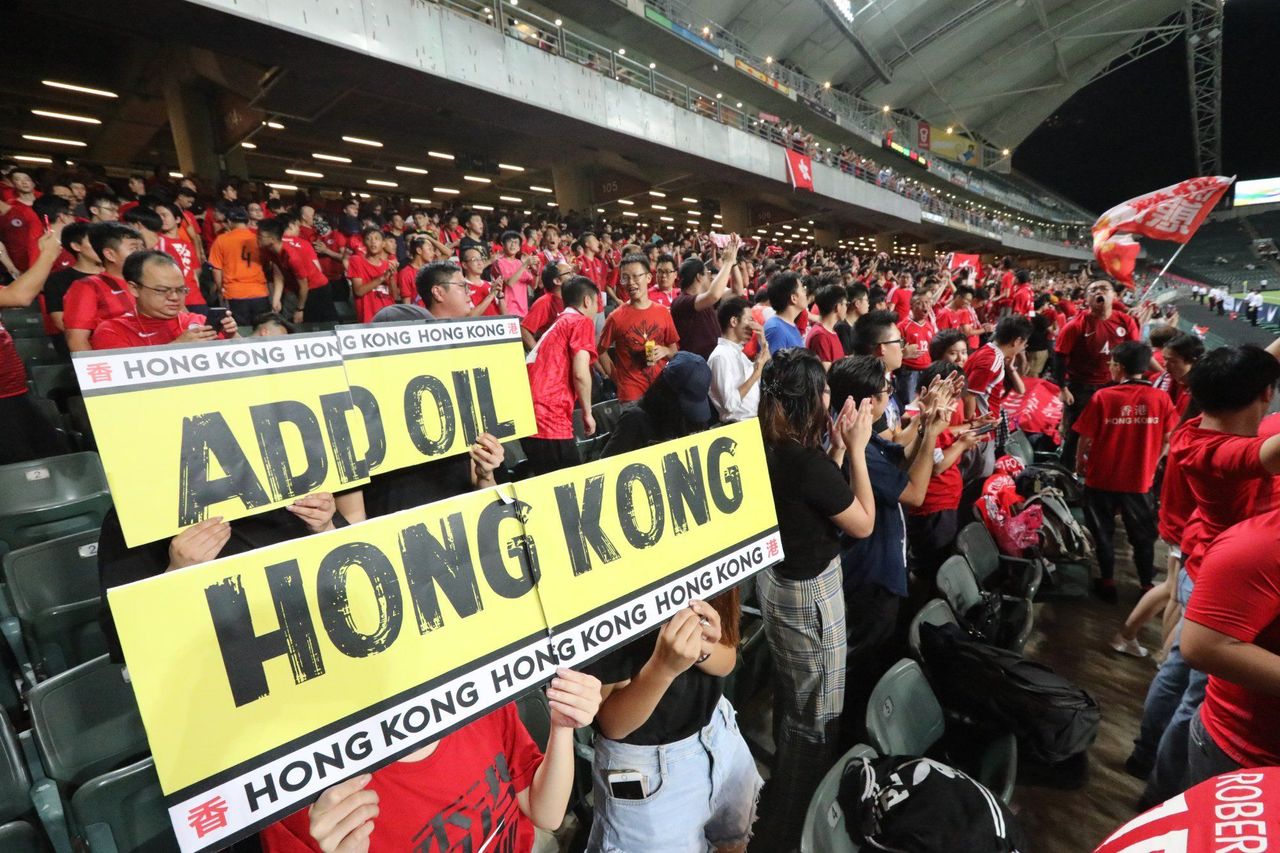 Football fans with an “add oil, Hong Kong” sign at the Hong Kong vs Iran
2022 Fifa World Cup qualifying match in Happy Valley, Hong Kong.
Football fans with an “add oil, Hong Kong” sign at the Hong Kong vs Iran
2022 Fifa World Cup qualifying match in Happy Valley, Hong Kong.
The phrase came back into mainstream use around 15 to 20 years ago, but it is fascinating to think that it was in use many centuries before. Even expatriates living here know the phrase in both Cantonese and its literal English translation, and they can seamlessly work it into conversation.
But before I go any further on the linguistic value of “add oil”, which has recently (and unfortunately) become a highly sensitive political phrase when used alongside “Hong Kong”, I want to emphasise that this is a cultural discussion, not a political one.
In the early days of the coronavirus pandemic in 2020, residents of Wuhan in central China chanted “Wuhan, add oil” from their windows when the city, where Covid-19 was first reported, was on lockdown. This was to encourage each other while they were cut off from the outside world.
A similar thing took place in Shanghai during the recent months of lockdown, and probably in many more Chinese cities on a smaller scale.
Perhaps most controversially, “add oil” was used by demonstrators during the 2019 anti-government protests when they chanted “Hong Kong, add oil”.
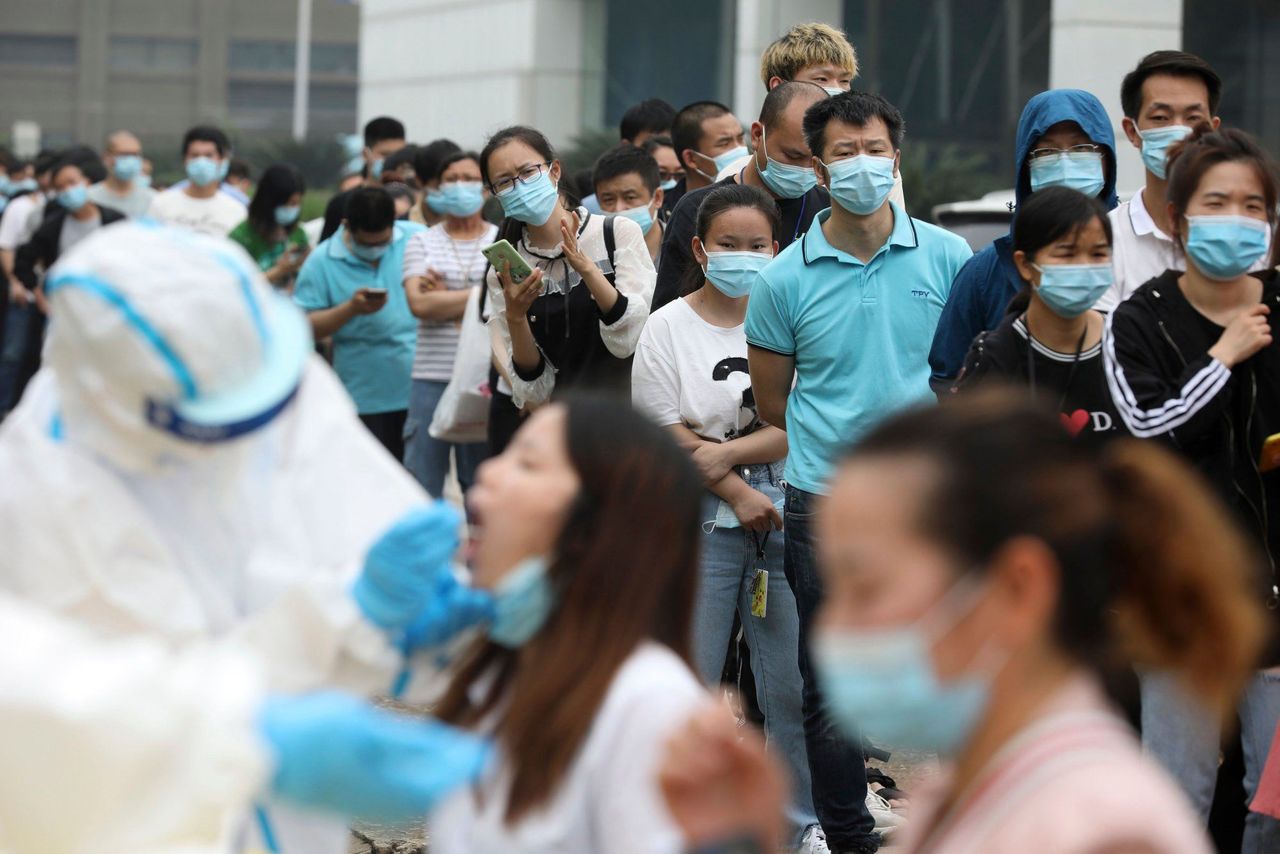 People queue up for a coronavirus test in Wuhan in central China in 2020.
If “add oil” can be used alongside other Chinese city names, then it seems the only problematic words of the phrase are, in fact, “Hong Kong”.
Well, if Hong Kong is not allowed to add oil any more, what can locals say to offer words of encouragement to one another?
Hong Kong people are highly ingenious and always find clever ways around things. Maybe we can substitute “oil” with “gas”, “water”, or popular dim sum dishes like har gau and siu mai.
These alternatives basically have the same intended effect, which is to arouse enthusiasm and energy in others. While it does seem trivial to have to tiptoe around a phrase – which is fundamentally innocuous and invigorating – the original “add oil” phrase now seems to be tainted by controversial connotations.
In an ideal world, we shouldn’t put a blanket ban on the phrase “Hong Kong, add oil” just because it was hijacked by protesters. Allowing people to use the phrase won’t make the city any less safe or people any less patriotic.
The core meaning of “add oil” is simple and straightforward. It encourages people to keep going, to never give up, to stay strong and to remain positive. Isn’t this what the Hong Kong spirit is all about?
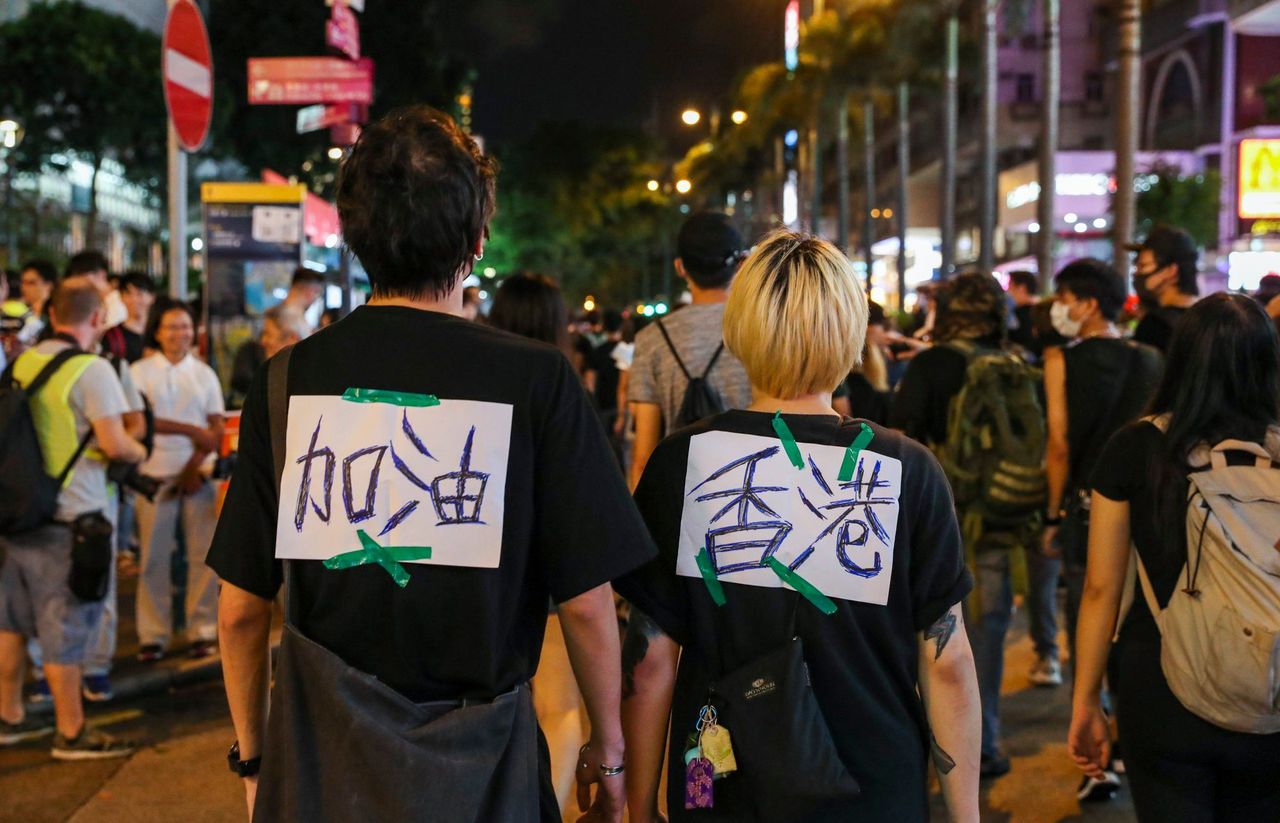 Protesters with signs reading “add oil, Hong Kong” on their backs in Tsim Sha Tsui, Kowloon.
If you have watched Canto-pop legend Jacky Cheung Hok-yau’s video for the city’s 25th anniversary of Hong Kong’s handover from the UK to China, you would agree that the way Cheung said “Hong Kong, add oil” was meant to encourage Hongkongers.
Any phrase is capable of inciting others to break the law, depending on the context and circumstances in which it’s used. We wouldn’t ban knives just because some people use them to hurt others, would we?
During the 2019 protests in Hong Kong, people used a coded phrase “going shopping” to say they were gathering to protest to circumvent detection. If we apply the same logic, are we not allowed to say we are going shopping ever again?
We should have the maturity and intelligence to differentiate intent, and we certainly do in Hong Kong. More people should be made aware that the phrase “add oil” has a long, interesting history illustrating how the government supported education and students hundreds of years ago.
Chinese people have a habit of labelling things. Labelling the number four as unlucky is a classic example. Since its Chinese pronunciation sounds the same as the word for “death”, some people avoid this number like the plague.
Hongkongers should retake ownership of the phrase “Hong Kong, add oil” and perhaps add whatever they deem necessary to give each other a much-needed boost after two years of Covid-19 and economic downturn.
 Hong Kong Canto-pop singer Jacky Cheung said “Hong Kong, add oil” in a
video for the city’s 25th anniversary of Hong Kong’s handover from the
UK to China.
Hong Kong Canto-pop singer Jacky Cheung said “Hong Kong, add oil” in a
video for the city’s 25th anniversary of Hong Kong’s handover from the
UK to China.
With the unrelenting threat of Covid-19 still raging, as well as high unemployment and economic woes, Hong Kong needs to add even more oil, as well as peace and love – now more than ever.