

Five things to know about inflation and how it is affecting us
Filling up the gas tank costs more than it did six months ago. So does the price of flour and sofas. A cheap used car is harder to find. And if you want to buy a home, you’d better move fast. Mortgage rates are going up.
It seems that every time you make a purchase, prices have ballooned. And it’s happening all over the globe. Inflation is galloping to the highest level many people have seen in their lifetimes. Both the United Kingdom and United States, for example, have recorded annual inflation rates of 9.1 percent, the highest level in 40 years. Nothing is immune: housing, food, electricity bills, construction supplies, and plane tickets have all gotten more expensive.
So what is inflation and why is it so high? Here are five things to know:
1. What is inflation – and why is it happening?
Rising costs mean inflation, which, put simply, means you get less for the same amount of money. There’s always some inflation, but generally not at these jaw-dropping levels.
Basically, prices go up when there are shortages and/or a hefty demand for goods or services. A company will raise prices if shortages mean it needs to spend more on materials, wages or shipping. Firms will also charge more if they realise customers are willing to pay more because of scarcity.
Right now, we’re seeing a perfect storm of factors, which started with a scarcity of all types of items during the coronavirus pandemic, due to factory shutdowns and logistical snarls in some of the world’s biggest export hubs, such as China. This jacked up the prices of raw materials, manufactured goods and transport, which then got passed on to customers.
At the same time, countries worldwide pumped cash into their economies to help consumers and companies struggling with the loss of income during the pandemic. As people began to emerge from lockdown, they went on spending sprees with their government support money and savings. This, combined with a shortfall of goods, made everything from refrigerators to shoes less available. Companies responded by inflating price tags.
What we’re seeing is inflation caused by both more demand and reduced supply. “It is unusual that both are pushing towards higher inflation at the same time,” says Stephen Zeldes, an economics professor at the Columbia University Business School.
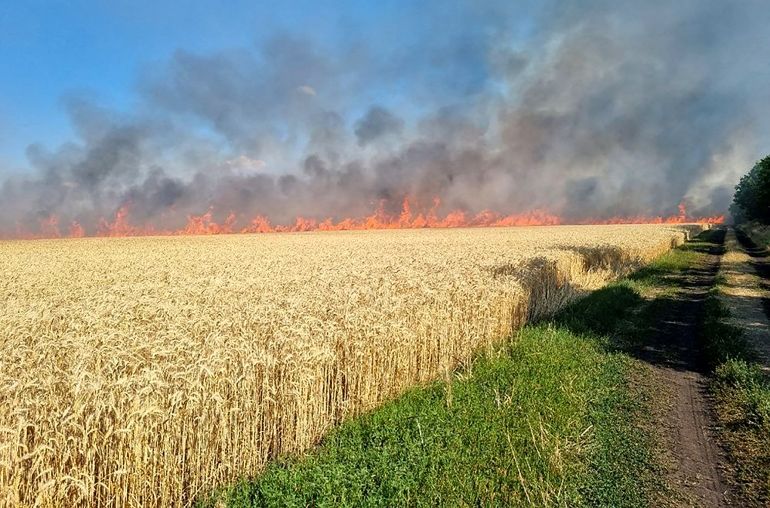 A wheat field burns due to shelling in Ukraine’s Mykolaiv region. The
war in Ukraine has only worsened inflation by disrupting trade in
grains, gas and oil
A wheat field burns due to shelling in Ukraine’s Mykolaiv region. The
war in Ukraine has only worsened inflation by disrupting trade in
grains, gas and oil
The Russian invasion of Ukraine in February worsened inflation by disrupting trade in natural gas, oil, and grains. That has increased the price of wheat – a staple in much of the world – along with the costs of heating or cooling houses and offices, fuelling cars and jets and trucking goods. It also boosted the price of fertiliser, which has made it more expensive to grow food. All this means that many people may be unable to commute to work, eat enough or turn up the thermostat in the autumn and winter if their wages don’t keep pace.
Economists can’t say when the spiral will end. Supply chain issues should eventually shake out. Central banks may be able to discourage spending by increasing interest rates, or the costs of borrowing by individuals or businesses. But the energy and grain shortfalls will continue for some time.
“Inflation now is everywhere; there is nowhere to hide from it,” says Julien Mathonniere, an economist with the Energy Intelligence Group, a global information company. “We have a huge energy and commodity crunch. Demand is still rising, but supply is simply unable to catch up.”
2. Who is most affected?
Pretty much every country, rich or poor, has been roiled. The inflation rates of 37 of 44 of the world’s largest economies more than doubled from the first quarter of 2020 to the same period in 2022, according to the Pew Research Center. Israel’s inflation rate exploded by a whopping 25 times, with Greece and Italy close behind. Less robust economies have taken a hit as well. Since March, the global cost-of-living crisis has driven 71 million people into poverty in the developing world, according to the United Nations Development Programme.
Low-income people, those with static wages and elderly people who survive on fixed pensions are among those who will suffer most. Those benefitting from inflation include firms such as oil companies that can charge historically high prices. Workers whose wages have kept up with inflation will be cushioned as well.
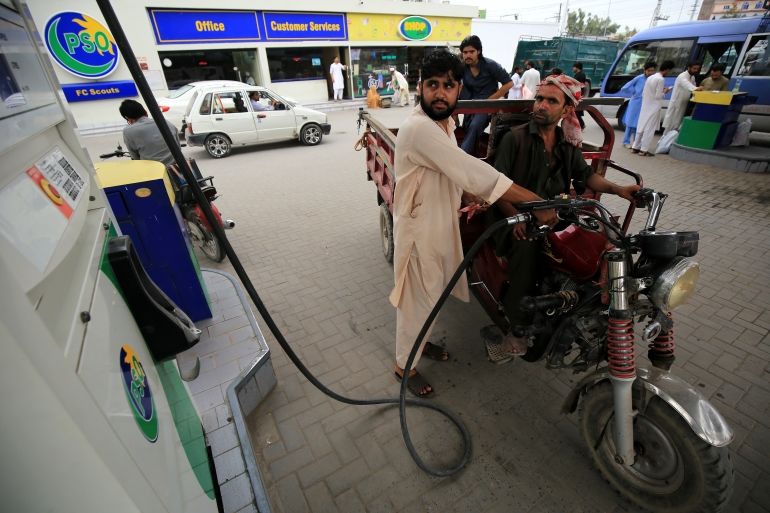 A petrol station attendant fills the tank of a vehicle in Peshawar,
Pakistan. During the pandemic, some 3.3 million barrels a day of
oil-refining capacity was lost globally due to the closure of
loss-making refineries. As demand recovers, with consumer fuels in short
supply, prices are up
A petrol station attendant fills the tank of a vehicle in Peshawar,
Pakistan. During the pandemic, some 3.3 million barrels a day of
oil-refining capacity was lost globally due to the closure of
loss-making refineries. As demand recovers, with consumer fuels in short
supply, prices are up
3. Why energy is the ‘critical chokepoint’
The current energy crisis began during the pandemic, but is only felt now. Loss-making refineries, which turn crude oil into consumer fuels like diesel and gasoline or petrol, closed around the world. Some 3.3 million barrels per day of capacity was lost. Now that the pandemic is waning and as demand recovers, gasoline and especially diesel and jet fuel are in short supply, no matter how much crude oil-producing countries produce. This makes flying, trucking goods and filling up at the pump more expensive. For instance, the average cost of petrol for cars in the US has topped $5 a gallon (3.8 litres), more than double than at the start of the pandemic.
New refineries are coming, but experts say it will take at least through 2023 until more consumer fuels hit the market. This situation was made worse by Russia invading Ukraine. Russia is among the world’s largest producers of oil and natural gas, with Europe as its largest market. As part of its sanctions against Russia, the Europe Union is banning all imports of Russian oil from the start of next year, and this is creating huge insecurity and price spikes. Fears are rising that Russia will choke Europe from its natural gas, causing further huge disruption.
Current shortages and expectations of increasing disarray make energy more expensive, leading to rising prices for everything since the world still runs on oil and gas.
“The energy crisis is the critical chokepoint,” according to Mathonniere.
The increase in energy prices over the past two years has been the largest since the 1973 oil crisis, according to the World Bank. The price of oil alone has risen by 21 percent since the start of the Russia-Ukraine war.
Electricity prices in Europe have risen 10 times their long-term average, according to Mathonniere. This drives up the costs of living and doing business and could go up even more during the colder months when people need to warm buildings. Governments across Europe are offering subsidies or setting caps on rises to lessen the pain on consumers. But prices are skyrocketing nonetheless, pushing people to rely on wood-burning stoves, coal or solar power, and go without hot meals and showers.
There’s no end in sight. Mathonniere expects oil prices to balloon this year by more than 50 percent from 2021, with a barrel averaging $110. That’s versus a low of $40 at the start of the pandemic, when demand collapsed.
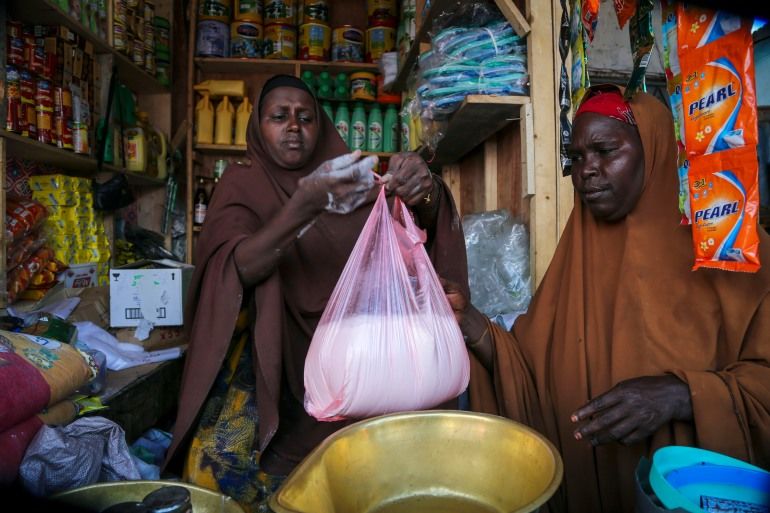 A woman buys wheat flour in the Hamar-Weyne market in the Somali
capital, Mogadishu. Russian hostilities in Ukraine are affecting wheat
exports and prices around the world, with Ukraine and Russia accounting
for a quarter of the world’s wheat
A woman buys wheat flour in the Hamar-Weyne market in the Somali
capital, Mogadishu. Russian hostilities in Ukraine are affecting wheat
exports and prices around the world, with Ukraine and Russia accounting
for a quarter of the world’s wheat
4. High inflation means there is a looming food catastrophe
Grain prices have shot through the roof because the war has disrupted harvests and exports from Russia and Ukraine. The two countries together account for a quarter of the world’s wheat, and 80 percent of sunflower oil exports. On top of that, droughts since last year in South America hurt the harvests of soybeans and maize, and the shortfalls increased prices. As if that weren’t bad enough, the exploding prices of fertiliser – Russia is the world’s leading exporter – cut into farmers’ profits.
This is driving 50 million people in 45 countries to the brink of famine, according to the World Food Programme. It reports that since the pandemic began, 345 million people are experiencing acute food insecurity, triple the amount two years ago. Africa is especially impacted, because it buys more agricultural products and food than it sells outside the continent, spending more than $85bn a year. Wheat and vegetable oils feature among the top imports.
“These are tough times for MENA and sub-Saharan Africa,” says Wandile Sihlobo, the chief economist at the Agricultural Business Chamber of South Africa. He identified the following countries as particularly vulnerable to rising wheat prices: Nigeria, Egypt, Algeria, Ethiopia, Morocco, Zimbabwe, Kenya, Yemen, Pakistan and Turkey.
The price of wheat has soared in Africa by more than 45 percent since the war in Ukraine began, according to the African Development Bank. Fertiliser prices have gone up by 300 percent. In Egypt, the world’s largest wheat importer, the government capped the price of bread in order to lessen the burden on families.
Sihlobo predicts commodity prices will remain above their five-year average for some time. Even goods like rice that are in plentiful supply will be impacted. “We are likely to see rice prices increasing somewhat in the coming months as some countries use it as a substitute for wheat,” he says.
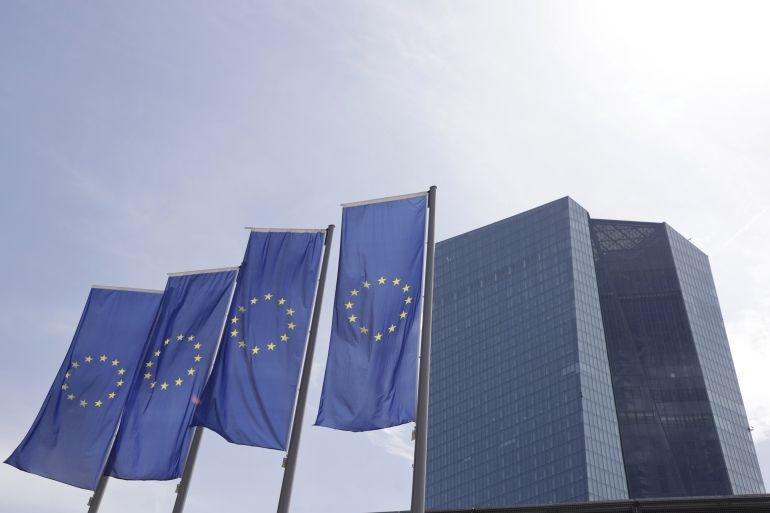 The European Central Bank, headquartered in Frankfurt, Germany, plans to
introduce the first interest rate hike in 11 years as part of measures
to ease inflation
The European Central Bank, headquartered in Frankfurt, Germany, plans to
introduce the first interest rate hike in 11 years as part of measures
to ease inflation 5. What can governments – and ordinary people – do?
Countries fighting inflation tend to look at measures taken by the United States, as it’s the biggest economy in the world and 40 percent of international trade transactions are invoiced in dollars. The US Federal Reserve, which regulates the American financial system, has raised interest rates by 1.5 percentage points since March in order to slow spending.
The European Central Bank of the 19 euro-zone countries signalled that it will follow suit sometime in July, lifting rates for the first time in 11 years.
Economists widely expect more US hikes to follow, but this entails a delicate balancing act. Increasing rates dampens business activity, and with it hiring and higher paycheques, which is not politically popular. Going too far can prompt a recession or negative growth.
When should hikes stop?
“That’s the key question that the Fed ponders every day,” says Zeldes, who specialises in household economics. “There is no magic number where we can say, ‘They’ve gone too far.’”
People can also make their money last longer by hunting for bargains or cutting out luxuries. As a last resort, they might have to dig into savings or grow vegetables in their gardens, if they have them. Microwaves are more energy efficient than ovens. Ordinary lightbulbs can be swapped for LEDs. Those living in areas with affordable public transport could forgo cars. This is a bad time to take out a loan, and a good time to pay off credit card debt before interest rates rise more. Review household budgets to eliminate anything that’s non-essential. If you can plump savings, build a cushion to get through this, and the next, inflationary swell. You never know when it might hit.