

Ghana fishing: Abuse, corruption and death on Chinese vessels
He has seen Chinese crew treating local fishermen like "slaves", he says.
"They beat them, they spit on them, they kick them," Mr Kweku says. "I have been through that before."
Mr Kweku works as a bosun - an officer in charge of equipment and the crew. He says he has been forced to work for three days without sleep, had food withheld from him and been forced to drink dirty water.
The fate of some of his fellow fishermen has been even worse, he says.
Mr Kweku says one of his colleagues fell sick with cholera on board a Chinese vessel but the crew refused to bring him back to shore for treatment. He didn't make it back alive.
He saw another get badly burned on a vessel after a fire ignited onboard. Another colleague got caught by a propeller. Neither survived and the families have not received proper compensation, he says.
These are just a few examples of the alleged widespread abuse and neglect linked to Chinese fishing vessels operating off Ghanaian shores.
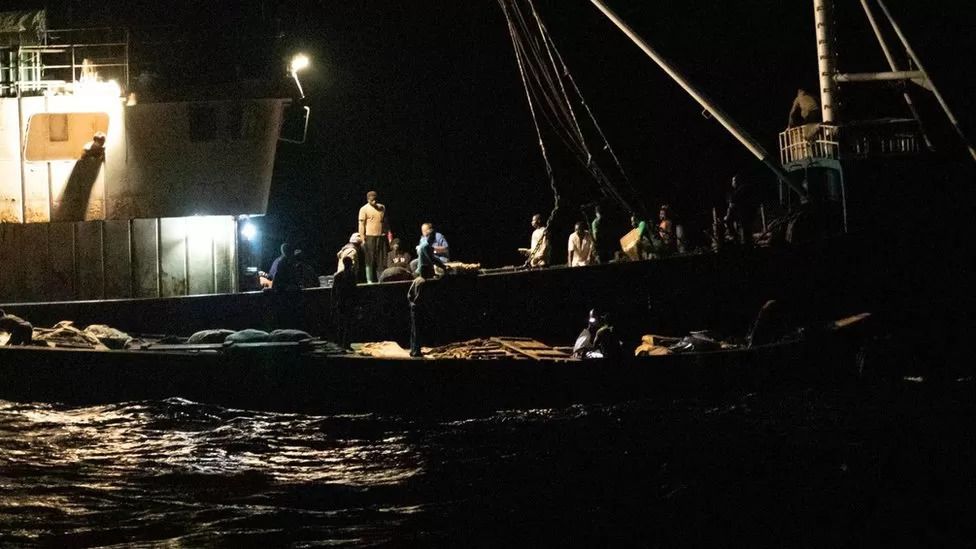 A substantial proportion of Chinese trawlers in Ghana have engaged in illegal practices, says the EJF
A recent EJF report investigates what it says are illegal, unreported and unregulated fishing, and human rights abuses by China's Distant Water Fishing (DWF) fleet in Ghana. The ownership and operational control of China's DWF fleet is complex and opaque, and is the largest in the world.
All 36 crew members interviewed by EJF had been forced to work more than 14 hours a day and received inadequate food.
* 94% had received inadequate medicine or witnessed verbal abuse
* 86% reported inadequate living conditions
* 81% had witnessed physical abuse
* 75% had seen serious injury at sea.
In response, China's embassy says it is a "responsible fishing country".
"We have always worked with other members of the international community to crack down on illegal, unreported and unregulated fishing, and have done a lot in effectively combating illegal fishing," its press office tells the BBC.
One of the worst disasters involving a Chinese vessel in Ghanaian waters took place eight months ago.
On 6 May, the MV Comforter 2 sank in stormy conditions. Fourteen crew were rescued, but 11 remain missing, presumed dead, including the state-appointed observer. The body of the Chinese captain was found.
One of the survivors, who requested anonymity and we will call Michael, recalls the horrors that unfolded that day.
Despite storms getting increasingly worse, he says the Chinese crew told the fishermen to pull in an excessive haul in one go. The boat already had a lot of fish on board, and it lost control, capsizing under the weight of the haul and the choppy waters.
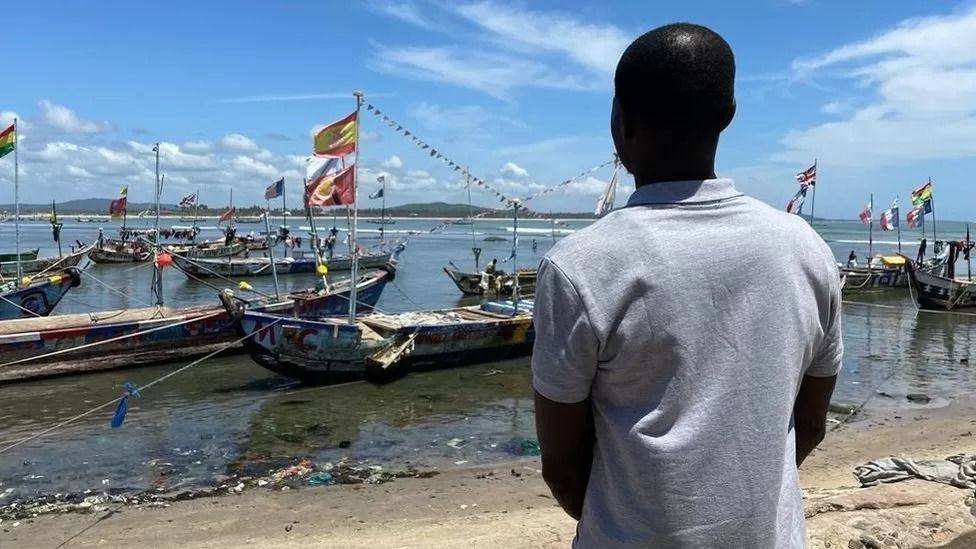 Michael hasn't recovered physically or mentally from the MV Comforter 2 disaster
Michael and nine others managed to grab hold of a floating oil drum for almost 24 hours, before a fisherman found them.
"It was a terrifying night," he says. "We didn't know whether we would make it or not."
Michael hasn't recovered physically or mentally from the disaster, and says the Ghanaian company officially in charge of the vessel, Boatacom, has not paid him any compensation.
"I'm not happy at all, the company keeps giving us excuses. Sometimes I feel pain all over my body. I need medical attention, but I don't have money," he says.
Kojo Ampratwum, managing director of Boatacom, tells the BBC the firm has submitted its reports to the insurance company and is waiting to hear back.
Tracing who owns the MV Comforter 2 and other vessels operating in Ghana is complicated.
Foreign ownership of industrial trawl vessels operating under the Ghanaian flag is illegal, but some Chinese firms get around this via Ghanaian front companies.
Through its research, EJF says the Chinese Dalian Mengxin Ocean Fishery Company is the ultimate owner of the MV Comforter 2 and that it is part of the Meng Xin fleet.
The Meng Xin fleet has also been linked to one of the most notorious cases on Ghanaian waters in recent times - the disappearance of fisheries observer Emmanuel Essien.
 Emmanuel Essien went missing at sea in 2019
Since 2018, Ghana has appointed fisheries observers on board all industrial trawlers operating under the Ghanaian flag. Their job is to collect data on fishing activities and report on illegal practices at sea.
Essien had earned a name as a dedicated and thorough observer, but this had led to problems. He got into a fight with a Chinese national who had stopped him from filming crew illegally discarding fish at sea, says his brother James Essien.
Emmanuel's final report to the Fisheries Commission was on 24 June 2019. In the report - a copy of which was provided to the BBC - he outlines illegal fishing activities and states: "I humbly plead with the police to investigate further."
On 5 July, Essien went missing from the Meng Xin 15 trawler.
James says that his brother had dinner with the rest of the crew before they headed back to their cubicle to sleep. The next morning he was nowhere to be seen.
More than three years on, the family still has no answers. A police investigation found "no signs of violence or anything incriminating".
"I want the truth to come out," James tells the BBC, in tears.
The Mengxin Ocean Fishery Company could not be reached for comment.
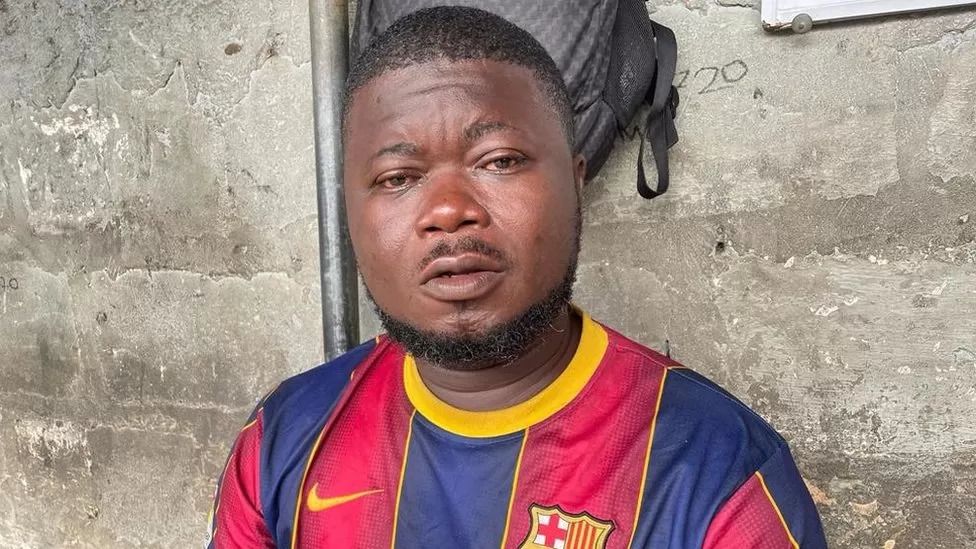 James Essien wants to know what happened to his brother
Essien's disappearance is one of many factors that have had a chilling effect on Ghana's fisheries observers.
Ghanaian observers who spoke to the BBC explain how a culture of fear, corruption and neglect are pushing them to take bribes to bury evidence of illegal fishing and abuse on Chinese vessels.
"Most of our colleagues are taking money," says one observer, who requested anonymity and we will call Daniel.
"They are being bribed and taking money from the Chinese and submitting reports to the ministry that are not true."
All the observers interviewed say their wages are poor and it often takes as long as five months to get paid, meaning kickbacks from Chinese and Ghanaian crew managers are necessary to feed their families.
"If you reject the bribe you go home hungry," says another observer, who we will call Samuel.
"Most of those observers do take bribes. That's what we do to take care of our families."
Some feel too scared to report the truth.
"Sometimes what they do is throw the observer into the water - it has happened before," Samuel says. "Because of the fear we normally don't report issues like that."
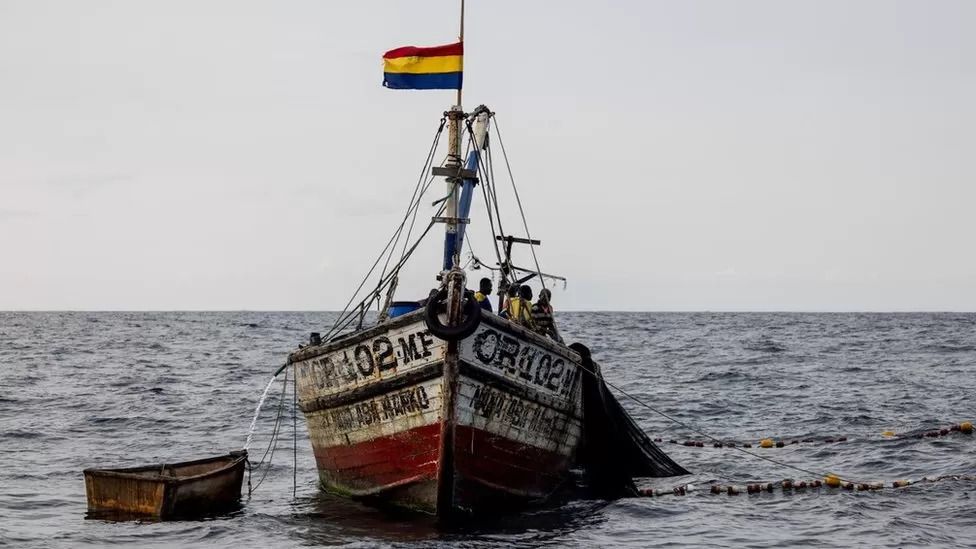 Ghanaian fishermen say they cannot compete with the Chinese trawlers
One former observer, who has since left Ghana, tells the BBC he was once called to the office of a high-ranking official within the Ministry of Fisheries and Aquaculture Development after he reported illegal practices at sea.
He says the official asked him to present the evidence, and then proceeded to delete it from his phone. But he had the evidence backed up on a laptop and threatened to post it on social media.
Then he says he started receiving threats.
At one point he was so nervous that he would not sleep at his own house because people knew where he lived and he was worried about being attacked, or worse.
One day, when he was cycling near the fishing harbour in Tema, a port city east of the capital Accra, he says a Ghanaian official spotted him and tried ramming him with his vehicle.
"He was trying to hit me with his car at the fishing harbour. I saw him so I jumped to the gutter… this guy was mad," he says.
He eventually decided to leave the industry after receiving death threats.
"I became miserable in life because when I'd go to the harbour, everyone was looking at me. I couldn't find any work to do. I became like a stranger, like I'm a bad person. It was so hard for me."
He now avoids the harbour when he's back in Ghana.
"People try to threaten me. These guys are very serious," he says.
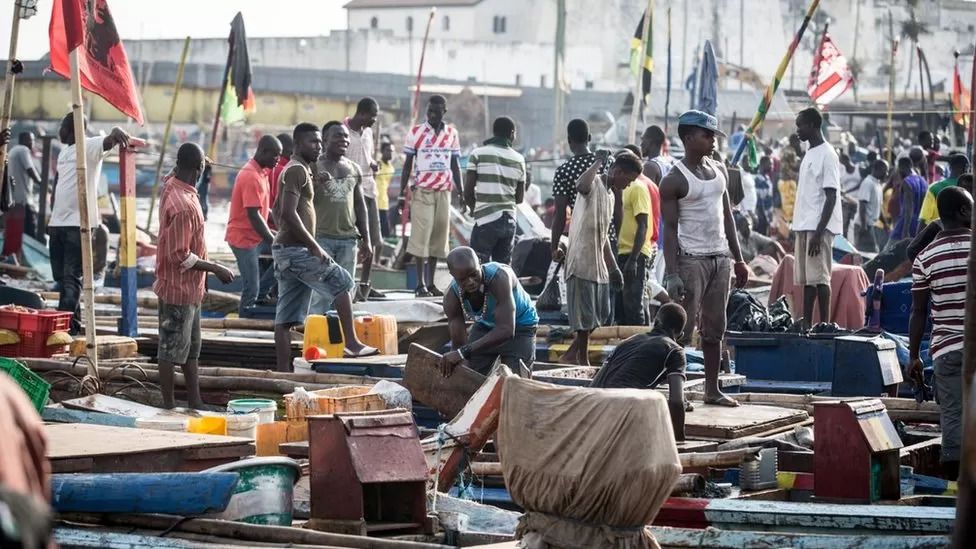 EJF says the problems that come with Chinese-owned trawl fleets are particularly acute in Ghana
Steve Trent, founder and head of EJF, says the high concentration of Chinese ownership within trawl fleets is a problem across West Africa, accusing them of often flouting the law.
But in Ghana, the problem is "particularly acute", he says.
"These Chinese owners have commonly put a Chinese captain in charge of the vessels to command the mainly Ghanaian crew and it is these Chinese captains that have driven the abuse," Mr Trent says. He blames the abuse on the owners seeking to "maximise profits and minimise costs".
EJF investigations have uncovered systemic corruption "at virtually every level and including fisheries officials, police and navy officers" tasked with enforcing regulations, he says.
While there has been some progress on illegal fishing in Ghana, Mr Trent says a lot more needs to be done.
"We need to see the loopholes and deceit by which illegal foreign ownership, now concentrated with the Chinese, are eliminated," he says.
The Ghanaian government did not respond to multiple requests for comment.
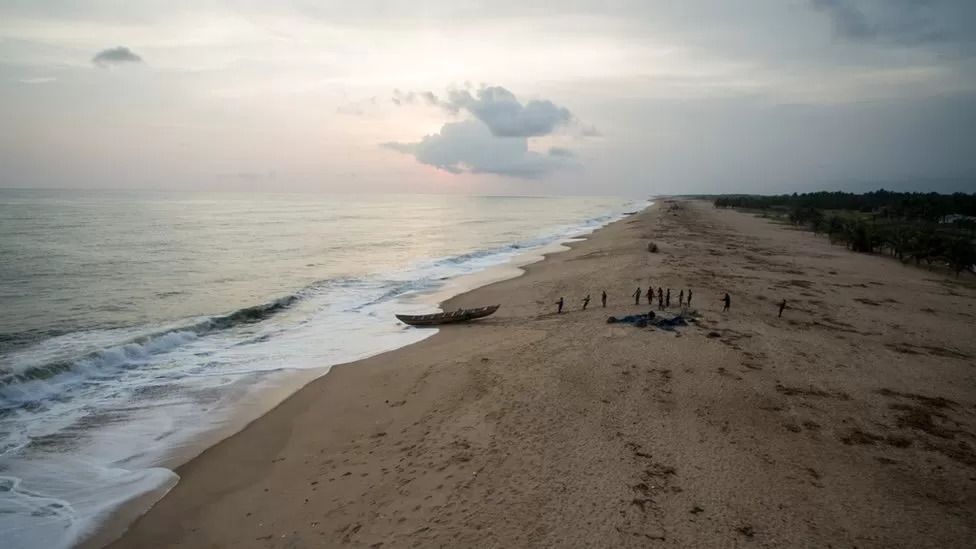 A mixture of abuse, disappearances and poor pay at sea has taken a toll on many in Ghana
Mr Kweku wants the government to allow fishermen to properly unionise, and says a system must be put in place so people are under contract before being sent out to work at sea.
A mixture of abuse, disappearances and poor pay has taken a lasting toll on his mental health, and that of many others.
"We lost a lot of fishermen at sea but nothing is done about that. Two or three observers are missing," he says.
"We are all afraid of going to sea but there is no work on land, so you must force yourself to go."