Arab Press

بالشعب و للشعب
Sunday, Apr 26, 2026

Hong Kong investors could take financial stake in Northern Metropolis plan

Hong Kong investors could take financial stake in Northern Metropolis plan

Financial Secretary Paul Chan says funding arrangements for transforming city’s border area with mainland China should be creative, tailor-made for each stage of development.

Individual Hong Kong investors may be allowed to take a financial stake in the city’s ambitious new plan to transform its sleepy border area with mainland China into a Silicon Valley-style tech hub, the financial secretary has said.

Paul Chan Mo-po unveiled elements of the Northern Metropolis development’s financing model – along with his assessment of Hong Kong’s future amid ongoing US-China tensions– during an interview for the October 13-14 China Institute Executive Summit 2021.

First proposed by Chief Executive Carrie Lam Cheng Yuet-ngor in her yearly policy address last week, the Northern Metropolis is intended to serve as a strategic growth engine, ease housing shortages and integrate the city into the Greater Bay Area, Beijing’s scheme to turn Hong Kong, Macau and nine Guangdong cities into an economic powerhouse.
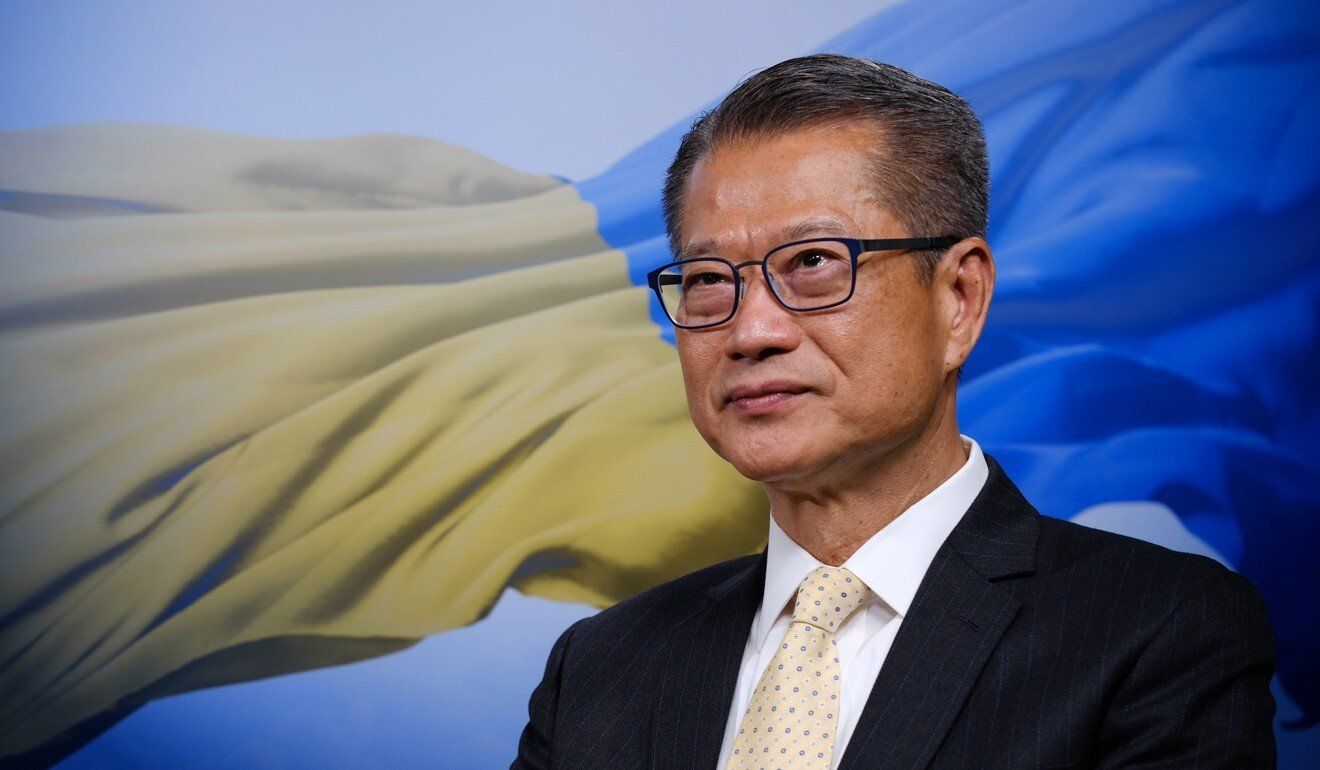
Financial Secretary Paul Chan.


“We need to do it by phases and have to be creative in terms of coming up with a package of financing arrangements,” Chan told the Post, a strategic partner in the event, this year dubbed “The View From China”.

“For certain activities that could involve public-private partnership, whether we should issue green bonds … apart from institutions, perhaps we may involve retail investors so Hong Kong people can own this particular vision and benefit from it.”

Chan predicted that financing packages would be tailor-made for each stage of the project’s development.

To be built up over the next two decades, the planned Northern Metropolis spans an area of 300 sq km, including seven land-based boundary control points, existing towns in Tin Shui Wai, Yuen Long, Fanling and Sheung Shui and their neighbouring rural areas, and six new development areas now in the planning or construction stage.

The development will eventually be home to 2.5 million people, or about a third of Hong Kong’s existing population, and is forecast to generate 650,000 jobs, of which nearly a quarter will be related to innovation and technology.

The government has pledged to conserve about 2,000 hectares (4,942 acres) of ecologically sensitive sites such as wetlands despite the massive changes.

The Northern Metropolis has been heralded as an attempt to create a second centre of power away from Hong Kong Island in the south, with the chief executive calling the new development the city’s “most important area”, as it was intended to facilitate greater integration with plans on the mainland.

“The southern part of Hong Kong is financial services, while the north of Hong Kong will be innovation and technology,” Chan said. “This is not just for industry development; it also releases land to provide housing and other facilities for Hong Kong people.”

He explained that the new development’s placement would allow Hong Kong’s IT industry to tap into the vibrant ecosystem just across the border.

“Working with the mainland in IT development is important, because it has developed clusters of commercial innovation in [Guangdong province’s] Dongguan and a robust consumer market,” he said.

He added that railways would be the transport backbone that wove the two sides together.

Chan separately shed some light on the report he released earlier this month detailing the damage inflicted on the city’s business environment and investment prospects by the anti-government protests of 2019, for which he held the US responsible.

Accusing Washington of using the city as a pawn to suppress China by inciting and supporting the protests, he said he expected Sino-US tensions to last through at least the next decade.

“There may be high times and low times, but the competitive situation will not go away,” he said.

“Hong Kong will face consequences, including more volatility in the financial market. We will have to be very careful in maintaining the market’s financial stability, in devising contingency plans so we are well-prepared for different scenarios.”

Newsletter

Related Articles

Arab Press
0:00
0:00
Close
News Roundup
Strategic Saudi-Bahrain Causeway Closed Amid Security Concerns as Trump Deadline Approaches
Saudi Arabia Keeps Red Sea Oil Exports Flowing Despite Regional Tensions
Pipeline Attack Cuts Significant Share of Saudi Arabia’s Oil Export Capacity
Saudi Business Leader Abudawood Appointed Chairman of Merit Incentives Group
TotalEnergies Confirms Damage at Saudi Refinery Following Security Incident
Saudi Arabia Launches Early Construction Phase for King Salman Stadium Project
Saudi Shift Away from Longstanding Dollar Oil Framework Gains Attention Amid Iran Conflict
Türkiye and Saudi Arabia Resolve Long-Running Transit Visa Dispute
Saudi Oil Capacity and Pipeline Flows Reduced as Supply Risks Intensify
TotalEnergies Reports Damage to Saudi SATORP Refinery Following Security Incidents
Gulf States Assess Prospects of U.S.-Iran Truce as Regional Stability Efforts Intensify
South Korea Resumes Honey Exports to Saudi Arabia Following Sanitary Approval
Saudi Arabia Carries Out Sentences in Eastern Province Following Security Convictions
Saudi Sovereign Wealth Fund Backs King Street’s Regional Credit Strategy
Saudi Arabia Secures World Cup Return as Egypt Celebrates Landmark Qualification
Iran and Saudi Arabia Intensify Diplomatic Engagement Amid Regional Tensions
Russia and Saudi Arabia Open Visa-Free Travel Corridor for Citizens
Saudi Oil Output Capacity Reduced by 600,000 Barrels Per Day Amid Regional Conflict
Saudi Arabia Suspends Operations at Select Energy Sites as Precautionary Measure
Saudi Arabia Halts Operations at Multiple Energy Facilities Amid Heightened Tensions
Global Markets Jolt as Iran Signals Ceasefire Breakdown and Rising Regional Tensions
King Street Aligns with Saudi Sovereign Wealth Fund to Expand Alternative Investments in Middle East
Attack on Saudi Arabia’s Jubail Petrochemical Hub Raises Global Supply Concerns
Debate Emerges Over Saudi Strategic Decisions as Gulf Cooperation Council Dynamics Come Into Focus
Saudi Arabia Expands Full Workforce Localisation to 69 Professions in Major Labour Reform
Emerging Alliance of Pakistan, Turkey, Egypt and Saudi Arabia Signals New Regional Power Dynamic Amid Iran Conflict
Iran Linked to Strikes Across Gulf States Following Refinery Attack Escalation
Saudi Arabia Voices Concern Over Fragile US–Iran Ceasefire Stability
Starmer Warns Sustained Effort Needed to Ensure US–Iran Ceasefire Holds
Saudi Arabia’s Key East-West Oil Pipeline Targeted Following Ceasefire Announcement
Iran Targets Saudi Arabia’s East-West Oil Pipeline in Escalating Regional Tensions
Trump Warns of Civilizational Stakes as Iran Halts Negotiations
Saudi Companies Expand Remote Work Measures Ahead of Iran-Related Security Concerns
Iran Warns of Strikes on Saudi Energy Infrastructure if US Targets Its Facilities
Iran Urges Civilians to Form Human Shields Around Nuclear Sites as Diplomatic Deadline Approaches
Saudi Arabia Raises Oil Prices to Record Premiums Amid Supply Pressures Linked to Iran Conflict
Key Saudi-Bahrain Causeway Closed Amid Heightened Security Concerns Linked to Iran
Formula One Calendar Gap Explained as Fans Await Next Grand Prix
Growing Strain on the Petrodollar System Comes Into Focus Amid Iran Conflict
Reported Strike on Saudi Arabia’s Jubail Complex Raises Global Energy Supply Concerns
FedEx Introduces New Digital Tool to Streamline Imports into Saudi Arabia
Iran Claims Strike on Saudi Arabia’s Jubail Petrochemical Complex Amid Rising Regional Tensions
Taiwan to Source Oil Shipments from Saudi Arabia’s Red Sea Ports
Saudi Arabia Evacuates Riyadh Financial District as Precaution Amid Regional Tensions
Saudi Arabia Balances Ambitious Economic Vision Amid Regional Tensions and Financial Pressures
Budget Saudi Arabia Reports Strong Full-Year 2025 Financial Performance
Saudi Arabia Expands Investment in Capcom With Stake Reaching Six Percent
Saudi Arabia Assesses Significant Economic Impact From Regional Conflict Involving Iran
US Beef Secures Expanded Market Access in Saudi Arabia
×