

How desperation is fuelling a new exodus from crisis-hit Lebanon
The story of Lebanon with immigration is as old as Lebanon. In the days of Phoenicians thousands of years ago, they used to migrate to trade and establish colonies in the Mediterranean basin, including Carthage in present-day Tunisia.
In the modern era, migration was associated with wars and economic crises accompanied by famine, as occurred in the First World War, up to the Civil War in 1975.
However, the current political and economic crisis, which coincided with the Beirut port explosion and a worsening coronavirus scenario, has created unprecedented social conditions that is fuelling the Lebanese people's desire to emigrate at any cost.
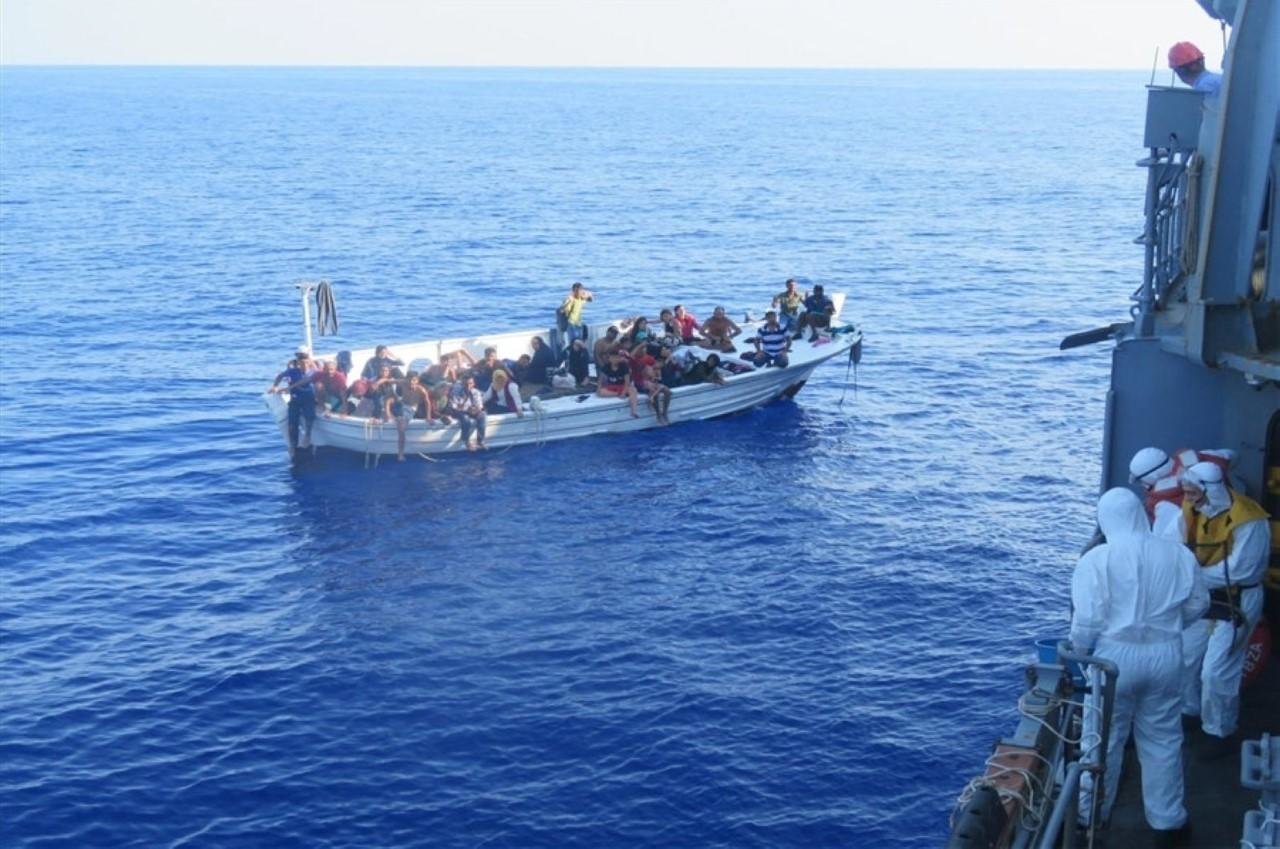
Even if it means drowning at sea, as happened a month ago when some desperate “boat people” from Tripoli, Lebanon’s second largest city, perished in waters off Cyprus on their way to Europe.
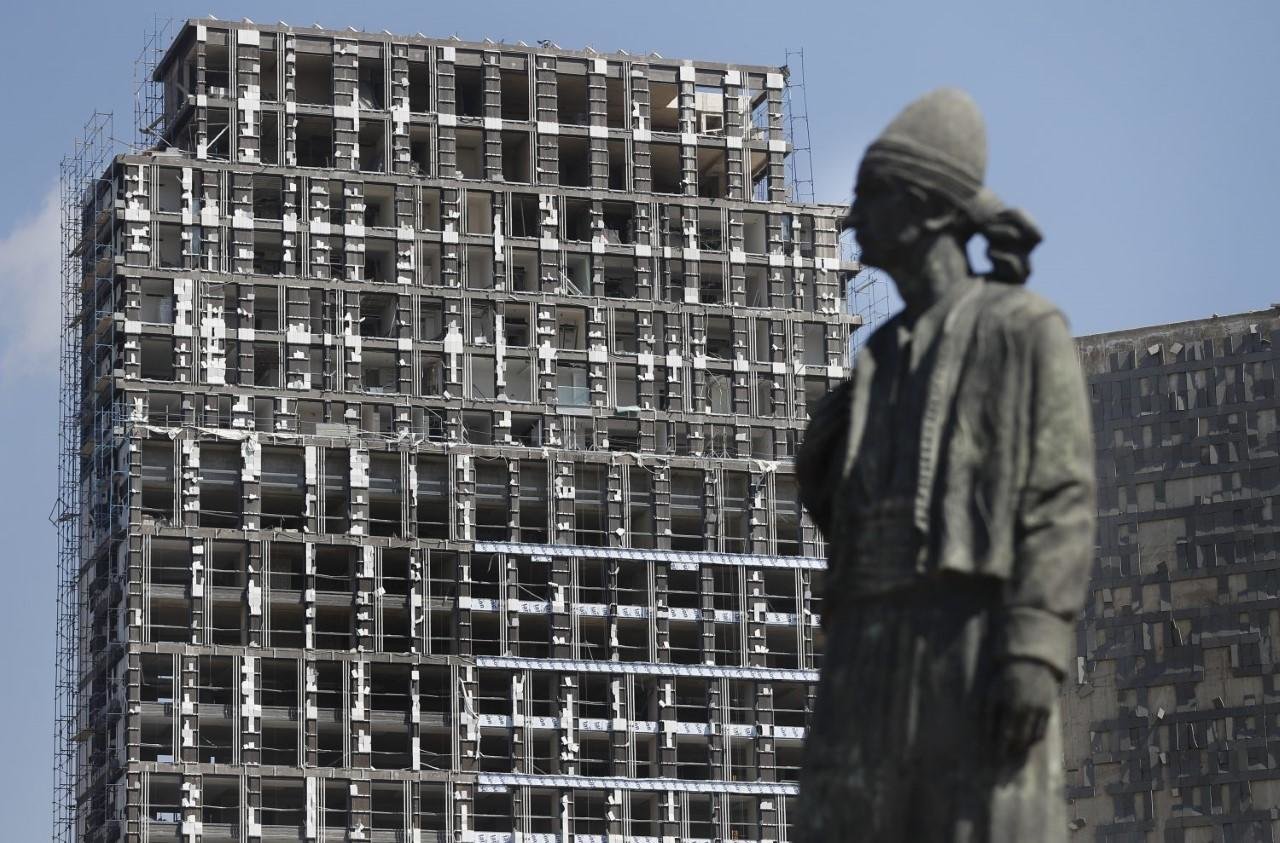
Another explosion and a fuel tank fire in the Lebanese capital on Friday killed four people as panic spread in a city already ravaged by the monster blast in August which killed 203 people, injured at least 6,500 others and ravaged swathes of Beirut..
No Lebanese, even the most pessimistic of them, could have imagined the sight of boats fleeing the economic and financial crisis, described by many locals as the "hell of Lebanon".
However, the country's poverty rate jumped from 28 percent in 2019 to 55 percent in May this year, according to The United Nations Economic and Social Commission for Western Asia (ESCWA). The corresponding increase in extreme poverty rose from 8 percent to 23 percent.
This brings the total number of the extremely poor and poor among the Lebanese population to 1.1 million and 2.7 million. The latter is an increase of 1.3 million among the poor, whereas the equivalent rise in the number of extremely poor is 750,000.
The middle class has contracted from over 57 percent of the population in 2019 to less than 40 percent in May.
All these factors are driving the desire to leave Lebanon, where the worst financial crisis in decades has pushed much of the population to the very edge.
More than three-quarters (77 percent) of young Lebanese people said they were actively trying to leave or had considered doing so as they struggle to address deepening economic insecurity, according to Asda’a BCW Arab Youth Survey released earlier this month.
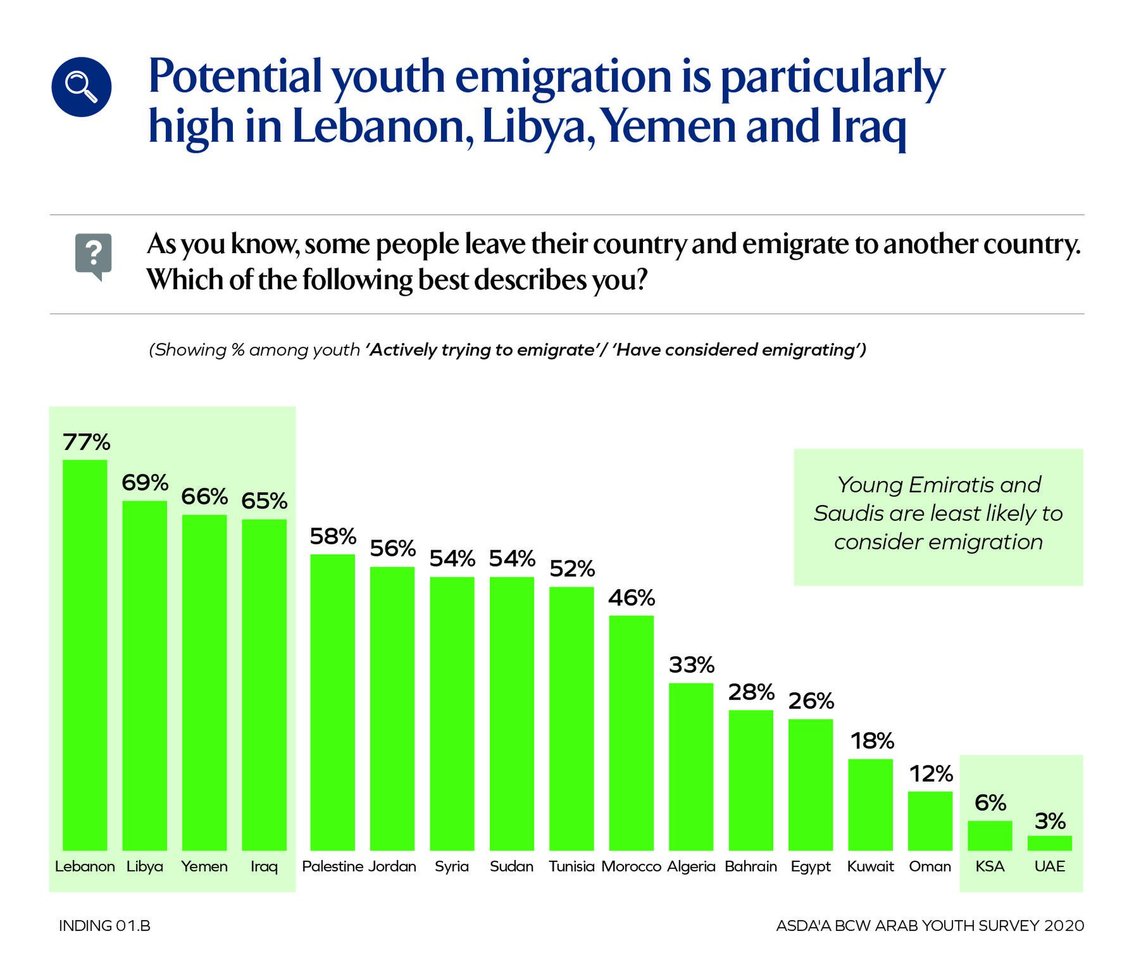
Lebanon's talented youth and business elite are prevented from succeeding in their own country, but the potential “new exodus” could be contained by the global recession as a result of the Covid-19 pandemic. However, the country still risks losing its most competent human resources.
What are the best centres in Beirut to take language tests? Does the emigration service accept "lollars" (Lebanese dollar, or a US dollar which is stuck in the banking system) as proof of financial resources? How can I obtain an equivalent for my diploma? These and many more related questions are posted daily on Facebook to exchange advice on the process of emigration to Canada.

Dr Guita Hourani (pictured above), director of the Lebanese Centre for Migration and Diaspora Studies, Faculty of Law and Political Science, University of Notre Dame – Louaize, told Arabian Business that there is no official data on emigration from Lebanon.
What most researchers do is subtract the number of departures from Lebanon via Beirut airport from the number of arrivals. "Although this may give us some clues about mobility through the airport, it is not a scientific method to assess the number of Lebanese who emigrate and it does not cover the terrestrial and maritime legal and illegal migration," she said.
"However, if we take this method to get an idea of mobility via the airport, we can say that, according to the Lebanese General Directorate of General Security, about 60,000 Lebanese left the country without return between mid-December 2018 and mid-December 2019, compared to 33,841 during the same period in 2018, an increase of 32,965 Lebanese (97.5 percent). Their number reached 19,263 in the last three months of 2019," Hourani added.
Immigration and asylum
In 2020, as the airport was closed due to the coronavirus and it was very difficult to leave Lebanon via Syria or the sea, there has been no legal migration during that period.
However, as soon as the airport resumed operations, the number of Lebanese, especially those with permanent residence permits or dual nationality or valid visas (students, visitors, business, and the like), were the ones that were leaving.
According to the Lebanese General Directorate of General Security, the daily average of those who leave Lebanon is about 4,000 people against about 2,400 arrivals.
Departure movement has sharply increased, after the explosion of the Beirut port. While the average number of arrivals decreased by 12.3 percent, the average number of departures increased by 36 percent.
The acceleration of the emigration of young people and nuclear families stands out as these categories of the Lebanese population were rushing to submit immigration and asylum applications or student and tourism applications to any country that has its consulate open.
The number of passengers travelling via the Beirut International Airport contracted by 75 percent to 1.7 million during the first nine months of this year, down from 7 million passengers in the same period in 2019.
The number of arrivals contracted by 76.7 percent to 807,305 with the number of departing travellers also dropping by 73.6 percent to 937,646 in the same period, giving a balance of more than 130,000 departures in nine months.
Successful Lebanese diaspora
Lebanon, a country of 5 million, takes massive pride in its emigrant community — including the many successful businessmen and celebrities of Lebanese heritage. Famous names among them are Mexican business magnate Carlos Slim, Columbian singer Shakira (pictured below), Mexican-American actress Salma Hayek, Lebanese-British barrister Amal Clooney and fashion designers Elie Saab (also pictured below) and Reem Accra. They also include the disgraced former Nissan-Renault boss Carlos Ghosn, who fled Japan to Lebanon last year.

The diaspora is estimated at about three times the population at home. Large communities are found everywhere, from Australia and Africa to Canada, Latin America and Europe.
About 400,000 Lebanese work in oil-rich Gulf countries. Lebanese community in Brazil is the most numerous Lebanese diaspora in the world, it is estimated by the Brazilian and Lebanese governments to be 7-10 million people. Michel Tamer served as the 37th president of Brazil from August 2016 to December 2018. Temer is the son of Nakhoul "Miguel" Elias Temer Lulia and March Barbar Lulia, Maronite Catholic Lebanese immigrants who came to Brazil in 1925.
Sheikh Mohammed bin Rashid Al Maktoum, Vice President and Prime Minister of the UAE and Ruler of Dubai, has directed the 30 tonnes of emergency medical assistance to Lebanon to help healthcare facilities treat victims of the massive explosions in Beirut.
The expat billions have helped keep the local economy liquid. The Lebanese Central Bank has kept the pound stable at 1,507 to the dollar since 1997, thanks to heavy borrowing at high interest rates.

That encouraged expats to send money home, buy property and deposit in local banks. Now the currency has spiralled to around 9,000 to the dollar on the black market. Capital controls have locked up dollars in bank accounts, uniting both rich and poor in anger.
Hourani said: "Today, the process is all the more difficult because professional opportunities are rare in the emigration countries usually favoured by the Lebanese - in North America, in Western Europe, in the Arab countries or in Australia - where economies are struggling. Even in the Gulf countries, which traditionally seek Lebanese labour, the International Monetary Fund forecasts a contraction of 7.1 percent of the region's GDP in 2020. The Oxford Economics report also predicted the destruction of 13 percent of jobs in these countries, accompanied by an exodus of expatriates."
Hourani noticed an increase in visa applications during and after a major crisis, like the August 4 port explosion, which he described as "a disaster, a calamity".
"There is no doubt that there has been a surge in visa applications, especially for countries such as Canada and France, which have been more accommodating since the port explosion. Other consulates, such as the UK and Cyprus, are closed or not accepting applications. The EU has issued a directive suspending visas to Lebanese since the fall of 2019," she added.
"Lebanese prefer to migrate to the US, Canada, Australia, Eastern and Western countries, the Gulf, and Africa. But now, they're becoming less choosy, they want out so they're shopping around to see which consulates are accepting applications. Youth are trying to leave as students, families are contacting their families abroad to apply for family reunification and others are trying to find work. Others are trying to leave by employing smugglers or brokers who can get them out either via Beirut airport or by the sea while taking a huge risk and paying a large amount of money," according to Hourani.
She warned of "a great danger" in employing smugglers or brokers to leave the country.
"People should know that there are risks involved such as human trafficking, swindling, death, and being turned back by the countries of destination. Countries that are in need of migrants, particularly in Europe, need to prevent potential illegal migration by considering the available Lebanese human resources and by devising special and speedy processes to benefit from this young and educated pool of people," she added.
Five things we learned:
* Lebanon's poverty rate has jumped from 28 percent in 2019 to 55 percent in May this year, according to The United Nations Economic and Social Commission for Western Asia (ESCWA)
* The Lebanese middle class has contracted from over 57 percent of the population in 2019 to less than 40 percent in May
* According to the Lebanese General Directorate of General Security, the daily average of those who leave Lebanon is about 4,000 people against about 2,400 arrivals
* Famous Lebanese expats abroad include Mexican business magnate Carlos Slim, Columbian singer Shakira, Mexican-American actress Salma Hayek, Lebanese-British barrister Amal Clooney and fashion designers Elie Saab
* The diaspora is estimated at about three times the population at home. Large communities are found everywhere, from Australia and Africa to Canada, Latin America and Europe