

Iran regime’s paranoia over future widespread protests
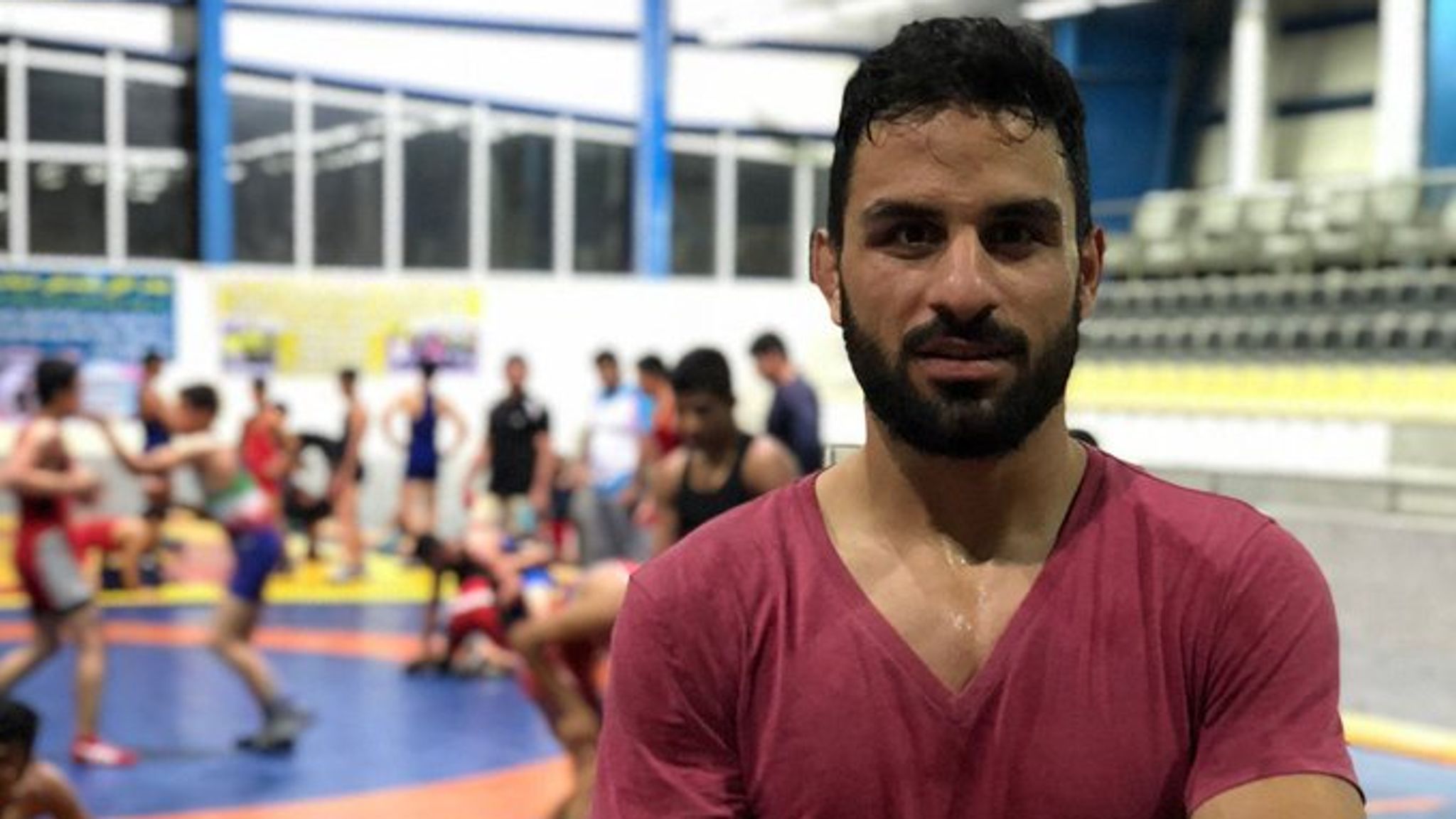 Navid Afkari was executed by hanging in the southern city of Shiraz.
Although Iranian President Hassan Rouhani has in the past admitted that people have the right to protest, the Iranian authorities have become increasingly paranoid about demonstrations erupting across the country.
The Iranian leaders’ paranoia is being demonstrated through their brutal suppression of peaceful protesters and political prisoners. The judiciary has ratcheted up its harsh punishments for those who protest, even if they are peaceful, and those who dare to oppose the regime’s policies.
Although the regime has, on occasions, commuted death sentences when there has been an international outcry, the theocratic establishment went ahead this week and executed champion wrestler Navid Afkari by hanging him in the southern city of Shiraz, according to Iranian state media. His execution was clearly carried out in a hurried manner and he was even denied a last visit from his family.
The Iranian leaders most likely wanted to make an example of the highly respected wrestler, to impose fear in society, and send a strong message to the people that anyone who dares to protest can face severe consequences.
Another high-profile figure that the regime has arrested and tortured is 20-year-old Ali Younesi, a student who in 2018 won a gold medal as a member of Iran’s national team during the 12th International Olympiad on Astronomy and Astrophysics.
He and his friend Amirhossein Moradi have been held without charge since April, accused by the authorities of having connections to the opposition group Mujahedin-e Khalq.
Iran’s Revolutionary Courts and the judiciary are known for their lack of due process, forced concessions, and for denying detainees access to lawyers.
As Human Rights Watch’s Deputy Middle East Director Michael Page explained: “Iranian authorities have a history of targeting dissidents’ family members on bogus charges and, after nearly two months, they have failed to provide an iota of evidence against Younesi and Moradi.
The prolonged solitary confinement, lack of access to a lawyer, and the judiciary’s history of coerced confessions signal that there’s almost zero chance that the due process rights of these two students will be respected.”
The Iranian regime has also been escalating its excessive punishment against minority religious groups. For example, last week, the Iranian Supreme Court upheld the death sentences of seven Sunni political prisoners.
They were sentenced to death on vague charges including “corruption on earth,” “acting against national security,” and “propaganda against the state.”
Last month, the judiciary also secretly hanged another protester, Mostafa Salhi. Amnesty International condemned his execution, stating that it “was carried out… despite serious unfair trial concerns including torture and other ill-treatment and the denial of access to a lawyer during the investigation phase of his case.”
"The Iranian leaders wanted to send a strong message that anyone who dares to protest can face severe consequences.
Dr. Majid Rafizadeh"
Since 2018, every wave of protests has questioned the legitimacy of the regime and challenged its hold on power. The regime is now particularly concerned due to the tremendous pressure it is facing.
This is largely because the country’s economic outlook is extremely dire and its currency has again lost a significant amount of its value in the last few months.
The rial hit a new low against the dollar last week, with one US dollar selling for about 262,000 rials in Tehran’s exchange market. A dollar was worth 200,000 rials in late June and about 85,000 rials only a year ago.
Desperate for cash, and in a rare move, the regime has even turned to other governments and international organizations to lend it money. But its attempts to secure funds have failed, mainly because of the US’ veto power or its pressure on other governments.
That is why Iranian President Hassan Rouhani lashed out at the US on Saturday, stating: “We requested a $5 billion loan from IMF (International Monetary Fund) and all members agreed but America does not allow the payment of this loan… The White House today has no sense of humanity.
Even more importantly, we have friendly countries that have our money deposited in their banks and they do not unfreeze these assets and say that America is putting pressure and threatening them against the unfreezing.”
The US’ sanctions on Iran’s oil industry and financial system, in addition to the coronavirus disease (COVID-19) pandemic, have crippled the country’s economy.
But, even if the US sanctions are lifted and COVID-19 disappears, the damage that has been inflicted on Iran’s economy will not be undone for a long time to come because years of growth have been lost.
The IMF this month estimated that Iran’s foreign exchange reserves will decrease by up to $19 billion this year (from $85 billion), with another $16 billion fall expected in 2021.
The Iranian regime is escalating its suppression due to its fears that protests could overthrow the political establishment. It is incumbent on the international community to investigate Tehran’s excessive punishment of peaceful protesters and to hold the Iranian leaders accountable for their egregious actions.
Dr. Majid Rafizadeh is a Harvard-educated Iranian-American political scientist. Twitter: @Dr_Rafizadeh