Arab Press

بالشعب و للشعب
Saturday, Jan 31, 2026

Residents struggle to flee quake-hit Turkish city of Gaziantep

Residents struggle to flee quake-hit Turkish city of Gaziantep

People who are stuck in the province take refuge in shopping malls, stadiums, mosques and community centres.


After a series of earthquakes and aftershocks in Turkey and Syria, many tried to flee the devastated city of Gaziantep, located about 33km (20 miles) from the epicentre.

With the airport and many roads outside the city blocked, those who were unable to leave took refuge on Tuesday in shopping malls, stadiums, mosques and community centres.

“When I thought of leaving the city, it was already too late,” 25-year-old Yunus Koser told Al Jazeera. Koser, who took shelter in Sih Fetullah square with his mother and brother, was working a night shift in the Ibrahimli neighbourhood – one of the city’s most affected areas – when the first earthquake hit early on Monday.

He said he immediately ran home through the chaos that had overtaken the streets, only to find that his house’s walls were damaged. When the second earthquake hit, Koser feared that his home was no longer safe.

“So, we preferred to camp in the open air, with dozens of other families,” he said.

“Sitting next to each other, around a fire, makes the situation slightly more bearable, more humane.”
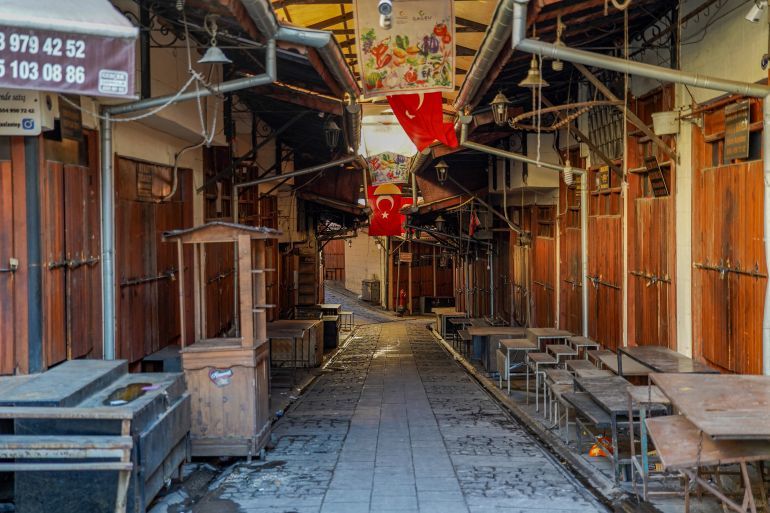
The city has become a ghost town following the disaster


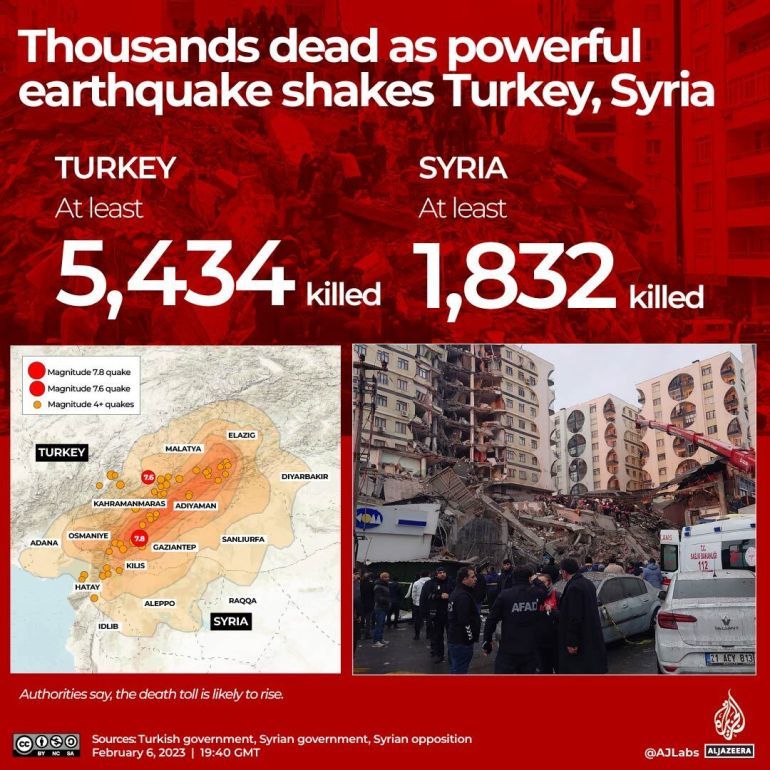
A day after the earthquakes shook southeastern Turkey and northwestern Syria, killing thousands, rescue operations were under way.

The death toll surpassed 7,000 late on Tuesday and is expected to continue to rise. Many in need are still isolated due to frigid temperatures and blocked roads, preventing rescue teams from reaching the affected areas.


‘As far as possible’


Mariia Honcharuk, 24, a Ukrainian refugee living in Gaziantep, said that she was still trying to leave the city.

“We are trying to go as far as possible until the situation calms down,” she said.

On Monday, Honcharuk quickly packed a few clothes in a bag and hopped on the first bus to Antalya, but the bus station was full of people trying to escape the city.

When she finally managed to get a ticket, she got stuck on the road to Adana. “We had to take another road because the main one was blocked, so it took much more time than usual,” Honcharuk said.

“Then, we were just waiting in a traffic jam the whole night and morning in Nurdagi [the epicentre of the earthquake], and we had to find an alternative way south.”

Yahaya Hassan Labaran, a Nigerian civil engineering PhD student at Gaziantep University, said that foreign students living alone have been panic-struck by the disaster.

“When the earthquake happened, they told us to leave our dormitory immediately, without knowing if we would go back,” Labaran said, adding that being stuck in a temporary shelter with hundreds of other people, with limited food and water, was emotionally draining.

“I even left my passport in the building. I’ve been trying to recollect it, because I want to reach my home country, but security won’t let me inside. I just want to go back home, I have never seen a disaster like this.”

Experts feard that Monday’s earthquakes could compound the loss of the region’s cultural legacy – Turkey’s government has said more than 5,600 buildings in Turkey have been destroyed. On Tuesday, UNESCO warned that several World Heritage Sites, identified by the United Nations agency for their cultural, historical, scientific and other forms of significance, might have been damaged.

After the first earthquake, Emad al-Mustafa jumped in his car with his wife and four children. Although his house, located near Sanko Park, was not damaged by the quake, he no longer believed it is safe to be there.

“When we realised there was no water, no electricity, no safety in our building, we decided to go,” al-Mustafa said by telephone as he travelled to Eskisehir, a city far away from the damaged areas. “But I wish I hadn’t taken that car journey. What we saw along the way was just rubbles and complete devastation, like an apocalypse movie.”

Newsletter

Related Articles

Arab Press
0:00
0:00
Close
Saudi Aviation Records Historic Passenger Traffic in 2025 and Sets Sights on Further Growth in 2026
Tech Market Shifts and AI Investment Surge Drive Global Innovation and Layoffs
Global Shifts in War, Trade, Energy and Security Mark Major International Developments
Tesla Ends Model S and X Production and Sends $2 Billion to xAI as 2025 Revenue Declines
The AI Hiring Doom Loop — Algorithmic Recruiting Filters Out Top Talent and Rewards Average or Fake Candidates
Federal Reserve Holds Interest Rate at 3.75% as Powell Faces DOJ Criminal Investigation During 2026 Decision
Putin’s Four-Year Ukraine Invasion Cost: Russia’s Mass Casualty Attrition and the Donbas Security-Guarantee Tradeoff
Saudi Crown Prince Tells Iranian President: Kingdom Will Not Host Attacks Against Iran
U.S. Central Command Announces Regional Air Exercise as Iran Unveils Drone Carrier Footage
Trump Defends Saudi Crown Prince in Heated Exchange After Reporter Questions Khashoggi Murder and 9/11 Links
Saudi Stocks Rally as Kingdom Prepares to Fully Open Capital Market to Global Investors
Air France and KLM Suspend Multiple Middle East Routes as Regional Tensions Disrupt Aviation
Saudi Arabia scales back Neom as The Line is redesigned and Trojena downsized
Saudi Industrial Group Completes One Point Three Billion Dollar Acquisition of South Africa’s Barloworld
Saudi-Backed LIV Golf Confirms Return to Trump National Bedminster for 2026 Season
Gold Jumps More Than 8% in a Week as the Dollar Slides Amid Greenland Tariff Dispute
Boston Dynamics Atlas humanoid robot and LG CLOiD home robot: the platform lock-in fight to control Physical AI
United States under President Donald Trump completes withdrawal from the World Health Organization: health sovereignty versus global outbreak early-warning access
Trump Administration’s Iran Military Buildup and Sanctions Campaign Puts Deterrence Credibility on the Line
Tech Brief: AI Compute, Chips, and Platform Power Moves Driving Today’s Market Narrative
NATO’s Stress Test Under Trump: Alliance Credibility, Burden-Sharing, and the Fight Over Strategic Territory
Saudi Arabia’s Careful Balancing Act in Relations with Israel Amid Regional and Domestic Pressures
Greenland, Gaza, and Global Leverage: Today’s 10 Power Stories Shaping Markets and Security
America’s Venezuela Oil Grip Meets China’s Demand: Market Power, Legal Shockwaves, and the New Rules of Energy Leverage
Trump’s Board of Peace: Breakthrough Diplomacy or a Hostile Takeover of Global Order?
Prince William to Make Official Visit to Saudi Arabia in February
Saudi Arabia Advances Ambitious Artificial River Mega-Project to Transform Water Security
Saudi Crown Prince and Syrian President Discuss Stabilisation, Reconstruction and Regional Ties in Riyadh Talks
Mohammed bin Salman Confronts the ‘Iranian Moment’ as Saudi Leadership Faces Regional Test
Cybercrime, Inc.: When Crime Becomes an Economy. How the World Accidentally Built a Twenty-Trillion-Dollar Criminal Economy
Strategic Restraint, Credible Force, and the Discipline of Power
Donald Trump Organization Unveils Championship Golf Course and Luxury Resort Project in Saudi Arabia
Inside Diriyah: Saudi Arabia’s $63.2 Billion Vision to Transform Its Historic Heart into a Global Tourism Powerhouse
Trump Designates Saudi Arabia a Major Non-NATO Ally, Elevating US–Riyadh Defense Partnership
Trump Organization Deepens Saudi Property Focus with $10 Billion Luxury Developments
There is no sovereign immunity for poisoning millions with drugs.
Mohammed bin Salman’s Global Standing: Strategic Partner in Transition Amid Debate Over His Role
Saudi Arabia Opens Property Market to Foreign Buyers in Landmark Reform
The U.S. State Department’s account in Persian: “President Trump is a man of action. If you didn’t know it until now, now you do—do not play games with President Trump.”
CNN’s Ranking of Israel’s Women’s Rights Sparks Debate After Misleading Global Index Comparison
Saudi Arabia’s Shifting Regional Alignment Raises Strategic Concerns in Jerusalem
OPEC+ Holds Oil Output Steady Amid Member Tensions and Market Oversupply
Iranian Protests Intensify as Another Revolutionary Guard Member Is Killed and Khamenei Blames the West
President Trump Says United States Will Administer Venezuela Until a Secure Leadership Transition
Delta Force Identified as Unit Behind U.S. Operation That Captured Venezuela’s President
Saudi-UAE Rift Adds Complexity to Middle East Diplomacy as Trump Signals Firm Leadership
OPEC+ to Keep Oil Output Policy Unchanged Despite Saudi-UAE Tensions Over Yemen
×