

States spent over $7B competing for early virus supplies
Ray Bellia had a good business before the coronavirus pandemic. He topped $4 million in annual sales from his New Hampshire store that specialized in protective gear for police.
Then he got a call from a buyer with the state of Massachusetts asking if he had anything that could protect people from COVID-19. As it happened, he did. He went on to sell the state 300,000 disposable masks for 97 cents each.
“From that point on, it’s been just insanity,” Bellia said.
Masks. Gowns. Gloves. Goggles. Sanitizer. Coveralls. Thermometers. Bellia has sold it all, and not just to Massachusetts. From Maine to Hawaii, numerous other states, counties, cities, colleges and schools have lined up to buy from him.
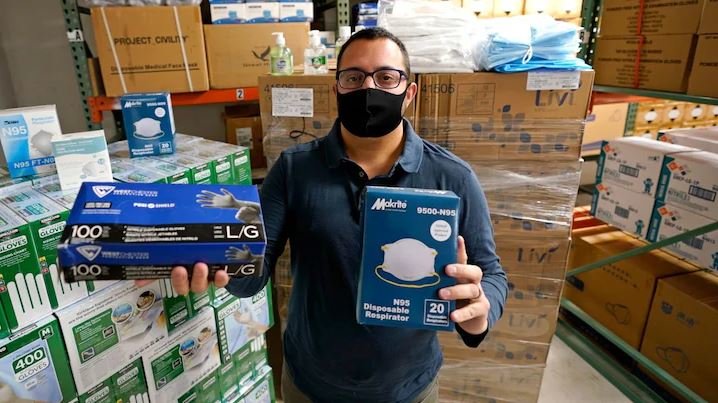
While countless other businesses tanked amid coronavirus shutdowns, Bellia's store — Body Armor Outlet — rapidly evolved into one of the nation's 20 largest suppliers of personal protective equipment to states this past spring, according to a nationwide analysis of state purchasing data by The Associated Press.
The AP tallied more than $7 billion in purchases by states this spring for personal protective equipment and high-demand medical devices such as ventilators and infrared thermometers.
The data, obtained through open-records requests, is the most comprehensive accounting to date of how much states were buying, what they were spending and whom they were paying during a chaotic spring when inadequate national stockpiles left state governments scrambling for hard-to-get supplies. Much of the buying happened outside normal competitive bidding procedures and, in many states a lack of transparency from governors' administrations made it difficult for the public — and even lawmakers — to see how taxpayer money was being spent.
The spending data covers the period from the emergence of COVID-19 in the U.S. in early 2020 to the start of summer. Some governors described the early PPE marketplace as the Wild West, where supplies often went to the highest bidder, even if they had already been promised to someone else. States set up their own fraud tests, rejecting masks that failed to meet safety specifications or lacked medical labeling.
In some states, normal recordkeeping went by the wayside. Idaho didn't initially itemize how much it paid for each mask and glove ordered from each supplier. That's because the state's buyers were preoccupied with trying to buy large quantities as quickly as possible against hundreds of competitors — all while working from home because of the pandemic, said J.P. Brady, senior buyer for the Idaho Department of Health and Welfare.
“It was chaos, pandemonium," Brady said. “None of us knew what we were doing.”
Though states have spent millions more this fall as COVID-19 cases surged again, the initial PPE spending panic has subsided as production increased and supply chains improved.
California spent the most during the pandemic's initial months — at least $1.5 billion in the AP's data — followed by Texas, Maryland, Massachusetts and Washington. New York also spent several hundred million dollars on PPE and ventilators through November, though it's unclear how much of that occurred in the spring.
New Jersey and New York provided total figures but not specific details about their purchases. New Jersey’s health department said it would be too “disruptive” to agency operations to do so, and New York repeatedly postponed a response.
The AP's data shows that millions of dollars flowed from states to businesses that had never before sold PPE, including a Chinese electric vehicle manufacturer, an American tribal organization and consultants with international connections. Traditional safety equipment suppliers also saw a surge in PPE sales, offsetting their losses from other products amid the sudden recession.
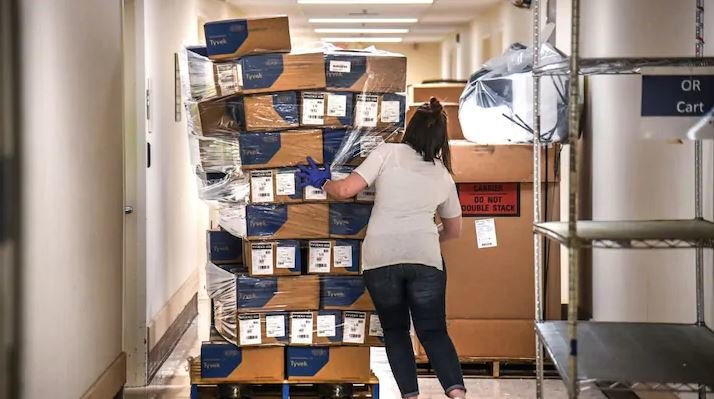
But the states' burst of spending wasn't a boon for everyone. Some businesses that tried to supply PPE lost millions of dollars when states canceled orders that failed to meet aggressive delivery deadlines or strict product specifications. Businesses selling PPE faced a treacherous market, with backlogs at foreign manufacturers, shipping delays and multiple intermediaries.
All of that led to a spike in prices paid by the states, costing taxpayers millions of dollars.
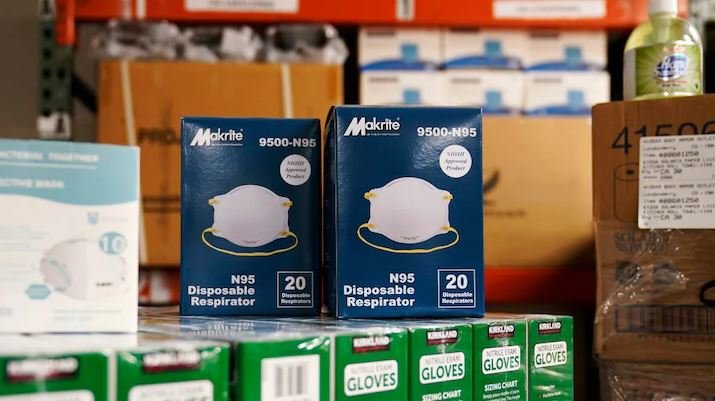
Before the pandemic, an N95 mask that filters out tiny particles might have cost about 50 cents. This spring, states paid an average of $3 each, according to the AP's analysis. Some states paid more than $10 a mask to get them quickly. Average prices for gloves rose fourfold.
In mid-March, Louisiana paid $57,450 for 5,000 N95 masks — at $11.49 each — from Grey Wolf Safety Group in Broussard. Grey Wolf owner Sean McClellan said that to fulfill the state's order, he had to buy out whatever his competitors had in stock. Some masks he got were designed for painting, others for welding. Some came with special breathing valves, while others did not.
“All the cheap masks that were N95, those were already gone,” McClellan said. "So I basically bought up the expensive ones that were left.”
Then he marked up the price a bit more and resold them to the state, making a couple of dollars per mask.
“I’m not price-gouging," McClellan said. "I have to make something, and I then have to pay my salesperson something.”
Other businesses that charged high prices to states offered similar explanations. Go Green Solutions Inc. in South Grafton, Massachusetts, sold its home state several thousand N95 masks in early April for $11.25 to $11.50 each. The price was a product of limited supply and high demand, resulting in only modest profit margins, manager Jim Fisher said.
“Usually, if you found inventory with some of your suppliers, you had to make a purchase right then and there. You couldn’t wait,” he said, "because within an hour, it would be gone.”
States competed with each other, hospital systems, the federal government and even other countries to find and buy medical gear as the virus began spreading.
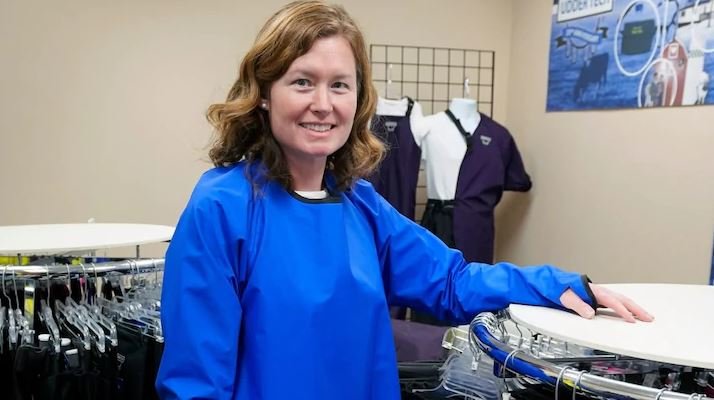
The pressure to obtain protective supplies led some states to unusual sources. Minnesota bought 2,300 waterproof gowns intended for milking cows from Udder Tech Inc. The special gowns cost about $46 each when freight was included — about seven times the average price that states were paying for medical gowns this spring. Before the pandemic, some health care systems could buy disposable gowns for about 40 cents each.
“They were looking to acquire anything they could at that point to help protect the health care workers,” said Dana Casto, business manager at the Rosemount, Minnesota-based dairy supply company.
While some states paid a premium for small orders from local suppliers, their purchasing agents also scrambled to secure large quantities of protective equipment, much of it manufactured in Asia. That created an opportunity for companies to enter the PPE field.
The largest supplier of PPE to states this spring had never sold a single mask before the pandemic. But from mid-March to early June, Chinese electric vehicle maker BYD sold $930 million worth of masks and sanitizer to states. Two-thirds of that went to California, where Democratic Gov. Gavin Newsom drew criticism for initially keeping secret the details of his “bold and big” deal that paid BYD $3.30 for each N95.
Like the leaders of some other states, Newsom sidestepped the traditional purchasing process of publicly soliciting competitive bids from vendors, which can take weeks or even months. Some state lawmakers responsible for budgeting complained that Newsom left them out of the loop.
Washington, which was among the first states to record coronavirus cases, bought tens of millions of N95 masks and similar KN95 masks from BYD this spring at prices ranging from $2.58 to $4.02 each. That helped rank Washington among the top states in mask purchasing rates per COVID-19 cases among its residents, according to the AP's analysis.
BYD also sold to Connecticut, Massachusetts, North Carolina and Texas this spring and signed an additional $316 million deal with California in July, after the period covered by the AP's data. By then, the price the company charged to California had fallen to $2.13 per N95 mask and 20 cents per surgical mask, barely a third of the spring rate.
During the first quarter of 2020, when China was in lockdown, BYD reported a 35% decline in operating income. That's when company Chairman Wang Chuanfu decided to begin making masks and sanitizer. BYD's income rebounded to post a 12% gain through the first three-quarters of the year. Its stock price surged from $5 a share in January to more than $20 this fall, although it's unclear how much of that is attributable to new PPE production versus its sales of electric vehicles and other products.
Frank Girardot, senior communications director for BYD North America, compared Chuanfu to an inventor “along the lines of Thomas Edison” who got into the PPE business for altruistic reasons.
"He, in January, decided that this was something that the company had to do in service to the world,” Girardot said.
BYD’s largest U.S. investor is Berkshire Hathaway, led by Warren Buffett.
Fastenal Co. and W.W. Grainger, two industrial suppliers, also saw surges in PPE sales. The AP's data includes $99 million in PPE sales to 32 states by Fastenal, and $50 million in PPE sales to 40 states by Grainger, which said its profits on those sales were squeezed by increased freight costs and previous contracts with reduced prices.
Many of the companies in the AP's data set are not publicly traded and thus can keep their financial figures private. For example, one of the largest deals is California's $179 million order of 20 million gowns from BuKo LLC. The New York-based company has a bare-bones website that describes it as “a brand and product development think tank.” Few other details are available about the company.
BuKo owner Rashmi Budhram declined to comment when reached by telephone.
Others, however, were more than willing to describe how PPE sales provided a lifeline at the onset of the pandemic.
The leaders at Grand Traverse Economic Development, a commercial investment entity for the Ottawa and Chippewa Native American tribes in Michigan, decided to get into the PPE business when a shutdown affected the tribe's other business ventures. The organization quickly became New Hampshire's top PPE supplier, selling the state nearly $28 million worth of masks, gowns, coveralls, face shields and sanitizing wipes this spring. It made a profit of around 10% to 15%, business development director Lauren Tucker said.
“This helped us keep our doors open, keep our staff fully employed and engaged, and we grew during the pandemic,” she said.
Bellia, president of Body Armor Outlet, also expanded. The AP's data for the spring includes just over $50 million in PPE sales to states by the Salem, New Hampshire, company. But Bellia said his total PPE sales this year are around $120 million — a roughly thirtyfold increase over his company's total sales for 2019.
Because of the success, Bellia increased his payroll from eight to 12 employees. And while he continues to sell body armor, he cleared almost all of it out of his warehouse to make room for coronavirus PPE.
“While in a heartbeat I would trade this to go back to the way it was, I think unequivocally it’s been a great thing for us," he said.