

The events that shook and shaped America in 2020
Since March, Americans have been flooded with news around the coronavirus. The US hit several grim milestones as daily cases and death rates rose and the Covid-19 pandemic changed the way Americans work, vote, learn, and socialize.
But amid the deadly pandemic were other crises that left a mark on 2020, including civil unrest, terrorist acts, White House resignations and firings, and natural disasters that devastated land and claimed lives.
Here are the stories that defined 2020:
January
The year began with international tension. On January 3, Iranian general Qassem Soleimani died during a military airstrike unleashed by American forces. His death prompted a series of efforts out of Tehran, the capital of Iran, to retaliate against the United States.
The efforts continued into June, when Tehran said President Donald Trump engaged in "murder and terrorist acts." At the time, the capital put Trump and other figures on "red notice" and urged Interpol to help detain him.
As the tension unfolded, the United States became aware of its first coronavirus case, marking the start of the US response to the pandemic.
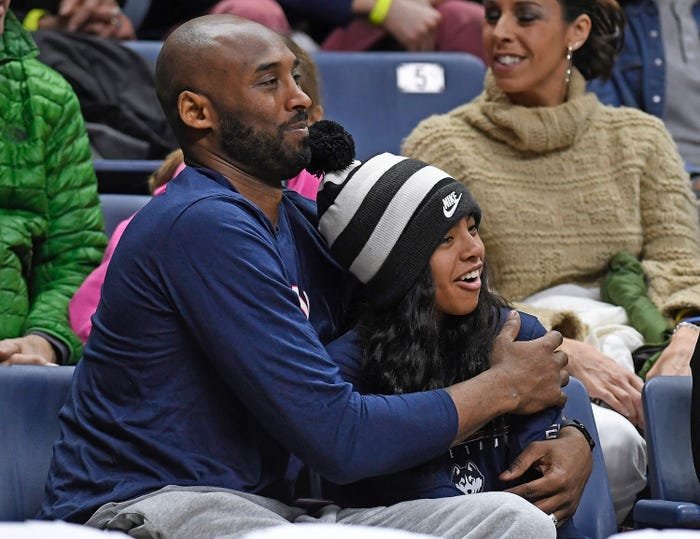
Then, basketball legend Kobe Bryant died in a tragic helicopter crash on January 26. Americans were shocked at the announcement of his death, which raised questions on how to grieve a beloved figure who had been accused of sexual assault.
February
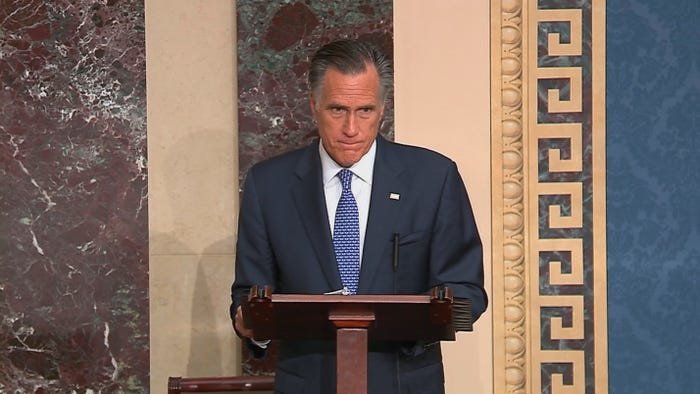
On February 5, the Republican-controlled Senate cleared Trump of two impeachment charges, bringing to an end a monthslong process to remove him from office. He was impeached in December on abuse of power and obstruction of Congress charges.
The decision to clear him of the first charge largely fell along party lines in the Senate, with every Democrat and independent senator — and Republican Sen. Mitt Romney — voting to convict Trump. The rest of the Republican senators voted to acquit. On the second charge, lawmakers' votes fell entirely along party lines, with Democrats voting to pin the obstruction of Congress charge on Trump and Republicans voting to clear him. Republicans, who maintain a Senate majority, won.
One day after the vote, news of the first American who died from the coronavirus spread. A 60-year-old was the first American reported to die from the disease.
March
Super Tuesday on March 3 helped thin out the list of more than two dozen candidates vying for president at the time. Now President-elect Joe Biden came out strong, with more than 63% of the vote. Following him was Sen. Bernie Sanders, who had a little over 16% of the vote. After the results came out, Mike Bloomberg dropped out of the race and endorsed Biden. Sen. Elizabeth Warren also ended her campaign.
Throughout the rest of the March primaries, Biden continued to score big as a handful of presidential candidates ended their bids.
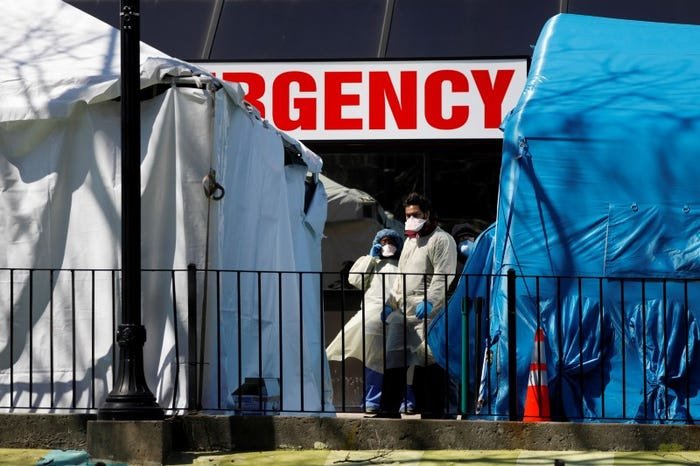
March also marked a shift from government officials to take the pandemic seriously. State and local officials in the US began initiating lockdown orders to curb the spread of the coronavirus. By the end of March, more than a third of the world had entered some form a lockdown.
On March 11, the World Health Organization officially recognized the coronavirus outbreak as a pandemic. And on March 13, Trump declared the coronavirus pandemic a national emergency. Two weeks later, Trump signed a $2 trillion stimulus package that included $1,200 direct payments to Americans.
Also on March 13, Breonna Taylor was shot dead by police in her own home, an event that incited monthslong Black Lives Matter protests that continue to this day.
April
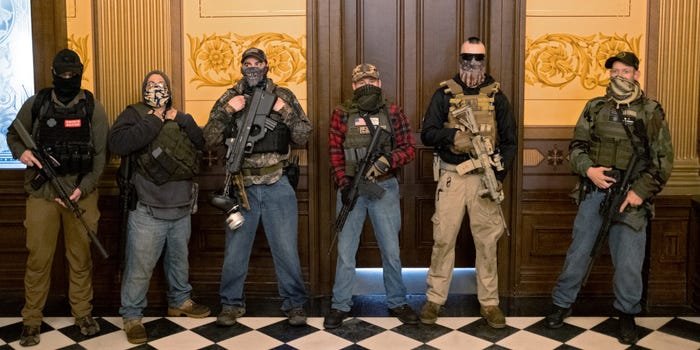
Throughout the month of April, many Americans staged protests to defy the orders. Trump was among those supporting these movements, pushing for a quick return to normal and urging state officials to reopen businesses to prop up the economy.
The April jobs report from the Labor Department said 14.7% of Americans were unemployed. About 20 million jobs were lost.
May
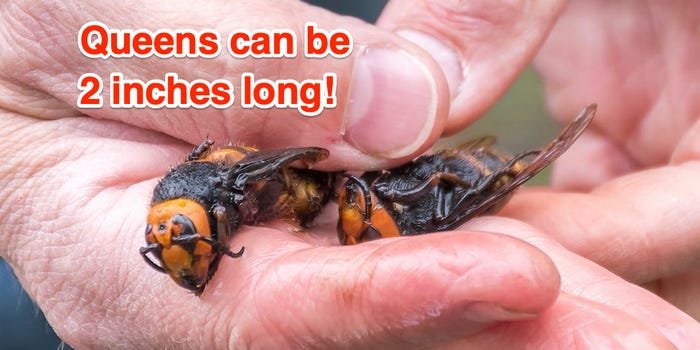
Early on in the month, reports came out of a new challenge: murder hornets.
They're officially called the Asian giant hornet, or Vespa mandarinia. Murder hornets are 2-inch insects that have killed humans in the past.
Near the end of the month, on Memorial Day, a Minneapolis police officer knelt on the back of George Floyd's neck, a Black man who died after being restrained for several minutes. His death reignited the Black Lives Matter protests that began earlier in the year after the death of Breonna Taylor. Derek Chauvin, the officer who knelt on Floyd's neck, was later charged with third-degree murder and second-degree manslaughter.
June
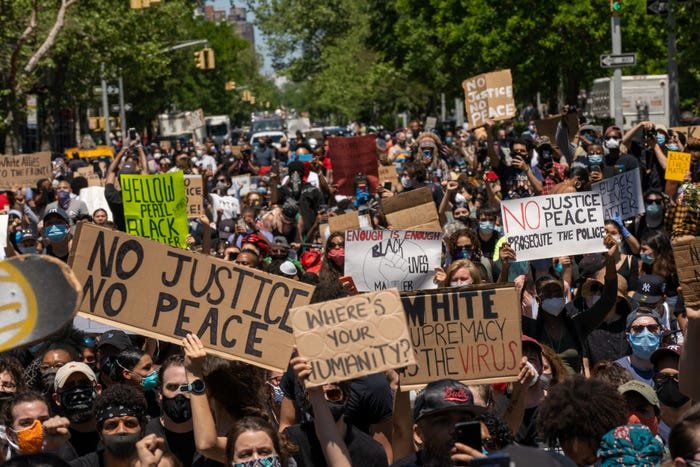
Protests continued into June, with waves of people both nationally and worldwide turning out again police brutality and racial injustice. While largely peaceful, some protests turned violent and dangerous, with law enforcement using force against demonstrators or rioters.
Meanwhile, Biden had secured enough delegates to formally clinch the title of Democratic presidential nominee. Up until this point, he had been the party's presumptive nominee.
July
Americans were barred from going to or staying in Europe. The European Union regarded US citizens as too risky to admit because of soaring coronavirus cases in the United States. The full list of admitted countries comprised Algeria, Australia, Canada, China, Georgia, Japan, Montenegro, Morocco, New Zealand, Rwanda, Serbia, South Korea, Thailand, Tunisia, and Uruguay.
Back home, racial tensions continued to spike. Protesters ardently demanded the removal of confederate monuments — and local and state officials complied.
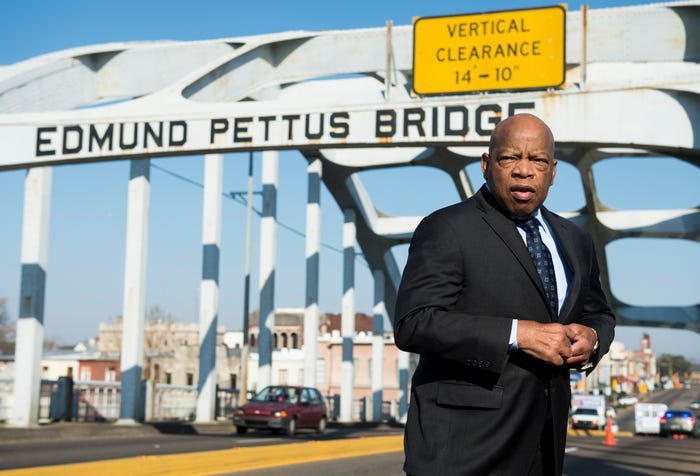
The US lost civil rights icon John Lewis, who served in the House of Representatives since 1987. He was part of the original Freedom Riders, a group of civil rights activists who protested segregated bus terminals.
Also in July, the FBI arrested Ghislaine Maxwell, the longtime girlfriend of Jeffrey Epstein, charging her with participation in the abuse of young girls. Epstein was facing sex trafficking charges until he died by suicide in jail. His accusers named Maxwell as a person who facilitated the sex trafficking by grooming young girls to sleep with men within Epstein's orbit.
August
After months of speculation on who his potential running mate would be, Biden announced Sen. Kamala Harris as his choice for vice president. Harris' nomination was monumental, as she made history as the first Black and Asian-American woman on a major-party ticket.
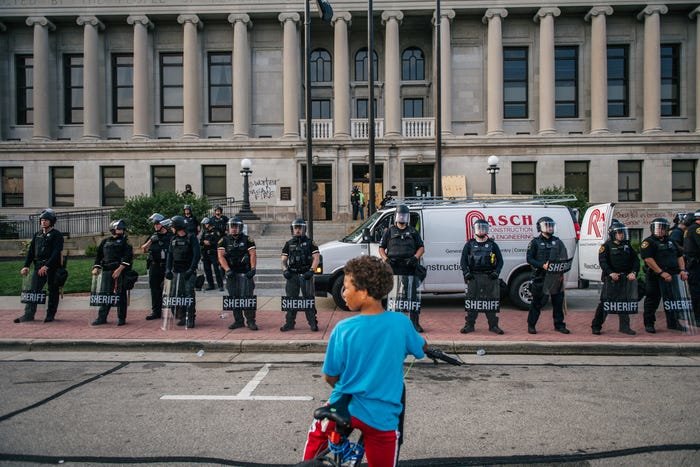
On August 23, Kenosha, Wisconsin, police repeatedly shot Jacob Blake, a 29-year-old Black man, in the back. During the shooting, Blake's kids were in the back of the car, and one of them had been celebrating a birthday. Blake was hospitalized with serious injuries.
Protests erupted in Kenosha shortly after the shooting. Police enacted a curfew in response to the demonstrations.
September
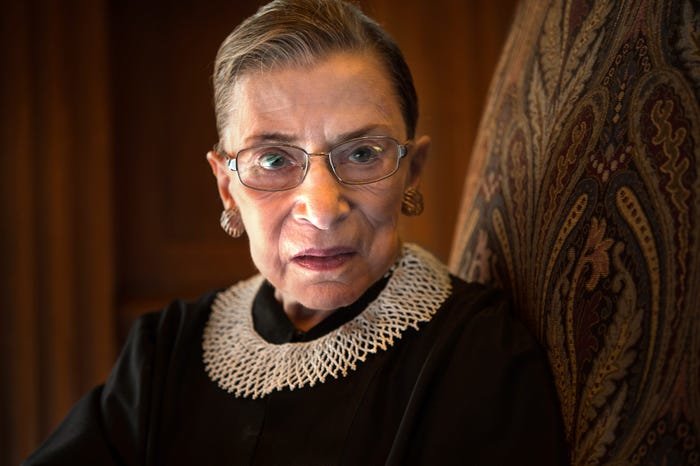
Ruth Bader Ginsburg died on September 18 from pancreatic cancer and left a vacancy on the Supreme Court bench. A few days before her death, she asked that she "not be replaced until a new president is installed."
Contrary to her wishes, lawmakers immediately began to plan for Ginsburg's replacement. Trump's choice was Amy Coney Barrett, a conservative Catholic who evaded questions about key issues during her confirmation hearings. The decision spurred protests and stern words of discontent — some of which originated from Barrett's former class peers.
Trump also received backlash on the day of the first presidential debate between him and Biden. When asked to denounce white supremacists, Trump told the Proud Boys, a far-right extremist hate group, to "stand back and stand by." The group celebrated Trump's remark and took it as a commanding order.
September was also the month when a grand jury declined to charge two of the three officers involved in the shooting of Breonna Taylor. One officer, Brett Hankison, was charged with three counts of first-degree wanton endangerment.
October
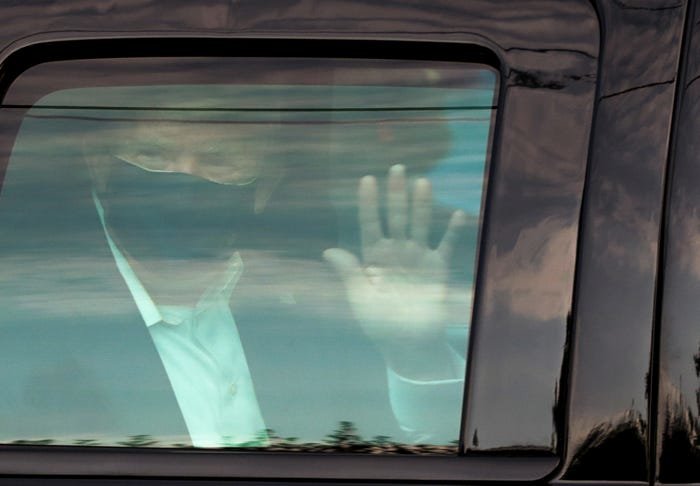
Trump on October 2 announced that he and first lady Melania have both tested positive for the coronavirus. Trump was transported to the Walter Reed Medical Center, where he stayed for a few days before being released.
"Don't be afraid of Covid," he tweeted, just ahead of leaving the hospital. At this time, the country was facing tremendous spikes in confirmed cases. And by early October, more than 30 White House aides, officials, and various other staff members tested positive for the coronavirus.
Meanwhile, the country was beginning to cast ballots by mail for the November presidential election. Most states have shifted to voting by mail this year to limit the spread of the coronavirus.
November
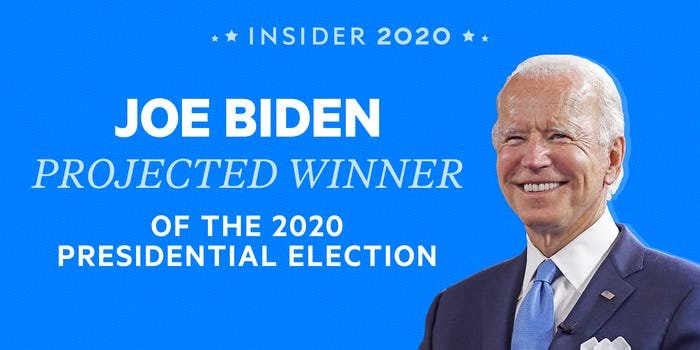
Business Insider called the presidency for Biden on November 6, but for weeks afterward, Trump refused to concede the results. He released a statement accusing Biden of "rushing to falsely pose as the winner" after dozens of news outlets projected the former vice president to have won the election. Biden won with a sweeping 306 electoral votes to Trump's 232.
Trump also unleashed a series of legal challenges alleging widespread voter fraud in multiple states. He hasn't won any of them.
As election litigation pended in the courts, coronavirus spikes continued. The US death toll increased by tens of thousands within a span of weeks, according to data compiled by Johns Hopkins University. Health officials encouraged Americans to celebrate Thanksgiving virtually. But a record-breaking 1.1 million travelers skirted the guidance and flew home after the holiday weekend.
December
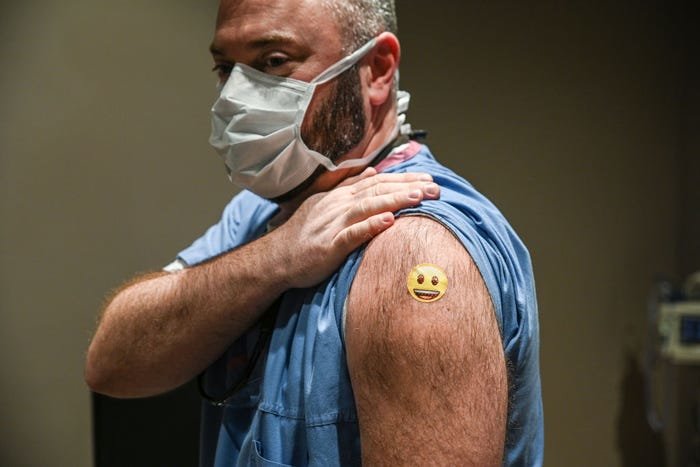
The FDA authorized the use of various vaccines, which were immediately shipped out to every state in the country.
Congress continued to debate the contents of the next stimulus package until finally striking a deal on December 20, just ahead of the Christmas holiday. It's a $900 billion rescue package that includes $600 in direct payments to Americans.
But in the final days of 2020, Trump struck down the bill, urging Congress to increase direct payments to $2,000. As a result, the stimulus relief package remains in limbo.
Also in December, the Trump administration was ordered to reinstate DACA, the Obama-era program that protects young, undocumented immigrants from deportation. Trump has fought to do away with the program, and this decision from a federal judge was a blow to his plan.