Saudi Arabia Intensifies Security Preparations for Hajj as Regional Tensions and Crowd Risks Raise the Stakes
Interior Minister Prince Abdulaziz bin Saud’s meetings with military and security commanders ahead of Arafat Day underscore how Hajj has evolved into one of the world’s most complex annual security operations.
Saudi Arabia’s massive security mobilization ahead of Arafat Day is fundamentally system-driven because the annual Hajj pilgrimage now depends on a vast state-managed infrastructure involving crowd control, surveillance systems, military coordination, emergency response networks and regional security planning.
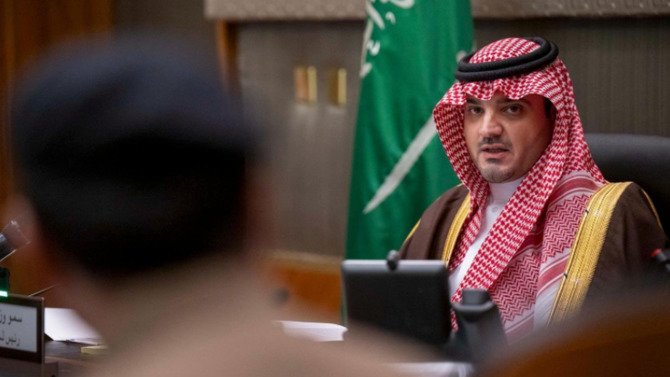
Saudi Interior Minister Prince Abdulaziz bin Saud bin Naif met senior security and military leaders ahead of Arafat Day as the kingdom finalized preparations for the most sensitive phase of the Hajj pilgrimage.
The meetings reflect the extraordinary operational pressure placed on Saudi authorities during one of the world’s largest annual religious gatherings.
What is confirmed is that Saudi security agencies, military units, civil defense authorities and emergency services intensified coordination ahead of the movement of pilgrims toward Mount Arafat, the spiritual climax of Hajj.
The Saudi government deployed large-scale security forces, medical teams, crowd-management personnel and logistical support units across the holy sites surrounding Mecca.
The key issue is that Hajj is no longer simply a religious gathering.
It has become one of the most complicated public-security and infrastructure-management operations in the world.
Millions of pilgrims from more than one hundred countries travel into a geographically concentrated area within a narrow time window.
Saudi authorities must simultaneously manage transportation systems, crowd movement, health risks, fire prevention, terrorism threats, weather exposure and diplomatic coordination.
Arafat Day represents the most operationally sensitive stage.
Pilgrims travel in massive numbers toward the Plain of Arafat, where Muslims believe the Prophet Muhammad delivered his final sermon.
The movement involves huge transportation flows through confined corridors connecting Mecca, Mina and Arafat.
Even minor disruptions can rapidly escalate into dangerous crowd conditions.
That risk has shaped Saudi policy for decades.
Several deadly stampedes and crowd disasters during previous pilgrimages forced the kingdom to redesign major parts of Hajj infrastructure.
Authorities invested billions of dollars into expanded road systems, multilevel pedestrian routes, surveillance technology, artificial intelligence-assisted crowd monitoring and emergency-response capabilities.
Saudi Arabia now operates Hajj using an increasingly militarized command-and-control structure.
Security forces monitor crowd density in real time through cameras, drones and digital tracking systems.
Transportation schedules are tightly regulated.
Pilgrim groups move through assigned routes under strict timing systems designed to prevent bottlenecks.
The interior ministry plays a central coordinating role because Hajj security extends far beyond ordinary policing.
The operation involves intelligence monitoring, border management, counterterrorism protection, cyber coordination, health-security planning and rapid deployment capabilities.
Regional instability raises the stakes further.
The Middle East remains under heightened geopolitical tension because of conflicts involving Gaza, Iran-backed armed groups, Red Sea shipping threats and wider regional security confrontations.
Saudi Arabia therefore faces pressure to prevent any external security disruption during the pilgrimage.
The kingdom has historically treated Hajj security as both a domestic and international legitimacy issue.
Saudi rulers derive major religious authority from managing Islam’s holiest sites.
Successful Hajj operations reinforce the kingdom’s standing across the Muslim world.
Any serious operational failure can quickly become politically and diplomatically damaging.
Health risks also remain central after the COVID-19 pandemic fundamentally changed how governments approach mass gatherings.
Saudi Arabia dramatically restricted pilgrimage attendance during the height of the pandemic before gradually restoring full-scale participation.
Since then, authorities expanded disease-monitoring systems, vaccination coordination, heat-response planning and emergency medical readiness.
Extreme heat is now one of the biggest operational concerns.
Temperatures during Hajj regularly exceed dangerous levels, especially during daylight hours around Arafat.
Heat exhaustion, dehydration and heatstroke pose serious risks for elderly pilgrims and those traveling long distances on foot.
Saudi authorities expanded cooling systems, misting stations, shaded areas and medical response units to reduce fatalities linked to heat exposure.
Technology increasingly shapes the pilgrimage.
Pilgrims now use digital permits, electronic identification systems, navigation applications and mobile coordination tools integrated into Saudi security infrastructure.
Authorities use predictive analytics and live data monitoring to anticipate crowd pressure points before they become emergencies.
The economic dimension is equally important.
Hajj and Umrah pilgrimage travel form a major pillar of Saudi Arabia’s economic diversification strategy under Vision 2030. The kingdom aims to increase religious tourism significantly over the coming decade through expanded airports, hotels, transportation networks and smart-city infrastructure around Mecca and Medina.
That means security reliability is directly tied to economic strategy.
Saudi Arabia wants to demonstrate that it can safely manage growing numbers of international pilgrims while modernizing the pilgrimage experience through technology and infrastructure expansion.
The meetings led by the interior minister also carry symbolic importance.
Public displays of coordination between military, police and civil defense leadership reinforce the image of centralized state control and operational readiness at a time when Saudi Arabia is presenting itself as both a religious leader and an increasingly modernized regional power.
The broader reality is that Hajj has evolved into a hybrid system combining religion, state security, advanced logistics and geopolitical management.
Saudi Arabia’s ability to control the pilgrimage safely now depends on integrating military-style coordination with infrastructure engineering, health planning, surveillance technology and international diplomacy at enormous scale.
The final operational test arrives during Arafat Day itself, when millions of pilgrims move simultaneously through tightly controlled corridors under one of the largest coordinated security and crowd-management deployments anywhere in the world.
Saudi Interior Minister Prince Abdulaziz bin Saud bin Naif met senior security and military leaders ahead of Arafat Day as the kingdom finalized preparations for the most sensitive phase of the Hajj pilgrimage.
The meetings reflect the extraordinary operational pressure placed on Saudi authorities during one of the world’s largest annual religious gatherings.
What is confirmed is that Saudi security agencies, military units, civil defense authorities and emergency services intensified coordination ahead of the movement of pilgrims toward Mount Arafat, the spiritual climax of Hajj.
The Saudi government deployed large-scale security forces, medical teams, crowd-management personnel and logistical support units across the holy sites surrounding Mecca.
The key issue is that Hajj is no longer simply a religious gathering.
It has become one of the most complicated public-security and infrastructure-management operations in the world.
Millions of pilgrims from more than one hundred countries travel into a geographically concentrated area within a narrow time window.
Saudi authorities must simultaneously manage transportation systems, crowd movement, health risks, fire prevention, terrorism threats, weather exposure and diplomatic coordination.
Arafat Day represents the most operationally sensitive stage.
Pilgrims travel in massive numbers toward the Plain of Arafat, where Muslims believe the Prophet Muhammad delivered his final sermon.
The movement involves huge transportation flows through confined corridors connecting Mecca, Mina and Arafat.
Even minor disruptions can rapidly escalate into dangerous crowd conditions.
That risk has shaped Saudi policy for decades.
Several deadly stampedes and crowd disasters during previous pilgrimages forced the kingdom to redesign major parts of Hajj infrastructure.
Authorities invested billions of dollars into expanded road systems, multilevel pedestrian routes, surveillance technology, artificial intelligence-assisted crowd monitoring and emergency-response capabilities.
Saudi Arabia now operates Hajj using an increasingly militarized command-and-control structure.
Security forces monitor crowd density in real time through cameras, drones and digital tracking systems.
Transportation schedules are tightly regulated.
Pilgrim groups move through assigned routes under strict timing systems designed to prevent bottlenecks.
The interior ministry plays a central coordinating role because Hajj security extends far beyond ordinary policing.
The operation involves intelligence monitoring, border management, counterterrorism protection, cyber coordination, health-security planning and rapid deployment capabilities.
Regional instability raises the stakes further.
The Middle East remains under heightened geopolitical tension because of conflicts involving Gaza, Iran-backed armed groups, Red Sea shipping threats and wider regional security confrontations.
Saudi Arabia therefore faces pressure to prevent any external security disruption during the pilgrimage.
The kingdom has historically treated Hajj security as both a domestic and international legitimacy issue.
Saudi rulers derive major religious authority from managing Islam’s holiest sites.
Successful Hajj operations reinforce the kingdom’s standing across the Muslim world.
Any serious operational failure can quickly become politically and diplomatically damaging.
Health risks also remain central after the COVID-19 pandemic fundamentally changed how governments approach mass gatherings.
Saudi Arabia dramatically restricted pilgrimage attendance during the height of the pandemic before gradually restoring full-scale participation.
Since then, authorities expanded disease-monitoring systems, vaccination coordination, heat-response planning and emergency medical readiness.
Extreme heat is now one of the biggest operational concerns.
Temperatures during Hajj regularly exceed dangerous levels, especially during daylight hours around Arafat.
Heat exhaustion, dehydration and heatstroke pose serious risks for elderly pilgrims and those traveling long distances on foot.
Saudi authorities expanded cooling systems, misting stations, shaded areas and medical response units to reduce fatalities linked to heat exposure.
Technology increasingly shapes the pilgrimage.
Pilgrims now use digital permits, electronic identification systems, navigation applications and mobile coordination tools integrated into Saudi security infrastructure.
Authorities use predictive analytics and live data monitoring to anticipate crowd pressure points before they become emergencies.
The economic dimension is equally important.
Hajj and Umrah pilgrimage travel form a major pillar of Saudi Arabia’s economic diversification strategy under Vision 2030. The kingdom aims to increase religious tourism significantly over the coming decade through expanded airports, hotels, transportation networks and smart-city infrastructure around Mecca and Medina.
That means security reliability is directly tied to economic strategy.
Saudi Arabia wants to demonstrate that it can safely manage growing numbers of international pilgrims while modernizing the pilgrimage experience through technology and infrastructure expansion.
The meetings led by the interior minister also carry symbolic importance.
Public displays of coordination between military, police and civil defense leadership reinforce the image of centralized state control and operational readiness at a time when Saudi Arabia is presenting itself as both a religious leader and an increasingly modernized regional power.
The broader reality is that Hajj has evolved into a hybrid system combining religion, state security, advanced logistics and geopolitical management.
Saudi Arabia’s ability to control the pilgrimage safely now depends on integrating military-style coordination with infrastructure engineering, health planning, surveillance technology and international diplomacy at enormous scale.
The final operational test arrives during Arafat Day itself, when millions of pilgrims move simultaneously through tightly controlled corridors under one of the largest coordinated security and crowd-management deployments anywhere in the world.