
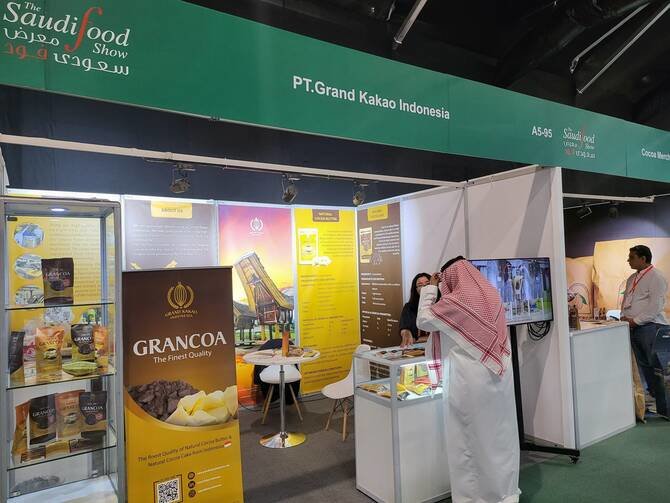
Indonesia Positions Businesses to Capture Saudi Vision 2030 Market Expansion
Jakarta urges exporters to target fast-growing Saudi demand in halal goods, services, and industrial supply chains as the Kingdom diversifies beyond oil
Indonesia is actively encouraging its business community to expand into Saudi Arabia by leveraging new commercial opportunities created under the Kingdom’s Vision 2030 economic transformation program.
The initiative, which aims to reduce Saudi Arabia’s dependence on oil revenues and expand sectors such as manufacturing, tourism, logistics, and digital services, is reshaping import demand and opening new access points for foreign suppliers.
The push from Jakarta reflects a broader trade strategy focused on non-traditional export markets.
Indonesian trade officials argue that Saudi Arabia’s structural shift is generating sustained demand growth in consumer goods and industrial inputs, particularly in sectors aligned with changing demographics and large-scale development projects.
At the core of the opportunity is Saudi Arabia’s economic diversification agenda, which is driving investment into non-oil industries and large infrastructure developments.
These include urban megaprojects, expanded tourism capacity, and logistics corridors intended to position the Kingdom as a regional trade hub connecting Asia, Europe, and Africa.
As these projects scale, demand increases for construction materials, furnishings, manufactured goods, and consumer products.
Indonesian exporters are being encouraged to focus on sectors where they already have competitive positioning, particularly halal food and beverages, agricultural products, modest fashion, cosmetics, furniture, and light manufacturing.
These categories align with both Saudi consumer preferences and the country’s expanding service economy, which is increasingly driven by tourism and domestic consumption rather than energy exports.
A key structural driver is the rapid expansion of Saudi Arabia’s religious tourism economy.
Rising numbers of Hajj and Umrah pilgrims have increased demand for packaged foods, hospitality supplies, medical products, and logistics services.
This creates recurring import needs that benefit exporting countries with established halal certification systems and supply chains.
Another factor reshaping market demand is Saudi Arabia’s labor and social reform agenda, which has increased workforce participation among women and expanded household consumption patterns.
This shift is contributing to growth in categories such as personal care, apparel, and retail services, further widening opportunities for foreign suppliers.
Indonesian officials also emphasize the importance of improving export readiness, including compliance with Saudi regulatory standards, product certification, and the development of business-to-business partnerships.
Trade promotion offices are positioning themselves as intermediaries to connect Indonesian exporters with Saudi buyers through structured matchmaking programs and investment facilitation.
Trade data highlights the scale of bilateral economic activity already in place, with Indonesia and Saudi Arabia maintaining multi-billion-dollar annual trade flows across energy, consumer goods, and manufactured products.
However, Indonesia continues to run a trade deficit driven largely by energy imports, reinforcing the strategic incentive to expand non-oil exports into the Saudi market.
The underlying mechanism of this policy push is clear: Saudi Arabia’s Vision 2030 is not a short-term stimulus program but a long-term restructuring of industrial demand.
As capital shifts toward non-oil sectors and domestic consumption rises, foreign exporters that align with the new economic architecture are expected to gain durable market access rather than cyclical gains tied to commodity cycles.
For Indonesia, the strategy represents both an export diversification effort and a geopolitical trade positioning move within the broader Gulf economy.
Success will depend on how effectively domestic firms adapt to Saudi standards, integrate into local supply chains, and compete with established regional exporters already targeting the same transformation-driven demand.
The initiative, which aims to reduce Saudi Arabia’s dependence on oil revenues and expand sectors such as manufacturing, tourism, logistics, and digital services, is reshaping import demand and opening new access points for foreign suppliers.
The push from Jakarta reflects a broader trade strategy focused on non-traditional export markets.
Indonesian trade officials argue that Saudi Arabia’s structural shift is generating sustained demand growth in consumer goods and industrial inputs, particularly in sectors aligned with changing demographics and large-scale development projects.
At the core of the opportunity is Saudi Arabia’s economic diversification agenda, which is driving investment into non-oil industries and large infrastructure developments.
These include urban megaprojects, expanded tourism capacity, and logistics corridors intended to position the Kingdom as a regional trade hub connecting Asia, Europe, and Africa.
As these projects scale, demand increases for construction materials, furnishings, manufactured goods, and consumer products.
Indonesian exporters are being encouraged to focus on sectors where they already have competitive positioning, particularly halal food and beverages, agricultural products, modest fashion, cosmetics, furniture, and light manufacturing.
These categories align with both Saudi consumer preferences and the country’s expanding service economy, which is increasingly driven by tourism and domestic consumption rather than energy exports.
A key structural driver is the rapid expansion of Saudi Arabia’s religious tourism economy.
Rising numbers of Hajj and Umrah pilgrims have increased demand for packaged foods, hospitality supplies, medical products, and logistics services.
This creates recurring import needs that benefit exporting countries with established halal certification systems and supply chains.
Another factor reshaping market demand is Saudi Arabia’s labor and social reform agenda, which has increased workforce participation among women and expanded household consumption patterns.
This shift is contributing to growth in categories such as personal care, apparel, and retail services, further widening opportunities for foreign suppliers.
Indonesian officials also emphasize the importance of improving export readiness, including compliance with Saudi regulatory standards, product certification, and the development of business-to-business partnerships.
Trade promotion offices are positioning themselves as intermediaries to connect Indonesian exporters with Saudi buyers through structured matchmaking programs and investment facilitation.
Trade data highlights the scale of bilateral economic activity already in place, with Indonesia and Saudi Arabia maintaining multi-billion-dollar annual trade flows across energy, consumer goods, and manufactured products.
However, Indonesia continues to run a trade deficit driven largely by energy imports, reinforcing the strategic incentive to expand non-oil exports into the Saudi market.
The underlying mechanism of this policy push is clear: Saudi Arabia’s Vision 2030 is not a short-term stimulus program but a long-term restructuring of industrial demand.
As capital shifts toward non-oil sectors and domestic consumption rises, foreign exporters that align with the new economic architecture are expected to gain durable market access rather than cyclical gains tied to commodity cycles.
For Indonesia, the strategy represents both an export diversification effort and a geopolitical trade positioning move within the broader Gulf economy.
Success will depend on how effectively domestic firms adapt to Saudi standards, integrate into local supply chains, and compete with established regional exporters already targeting the same transformation-driven demand.