Iraq Reaffirms Condemnation of Cross-Border Attacks on Saudi Arabia and UAE Amid Escalating Drone Tensions
Baghdad doubles down on rejecting use of Iraqi territory for regional strikes as Gulf states accuse militias of launching drones from inside Iraq, triggering diplomatic pressure and security investigations.
Iraq’s government has reaffirmed its condemnation of recent attacks on Saudi Arabia and the United Arab Emirates while escalating diplomatic and security measures aimed at preventing Iraqi territory from being used in cross-border strikes.
The statement comes amid a wave of drone incidents that Gulf states say originated from inside Iraq, intensifying regional pressure on Baghdad to contain armed factions operating within its borders.
What is confirmed is that Saudi Arabia and the UAE have reported multiple drone incursions in recent days, with Riyadh stating that three drones were intercepted after entering its airspace from the direction of Iraq.
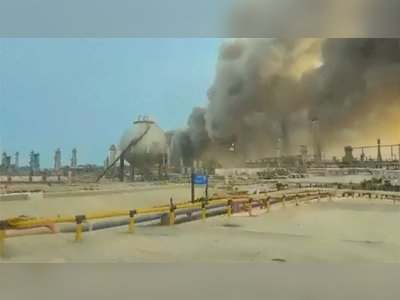
The UAE separately reported that several drones were launched toward its territory over a short period, including one incident that triggered a fire near a facility in the Gulf region.
Iraqi authorities have publicly rejected any involvement, stating that their air defense systems did not detect launches from Iraqi territory.
In response, Iraq’s prime minister and the Ministerial Council for National Security reiterated that Iraq will not allow its land or airspace to be used for attacks against neighboring states.
Officials ordered investigations and said legal and security measures would be taken against any group found responsible.
A coordinating committee has also been formed to liaise with Saudi Arabia and the UAE to verify facts and prevent escalation.
The key issue is the growing accusation that Iran-aligned armed groups operating inside Iraq are conducting drone and rocket attacks across borders without full state control.
These factions exist in a complex security environment where multiple armed actors retain autonomy despite formal state oversight.
Baghdad’s challenge is that it must simultaneously deny responsibility, maintain relations with Gulf partners, and assert authority over domestic armed networks that are politically sensitive and difficult to fully constrain.
Saudi Arabia and the UAE have not publicly attributed responsibility to the Iraqi state itself but have consistently linked attacks to launch points inside Iraq.
The Gulf Cooperation Council has also described such incidents as violations of regional sovereignty, increasing political pressure on Baghdad to demonstrate stronger control over its territory.
The situation has become more sensitive as broader regional conflict dynamics have heightened the risk of spillover from ongoing military confrontations involving state and non-state actors.
For Iraq, the stakes extend beyond diplomacy.
Repeated allegations of cross-border launches risk undermining its efforts to position itself as a neutral regional actor and could strain economic and security cooperation with Gulf neighbors.
At the same time, any internal crackdown on armed groups carries domestic political risks, given their integration into Iraq’s fragmented security and political landscape.
The Iraqi government has committed to continuing investigations in coordination with regional partners and reinforcing its stance that its territory cannot be used as a platform for external attacks.
The next phase will focus on identifying launch networks and enforcing accountability measures against any confirmed perpetrators while attempting to preserve regional stability and diplomatic balance.
The statement comes amid a wave of drone incidents that Gulf states say originated from inside Iraq, intensifying regional pressure on Baghdad to contain armed factions operating within its borders.
What is confirmed is that Saudi Arabia and the UAE have reported multiple drone incursions in recent days, with Riyadh stating that three drones were intercepted after entering its airspace from the direction of Iraq.
The UAE separately reported that several drones were launched toward its territory over a short period, including one incident that triggered a fire near a facility in the Gulf region.
Iraqi authorities have publicly rejected any involvement, stating that their air defense systems did not detect launches from Iraqi territory.
In response, Iraq’s prime minister and the Ministerial Council for National Security reiterated that Iraq will not allow its land or airspace to be used for attacks against neighboring states.
Officials ordered investigations and said legal and security measures would be taken against any group found responsible.
A coordinating committee has also been formed to liaise with Saudi Arabia and the UAE to verify facts and prevent escalation.
The key issue is the growing accusation that Iran-aligned armed groups operating inside Iraq are conducting drone and rocket attacks across borders without full state control.
These factions exist in a complex security environment where multiple armed actors retain autonomy despite formal state oversight.
Baghdad’s challenge is that it must simultaneously deny responsibility, maintain relations with Gulf partners, and assert authority over domestic armed networks that are politically sensitive and difficult to fully constrain.
Saudi Arabia and the UAE have not publicly attributed responsibility to the Iraqi state itself but have consistently linked attacks to launch points inside Iraq.
The Gulf Cooperation Council has also described such incidents as violations of regional sovereignty, increasing political pressure on Baghdad to demonstrate stronger control over its territory.
The situation has become more sensitive as broader regional conflict dynamics have heightened the risk of spillover from ongoing military confrontations involving state and non-state actors.
For Iraq, the stakes extend beyond diplomacy.
Repeated allegations of cross-border launches risk undermining its efforts to position itself as a neutral regional actor and could strain economic and security cooperation with Gulf neighbors.
At the same time, any internal crackdown on armed groups carries domestic political risks, given their integration into Iraq’s fragmented security and political landscape.
The Iraqi government has committed to continuing investigations in coordination with regional partners and reinforcing its stance that its territory cannot be used as a platform for external attacks.
The next phase will focus on identifying launch networks and enforcing accountability measures against any confirmed perpetrators while attempting to preserve regional stability and diplomatic balance.