Saudi Arabia’s Industrial Push Tests Whether State Policy Can Rewire a Petrostate Economy
Early results from Vision 2030-linked diversification efforts show momentum in manufacturing and services, but oil dependence still anchors fiscal reality and growth constraints.
SYSTEM-DRIVEN transformation is at the center of Saudi Arabia’s attempt to diversify its economy away from oil through a broad industrial policy framework tied to its Vision 2030 strategy, a long-term national plan designed to reshape production, investment, and employment structures.
What is confirmed is that Saudi Arabia has significantly expanded state-led industrial policy over the past decade, using sovereign investment funds, regulatory reform, and large-scale infrastructure projects to attract foreign capital and develop non-oil sectors such as tourism, logistics, manufacturing, mining, and renewable energy.
These efforts are coordinated through centralized economic planning institutions and supported by substantial public spending powered by hydrocarbon revenues.
Early evidence suggests measurable but uneven progress.
Non-oil sectors have grown in output and employment contribution, with increased activity in construction, hospitality, and emerging industrial zones.
Foreign direct investment has also increased in targeted sectors, supported by regulatory changes aimed at improving business conditions and reducing barriers to entry for international firms.
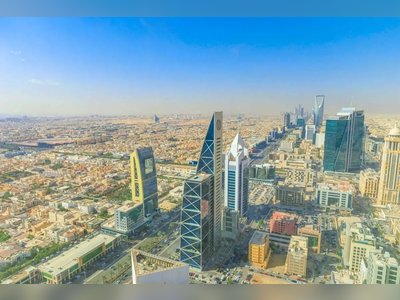
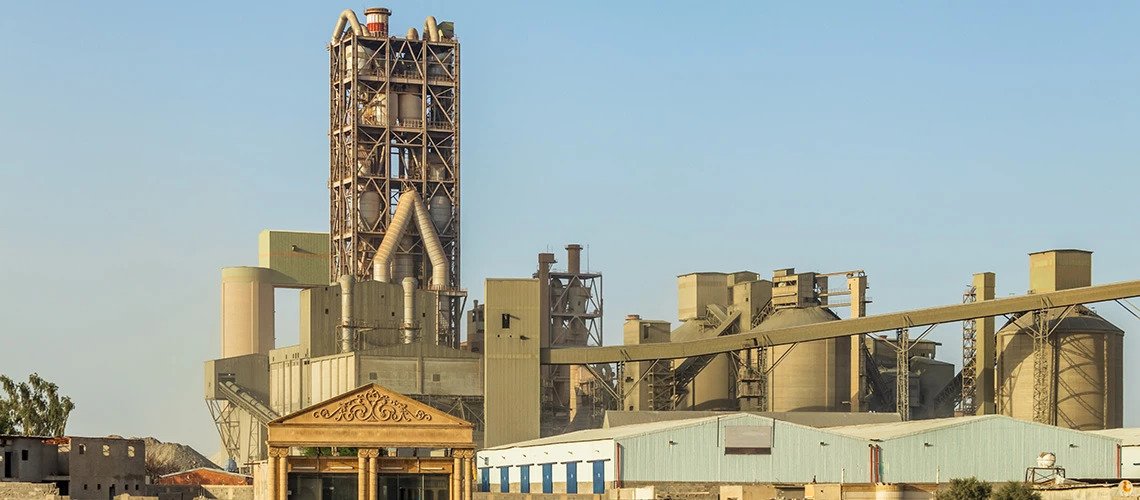
New economic cities and industrial clusters have been developed to concentrate manufacturing capacity and logistics infrastructure.
However, the key issue is whether this diversification is structural or cyclical.
Much of the funding underpinning these initiatives still originates from oil revenues, meaning that fiscal capacity to sustain industrial expansion remains tied to global energy prices.
This creates a dependency loop in which diversification efforts are financed by the very sector they are intended to reduce reliance on.
Industrial policy tools used by Saudi Arabia include sovereign wealth investment through large state-controlled funds, public-private partnerships, and direct government participation in strategic industries such as green hydrogen, electric mobility supply chains, and advanced manufacturing.
These interventions aim to correct perceived market failures, accelerate technology transfer, and create domestic value chains that previously did not exist at scale.
Yet outcomes remain mixed in terms of productivity and private-sector crowding-in.
While large flagship projects have attracted global attention and capital commitments, broader-based private sector expansion remains constrained by labor market structure, skills gaps, and the continued dominance of state-linked enterprises in key sectors.
This limits the speed at which a self-sustaining diversified economy can emerge.
Labor market dynamics are a central constraint.
Saudi Arabia’s workforce composition, historically reliant on public sector employment and expatriate labor in the private sector, is undergoing gradual change through nationalization policies aimed at increasing domestic employment.
However, aligning workforce skills with industrial policy ambitions remains a persistent challenge.
Another structural factor is capital allocation efficiency.
Large-scale state-directed investment can mobilize resources quickly, but it also risks misallocation if projects are guided more by strategic ambition than by commercial viability.
The success of diversification therefore depends not only on capital deployment but on the emergence of competitive, export-oriented industries capable of operating without continuous state support.
Despite these constraints, there are early signs of partial success.
Non-oil GDP growth has become a more prominent component of overall economic expansion in recent years, and Saudi Arabia has developed new industrial capacity in sectors that were previously minimal or absent.
The country is also increasingly integrated into global logistics and trade networks through port expansion and corridor development.
The broader implication is that industrial policy can accelerate diversification in a resource-dependent economy, but it does not automatically replace the underlying revenue base that funds it.
In Saudi Arabia’s case, the transition is best understood as a gradual rebalancing rather than a clean break, with oil still functioning as the financial backbone of state-led transformation while non-oil sectors steadily expand their share of economic activity.
What is confirmed is that Saudi Arabia has significantly expanded state-led industrial policy over the past decade, using sovereign investment funds, regulatory reform, and large-scale infrastructure projects to attract foreign capital and develop non-oil sectors such as tourism, logistics, manufacturing, mining, and renewable energy.
These efforts are coordinated through centralized economic planning institutions and supported by substantial public spending powered by hydrocarbon revenues.
Early evidence suggests measurable but uneven progress.
Non-oil sectors have grown in output and employment contribution, with increased activity in construction, hospitality, and emerging industrial zones.
Foreign direct investment has also increased in targeted sectors, supported by regulatory changes aimed at improving business conditions and reducing barriers to entry for international firms.
New economic cities and industrial clusters have been developed to concentrate manufacturing capacity and logistics infrastructure.
However, the key issue is whether this diversification is structural or cyclical.
Much of the funding underpinning these initiatives still originates from oil revenues, meaning that fiscal capacity to sustain industrial expansion remains tied to global energy prices.
This creates a dependency loop in which diversification efforts are financed by the very sector they are intended to reduce reliance on.
Industrial policy tools used by Saudi Arabia include sovereign wealth investment through large state-controlled funds, public-private partnerships, and direct government participation in strategic industries such as green hydrogen, electric mobility supply chains, and advanced manufacturing.
These interventions aim to correct perceived market failures, accelerate technology transfer, and create domestic value chains that previously did not exist at scale.
Yet outcomes remain mixed in terms of productivity and private-sector crowding-in.
While large flagship projects have attracted global attention and capital commitments, broader-based private sector expansion remains constrained by labor market structure, skills gaps, and the continued dominance of state-linked enterprises in key sectors.
This limits the speed at which a self-sustaining diversified economy can emerge.
Labor market dynamics are a central constraint.
Saudi Arabia’s workforce composition, historically reliant on public sector employment and expatriate labor in the private sector, is undergoing gradual change through nationalization policies aimed at increasing domestic employment.
However, aligning workforce skills with industrial policy ambitions remains a persistent challenge.
Another structural factor is capital allocation efficiency.
Large-scale state-directed investment can mobilize resources quickly, but it also risks misallocation if projects are guided more by strategic ambition than by commercial viability.
The success of diversification therefore depends not only on capital deployment but on the emergence of competitive, export-oriented industries capable of operating without continuous state support.
Despite these constraints, there are early signs of partial success.
Non-oil GDP growth has become a more prominent component of overall economic expansion in recent years, and Saudi Arabia has developed new industrial capacity in sectors that were previously minimal or absent.
The country is also increasingly integrated into global logistics and trade networks through port expansion and corridor development.
The broader implication is that industrial policy can accelerate diversification in a resource-dependent economy, but it does not automatically replace the underlying revenue base that funds it.
In Saudi Arabia’s case, the transition is best understood as a gradual rebalancing rather than a clean break, with oil still functioning as the financial backbone of state-led transformation while non-oil sectors steadily expand their share of economic activity.