Syrian President Thanks Türkiye, US, Saudi Arabia and Qatar Following Repeal of Caesar Act Sanctions
Damascus hails the end of long-standing sanctions as a major step toward economic recovery and international reintegration
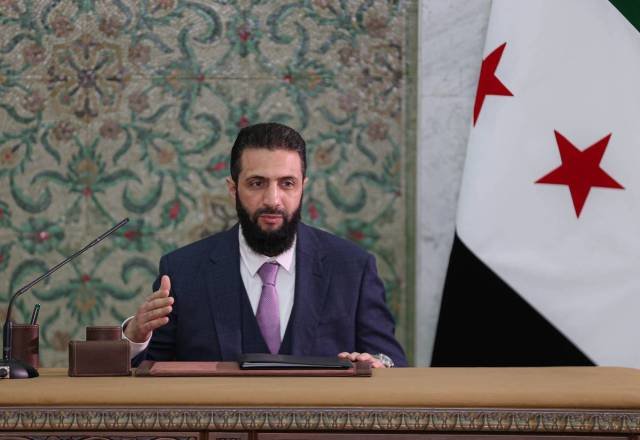
Syrian President Ahmad al-Sharaa publicly expressed his gratitude to the leaders of Türkiye, the United States, Saudi Arabia and Qatar after the U.S. Congress moved to repeal the Caesar Act sanctions that had restricted Syria’s economy for more than a decade.
In a recorded address shared on social media, al-Sharaa described the lifting of the sanctions as a historic moment that offers ‘‘a new beginning’’ for the Syrian people, acknowledging the efforts and patience of Syrians across fourteen years of hardship under economic pressure.
He specifically thanked U.S. President Donald Trump and members of Congress for their decision to end the Caesar Act, which was included in the United States’ annual defence spending legislation for fiscal year 2026, and noted the important diplomatic support provided by Türkiye, Saudi Arabia and Qatar in facilitating the sanction’s repeal.
The Caesar Syria Civilian Protection Act, first enacted in two thousand and nineteen, had authorised sweeping economic and travel sanctions on individuals and entities associated with violence against civilians during Syria’s long civil war.
Its reversal comes after the ouster of former President Bashar al-Assad in December two thousand and twenty-four and the establishment of a new transitional government led by al-Sharaa.
The repeal — passed by the U.S. Senate with a strong bipartisan vote — was widely welcomed by regional governments that had lobbied for relief to support Syria’s reconstruction and reintegration into the global economy.
Al-Sharaa also extended his appreciation to other Arab, Islamic and European countries that supported the Syrian people and the effort to rescind the sanctions, underscoring a shared regional desire for stability and rebuilding.
Beyond political symbolism, Syrian officials and economic strategists have characterised the end of the sanctions regime as opening the door for foreign investment, reconstruction projects and economic partnerships that had previously been stifled by legal barriers and risk aversion among international firms.
The move is expected to structure a path for Syria’s gradual return to global financial systems, with officials urging Syrians at home and abroad to participate in national recovery efforts.
While challenges remain, including ongoing security concerns and infrastructure rebuilding, the repeal of the Caesar Act is widely seen in Damascus as a pivotal step toward economic revitalisation and regional engagement.
In a recorded address shared on social media, al-Sharaa described the lifting of the sanctions as a historic moment that offers ‘‘a new beginning’’ for the Syrian people, acknowledging the efforts and patience of Syrians across fourteen years of hardship under economic pressure.
He specifically thanked U.S. President Donald Trump and members of Congress for their decision to end the Caesar Act, which was included in the United States’ annual defence spending legislation for fiscal year 2026, and noted the important diplomatic support provided by Türkiye, Saudi Arabia and Qatar in facilitating the sanction’s repeal.
The Caesar Syria Civilian Protection Act, first enacted in two thousand and nineteen, had authorised sweeping economic and travel sanctions on individuals and entities associated with violence against civilians during Syria’s long civil war.
Its reversal comes after the ouster of former President Bashar al-Assad in December two thousand and twenty-four and the establishment of a new transitional government led by al-Sharaa.
The repeal — passed by the U.S. Senate with a strong bipartisan vote — was widely welcomed by regional governments that had lobbied for relief to support Syria’s reconstruction and reintegration into the global economy.
Al-Sharaa also extended his appreciation to other Arab, Islamic and European countries that supported the Syrian people and the effort to rescind the sanctions, underscoring a shared regional desire for stability and rebuilding.
Beyond political symbolism, Syrian officials and economic strategists have characterised the end of the sanctions regime as opening the door for foreign investment, reconstruction projects and economic partnerships that had previously been stifled by legal barriers and risk aversion among international firms.
The move is expected to structure a path for Syria’s gradual return to global financial systems, with officials urging Syrians at home and abroad to participate in national recovery efforts.
While challenges remain, including ongoing security concerns and infrastructure rebuilding, the repeal of the Caesar Act is widely seen in Damascus as a pivotal step toward economic revitalisation and regional engagement.