Arab Press

بالشعب و للشعب
Wednesday, Jul 29, 2026

Analysis: Zuckerberg tries to hit hard at the whistleblower, but nothing lands

Analysis: Zuckerberg tries to hit hard at the whistleblower, but nothing lands

Hours after Facebook whistleblower Frances Haugen testified before Congress about how the social network poses a danger to children and democracy, Mark Zuckerberg took to the platform he built and posted a 1,300-word screed trying to undermine her.

His main argument was that Haugen was taking Facebook's research on its impact on children -- among the tens of thousands of pages of internal documents and research she took before she left the company -- out of context. In essence, he argued she cannot be trusted to properly portray the company's findings, claiming she painted a "false picture of the company."

But although Facebook employs many talented and diligent researchers, its top executive who cannot be trusted when it comes to sharing the work of those researchers with the public.

In August, Facebook (FB) released a report about the most-viewed posts on its platform in the United States. Guy Rosen, Facebook's vice president of integrity (yes, that's a real job title at Facebook) said at the time the company had become "by far the most transparent platform on the internet."

The report covered Facebook data for the second quarter of this year, and Facebook suggested it painted a rather rosy picture. "Many of the most-viewed pages focused on sharing content about pets, cooking, family," Facebook said.

There was a catch. The research report focused on the second quarter of 2021 -- but what about the first quarter? Had Facebook not gathered data and compiled a report for the first three months of 2021?

It had, but Facebook executives chose not to share it with the public "because of concerns that it would look bad for the company," The New York Times reported. The shelved report showed that the most-viewed link on Facebook in the first quarter of this year was a news article that said a doctor died after receiving the coronavirus vaccine, the Times reported.

That a news article with clear potential to be reshared in a way that undermines the safety of vaccination would be one of the most popular pieces of content on Facebook amid a pandemic didn't fit with the image the company's executives are trying to project: that anti-vaccine sentiment isn't running rampant on the platform and the company isn't contributing to America's vaccine hesitancy problem.

When the research eventually leaked to the Times, Facebook came clean, "We're guilty of cleaning up our house a bit before we invited company," said Andy Stone, a Facebook spokesperson.

The next month, the company was criticized after New York University researchers who were studying misinformation on Facebook said they were booted from the platform. (The company said their decision to deplatform the researchers was related to a separate study on political ads that involved using a browser extension that allowed users to anonymously share the ads they saw on Facebook with the researchers.)

Facebook does regularly publish reports on its enforcement of its rules and how much content it catches that is against them, such as hate speech. Earlier this year the company announced it had brought on EY to audit the research beyond those reports.

Bringing in an auditor could be a welcome move, but when it comes to the company's handling of its engagement reports earlier this year, the very blatant cherry-picking of what research to make public and what to hide raises the question: what else does Facebook know that it's not telling us? And who is really creating a "false picture" of the company and its impact on society?
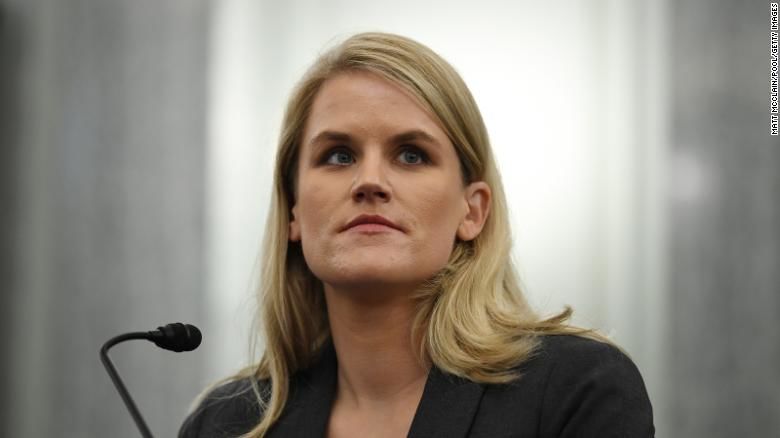
Facebook whistleblower, Frances Haugen appears before the Senate Commerce, Science, and Transportation Subcommittee.


A low-level employee


Facebook's other attempt to undermine the whistleblower was to portray Haugen as a low-level employee who doesn't know what she is talking about. But that strategy appears to be backfiring, too.

Samidh Chakrabarti was head of "civic engagement" at Facebook. Chakrabarti had regularly been put forward by the company to speak publicly about the good work Facebook was doing, even being part of the press tour of the Facebook "war room" for the 2018 US Midterm elections. (The war room was later widely mocked as a publicity stunt.)

After her testimony Tuesday, Facebook described Haugen as "a former product manager at Facebook who worked for the company for less than two years, had no direct reports, never attended a decision-point meeting with C-level executives."

That prompted Chakrabati to respond on Twitter, "Well I was there for over 6 years, had numerous direct reports, and led many decision meetings with C-level execs, and I find the perspectives shared on the need for algorithmic regulation, research transparency, and independent oversight to be entirely valid for debate."

Unfortunately for Facebook, Haugen is on to something.

Comments

Oh ya 5 year ago
Talking about hitting and zuckersucker do you remember years ago they had weighted punching bags for kids. It was a cheap inflatable bag with a picture printed on it and when you punched it it stood back up. I think I had Howdy Duty printed on mine. Well one with zucks face could be a great selling idea. A punch a elbow or a bitch slap across his smug face would be a good start to lots of peoples day

Newsletter

Related Articles

Arab Press
0:00
0:00
Close
Trump says Israel ‘would not survive’ without US
Nvidia Reportedly Takes Vast Texas Data-Centre Lease to Underwrite AI Expansion
FIFA’s Private-Investment Plan for World Cup Rights Draws European Revolt
Following OpenAI's Cyberattack: 'Most Companies Still Do Not Understand What Is Coming'
OpenAI Sued After ChatGPT Allegedly Discouraged Emergency Care Before Near-Fatal Embolism
Miliband Sets Climate and International Law at Centre of UK Diplomacy
Pentagon Discloses Nearly 100 US Troop Injuries During Renewed Iran Fighting
Trump Readies New Tariffs as Temporary Global Levy Nears Expiry
High Prices Push Coffee Drinkers Toward Whole Beans and Home Brewing
Trump Draws Boos and Podium Scrutiny at Spain’s World Cup Triumph
Spain Defeats Argentina in Extra Time to Win Second World Cup
Turkey Explores S-400 Transfer to UAE in Bid to Rejoin F-35 Program
US Retaliates Against Iran After Two American Troops Killed in Jordan
Proposed U.S.-Saudi Nuclear Pact Could Permit Limited Uranium Enrichment Under International Safeguards
Why Kentucky Fried Chicken Became KFC—and Why the False Explanations Persist
Iran Claims It Destroyed Bahrain’s Main Artificial Intelligence Center in Missile and Drone Strike
Ukrainian Drones Strike Wildberries Warehouses Deep Inside Russia
Reported CIA Mission Helped Clear the UAE’s Path to Advanced US AI Chips
Artificial Intelligence Capital Fuels Markets While Governments and Regulators Face Mounting Strategic Tests
China’s Moonshot’s Kimi K3 Narrows the Gap With Anthropic Through Scale, Openness and Lower Cost
The Ledger Will Not Trust on Faith
Passenger Bound for Germany Refused to Sit Beside a Woman on a Plane — Then Slapped a Flight Attendant
Ukraine’s Leadership Rift Spills Into the Streets as Protesters Target Army Chief
The Ten World Cup Finals That Defined Football History
Smartphones Are Getting More Expensive, Sales Are Collapsing, and Even Apple Admits: "Prices Will Rise"
Leadership Change and Strategic Rivalry Redraw the Political Map
The AI Race Enters Its Infrastructure Era
Britain Nationalises British Steel to Protect Scunthorpe Production and Strategic Supply
Thomas Tuchel Faces Fierce Backlash After Tactical Retreat Costs England World Cup Final Berth
A Quiet Bastille Day: France Grapples with World Cup Heartbreak and Leftover Fireworks
Spain in Ecstasy: "We Feel Unbeatable, We Taught the Whole World a Lesson"
Harvard Astrophysicist to Lead U.S. Scientific Advisory on Unidentified Aerial Phenomena
Emergency Sirens Activated Across Bahrain as Interior Ministry Issues Shelter Directives
World Cup Visitors Turn American Big-Box Stores Into Souvenir Stops
Netflix Weighs Always-On Channels, Bundles and Short-Form Video
The AI Invoice Shock: Layoffs Didn't Save Managers Money — They Cost Them More
Concern: Sexually Transmitted Bacterium Among Men Develops Antibiotic Resistance
Passenger Partially Pulled Out of Ryanair Jet After Cabin Window Fails Mid-Flight
Severe Heatwave Drives Dangerous Ground-Level Ozone Pollution Across Two Thirds of European Union
The Physical and Electronic Barriers Disrupting Domestic Wireless Networks
France and Morocco Open World Cup Quarter-Finals as Collina Defends Refereeing
Tech Pulse: The Future of AI and Screen Culture
Global News Briefing: Escalating Geopolitical Tensions and Corporate Shakeups
Global News Brief: Escalating Conflicts, Public Health Crises, and World Cup Drama
Europe's Growing Struggle with Extreme Heat and Air Conditioning
Anthropic Reengineers Agentic Architecture to Shift Autonomous Workplace Automation to the Cloud
Logic Flaw in Windows 11 Permission Architecture Silently Consumes Hundreds of Gigabytes of Local Storage
Apple Advances Late-Stage Operating Systems with Fourth Beta Deployments
Global Crisis Alert: Escalating Middle East Tensions and UK Political Upheaval
Japanese Technology Firm Fujitsu Launches Advanced Artificial Intelligence Tool for Corporate Disclosures
×