Arab Press

بالشعب و للشعب
Thursday, Mar 12, 2026

Berlin warms to France’s ‘Buy European’ plans as global trade rules erode

Berlin warms to France’s ‘Buy European’ plans as global trade rules erode

Germany fears losing industrial champions because of unfair competition from state-backed US and Chinese rivals.

Threatened by a new U.S. subsidy package that could hammer EU industry, Germany is rowing back on its long-standing objections to schemes like France's "Buy European Act" that would set provisions on buying goods locally.

Berlin's increasing sympathy for the French approach is a stark sign that Germany fears the traditional trade order is melting, as Washington follows China's lead with massive state support for industry. As one of the EU's more commercially liberal nations, Germany has generally opposed French proposals for interventionist industrial strategy, reckoning such measures would break free-trade taboos.

The calculus is now changing, however, ahead of a gathering of EU trade ministers in Brussels on Friday and a meeting between German Chancellor Olaf Scholz and French Prime Minister Elisabeth Borne in Berlin.

America's Inflation Reduction Act, which grants $369 billion worth of subsidies and tax breaks to U.S. green businesses, will be high on the agenda of both meetings. EU countries fear that the U.S. law will suck investment out of Europe, and are fuming about discriminatory provisions that encourage consumers to "Buy American" when it comes to purchasing an electric vehicle.

With the time for peace talks with the U.S. running out amid little hope of an agreement, German officials are now open talking about not only funneling billions of state subsidies into key green technologies like batteries, wind power or hydrogen, but also creating controversial requirements that would, at least to a certain extent, privilege European production.

German Economy Minister Robert Habeck said Thursday that the EU needed a "strong answer" to the U.S. law, telling German daily Handelsblatt that this would involve faster approvals of state aid decisions by the European Commission, more subsidies and also "procurement of local products."

The latter point is crucial, as it edges toward a "Buy European Act" that French President Emmanuel Macron has been calling for, which would give preferences to the use of European components in crucial industries, similar to those the U.S. law offers to American products. However, it's likely to antagonize other trading partners as they would be disadvantaged.

While such local content provisions might help the EU to avoid an exodus of key industries and ensure that the bloc stays in the race to produce next-generation green technologies, including electric vehicles, they are seen as a sacrilege in the international trading system.
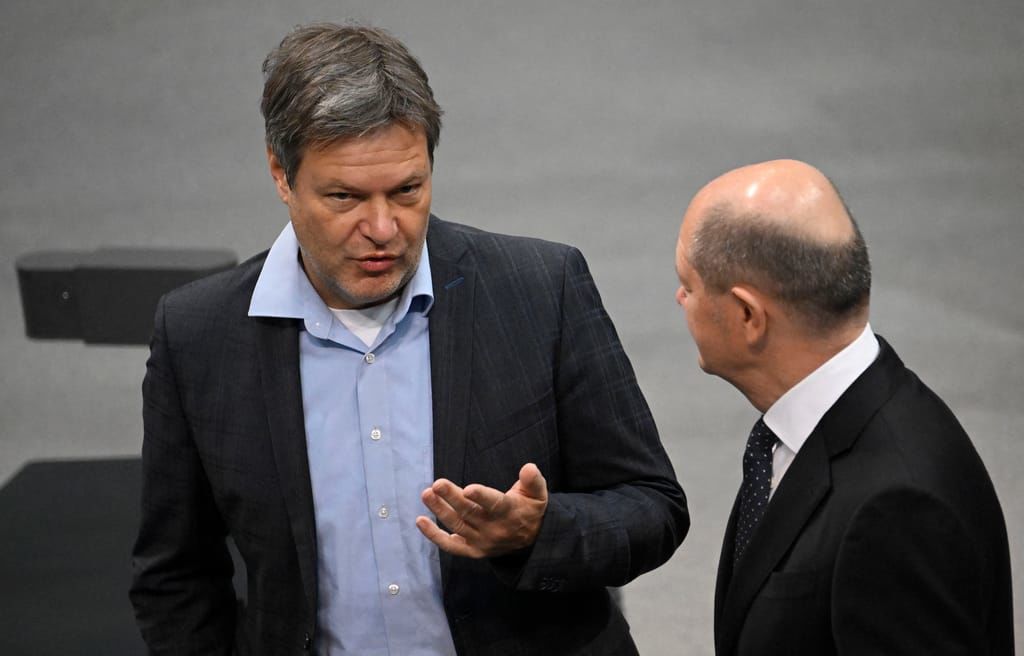

German Economy Minister Robert Habeck and Chancellor Olf Scholz, pictured November 23 2022

"The question of local content is very tricky, because it’s by definition very much against the core of World Trade Organization (WTO) rules, which is no discrimination against foreign companies," said Elvire Fabry, a senior research fellow at the Institut Jacques Delors.

Fabry warned that the EU "risks crossing the Rubicon" and losing its credibility as a custodian of global trading rules, on which the EU depends much more than the U.S. because of its high share of foreign trade.

Speaking at an economics summit in Berlin on Wednesday, Habeck accepted that the EU's actions should remain in line with multilateral trading rules "if possible," but also warned that, faced with unfair trading practices by the U.S. and China, it was not enough to just "criticize and complain."

Habeck said that local content requirements had long been "unfamiliar" to the EU, but stressed that Europe had already taken such a path in the field of microchip production.

He suggested that such a measure might qualify for an exemption under global trading rules as long as the EU can prove that it's not about creating "national" advantages but instead about "the strategic need for sovereignty, also in the area of energy policy."

Newsletter

Related Articles

Arab Press
0:00
0:00
Close
Iran warns of $200 oil as forces target merchant ships in Gulf
Japan to Release 45 Days of Oil Reserves Amid Iran Conflict
Three Commercial Vessels Attacked Near Strait of Hormuz, Thai-Flagged Ship Damaged and Crew Evacuated
Saudi Red Sea Oil Exports Set for Record in March as Kingdom Reroutes Crude Amid Hormuz Crisis
Saudi Arabia Seeks Belgian Military Support After Iranian Missile Attacks
Saudi Arabia Welcomes US Decision to Designate Sudan’s Muslim Brotherhood as Terrorist Organisation
Saudi Aramco Plans Dual Gulf and Red Sea Export Routes as Iran Crisis Disrupts Oil Shipments
Saudi Cabinet Condemns Iranian Attacks and Reaffirms Kingdom’s Right to Defend Its Sovereignty
Ukraine Deploys Counter-Drone Teams to Gulf States as Iranian Drone Threat Expands
Bahrain Grand Prix Faces Uncertainty as Saudi Arabia Works to Keep Formula One Race on Track
Saudi Arabia Faces New Strategic Dilemma in Yemen as Regional War Reshapes Calculations
OPEC Confirms Saudi-Led Oil Output Increase as Iran War Disrupts Global Energy Markets
Pakistan Pledges Rapid Support for Saudi Arabia Amid Escalating Middle East Tensions
Global Energy Agency Announces Record Release of 400 Million Barrels to Stabilize Oil Markets Amid Hormuz Disruption
Aramco Warns Global Oil Market Faces ‘Catastrophic’ Shock if Strait of Hormuz Remains Closed
Iran Launches Drone and Missile Attacks Across Gulf Targets Including Saudi Arabia, Kuwait and Bahrain
Saudi Arabia Elevates Fahad Al-Saif as Vision 2030 Enters Crucial Implementation Phase
Saudi Aramco Expands Routes to Move Oil Without Reliance on the Strait of Hormuz
Saudi Arabia and Pakistan Reaffirm Mutual Defense Cooperation Following Iran Strike
Saudi Arabia Plans Major Ukrainian Arms Deal to Counter Iranian Drone Threat
Pentagon Signals Intensification of U.S. Air Campaign as Iran Conflict Escalates
U.S. Senator Lindsey Graham Raises Prospect of Mutual Defense Pact With Saudi Arabia Amid Iran Conflict
Why Saudi Arabia Is Unlikely to Have Wanted U.S. Airstrikes on Iran
Saudi Arabia’s Red Sea Oil Exports Set to Reach Record High as Gulf Routes Face Disruption
Saudi Arabia Pushes East–West Oil Pipeline Toward Full Capacity as Hormuz Crisis Disrupts Global Energy Flows
Oil Prices Retreat From Peak as G7 Weighs Release of Strategic Reserves
Pentagon Identifies U.S. Soldier Who Died After Iranian Strike on Saudi Air Base
Why Saudi Arabia’s $50 Billion ‘The Line’ Megacity Slowed — and How Artificial Intelligence Is Reshaping the Plan
United States Withdraws Diplomatic Staff from Saudi Arabia and Southeast Turkey as Regional Conflict Escalates
Fanatics Moves Tom Brady Flag Football Showcase from Saudi Arabia to Los Angeles Amid Regional War
Saudi Arabia Seeks Strategic Support from Pakistan After Iranian Missile and Drone Attacks
Saudi Arabia Begins Oil Output Cuts as Hormuz Disruption Forces Storage Limits
Saudi Arabia Travel Advisory Tightened as Middle East War Triggers Regional Security Alerts
Saudi Arabia Warns Iran It Will Be ‘Biggest Loser’ as Drone Strikes Spread Across Gulf States
Lindsey Graham Urges Saudi Arabia to Join US Effort Against Iran as War Expands
Saudi Crown Prince Holds Strategic Calls With Spanish and Ukrainian Leaders Amid Regional Tensions
Kuwait’s Jazeera Airways Shifts Operations to Saudi Arabia Amid Regional Airspace Disruptions
Saudi Arabian Grand Prix: Why Jeddah’s Night Race Has Become One of Formula One’s Most Distinctive Events
F1 Leadership Addresses Bahrain and Saudi Arabia Races as Middle East Conflict Raises Safety Concerns
Zelenskyy Offers Saudi Crown Prince Assistance to Counter Iranian Drone Threat
Seventh U.S. Service Member Dies from Injuries After Iranian Strike in Saudi Arabia
Civilian Infrastructure Increasingly Hit as Iran Conflict Expands and Saudi Arabia Reports First Fatalities
Saudi Arabia Warns Iran to Halt Attacks and Signals Potential Retaliation
US Embassy in Riyadh Issues Security Alert Urging Americans to Shelter in Place Amid Regional Attacks
Projectile Strike on Saudi Residential Building Kills Two as Regional Conflict Expands
Saudi Arabia Warns Iran While Expanding Diplomatic Efforts to Contain Widening Middle East War
Iran’s President Rejects U.S. Surrender Demand as Drone and Missile Strikes Hit Gulf States
Saudi Arabia Intercepts Drone Swarm Targeting Strategic Shaybah Oil Field
Pakistan Faces Growing Pressure to Balance Ties With Iran and Saudi Arabia as Regional War Intensifies
Middle East Conflict Tests Mohammed bin Salman’s Vision to Transform Saudi Arabia Into a Global Hub
×