Arab Press

بالشعب و للشعب
Thursday, Feb 26, 2026

Biden blocks Trump-era gig-worker rule

Biden blocks Trump-era gig-worker rule

Decision removes an extra layer of assurance gig companies wanted to prevent workers from being classified as employees

The Biden administration is blocking a Trump-era regulation that would have made it easier to classify gig workers and others as independent contractors, a policy that had been sought by companies such as food-delivery and ride-sharing services.

The Labor Department said Wednesday it is nullifying a rule it completed in early January that sought to make it more difficult for a gig worker to be counted as an employee under federal law. Having status as an employee, rather than a contractor, means those workers are covered by federal minimum-wage and overtime laws.

Employees are also better positioned than contractors to organize into labor unions. The Biden administration has made creating union jobs a priority.

The Labor Department is acting this week to block the rule before it was implemented Friday, following a common practice of presidents of different parties undoing the prior president’s pending rules early in a new administration.

Nullifying the Trump rule maintains the decades long status quo, which has largely allowed app-based services to not count drivers and other providers as employees. But Wednesday’s action removes an extra layer of assurance gig-economy companies had sought as a way, they said, to modernize labor laws.

The Labor Department isn’t planning to offer new regulations for independent contractors in the near future, said Jessica Looman, principal deputy administrator for the department’s Wage and Hour Division.

"We are going back to the decade’s old analysis and we really feel that this is the space where we can best protect workers," she said on a call with reporters. "When it comes to digital workers...we want to make sure that we continue to look at their needs, how they are interacting with their individual employers and whether or not they have the protections of the Fair Labor Standards Act."

By blocking the Trump rule, the Labor Department will continue to use its previous regulation to enforce the Fair Labor Standards Act, which was enacted in 1938. While Wednesday’s action doesn’t immediately change how gig workers are classified, it leaves ambiguity about how a Depression-era law will be applied to a smartphone economy. Ms. Looman said the department will look for opportunities to enforce existing laws, especially as they apply to lower-wage workers.
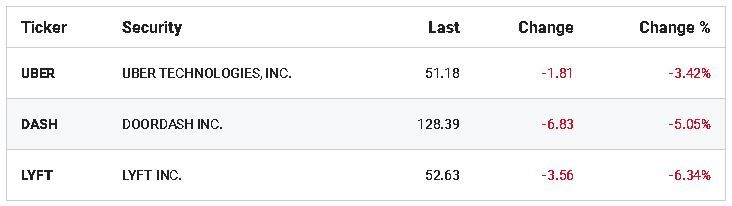

She said Wednesday’s announcement should not dramatically change how the department regulates app-based services but said the department is engaging with those companies and others about labor-law enforcement.

"The fact that we are moving and are embracing a pro-worker position doesn’t mean that we’re anti-employer," Ms. Looman said.

Earlier this year, Uber Technologies Inc. applauded the Trump rule, saying it recognized the flexibility gig workers sought and called the previous regulation—which now is remaining in place—outdated. Trump administration officials said their rule made it easier for Americans to be self-employed and set their own hours.

The Trump rule, announced on Jan. 6, was to be implemented on March 8, but the Labor Department delayed it from going into effect until Friday, as part of President Biden’s broader freeze on pending regulations.

Labor Secretary Marty Walsh, in an April interview with The Wall Street Journal, said that legitimate independent contractors are an important part of our economy, but the Trump-era rule made it too easy to deny workers employee status.

"We’ve seen employers are increasingly misclassifying their workers as independent contractors in order to reduce labor costs and take a lot of protections away from workers, including minimum wage and overtime," Mr. Walsh said.

The back-and-forth contractor regulations are in part a response to California rules applied to gig companies.

In November, voters in California exempted Uber, Lyft, DoorDash and others from a state law that would have forced them to reclassify their drivers as employees, eligible for broad employment benefits. While the exemption allowed the companies to preserve their business models in the most populous U.S. state, they did concede some new benefits such as health insurance for drivers who worked 15 hours or more a week, occupational-accident insurance coverage and 30 cents for every mile driven.

At the time, the companies said they would lobby to make this model—flexibility for drivers with limited benefits—the national standard.

Newsletter

Related Articles

Arab Press
0:00
0:00
Close
SECRETARY RUBIO on IRAN: Iran poses a very great threat to the United States, and has for a very long time.
Larry Summers, the former U.S. Treasury Secretary, is resigning from Harvard University as fallout continues over his ties to Jeffrey Epstein.
U.S. stocks ended higher on Wednesday, with the Dow gaining about six-tenths of a percent, the S&P 500 adding eight-tenths of a percent, and the tech-heavy Nasdaq climbing roughly one-and-a-quarter percent.
Nvidia posted better than expected results for the January quarter on Wednesday and forecast current quarter revenue above market estimates.
Saudi Arabia’s Coffee Renaissance Gains Momentum as Investment and Heritage Drive Industry Growth
Saudi Shipping Leader Bahri Expands Fleet as Tanker Rates Approach $200,000 a Day
Saudi Arabia Advances First National Urban Policy Through High-Level Leadership and Institutional Alliances
Major Life Sciences Summits to Spotlight Saudi Arabia’s Rise as Regional Biotech and Pharma Hub
Saudi Arabia Reframes Red Sea and Horn of Africa Strategy Amid Rising Security and Trade Stakes
Saudi Arabia Recalibrates Its Role in Shifting Regional and Global Power Dynamics
Saudi Retail Signals to Global Brands: Localise or Lose Ground in a Rapidly Evolving Market
Saudi Arabia Looks to Human Capital Investment to Unlock Demographic Dividend
Saudi Arabia and Iran Increase Oil Exports Amid Escalating Middle East Tensions
Saudi Data Protection Authority Intensifies Enforcement Under Personal Data Law
Saudi Arabia Raises Oil Output and Exports Amid Contingency Planning Over Iran Tensions
USS Gerald R Ford Arrives in Souda, Crete
Saudi Sovereign Wealth Fund Unit Expands Push Into Global Private Credit
Saudi Arabia Eases Headquarters Rules to Attract More Foreign Firms
Saipem Secures Major Offshore Pipeline Contract in Saudi Arabia
Saudi Arabia’s Targeted Oil Export Cuts to the US Seen as Strategic Signal Amid Global Supply Glut
Nemetschek Arabia Signs Strategic MoU with Saudi Facility Management Association
Gulf Markets Close Mixed as Saudi Shares Slip on Budget Deficit Concerns
Saudi Arabia Posts Largest Quarterly Budget Deficit in Years Amid Weaker Oil Revenues and Higher Spending
U.S. Lawmaker Urges Safeguards on Saudi Civil Nuclear Deal as Trump Administration Advances Agreement
Saudi Arabia and Gulf Allies Rally Behind Kuwait in Escalating Maritime Border Dispute with Iraq
Universal Aviation Secures License to Operate and Manage New General Aviation Terminal in Dammam
Tucker Carlson’s Saudi Arabia Remarks Spark Debate Over Israel Stance
GCC Secretary-General Holds Talks with EU Ambassador in Riyadh
Gulf States’ AI Investment Drive Seen as Strategic Bet on Technology and U.S. Security Ties
African Union Commission Chair Meets Saudi Vice Foreign Minister to Deepen Strategic Cooperation
President El-Sisi Holds Strategic Talks with Saudi Crown Prince in Riyadh
Lucid Unveils Up to $12,000 Incentive for Air and Gravity Models in Saudi Arabia
Saudi Arabia Enters Global AI Partnership, Expanding Its Role in International Technology Governance
Saudi Arabia’s Landmark U.S. LNG Agreement Signals Major Strategic Shift
Saudi Arabia Accelerates Global Gaming Push with Billion-Dollar Deals and Expanded PIF Mandate
Saudi Arabia Reports $25.28 Billion Budget Deficit in Fourth Quarter of 2025
Alvarez & Marsal Tax Establishes Dedicated Pillar Two and Transfer Pricing Team in Saudi Arabia
United States Approves Over Fifteen Billion Dollars in Major Arms Sales to Israel and Saudi Arabia
Pre-Iftar Walks Gain Momentum as Ramadan Wellness Trend Spreads
Middle East Jackup Rig Fleet Contracts Further After Saudi Drilling Suspensions
Türkiye and Saudi Arabia Prepare to Sign Five Gigawatt Renewable Energy Deal at COP31
King Mohammed VI Congratulates Saudi Leadership on Founding Day, Reaffirming Strategic Ties
US Envoy Huckabee Clarifies Remarks on Israel After Expansionism Controversy
Saudi Arabia Introduces Limited Exceptions to Regional Headquarters Requirement for Foreign Firms
Saudi Arabia Joins Global Partnership on Artificial Intelligence, Elevating Its Role in Shaping AI Governance
Saudi Arabia and Arab States Mobilise Diplomatically After U.S. Envoy’s Israel Remarks
Cristiano Ronaldo Reaffirms His Commitment to Saudi Arabia Amid Transfer Speculation
Proposed US-Saudi Nuclear Deal Raises Questions Over Uranium Enrichment Provisions
Saudi Arabia Sends 81st Aid Flight to Gaza as Humanitarian Air Bridge Continues
Global Games Show Riyadh 2026 Positioned as Catalyst for Saudi Arabia’s Vision 2030
×