Arab Press

بالشعب و للشعب
Saturday, Jan 24, 2026

China would prefer Biden stability to Trump chaos, ex-US envoy says
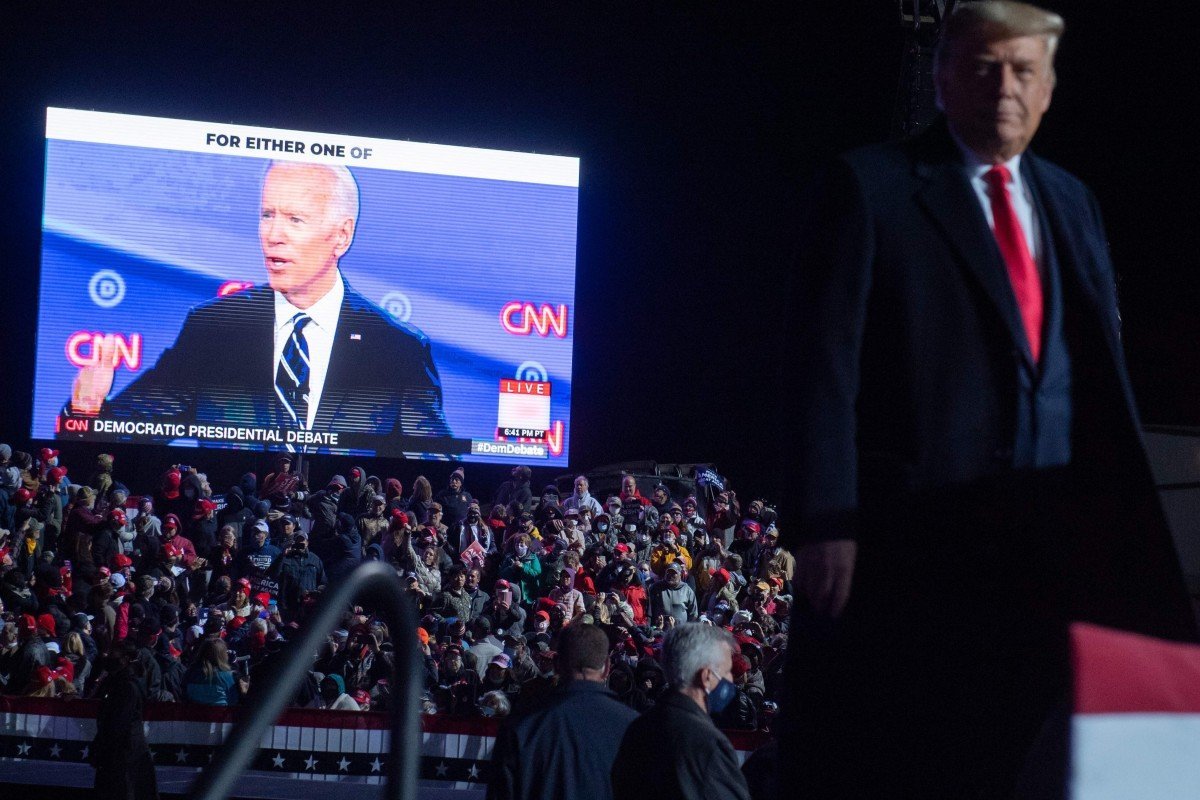
China would prefer Biden stability to Trump chaos, ex-US envoy says

Ahead of next week’s US presidential election, former American ambassador to China Max Baucus says Joe Biden represents a break from a ‘president that doesn’t work with his advisers’.


Former ambassador to China Max Baucus says Beijing would probably prefer Joe Biden as president over Donald Trump.

After four years of unpredictability and US President Donald Trump tweeting “whatever is on his mind in the middle of the night”, China would probably prefer the relative stability that a Joe Biden presidency would bring, America’s former ambassador to Beijing says.

The comments from Max Baucus – the top US envoy to China between 2014-17, and an adviser on China policy to Joe Biden’s presidential campaign – can be added to a maelstrom that views on whether Beijing would prefer four more years of Trump or a more ostensibly conventional White House, a debate which has raged for most of Trump’s first term.

Yet, sources inside China and experts on the country vary wildly in their perception of how the US election is viewed in Zhongnanhai, the Chinese leadership compound.

In a wide-ranging interview with the South China Morning Post , Baucus acknowledged China would be “somewhat conflicted” ahead of next week’s election. But conversations with well-placed contacts in Beijing have led him to believe China would prefer more stable superpower ties.

“I think China finds Trump a bit of a nuisance, but they also find Trump leading the US down the primrose path of decline, which obviously helps China,” Baucus said, adding any remaining reformers within the Chinese government would also be emboldened by a “restoration of the resilience of American democracy”.

“On the other hand, President Xi Jinping – as the Chinese do generally – wants stability, he doesn’t want to rock the boat.

“In the Biden presidency, there’s more stability. You don’t see a president, just on his Twitter account, say whatever is on his mind in the middle of the night, or a president that doesn’t work with his advisers.”

Trump vs Biden: The 2020 US presidential election


Trump has also said Beijing would prefer a Biden presidency, telling Fox News this month that “if Biden wins, China will own the United States”.

But others, including Long Yongtu , China’s former vice-minister of foreign trade and point man during China’s 15-year talks to join the World Trade Organization nearly two decades ago, have said Trump’s re-election would be welcomed in Beijing.

Echoing other advisers, Baucus said if Biden was elected he would review Trump’s China policies, such as trade tariffs, sanctions and export controls. But given the bipartisan support for many of them, they may be there to stay, he added.

“There is going to be pressure to maintain current tariffs on Chinese imports to the US, to maintain the Entity List, sanctions on companies and actors that violate the provisions of the Entity List,” he said.

“Same with any companies with ties to the [People’s Liberation Army], the human rights sanctions – provisions related to Hong Kong’s special status for example – a lot of that will continue for a while until he figures out exactly what he wants to do with China.”

In an interview with Reuters on Wednesday, key Biden advisers Jeffrey Prescott and Brian McKeon said the Democratic challenger would “immediately consult America’s main allies before deciding on the future of US tariffs on China”.

Baucus, who served as a Democratic Party senator for Montana from 1978 to 2014, said he did not see sanctions on Chinese officials and entities for human rights abuses in Xinjiang or related to Hong Kong’s national security law being lifted “for the foreseeable future”.

The US Electoral College: how does it work and why does it exist?


Such a reset would require an end to “the free fall” in relations, and an about-face in the policies of Xi, who Baucus said has “given himself a black eye” over Xinjiang and its coverage in global media.

Baucus was sceptical as to whether the Obama administration he served under could have done more to prevent China’s “inevitable” course of action on Hong Kong.

“The United States, the UK, Canada, European countries have expressed deep concern about human rights in Hong Kong. But to be candid, I don’t know where the leverage is to do much about it,” said the retired diplomat.

Hong Kong, Tibet, Xinjiang were core issues for Xi Jinping who would do whatever it takes to protect them, he added.

Baucus said there was a noticeable shift in China’s behaviour during his time in the country.

Beijing’s “Made in China 2025” initiative, its “salami slicing” territorial expansion in the South China Sea and its draconian social credit system signalled a turn towards a more insular domestic policy and an aggressive foreign policy, he said.

US-China relations: Joe Biden would approach China with more ‘regularity and normality’


Since then, China’s “wolf warrior” diplomacy combined with Trump’s “American First” doctrine has helped bilateral ties deteriorate.

“Many people mentioned the Thucydides Trap, and I think there’s some merit to that. Not that we’re definitely going to fall into the trap, but we’re certainly moving in that direction,” Baucus said in reference to the voguish theory that war is inevitable when an emerging power encounters an incumbent one.

“And whether the trap springs depends upon how well we manage the relationship. But certainly some of that is accelerated by two presidents who somewhat fanned the flames of nationalism. ”

Newsletter

Related Articles

Arab Press
0:00
0:00
Close
Saudi-Backed LIV Golf Confirms Return to Trump National Bedminster for 2026 Season
Gold Jumps More Than 8% in a Week as the Dollar Slides Amid Greenland Tariff Dispute
Boston Dynamics Atlas humanoid robot and LG CLOiD home robot: the platform lock-in fight to control Physical AI
United States under President Donald Trump completes withdrawal from the World Health Organization: health sovereignty versus global outbreak early-warning access
Trump Administration’s Iran Military Buildup and Sanctions Campaign Puts Deterrence Credibility on the Line
Tech Brief: AI Compute, Chips, and Platform Power Moves Driving Today’s Market Narrative
NATO’s Stress Test Under Trump: Alliance Credibility, Burden-Sharing, and the Fight Over Strategic Territory
Saudi Arabia’s Careful Balancing Act in Relations with Israel Amid Regional and Domestic Pressures
Greenland, Gaza, and Global Leverage: Today’s 10 Power Stories Shaping Markets and Security
America’s Venezuela Oil Grip Meets China’s Demand: Market Power, Legal Shockwaves, and the New Rules of Energy Leverage
Trump’s Board of Peace: Breakthrough Diplomacy or a Hostile Takeover of Global Order?
Prince William to Make Official Visit to Saudi Arabia in February
Saudi Arabia Advances Ambitious Artificial River Mega-Project to Transform Water Security
Saudi Crown Prince and Syrian President Discuss Stabilisation, Reconstruction and Regional Ties in Riyadh Talks
Mohammed bin Salman Confronts the ‘Iranian Moment’ as Saudi Leadership Faces Regional Test
Cybercrime, Inc.: When Crime Becomes an Economy. How the World Accidentally Built a Twenty-Trillion-Dollar Criminal Economy
Strategic Restraint, Credible Force, and the Discipline of Power
Donald Trump Organization Unveils Championship Golf Course and Luxury Resort Project in Saudi Arabia
Inside Diriyah: Saudi Arabia’s $63.2 Billion Vision to Transform Its Historic Heart into a Global Tourism Powerhouse
Trump Designates Saudi Arabia a Major Non-NATO Ally, Elevating US–Riyadh Defense Partnership
Trump Organization Deepens Saudi Property Focus with $10 Billion Luxury Developments
There is no sovereign immunity for poisoning millions with drugs.
Mohammed bin Salman’s Global Standing: Strategic Partner in Transition Amid Debate Over His Role
Saudi Arabia Opens Property Market to Foreign Buyers in Landmark Reform
The U.S. State Department’s account in Persian: “President Trump is a man of action. If you didn’t know it until now, now you do—do not play games with President Trump.”
CNN’s Ranking of Israel’s Women’s Rights Sparks Debate After Misleading Global Index Comparison
Saudi Arabia’s Shifting Regional Alignment Raises Strategic Concerns in Jerusalem
OPEC+ Holds Oil Output Steady Amid Member Tensions and Market Oversupply
Iranian Protests Intensify as Another Revolutionary Guard Member Is Killed and Khamenei Blames the West
President Trump Says United States Will Administer Venezuela Until a Secure Leadership Transition
Delta Force Identified as Unit Behind U.S. Operation That Captured Venezuela’s President
Saudi-UAE Rift Adds Complexity to Middle East Diplomacy as Trump Signals Firm Leadership
OPEC+ to Keep Oil Output Policy Unchanged Despite Saudi-UAE Tensions Over Yemen
Saudi Arabia and UAE at Odds in Yemen Conflict as Southern Offensive Deepens Gulf Rift
Abu Dhabi ‘Capital of Capital’: How Abu Dhabi Rose as a Sovereign Wealth Power
Diamonds Are Powering a New Quantum Revolution
Trump Threatens Strikes Against Iran if Nuclear Programme Is Restarted
Why Saudi Arabia May Recalibrate Its US Spending Commitments Amid Rising China–America Rivalry
Riyadh Air’s First Boeing 787-9 Dreamliner Completes Initial Test Flight, Advancing Saudi Carrier’s Launch
Saudi Arabia’s 2025: A Pivotal Year of Global Engagement and Domestic Transformation
Saudi Arabia to Introduce Sugar-Content Based Tax on Sweetened Drinks from January 2026
Saudi Hotels Prepare for New Hospitality Roles as Alcohol Curbs Ease
Global Airports Forum Highlights Saudi Arabia’s Emergence as a Leading Aviation Powerhouse
Saudi Arabia Weighs Strategic Choice on Iran Amid Regional Turbulence
Saudi Arabia Condemns Sydney Bondi Beach Shooting and Expresses Solidarity with Australia
Washington Watches Beijing–Riyadh Rapprochement as Strategic Balance Shifts
Saudi Arabia’s Vision 2030 Drives Measurable Lift in Global Reputation and Influence
×