Arab Press

بالشعب و للشعب
Monday, Mar 09, 2026

COVID during the World Cup in Qatar: Should you be worried?

COVID during the World Cup in Qatar: Should you be worried?

The World Cup 2022 will be one of the first major sporting events since the start of the COVID-19 pandemic that will not have limitations on crowd numbers, and all eight stadiums will be allowed to fill to their maximum capacities.

The tournament kicks off on November 20 in Qatar and is expected to attract more than 1.2 million people to witness the biggest sporting event in the world.

In recent months, music festivals, political gatherings and business events have taken place with little to no health-related limitations.

Qatari authorities dropped COVID-related travel restrictions starting on Tuesday, including mandatory pre-arrival testing, so fans travelling from abroad will no longer need to show a negative COVID-19 test before boarding their flights to Qatar.
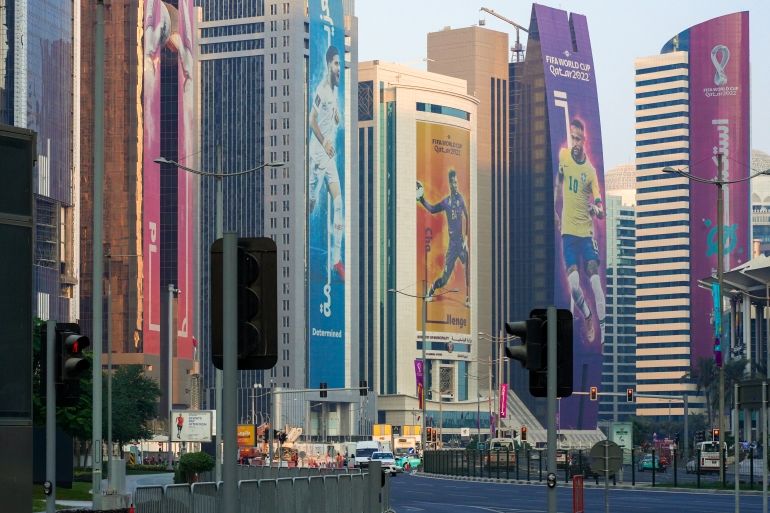
FIFA World Cup Qatar 2022 posters on buildings in the capital, Doha


COVID-related hospitalisations and deaths are dropping, but as winter looms in the Northern Hemisphere and people spend more time indoors, health experts are warning of another global coronavirus wave.

In October, the World Health Organization and the European Centre for Disease Prevention and Control said Europe was entering its third pandemic winter and COVID-19 and seasonal influenza were “co-circulating”, increasing risks for vulnerable communities, such as the elderly and people with disabilities.

In the United States, cases of the new Omicron subvariants BQ.1 and BQ1.1 have doubled in recent weeks and could lead to a large surge of COVID-19 cases, according to some scientists.

To date, there have been more than 629 million confirmed infections globally and almost 6.6 million deaths.


World Cup guidelines


While announcing its new health regulations, Qatar’s government said the contact-tracing app Ehteraz will no longer be necessary for entering any buildings except for health facilities.

On October 19, the government also announced that masks will no longer be required on public transport.

In a statement about the rollback of health controls, the health ministry pointed to the national vaccination programme and the continuing drop of COVID-19 cases in Qatar and around the world.

Cases in the Gulf country of 2.9 million people have decreased 34 percent from September 19 to October 17. To date, the country has recorded more than 465,000 infections and over 680 deaths since the pandemic began.


‘Pandemic not over’


A resident of Qatar told Al Jazeera that she understood why restrictions were being removed, but she said it was still important to “keep your guard up”.

“For more than two years now, we have had a safety net of sorts,” said the resident, who wished to remain anonymous. “We had mask mandates, the need to be vaccinated, boosted and what not.

“Now it will mostly be gone. It makes me very uneasy because it’s not like the pandemic is over.”

Laith Abu-Raddad, a professor of Infectious Disease Epidemiology at Cornell University in Doha, said a large number of people coming together at the World Cup can result in more infections.

“There will be lots of mass gatherings, where people will be close to each other – inside the stadium, queues outside, fan zones, parties indoors where friends will watch the games together,” he told Al Jazeera. “This is why it is important for everyone to keep at least some measures of caution and avoid crowding in close proximity to other people.”
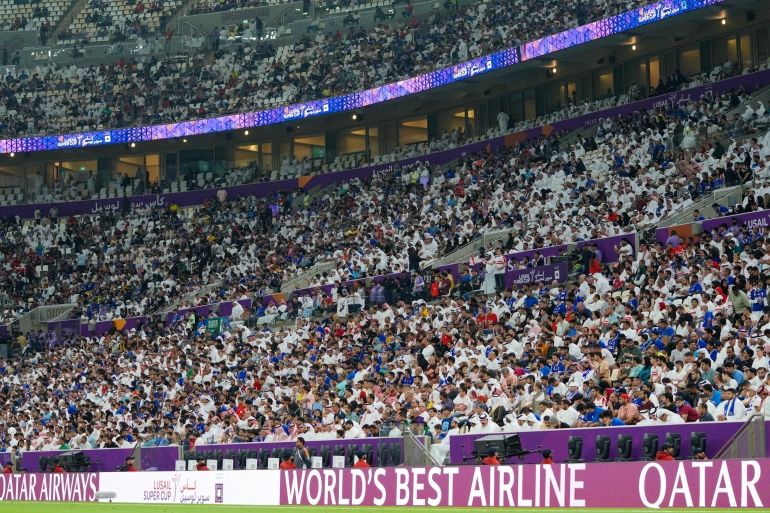
All stadiums in Qatar are expected to fill to their maximum capacities during the World Cup


Abu-Raddad said it was “extremely important” for those over 50 to get their booster shots.

“This is really the simplest thing anyone can do to protect themselves because older people and people with co-morbidities are the people who have the highest risk,” he said.


Numbers unlikely to reach ‘serious levels’


Yet Zein Abid, who works as a security guard in Doha, said he and his friends have “almost forgotten” about COVID-19 and how it had previously “taken over” their lives for two and a half years.

“It’s something we have come to live with,” Abid told Al Jazeera. “I feel Qatar has handled the pandemic better than most countries … Death rates have been low. I think we will be fine.”

Abu-Raddad said that while he expects a rise in infections during the World Cup, the number of severe cases and hospitalisations were unlikely to reach “serious levels”.

For one thing, he said, there are high levels of immunity worldwide. More than 69 percent of people on the planet have received at least one dose of a COVID vaccine while 64 percent are fully vaccinated.

“Fans will be coming for a few days,” Abu-Raddad added. “It’s not like they’re coming here for a long time where they were going to get infected, infect others and be hospitalised here.”


Newsletter

Related Articles

Arab Press
0:00
0:00
Close
Saudi Crown Prince Holds Strategic Calls With Spanish and Ukrainian Leaders Amid Regional Tensions
Kuwait’s Jazeera Airways Shifts Operations to Saudi Arabia Amid Regional Airspace Disruptions
Saudi Arabian Grand Prix: Why Jeddah’s Night Race Has Become One of Formula One’s Most Distinctive Events
F1 Leadership Addresses Bahrain and Saudi Arabia Races as Middle East Conflict Raises Safety Concerns
Zelenskyy Offers Saudi Crown Prince Assistance to Counter Iranian Drone Threat
Seventh U.S. Service Member Dies from Injuries After Iranian Strike in Saudi Arabia
Civilian Infrastructure Increasingly Hit as Iran Conflict Expands and Saudi Arabia Reports First Fatalities
Saudi Arabia Warns Iran to Halt Attacks and Signals Potential Retaliation
US Embassy in Riyadh Issues Security Alert Urging Americans to Shelter in Place Amid Regional Attacks
Projectile Strike on Saudi Residential Building Kills Two as Regional Conflict Expands
Saudi Arabia Warns Iran While Expanding Diplomatic Efforts to Contain Widening Middle East War
Iran’s President Rejects U.S. Surrender Demand as Drone and Missile Strikes Hit Gulf States
Saudi Arabia Intercepts Drone Swarm Targeting Strategic Shaybah Oil Field
Pakistan Faces Growing Pressure to Balance Ties With Iran and Saudi Arabia as Regional War Intensifies
Middle East Conflict Tests Mohammed bin Salman’s Vision to Transform Saudi Arabia Into a Global Hub
Proposed U.S.–Saudi Nuclear Deal Could Ease Traditional Nonproliferation Requirements
Iran Claims Strike on U.S.-Linked Oil Tanker Near Saudi Waters as Maritime Tensions Escalate
Saudi Arabia Says Air Defences Destroyed 23 Drones and Three Missiles Amid Escalating Regional Conflict
Saudi Arabia Warns Iran Against ‘Miscalculation’ After Missile and Drone Attacks Across Gulf
Iranian Missiles Intercepted Across Gulf as Air Defences Activate in Saudi Arabia, Qatar, UAE and Bahrain
U.S. Justice Department Pursues Criminal Cases Against Cuban Officials in New Legal Push
Abrupt Cancellation of U.S. Army Exercise Sparks Speculation Over Possible Middle East Deployment
Saudi Arabia Led OPEC Output Surge Ahead of Iran Strikes, Survey Finds
Cristiano Ronaldo Travels to Spain for Hamstring Treatment After Injury in Saudi Pro League Match
Saudi Aramco Reroutes Oil to Red Sea as Strait of Hormuz Disruptions Hit Gulf Exports
Saudi Arabia Presses Ahead With Economic Diversification Despite Fiscal and External Deficits
Middle East Conflict Puts Bahrain and Saudi Arabian Formula One Races at Risk
Iran Targets Israeli Diplomatic Site in Bahrain and US Air Base in Qatar as Regional Conflict Expands
Saudi Arabia Intercepts Three Ballistic Missiles Targeting Prince Sultan Air Base
Iran Launches Fresh Missile and Drone Attacks Across Middle East as Regional War Intensifies
Saudi Arabia Opens Direct Communication Channel With Iran in Bid to Prevent Wider Regional War
Saudi Arabia Maintains Strong Fiscal Position Despite Global Uncertainty, Finance Ministry Says
Saudi Arabia Considers Response After Iranian Drone Strike Hits Major Northern Oil Refinery
Saudi Carrier Flynas Plans Limited Flight Resumption to Dubai Amid Regional Tensions
Saudi Arabia and UAE Pledge Close Coordination to Secure Oil Supplies for Japan
Middle East Conflict Casts Doubt Over Bahrain and Saudi Arabian Formula One Races
Iran Rejects Claims of Attacks on Türkiye, Azerbaijan, Saudi Arabia and Oman
Saudi Arabia Condemns Iranian Strikes Targeting Türkiye and Azerbaijan
Saudi Pro League Orders Clubs to Continue Matches Despite Escalating Regional Conflict
Saudi Arabia Scrambles to Redirect Oil Exports as Gulf Storage Nears Capacity
U.S. Embassy in Riyadh Issues Emergency Security Alert After Drone Strike and Escalating Regional Threats
Iran Expresses Gratitude to Saudi Arabia for Closing Airspace During Escalating Conflict
Saudi Arabia Fears Iranian Strikes Could Target Senior Leaders as Regional War Escalates
Iran Says Its Strikes Target Only U.S. Military Assets and Denies Attacking Saudi Arabia
Drone Strike Hits U.S. Embassy in Riyadh as Middle East Conflict Escalates
Tom Brady’s Saudi Flag Football Event May Shift to U.S. as Middle East Conflict Disrupts Plans
Iran War Strikes Saudi Arabia at a Critical Moment for Its Economic Transformation
Saudi Cabinet Declares Kingdom Will Take All Necessary Measures to Defend National Security
United States Urges Citizens to Leave Fourteen Middle Eastern Countries as Iran War Escalates
Saudi Aramco’s Ras Tanura Refinery Targeted Again in Second Drone Attack Within Two Days
×