Arab Press

بالشعب و للشعب
Thursday, Feb 26, 2026

Cryptocurrency key terms: A guide to making sense of digital money

Cryptocurrency key terms: A guide to making sense of digital money

What's the difference between altcoins and stablecoins? What's hashing and mining? Sometimes the jargon around cryptocurrencies can make your head spin. Here's how to make sense of it all.

As with any new technology, cryptocurrency comes with its own jargon. For the uninitiated, this can be confusing, even intimidating, at first glance.

If you’re looking to buy, invest or trade in cryptos, a grasp of the most commonly used terms will go a long way to help you understand how blockchain and cryptocurrencies work.

Here are just some of the key terms you will come across:

Bitcoin


Bitcoin was invented in 2008 by a mysterious person or group named Satoshi Nakamoto. While it is now one of thousands of cryptocurrencies, it continues to hog the limelight as the first ever crypto.

Altcoin


"Alt" being short for alternative, altcoin is a term which applies to cryptocurrencies that aren’t Bitcoin and which followed in the wake of its launch.

Stablecoin


While Bitcoin and other altcoins are decentralised, stablecoins are pegged to something else of value, be it an existing currency like the US dollar, or a commodity, in order to make them less volatile.

Ethereum


Ethereum is an open-source, blockchain-based software platform that has its own cryptocurrency called ether. Much like Bitcoin, there are terms that are specific to dealing with Ethereum, including Solidarity, a coding language invented by the platform which is similar to JavaScript.

Non-fungible token (NFT)


While cryptos are fungible, meaning they can be exchanged on a one-to-one basis, NFTs are not interchangeable as they are of different values. NFTs are a form of cryptocurrency which hold assets like music and art rather than money.

Cryptography


The study of secure communications in which the sender and recipient are the only ones who are able to see a message. It’s the basis for blockchain technology used in cryptocurrency transactions.

Fiat currency


Fiat currencies are ones that are issued by governments or banks, but are not backed by a commodity, such as gold. Most modern paper currencies we use today are fiat currencies.

Commodity currency


Unlike fiat currencies, commodity currencies are linked to commodities such as gold, and fluctuate based on the world market value of those products or materials.
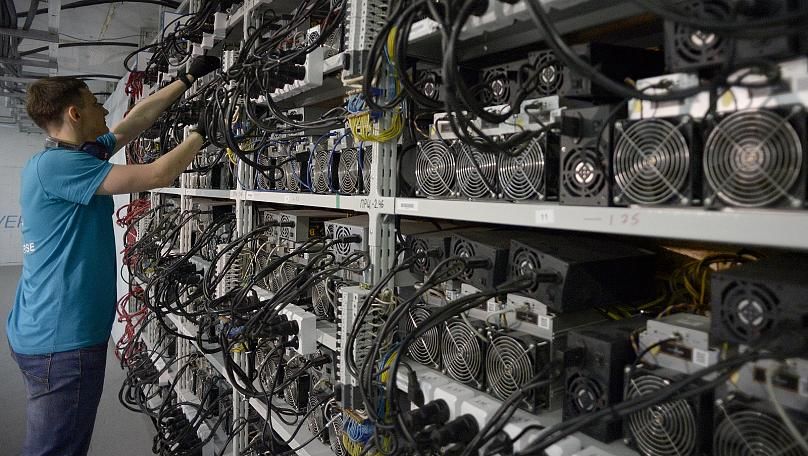
An employee inspects machines for the production of bitcoins at a mining centre.


Decentralised finance


Also known as DeFi, decentralised finance is the notion that crypto entrepreneurs can recreate a financial system outside the control of the government and traditional financial institutions like banks and brokerages using blockchain technology.

Blockchain


A block is one record of transaction data. Once a transaction is completed, it goes into the blockchain, which is a network of blocks that act as a public ledger that keeps a record of transactions, much as a bank would.

For every transaction, a new block is generated and added to the blockchain. Each block contains a mathematical puzzle with a unique answer which needs to be solved before it can be added to the blockchain. The more blocks that are added, the more secure the blockchain becomes.

Hashing


Hashing is the process of using a function or algorithm to encrypt and decrypt the data in each block. The hash code - or simply hash - can be used as a way of narrowing down the search for data when trying to validate each new block, known as mining.

Mining


The process of finding new coins and validating them for rewards, mining involves supercomputers to unlock blocks by solving - or "hashing" - the complicated mathematical puzzles within each one.

Mining rig


A rig is a computer specifically designed and used to mine for blocks.

Public key


This is the publicly available code that you share with people to receive cryptocurrency into your account.

Private key


This is the confidential code which you use to access your wallet where your cryptos are stored. Only you should have access to this. If someone else finds this key, your stored cryptos are vulnerable to theft.

Whale


As the name suggests, whales are players in the cryptocurrency pond who own large amounts of cryptos. By moving large amounts of cryptos in a sale or purchase, whales have the ability to significantly impact the market, so traders try to keep track of their activities.

Wallet


As with other terms, this is borrowed from our everyday financial vocabulary. Just as with fiat currencies, cryptos are stored in a virtual wallet to keep them safe.

Cold storage


Often regarded as more secure than a wallet, cold storage entails storing bitcoins offline in a device known as a hardware wallet. Owners tend to use both - a wallet for regular spending and cold storage for savings.

Paper wallet


A form of cold storage, a paper wallet is the printed version of your public and private keys on paper in the form of QR codes.

Satoshi or "sat"


As with physical currencies, Bitcoin comes in denominations. A Satoshi - named after Bitcoin’s creator - is the smallest denomination of this particular crypto, equating to 100 billionth of one Bitcoin.

Newsletter

Related Articles

Arab Press
0:00
0:00
Close
Cristiano Ronaldo Acquires 25 Percent Stake in Saudi-Owned Spanish Club Almería
U.S.–Saudi Relations Balance Transactional Deal-Making with Expanding Strategic Ambitions
Israel’s President Herzog Signals Cautious Message on Saudi Ties at UAE Iftar in Tel Aviv
United States and Saudi Arabia Strengthen Security Ties with Joint Explosive Ordnance Disposal Exercise
Saudi Arabia Responds to Israel–UAE Moves in Somalia as Regional Rivalries Intensify
Saudi Arabia Showcases Expanding Defense Ambitions at World Defense Show 2026
SECRETARY RUBIO on IRAN: Iran poses a very great threat to the United States, and has for a very long time.
Larry Summers, the former U.S. Treasury Secretary, is resigning from Harvard University as fallout continues over his ties to Jeffrey Epstein.
U.S. stocks ended higher on Wednesday, with the Dow gaining about six-tenths of a percent, the S&P 500 adding eight-tenths of a percent, and the tech-heavy Nasdaq climbing roughly one-and-a-quarter percent.
Nvidia posted better than expected results for the January quarter on Wednesday and forecast current quarter revenue above market estimates.
Saudi Arabia’s Coffee Renaissance Gains Momentum as Investment and Heritage Drive Industry Growth
Saudi Shipping Leader Bahri Expands Fleet as Tanker Rates Approach $200,000 a Day
Saudi Arabia Advances First National Urban Policy Through High-Level Leadership and Institutional Alliances
Major Life Sciences Summits to Spotlight Saudi Arabia’s Rise as Regional Biotech and Pharma Hub
Saudi Arabia Reframes Red Sea and Horn of Africa Strategy Amid Rising Security and Trade Stakes
Saudi Arabia Recalibrates Its Role in Shifting Regional and Global Power Dynamics
Saudi Retail Signals to Global Brands: Localise or Lose Ground in a Rapidly Evolving Market
Saudi Arabia Looks to Human Capital Investment to Unlock Demographic Dividend
Saudi Arabia and Iran Increase Oil Exports Amid Escalating Middle East Tensions
Saudi Data Protection Authority Intensifies Enforcement Under Personal Data Law
Saudi Arabia Raises Oil Output and Exports Amid Contingency Planning Over Iran Tensions
USS Gerald R Ford Arrives in Souda, Crete
Saudi Sovereign Wealth Fund Unit Expands Push Into Global Private Credit
Saudi Arabia Eases Headquarters Rules to Attract More Foreign Firms
Saipem Secures Major Offshore Pipeline Contract in Saudi Arabia
Saudi Arabia’s Targeted Oil Export Cuts to the US Seen as Strategic Signal Amid Global Supply Glut
Nemetschek Arabia Signs Strategic MoU with Saudi Facility Management Association
Gulf Markets Close Mixed as Saudi Shares Slip on Budget Deficit Concerns
Saudi Arabia Posts Largest Quarterly Budget Deficit in Years Amid Weaker Oil Revenues and Higher Spending
U.S. Lawmaker Urges Safeguards on Saudi Civil Nuclear Deal as Trump Administration Advances Agreement
Saudi Arabia and Gulf Allies Rally Behind Kuwait in Escalating Maritime Border Dispute with Iraq
Universal Aviation Secures License to Operate and Manage New General Aviation Terminal in Dammam
Tucker Carlson’s Saudi Arabia Remarks Spark Debate Over Israel Stance
GCC Secretary-General Holds Talks with EU Ambassador in Riyadh
Gulf States’ AI Investment Drive Seen as Strategic Bet on Technology and U.S. Security Ties
African Union Commission Chair Meets Saudi Vice Foreign Minister to Deepen Strategic Cooperation
President El-Sisi Holds Strategic Talks with Saudi Crown Prince in Riyadh
Lucid Unveils Up to $12,000 Incentive for Air and Gravity Models in Saudi Arabia
Saudi Arabia Enters Global AI Partnership, Expanding Its Role in International Technology Governance
Saudi Arabia’s Landmark U.S. LNG Agreement Signals Major Strategic Shift
Saudi Arabia Accelerates Global Gaming Push with Billion-Dollar Deals and Expanded PIF Mandate
Saudi Arabia Reports $25.28 Billion Budget Deficit in Fourth Quarter of 2025
Alvarez & Marsal Tax Establishes Dedicated Pillar Two and Transfer Pricing Team in Saudi Arabia
United States Approves Over Fifteen Billion Dollars in Major Arms Sales to Israel and Saudi Arabia
Pre-Iftar Walks Gain Momentum as Ramadan Wellness Trend Spreads
Middle East Jackup Rig Fleet Contracts Further After Saudi Drilling Suspensions
Türkiye and Saudi Arabia Prepare to Sign Five Gigawatt Renewable Energy Deal at COP31
King Mohammed VI Congratulates Saudi Leadership on Founding Day, Reaffirming Strategic Ties
US Envoy Huckabee Clarifies Remarks on Israel After Expansionism Controversy
Saudi Arabia Introduces Limited Exceptions to Regional Headquarters Requirement for Foreign Firms
×