

Despite rising support for Trump, why America's Muslims are firmly behind Democrats
Despite rising support for President Donald Trump among American Muslims, members of the community are still overwhelmingly in favour of a Democratic president, according to poll results from the Institute for Social Policy and Understanding.
Based in Dearborn, Michigan – a US town with the highest proportion of Arab-American residents – the ISPU is a research organisation dedicated to studying Muslim Americans.
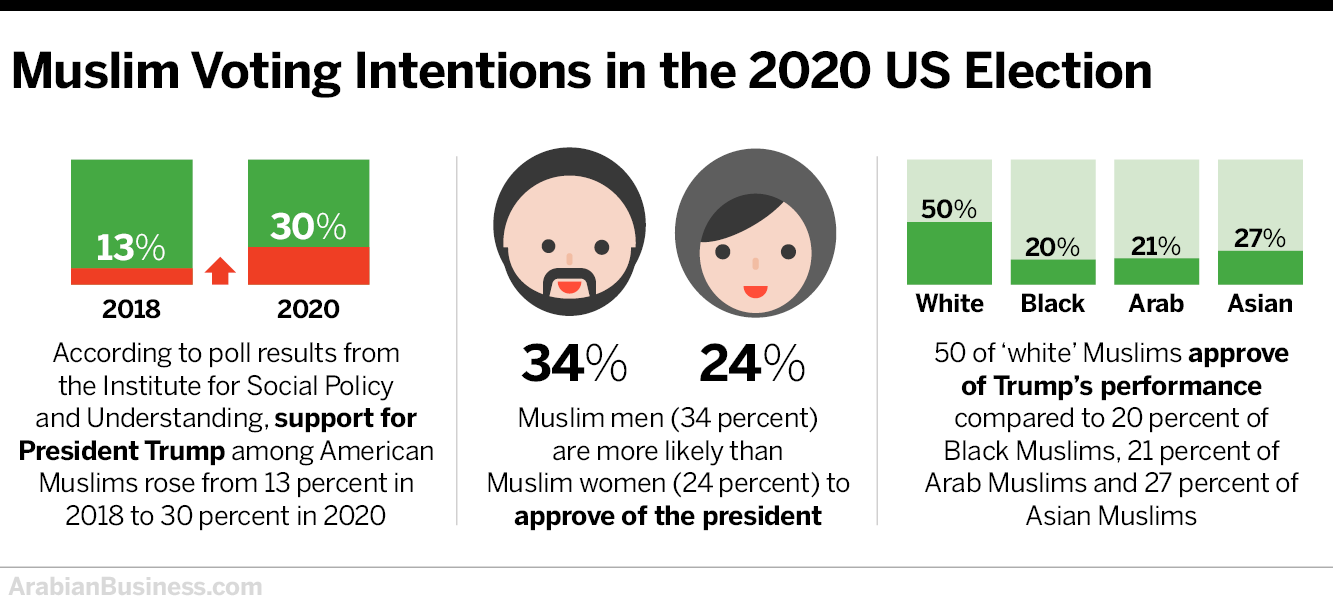
In its fifth annual poll of the community, the poll found that support for President Trump among American Muslims rose from just 13 percent in 2018 to 16 percent in 2019 to 30 percent in 2020.
In an interview with the US-based Religion News, ISPU research director Dalia Mogahed said that the rising support for Trump may be explained by a wave of patriotism at the outset of the Covid-19 pandemic.
“It was done right at the beginning of the coronavirus lockdown,” Mogahed said of the poll. “When there’s a national crisis, people tend to rally around the leader of the flag.”
Additionally, the report found that Muslim men (34 percent) are more likely than Muslim women (24 percent) to approve of the president.
The report also found that 50 percent of ‘white’ Muslims approve of Trump’s performance as President, which it said was roughly “on par” with the broader white American community.
Non-white Muslims, on the other hand, were found to be significantly less likely to approve of the Trump administration, with only 20 percent of Black Muslims, 21 percent of Arab Muslims and 27 percent of Asian Muslims reporting approval of the president.
The report noted that Muslim Americans were statistically more likely to approve of Trump if they identify as Republicans, support faith groups building coalitions with political conservatives on religious liberty issues and view the economy as “the most important policy priority for judging a candidate.”
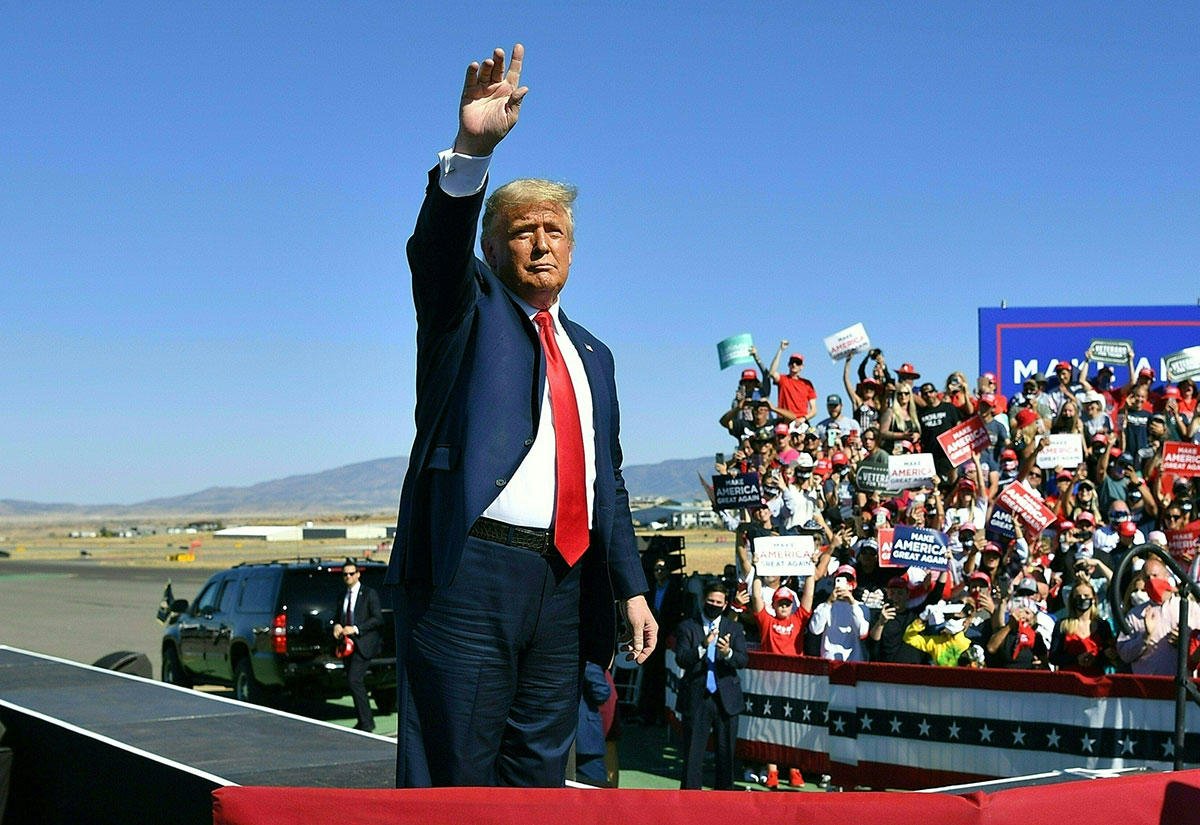
Despite the notable increase in support for the President over the last several years, Muslim support for Trump continues to lag behind other faith groups in the US. Approximately 7 of every 10 Evangelical Christians, for example, expressed approval, compared to 44 percent of Catholics, 46 percent of protestants, and 39 percent of the general public.
Strong Support for Democrats
According to the data, Muslims overwhelmingly prefer a Democrat for president, with 51 percent of Muslim Americans polled saying they support a candidate from the Democratic party, as opposed to 16 percent who selected a Republican. The figure, however, is lower than in 2016, when 67 percent of Muslims said they preferred a Democrat.
Support for Donald Trump’s election was found to have risen from 4 percent in 2016 to 14 percent in 2020, which the ISPU credits to rising support among White Muslims.
Comparatively, however, Muslims were found to be by far the least likely to prefer Trump, who was identified as the preferred candidate for 27 percent of Jews, 34 percent of Catholics, 39 percent of Protestants and 61 percent of White Evangelicals.
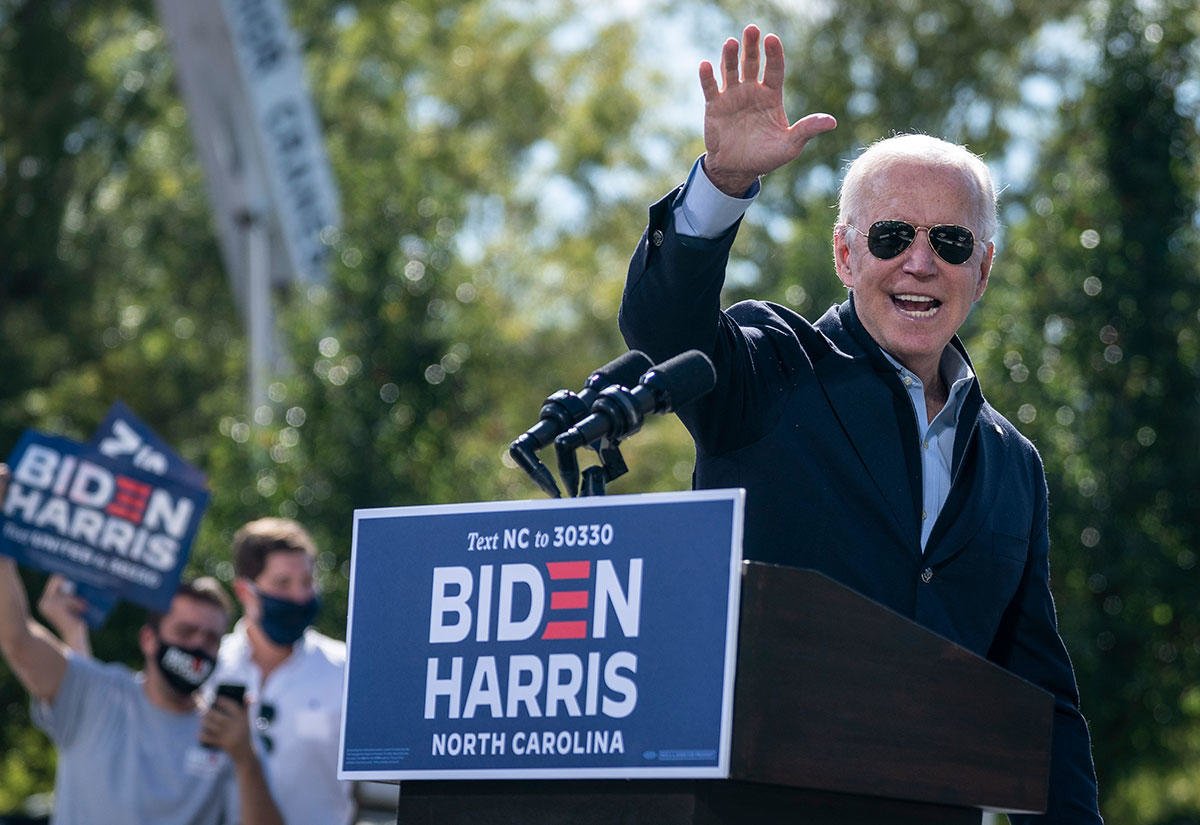
Of those polls, 22 percent of Muslims said that current Democratic presidential hopeful Joe Biden was their candidate of choice, compared to 27 percent of Catholics, 19 percent of white Evangelicals, 42 percent of Jews and 22 percent of non-affiliated Americans.
Of the other Democrats who were once in the running for the candidacy, Bernie Sanders was found to have the higher support among Muslims (29 percent) than he did with any other faith group.
Voting and Political Participation
Of all the faith and non-faith groups examined in the report, Muslims were found to be much more likely (26 percent) to be ineligible to vote, most as a result of being non-citizen.
With 74 percent of American Muslims eligible to vote and only 78 percent of them actually registered, only 57 percent of the total Muslims in the country were found to be registered.
Despite being less likely to be registered, Muslim-Americans were found to be more likely to be involved in local political processes.
Approximately 22 percent of Muslim-Americans, for example, reported attending a town hall meeting in the last year, significantly higher than Protestants (15 percent) and Evangelicals (12 percent).
Muslims – and Jews – were also found to be most likely (16 percent) to volunteer for a political campaign, compared with 5 percent of Catholics, 8 percent of Protestants and 9 percent of White Evangelicals.
Five Things We Learned:
1. Muslim-American support for President Trump more than doubled between 2018 and 2020
2. Researchers believe that White Muslims and a wave of patriotism drove the figures to spike
3. However, Muslim-Americans remain much more likely to support the Democratic Party
4. More than a quarter of Muslims in the US remain ineligible to vote
5. Muslims, however, are more likely than others to participate in local politics and volunteer for political campaigns