Arab Press

بالشعب و للشعب
Tuesday, Mar 03, 2026

EU's Russia oil ban in jeopardy as Hungary rejects sanction as 'atomic bomb' for economy

EU's Russia oil ban in jeopardy as Hungary rejects sanction as 'atomic bomb' for economy

Viktor Orban could veto the bloc's planned oil embargo unless the EU comes back with proposals which recognise Hungary's difficulties, which include an energy infrastructure pointing almost squarely towards Moscow.

Hungary has warned it cannot accept the EU's planned ban on Russian oil as it would amount to an "atomic bomb" for its economy, threatening to scupper the bloc's sixth sanctions package against Moscow.

Prime Minister Viktor Orban - no stranger to disputes with the bloc's executive - told state radio he was ready to negotiate on any proposal that would meet Hungary's interests.

But he declared that what was on the table would prove too costly.

The country sources almost 65% of its oil supplies, including refined products, from Russia.

Ursula von der Leyen, the European Commission president, used a speech to the European Parliament in Strasbourg on Wednesday to declare that the time had come for the bloc to ban Russian oil supplies within six months and refined products by the end of the year.

She said then: "It will not be easy. Some member states are strongly dependent on Russian oil. But we simply have to work on it.

"Putin must pay a price, a high price, for his brutal aggression."

The proposal, part of a new round of measures aimed at punishing Russia for its invasion of Ukraine, follows a similar move announced by Britain and the United States in March.

Hungary and Slovakia, under the embargo plan, have been given an extra year to make alternative arrangements.

The Reuters news agency, citing three EU sources, reported on Friday that further concessions under discussion to win nation states over would include giving Hungary, Slovakia and the Czech Republic more time to adapt to the embargo, and help with upgrading their own oil infrastructure.

Hungary's opposition poses a threat to the embargo as it requires the support of all 27 member states to be approved.

It was only made possible after Germany, Europe's biggest economy, declared that it was now in a position to source the supplies it needed from elsewhere.

In his radio interview Mr Orban, who was re-elected for a fourth term last month and is widely seen as a Putin ally, voiced concern about the EU's backlash against Russia's actions.
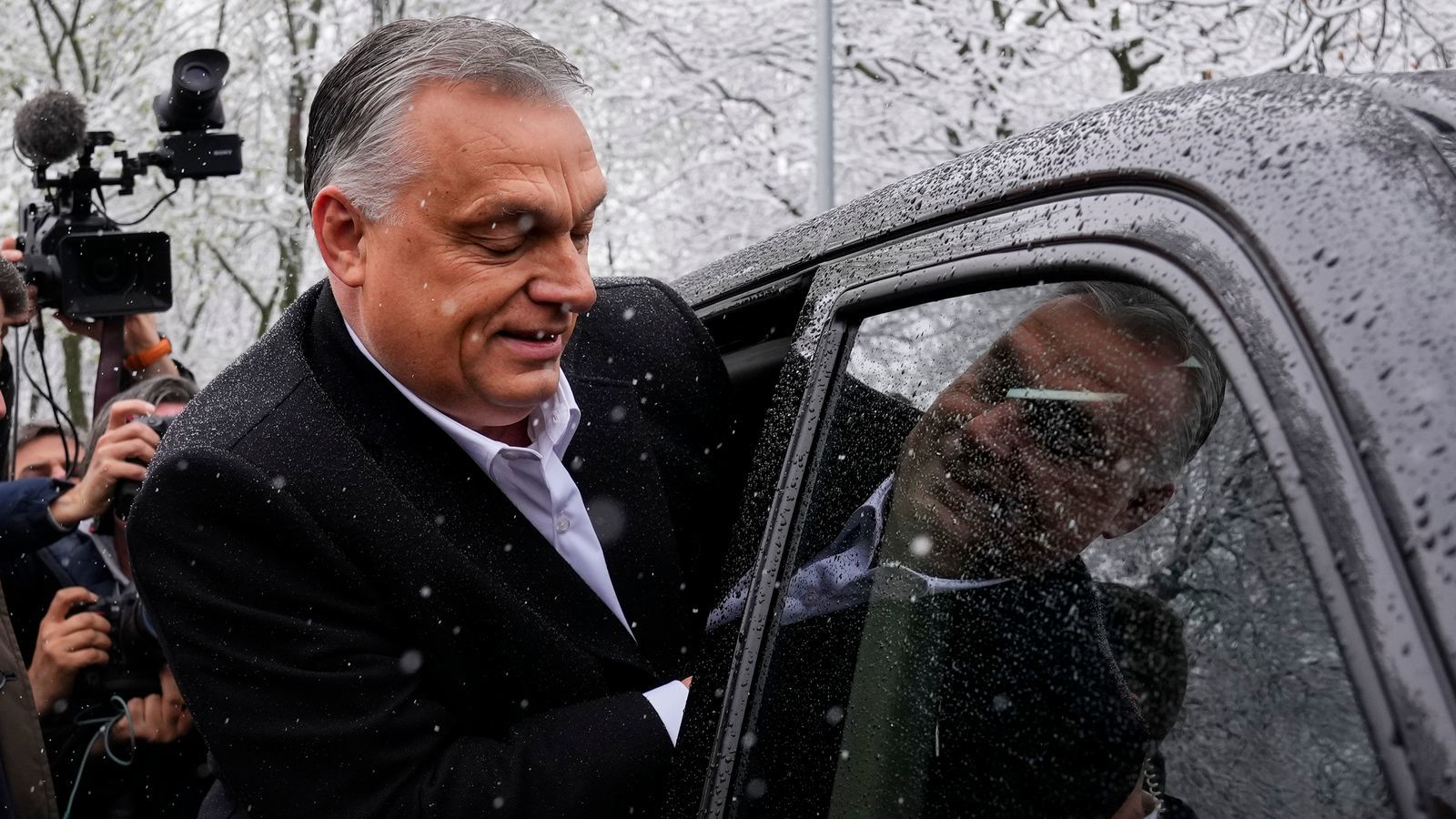
Viktor Orban is seen after casting his vote in Hungary's elections last month


He reiterated that Hungary would not send weapons to Ukraine, like some other member states, insisting his country's stance was "for peace".

On the specific energy issue, he argued that Hungary would need five years and make huge investments in its refineries and pipelines to be able to adjust to any Russian oil ban.

"We know exactly what we need, first of all we need five years for this whole process to be completed... one to one-and-a-half years is not enough for anything," Mr Orban said.

He said Hungary was waiting to see a new proposal from the commission.

"I don't want to confront the EU but to cooperate... but this is only possible if they take our interests into account."

Mr Orban also said Hungary would not support the blacklisting of the head of the Kremlin-allied Russian Orthodox Church, Patriarch Kirill, as this was an "issue of religious freedom".

Newsletter

Related Articles

Arab Press
0:00
0:00
Close
Imola Emerges as Standby Venue if Bahrain or Saudi Arabia Grands Prix Are Cancelled
Uncertainty Clouds $24 Billion Gulf Investment Linked to Paramount–WBD Deal
Middle East Strikes Disrupt Qatar LNG, Saudi Refining and Israeli Energy Fields
Gulf States Signal Possible Collective Action Over Iran’s Escalating Strikes
Saudi Arabia Summons Iranian Ambassador After Cross-Border Attacks
Saudi Arabia Intercepts Drones Targeting Ras Tanura Oil Refinery as Conflict Escalates
Saudi Arabia Clarifies It Supported Diplomacy With Iran, Not Military Escalation
Putin and Saudi Crown Prince Confer on Escalating Iran Crisis
Drone Strike Forces Shutdown of Saudi Arabia’s Largest Oil Refinery
Saudi Arabia Signals Harder Line on Iran as Regional Conflict Deepens
Strikes in Qatar and Saudi Arabia Pull Energy Infrastructure Deeper Into Expanding Middle East Conflict
U.S. and Israel Intensify Strikes on Iran as Conflict Expands to Lebanon and Gulf States
Violent Pro-Iranian Protesters Storm U.S. Consulate in Karachi
Missile Debris Sparks Fires at Dubai’s Jebel Ali Port Near Palm Jumeirah
Iran Strikes U.S. Fifth Fleet Headquarters in Bahrain Amid Wider Gulf Retaliation
Emerging Saudi–Turkish Alignment Draws Attention as Potential Strategic Challenge for Israel
Saudi Arabia Unveils $100 Billion Technology Investment Fund to Accelerate Post-Oil Diversification
Saudi Arabia Reaffirms Firm Commitment to Two-State Solution in Renewed Diplomatic Push
Saudi Arabia Launches Central Kitchen in Gaza to Deliver 24,000 Meals a Day
Saudi Arabia Announces $346 Million Support Package for Yemen in Renewed Humanitarian Push
Saudi Investors Increase US Equity Exposure Amid Domestic Market Weakness
Saudi Arabia Unveils Major Desert Gas Development in Strategic Shift Toward Diversified Energy Growth
Satellite Images Indicate Increased Aircraft Presence at Saudi Airbase Hosting US Forces
Telephone Diplomacy Sparks Tensions Between Two Key US Allies After Trump Intervention
Asian LPG Prices Surge After Damage Forces Saudi Aramco Export Disruptions
Saudi Arabia Unveils $100 Billion AI Infrastructure Fund to Challenge US and China
Saudi Stocks Close Lower as Tadawul All Share Index Falls 1.28 Percent
Saudi Arabia Launches Smart Mapping System to Enhance Pilgrim Experience at Holy Sites
Cristiano Ronaldo Acquires 25 Percent Stake in Saudi-Owned Spanish Club Almería
U.S.–Saudi Relations Balance Transactional Deal-Making with Expanding Strategic Ambitions
Israel’s President Herzog Signals Cautious Message on Saudi Ties at UAE Iftar in Tel Aviv
United States and Saudi Arabia Strengthen Security Ties with Joint Explosive Ordnance Disposal Exercise
Saudi Arabia Responds to Israel–UAE Moves in Somalia as Regional Rivalries Intensify
Saudi Arabia Showcases Expanding Defense Ambitions at World Defense Show 2026
SECRETARY RUBIO on IRAN: Iran poses a very great threat to the United States, and has for a very long time.
Larry Summers, the former U.S. Treasury Secretary, is resigning from Harvard University as fallout continues over his ties to Jeffrey Epstein.
U.S. stocks ended higher on Wednesday, with the Dow gaining about six-tenths of a percent, the S&P 500 adding eight-tenths of a percent, and the tech-heavy Nasdaq climbing roughly one-and-a-quarter percent.
Nvidia posted better than expected results for the January quarter on Wednesday and forecast current quarter revenue above market estimates.
Saudi Arabia’s Coffee Renaissance Gains Momentum as Investment and Heritage Drive Industry Growth
Saudi Shipping Leader Bahri Expands Fleet as Tanker Rates Approach $200,000 a Day
Saudi Arabia Advances First National Urban Policy Through High-Level Leadership and Institutional Alliances
Major Life Sciences Summits to Spotlight Saudi Arabia’s Rise as Regional Biotech and Pharma Hub
Saudi Arabia Reframes Red Sea and Horn of Africa Strategy Amid Rising Security and Trade Stakes
Saudi Arabia Recalibrates Its Role in Shifting Regional and Global Power Dynamics
Saudi Retail Signals to Global Brands: Localise or Lose Ground in a Rapidly Evolving Market
Saudi Arabia Looks to Human Capital Investment to Unlock Demographic Dividend
Saudi Arabia and Iran Increase Oil Exports Amid Escalating Middle East Tensions
Saudi Data Protection Authority Intensifies Enforcement Under Personal Data Law
Saudi Arabia Raises Oil Output and Exports Amid Contingency Planning Over Iran Tensions
USS Gerald R Ford Arrives in Souda, Crete
×